
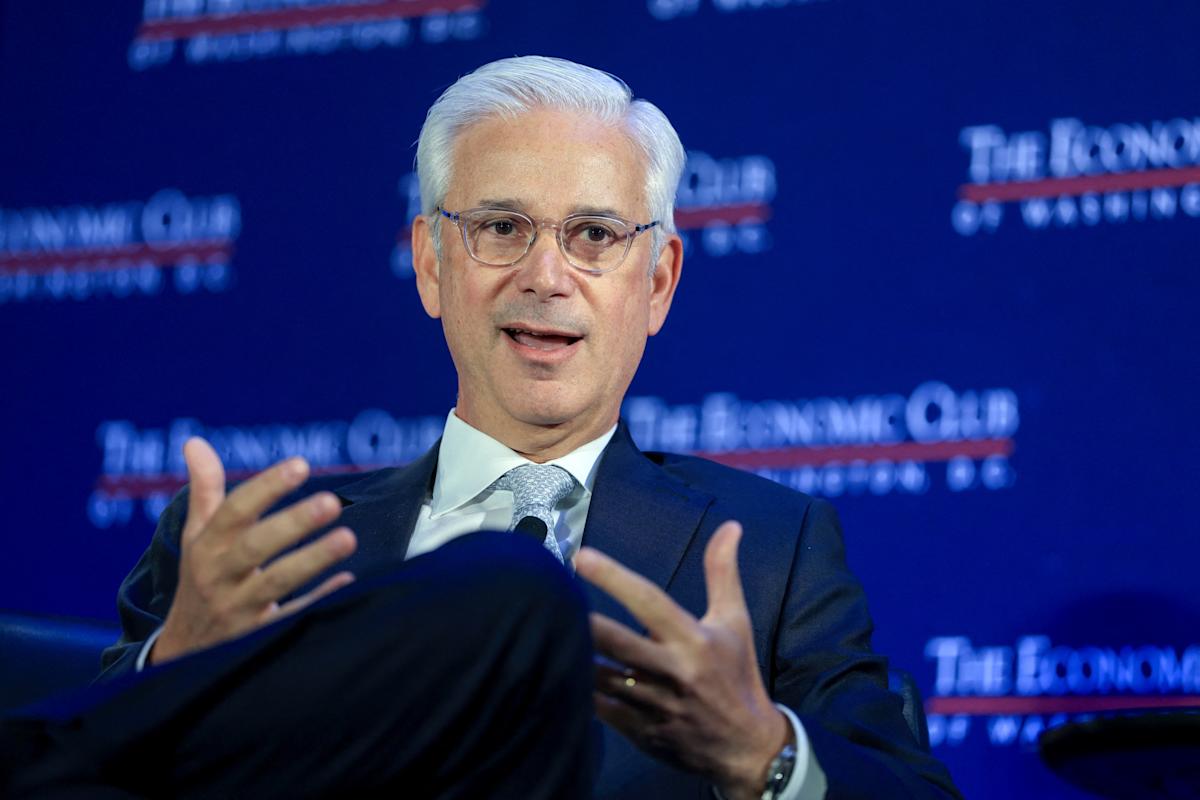
Wells Fargo (WFC) CEO Charles Scharf said on Monday that the US economy has been resilient, but he also acknowledged how bad sentiment is among American consumers and businesses.
“Right now, from everything that we see, the economy is still extremely strong,” Scharf said during an interview with David Rubenstein at the Economic Club of Washington, D.C., acknowledging the wide divergence from how consumers are feeling amid uncertainty stemming from the Iran war.
“They’re getting through it. Businesses have gone into this in strong financial shape. So those are all the good things. But then when you ask them how they feel, everyone’s nervous,” Scharf said.
He also said that consumers are adjusting their spending based on higher gas prices. Altogether, he described the economic dynamic as “neutral to just beginning to see some potential for some negative impacts.”
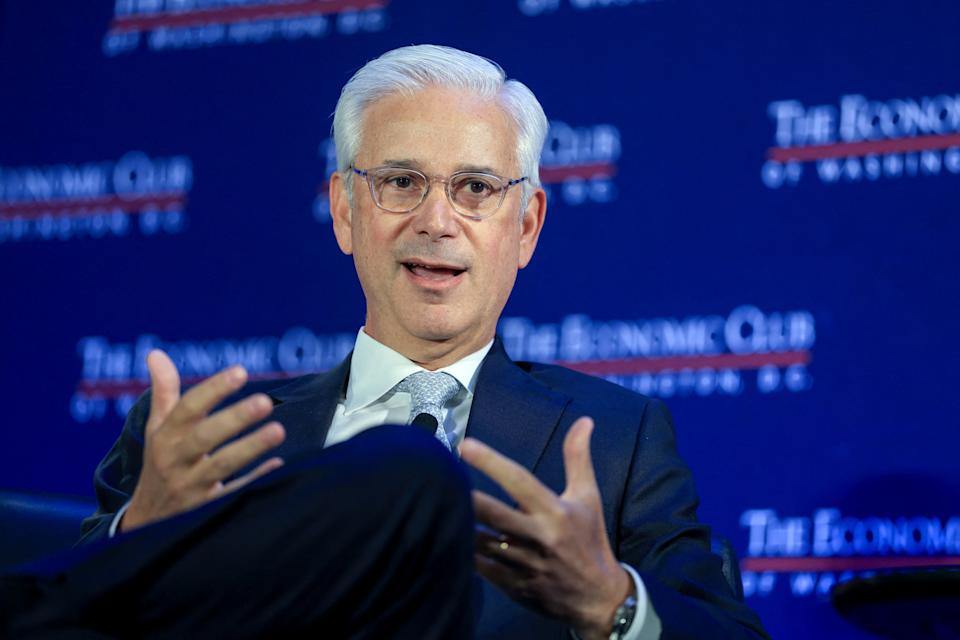 Wells Fargo CEO Charlie Scharf is interviewed by David Rubenstein, Chairman of the Economic Club of Washington D.C., (not picutred) during an event in Washington, D.C., U.S., April 20, 2026. REUTERS/Evelyn Hockstein · REUTERS / REUTERS
President Trump said earlier on Monday in a Bloomberg interview that he’s not likely to extend the current two-week ceasefire with Iran that expires late on Wednesday. Trump said the blockade on the Strait of Hormuz, which has the world’s oil market in a supply shock, would not be lifted until a deal is reached.
“If the conflict ends, the straits open up, production returns in some reasonable period of time, there will be this impact on consumer spend, on some of these other things, but in that kind of environment, it won’t be damaging. If this goes on for a longer period of time, it can be more damaging,” he added.
Wells Fargo and the country’s other biggest banks reported strong increases in first quarter profits last week. The San Francisco based bank and its peers showed healthy consumer spending growth range between 5% and 9% across the country’s four largest banks. And on analyst calls, Scharf and other executives struck an upbeat tone, judging the US economy and consumers in aggregate as “resilient.”
Big banks lend less heavily to lower income borrowers than small and more specialized rivals. They also judge the health of their US customers on their spending activity and the unemployment rate, which can exclude other financial pressures.
The upbeat sentiment from lenders struck a somewhat discordant pitch with how consumers feel generally. The latest University of Michigan Consumer Sentiment Index showed that US consumer confidence this month has dropped to its lowest reading in the survey’s 74-year history.
During the same interview, Scharf voiced his support for a Federal Reserve immune to external pressures, saying “the independence of the Fed is critically important” when asked about the topic by Rubenstein. He also played down worries over the private credit industry, arguing that it isn’t “big enough to be a systemic risk.”