
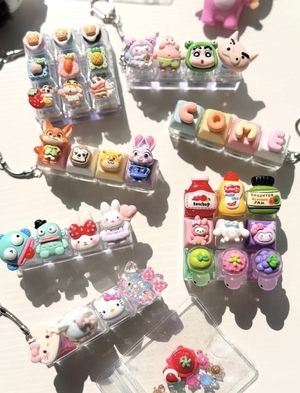
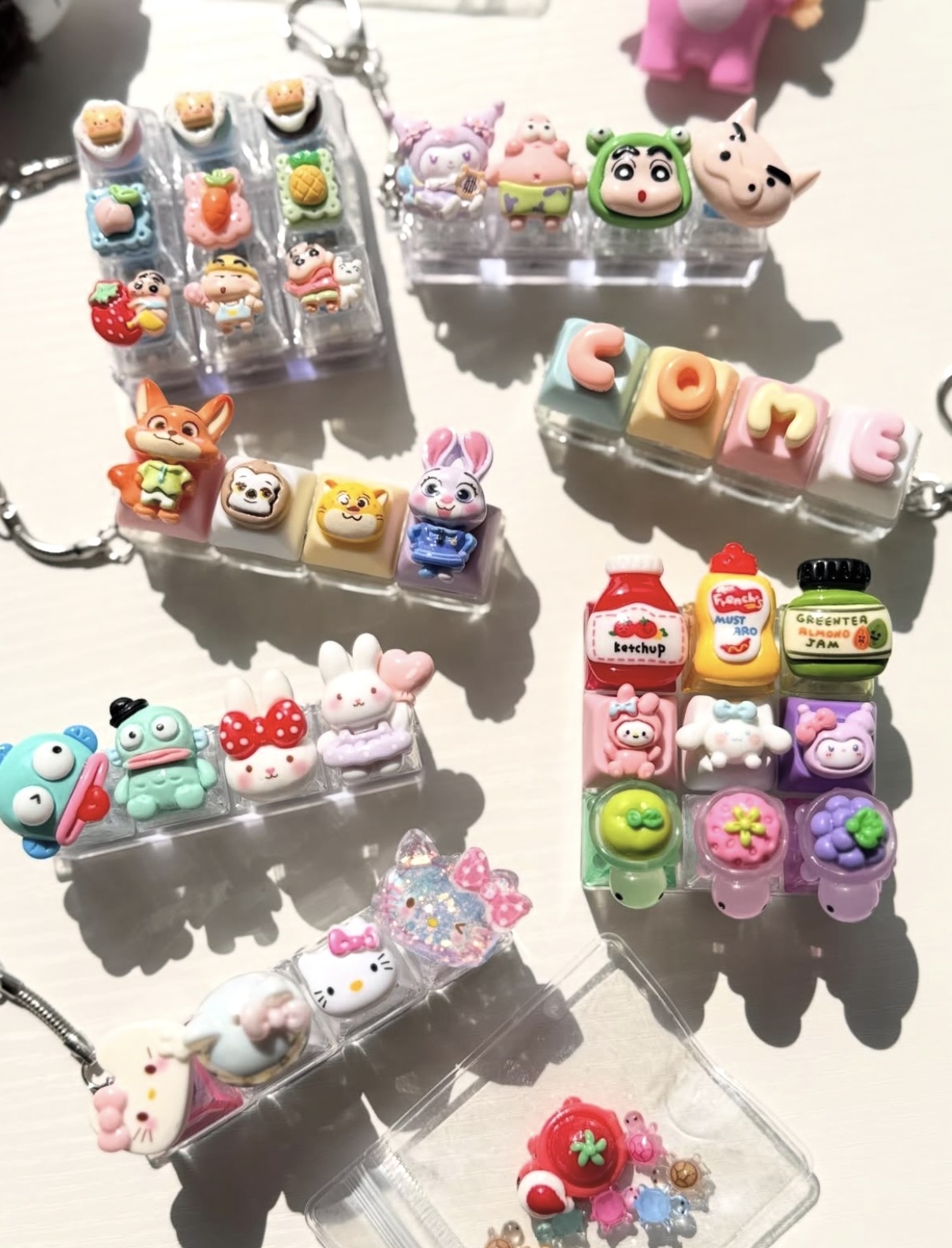
 Keycaps (Jaekyungsa Mall)
“I’m having a hard day.” For a growing number of young consumers, that sentiment is no longer kept private. It is managed, quite literally, in hand.
Across South Korea, small, portable items designed to ease tension are becoming part of daily routines. From tactile keycap keyrings clipped onto bags to soft squishy toys and pocket-sized worry stones, these objects are emerging as everyday tools for managing stress.
According to SomeTrend, Instagram mentions of “keycap keyrings” rose 137 percent in February compared with December, while blog mentions increased 56 percent over the same period. The appeal is straightforward. Many of these fidget toy-like products deliver immediate tactile feedback and a brief mental reset through a clicking sound or soft resistance. Consumers also treat them as accessories, customizing keycaps or choosing character-themed designs that reflect personal taste.
Popular culture has taken notice. A recent skit on SNL Korea satirized Gen Z office life, featuring a young employee anxiously tapping a keycap after being scolded by a supervisor. The exaggerated scene — rapid, almost compulsive clicking to regain composure — mirrors how such items are increasingly framed as quick coping tools for workplace stress.
Industry observers say the broader movement aligns with a shift in how younger generations approach emotional well-being.
In a recent report titled “Minority Report: Dare to Be Vulnerable,” Cheil Worldwide said vulnerability is increasingly seen not as a flaw but as a marker of authenticity. Rather than masking stress, users openly acknowledge it and seek small, accessible ways to manage it.
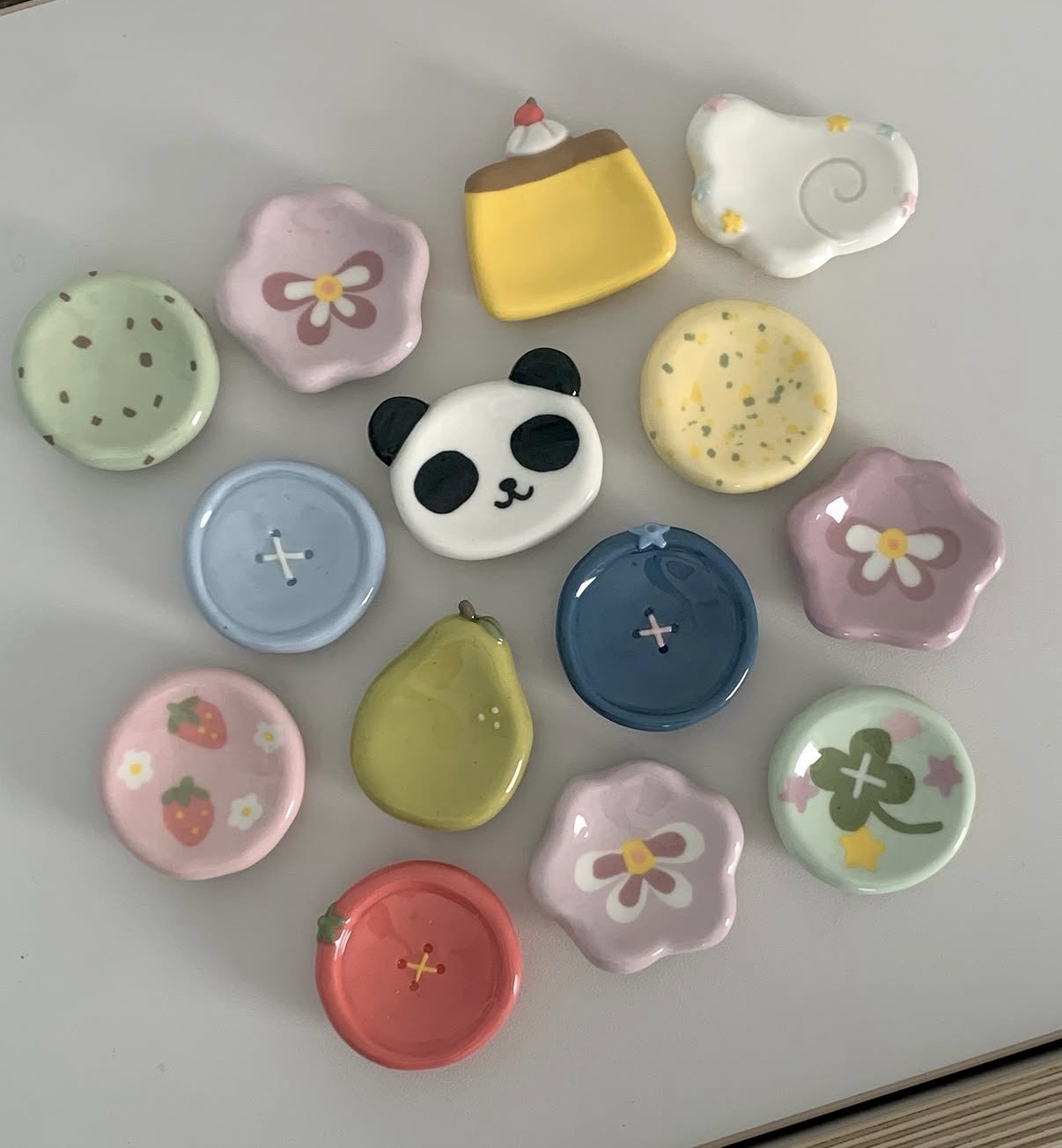 Worry stones (Mixture Ceramic Studio)
The behavior is translating into consumption patterns. In Seoul’s Dongdaemun Shopping Complex, an accessory supply arcade, vendors report a noticeable rise in visitors in their 20s and 30s. Many gather around displays of squishy toys, testing textures and comparing how quickly items return to shape.
“Fidgeting with them helps me relax. I also use them during meetings at work when I need to come up with new ideas,” said a 28-year-old surnamed Kim.
Other objects gaining traction include “worry stones” — small, thumb-sized stones with a shallow indentation emerging as simple tools for easing anxiety. Users rub the surface with their thumb, a repetitive motion believed to promote calm. Materials range from ordinary pebbles to polished stone or ceramic.
What ties these items together is accessibility. They are inexpensive, easy to carry and require no instruction. More importantly, they provide a quick, physical way to interrupt stress — albeit only briefly.
Analysts say that the combination is key. In a fast-paced environment, products that offer instant sensory satisfaction while doubling as a form of self-expression can spread quickly. As the line between emotional care and consumer goods continues to blur, the market for these small “coping tools” is expected to expand.
For many users, the appeal is practical rather than aspirational. A keycap keyring clipped to a bag or a soft toy tucked into a pocket may not address the underlying causes of stress. But in the course of an ordinary day, they offer something immediate: a brief pause, held in the palm of a hand.
yoohong@heraldcorp.com