
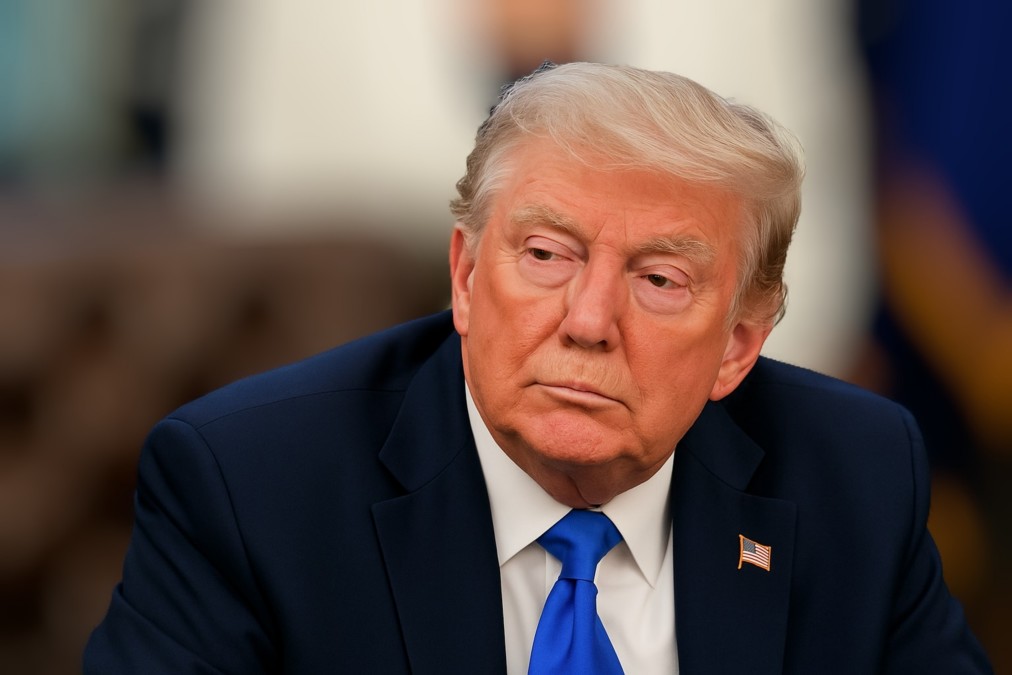
As we suspected, President Trump’s televised interview on Tuesday morning was largely “more of the same,“ but there were a few notable items that caught our attention in the process.
Trump did not back down from his comment that he will not extend the ceasefire when it expires on Wednesday, and that while he doesn’t want to do it, he will bomb power plants and bridges in Iran if a “great deal” isn’t reached in time. To us ,this appears to be Trump once again “upping the ante” ahead of peace talks, a strategy we’ve seen before from the president.
During the interview, Trump indicated that he would be disappointed if nominated Federal Reserve Chair Kevin Warsh did not cut rates “immediately,” but the president quickly pivoted back to the subject of Iran and why the war needed to be fought.
While that could be Trump potentially giving Warsh a pass on rate cuts — which would be hard to do, given the step up in published inflation data as well as oil and petroleum prices — the president also raised a question about Warsh’s confirmation process.
Trump was asked point-blank if he would consider an off-ramp for the Department of Justice investigation into Fed Chair Jerome Powell and the Federal Reserve regarding construction cost overruns. Trump indicated that he would not back down and drop the probe, and this could set up a showdown with Senator Thom Tillis of North Carolina, who has promised to hold up Warsh’s confirmation if the DoJ doesn’t drop its criminal investigation of the Fed and Powell.
When asked about companies seeking tariff refunds, Trump indicated that he is keeping score on which companies are and which ones aren’t, and he’s going to remember.
Trump also indicated that the administration is likely to hammer out a deal with Anthropic, which was recently named a “supply chain risk.” The president also indicated that the administration is working with OpenAI, a positive comment as that company moves toward its eventual IPO.
Netting it all out, with the Nasdaq Composite still in over bought territory based on its relative strength index level and the S&P 500 not too far behind, the risk we see is that if no deal between the U.S. and Iran is achieved or if the market is underwhelmed by one that is struck, profit taking following the market’s significant bounce back month to date could ensue.
When the market has been in similar settings in the past, expectations have been high, and hopium has been a driving factor. As we’ve seen, it doesn’t take much to let some air out of the market balloon. That risk is one reason why we’re keeping the Portfolio’s market-hedging position intact. Should a good deal between the U.S. and Iran be reached, we’ll consider trimming back the Portfolio’s exposure to those strategies.
Related: How Much Upside Can Remain for a Market That’s Afraid to Sell?
More Pro Portfolio