
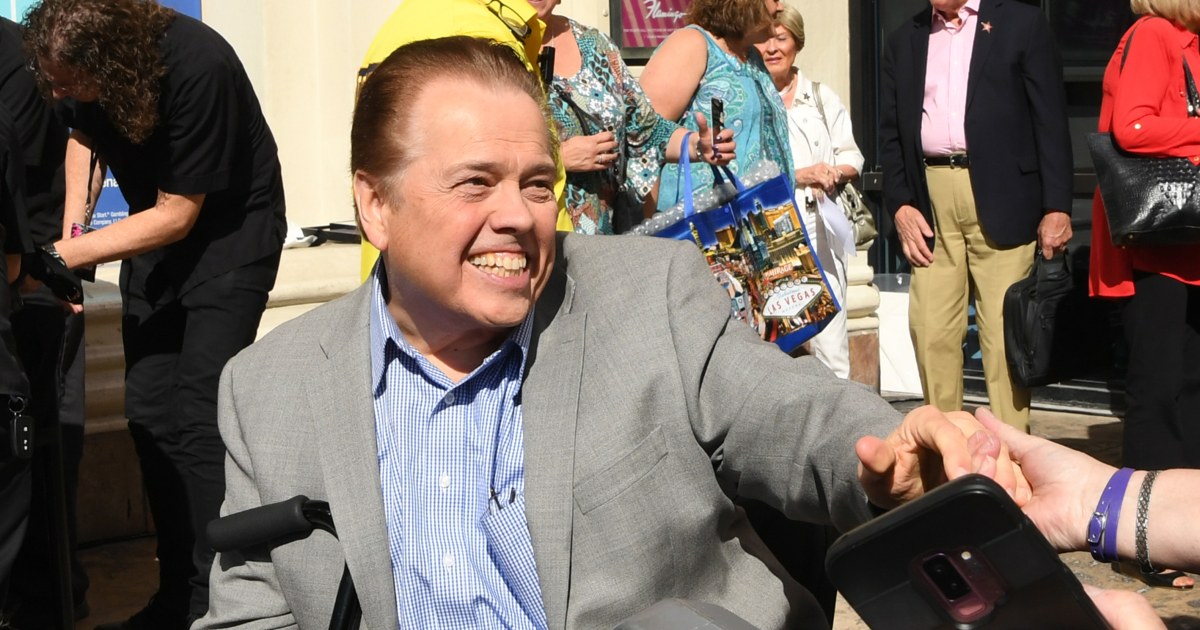
Singer Alan Osmond has died at the age of 76, his family confirmed in a press release on April 21.
The family said the late Osmond, the third born and oldest member in their sibling singing group, “will be remembered as the leader of The Osmond family who helped shape the career of the performing family into a world-wide household name.”
Their statement also addressed Osmond’s 40-year battle with multiple sclerosis. The singer opened up repeatedly throughout his career about how the disease affected him and his ability to perform. At one point, his symptoms prevented him from playing with his grandchildren.
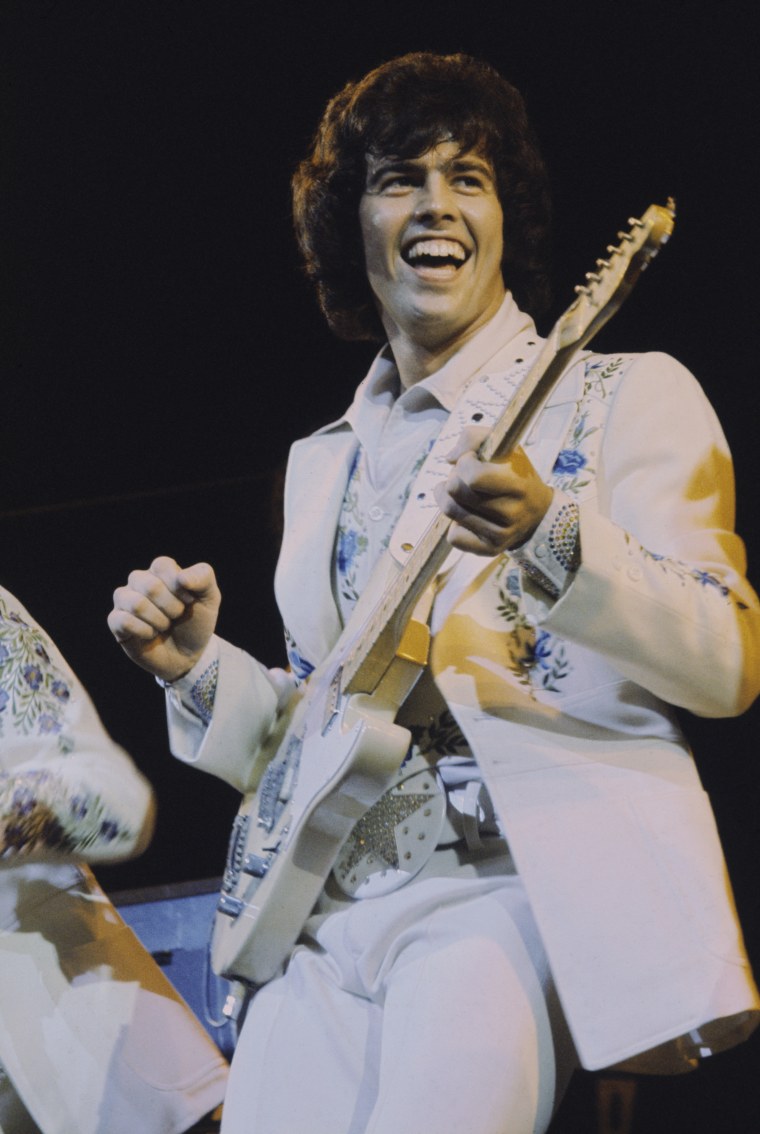 Alan Osmond performs live on stage with American family pop group The Osmonds on the British leg of their European tour, Oct. 1973.Michael Putland / Getty Images
“Could not pick up a penny, couldn’t hold my grandkids,” he shared in an interview with NBC affiliate KSL in 2007 about some of his most difficult moments. However, his symptoms later improved and he was able to join his family for their 50th anniversary special that same year.
Read on to learn more about Osmond’s battle with MS and what he said about the challenges he faced.
What Was Alan Osmond’s Cause of Death?
Although the Osmonds did not specify a cause of death in their statement, they did mention the “senior performing member”’s 40-year battle with multiple sclerosis. The family said the neurological disease caused the singer to retire from performing with the Osmond Brothers and other members of his family.
The late musician’s wife, Suzanne Pinegar Osmond, took care of him as he dealt with his symptoms, the family said. The couple, who married in 1974, shared eight sons together.
“Osmond’s mantra regarding the disease was always, ‘I might have MS, but MS doesn’t have me,’” the statement read, a sentiment he also shared when speaking with NBC affiliate KSL in 2023 and in multiple other interviews.
The statement continued, “His positive outlook was an inspiration to many, and he donated much of his time speaking at MS events, encouraging individuals like himself on how to mentally and physically deal with the advancement and treatment of the disease.”
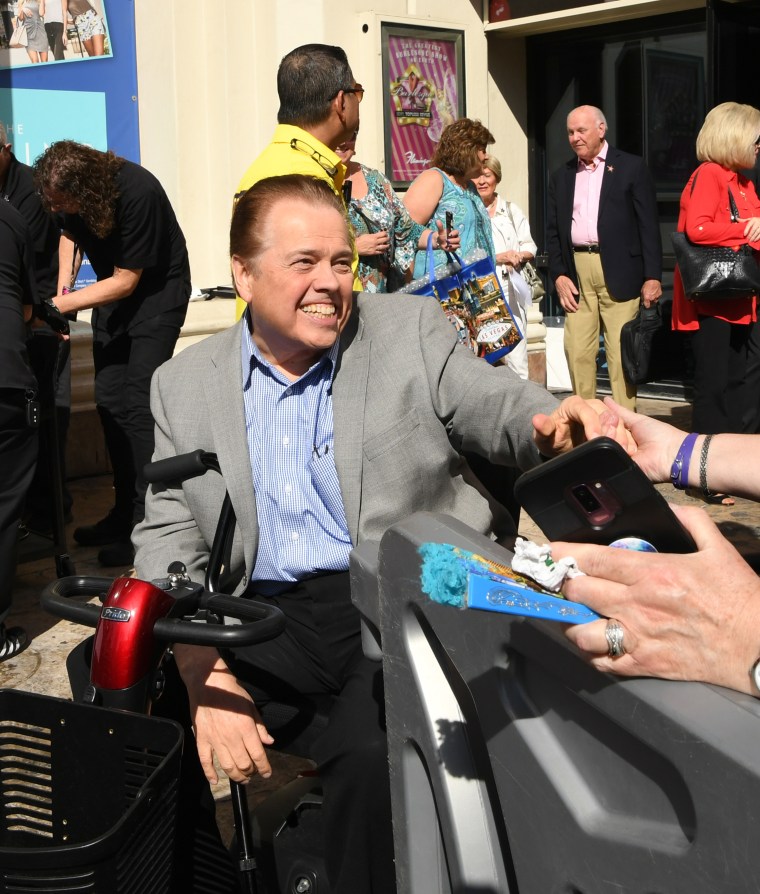 Alan Osmond in Las Vegas on Oct. 4, 2019.Denise Truscello / WireImageWhat Did Alan Osmond Share About His MS?
In 2007, Osmond shared with KSL that he traveled to England and participated in a clinical trial to help improve his MS. According to the affiliate, he could not lift his right arm, had weakness in his right leg and needed to use a wheelchair.
But the treatment, he said, helped him return to the stage and he appeared beside six of his siblings for their PBS reunion concert in Las Vegas.
In a May 2020 joint interview with his son David, who was also diagnosed with MS, Osmond shared that he first noticed symptoms in 1986. “I noticed that I couldn’t play the trumpet quite as fast,” he recalled. “And I also noticed I would trip easy and there was nothing to trip on.”
After a series of tests, his diagnosis was confirmed. “I was embarrassed. I didn’t want anyone to know,” he continued. “I felt like I was letting my brothers down.”
That’s when he came up with his MS mantra, he said, adding that “When one gets MS, the whole family gets MS.”
David chimed in and said he remembered his dad telling him, “His body might have MS, but his spirit doesn’t. And it’s soaring.”
The two said they had hope for the future and they wanted others diagnosed with MS to know they are not alone.
Osmond said, “Thirty-two-and-a-half years of having it, I’m still moving. And you gotta make it happen.”
What Is Multiple Sclerosis?
MS is a disease that leads to the “breakdown of the protective covering of nerves,” per Mayo Clinic. The disease affects communication between the brain and the rest of the body, which can lead to numbness, weakness, trouble walking and vision changes.
Although there isn’t a cure, treatments can “help speed the recovery from attacks, modify the course of the disease and manage symptoms.”