
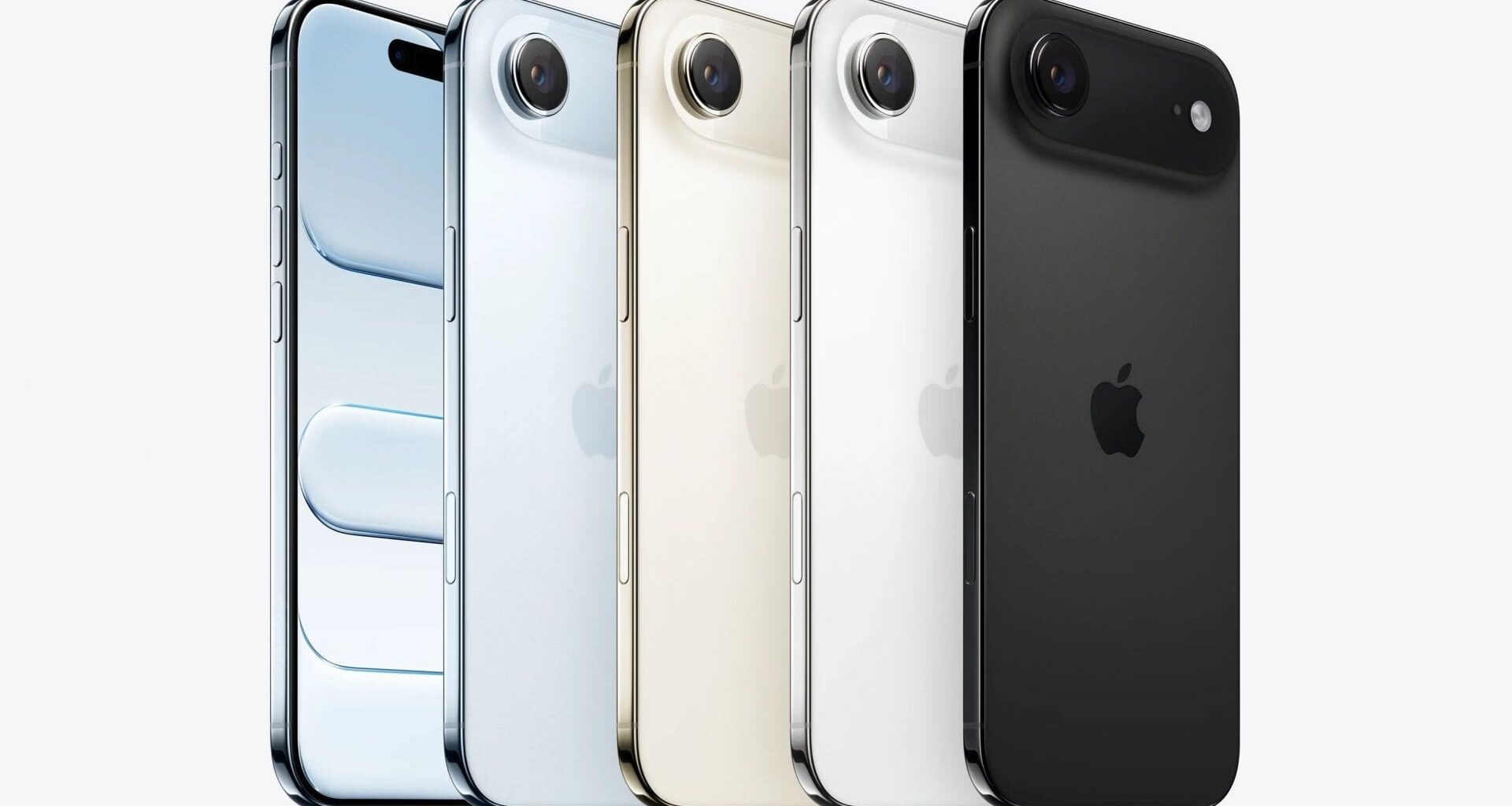

The iPhone Fold, also known as the iPhone Ultra, is one of the most anticipated releases in history. When Steve Jobs introduced the first iPhone in 2007, it not only transformed the smartphone industry forever but also changed the way we use phones.
Almost every iPhone release since then has arguably only brought iterative changes, but the iPhone Fold could change everything, just like the original did. Nonetheless, we know very little about this mysterious device, but there have been enough leaks to form a clearer picture.
In this article, we examine all the available leaks about the iPhone Fold.
Read more: Big setback for Apple fans as iPhone Fold reportedly delayed to the end of 2026
iPhone Fold leaks mastersheet compilation
1) Naming
Previously, Apple’s reported foldable smartphone was rumored to be called iPhone Fold. However, newer leaks suggest it will be called iPhone Ultra.
According to a well-known Weibo leaker, Instant Digital, the device will be called iPhone Ultra (Google translated):
“Apple’s Autumn Event This Year: An All-Premium Lineup iPhone 18 Pro, iPhone 18 Pro Max, iPhone Ultra (Fold). Apple fans, get your wallets ready.”
This information has since been corroborated by other Weibo leakers. It also makes sense, given that Apple has also used the same “Ultra” name for the Apple Watch Ultra. However, many users are still calling it the iPhone Fold.
2) Design and build
The iPhone is reported to be thin like the iPhone Air (Image via Apple)
Ming-Chi Kuo, a reliable leaker, has detailed the choices Apple is supposedly making for the foldable iPhone. According to him, the iPhone Fold or Ultra will feature a book-like design:
“The foldable iPhone will have a book-style design, featuring an approximately 7.8-inch crease-free inner display and an approximately 5.5-inch outer display.”
Although the device appears to follow the same design principles as Android foldable phones, its body dimensions and inner display aspect ratio suggest it will feel more like a book. When folded, it may resemble a book, but when unfolded, it could look more like an iPad Mini.
Sonny Dickson (@SonnyDickson on X) posted pictures of alleged iPhone Fold dummy units, which give us a general idea of what the final unit could look like.
According to the leaked pictures, the device does look like a book with a 4:3 aspect ratio for the inner display.
As for the build quality, Instant Digital previously mentioned that the iPhone Fold will feature a major external and internal redesign (Google translated):
“The volume buttons are not located on the left side; instead, they have been placed directly at the top of the right-hand edge of the device (adopting a button layout logic similar to the top edge of the iPad mini). This arrangement is bound to challenge users’ established habits regarding smartphone usage. The Power button (which integrates Touch ID) and the AI button (camera shutter key) remain on the right side.”
“Why was this layout chosen? The motherboard is situated on the right side, and the designers wanted to avoid the complexity of routing circuitry across the screen area to support buttons on the left. Consequently, the left side remains completely clean and free of physical buttons, with virtually all available space dedicated to the display assembly and the battery. This design choice has, in turn, resulted in the iPhone with the largest battery capacity in history.”
The redesigned chassis will also require users to relearn how to use it. After all, people have developed muscle memory for pressing the buttons on the left side to control the volume.
With the foldable iPhone, users will apparently need to build new muscle memory, as the buttons are reported to be on the right side.
3) Displays
A report from The Elec, a South Korean Media outlet, suggests Apple will use a custom CoE OLED panel from Samsung for the iPhone Fold. CoE stands for Color Filter on Encapsulation, a technology designed to achieve a thinner and lighter display. This type of panel is necessary to fit inside the device’s chassis, which is said to be thinner.
Here’s what The Elec said (Google translated):
“Apple is reportedly considering releasing a slimmer iPhone Air in 2027, the 20th anniversary of the iPhone. Apple is also considering applying CoE (Color filter on Encapsulation) technology, which is advantageous for implementing thin panels.”
According to the Front Page Tech (FPT) YouTube channel, Apple is aiming for a creaseless display. Currently, all foldable phones have a visible crease in the middle where the display bends, but that reportedly won’t be the case with the foldable iPhone.
As per FPT, Apple will use a special metal plating and liquid metal in the hinge to achieve the creaseless display:
“One drawback to foldables — one very big drawback to foldables, regardless of how cool they may look and feel is that from perhaps too many angles, you can see and feel a crease down the middle of the plastic display where the hinge is. This isn’t typically a design flaw. It’s just inherently what happens when you take an OLED display and bend it. Apple, through witchcraft and good vibes, has completely subverted this issue. They’re doing this by using a metal plate that disperses the pressure of bending the display, that along with using liquid metal in the hinge is supposed to make this thing durable enough to hit a small child.”
Read more: iPhone 18 Pro leaks mastersheet: Under-display FaceID, better cameras, bigger battery, and more
4) Cameras
The iPhone Fold is reported to feature a horizontal camera module like the iPhone Air (Image via Apple)
According to Ming-Chi Kuo, the iPhone Fold will feature dual rear cameras and a single selfie camera for each display:
“The rear camera features a dual-lens setup, with one front-facing camera available in both folded and unfolded states.”
Instant Digital also corroborated this leak and provided some additional information (Google translated):
“It features a single circular cutout for the front-facing camera—a smaller, cleaner aperture design for the active display area. In short, the iPhone Fold houses an internal stacking structure that is nothing short of industry-shaking—a design that is at once extreme, logical, and elegant. The rear camera setup—comprising dual lenses, a microphone on the right, and a flash—is arranged horizontally; the entire module *appears* to feature an all-black background, distinct from the color of the device’s body itself.”
Essentially, the iPhone Fold could feature a horizontal rear camera module, just like the iPhone Air. The only difference is that the iPhone Air has a single camera in the module, whereas the iPhone Fold will likely have dual lenses. Whether the second lens will be an ultrawide or a telephoto remains to be seen.
5) Performance, features, and other specs
According to the Weibo tipster, Mobile Phone Chip Expert, the iPhone Fold will be powered by the Apple A20 chipset and Apple C2 modem:
“I recently had dinner with a friend at Apple who works in IC design. Next year, Apple’s iPhone 18—featuring the 2nm A20 processor—will come in two distinct versions. The standard version of the chip is codenamed “Borneo,” while the processor designated for the Pro models and the foldable device is the “Borneo Ultra.” This marks what is likely the very first reveal of Apple’s 2nm processor across the entire web.”
This Apple A20 chipset will reportedly be built on TSMC’s 2nm manufacturing process, which can deliver higher performance and lower power consumption. However, Mobile Phone Chip Expert suggests the iPhone Fold will sport an “Ultra” variant of the Apple A20 chipset, which is codenamed Borneo.
Instant Digital also mentioned that the iPhone Fold will have a big battery inside:
“The motherboard is situated on the right side, and the designers wanted to avoid the complexity of routing circuitry across the screen area to support buttons on the left. Consequently, the left side remains completely clean and free of physical buttons, with virtually all available space dedicated to the display assembly and the battery. This design choice has, in turn, resulted in the iPhone with the largest battery capacity in history.”
Apple could utilize dual batteries in each compartment of the foldable display, which would be one of the best ways to implement a large battery.
6) Pricing and launch timeline
According to Ming-Chi Kuo, the iPhone Fold or Ultra is expected to have a $2,000–$2,500 price tag. Given the premium materials and components likely used, it is understandable why it would cost that much. This pricing has also been corroborated by Bloomberg’s Mark Gurman.
Gurman also believes the iPhone Fold or Ultra is still poised for a September 2026 release, alongside the iPhone 18 series, unless there’s a major delay or manufacturing issue.
Well-known Weibo leaker, Fixed Focus Digital, also corroborated the launch window:
“It is definitely coming out this year… The production line is already in the final finishing stages. The most likely scenario is still that it launches alongside the iPhone 18 series. Even if a delay does occur, it would only push back its release by a single month.”
Hopefully, there’s no delay, and Apple releases the iPhone Fold alongside the iPhone 18 series.
Read more: Tim Cook era vs Steve Jobs era: Apple’s highs and lows across generations
Why did you not like this content?
Cancel
Submit
Was this article helpful?

Thank You for feedback
Edited by Suraj Bhowal