
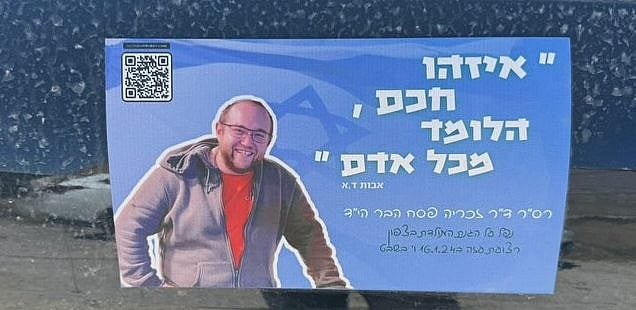
Our son, Dr. Zechariah Haber z”l, a devoted husband and father, talented agricultural scientist and talmid chacham (Torah scholar), was killed on reserve duty in Gaza in January 2024 at the age of 32. We miss him and mourn him every single day to an extent that is hard to explain to someone that has not experienced the loss of a child, but this week was particularly hard for us and for many other people in Israel because it was Yom HaZikaron, Israel’s Memorial Day.
This was the third time we experienced Yom HaZikaron as a bereaved family so we realized in advance that it would be very difficult. We also tried to learn from our prior experiences to choose ceremonies that would provide us with comfort and resonate with us. The first ceremony my husband, Aharon, and I attended was the annual Yom HaZikaron ceremony at Hebrew University’s Faculty of Agriculture in Rehovot, where Zechariah earned his bachelors’ and masters’ degrees. The faculty honors the memories of all of its graduates, students and employees thereof who died in battle or in terror attacks. Unfortunately, the 7th of October and the ensuing war took a relatively high toll on the faculty community, since many graduates and students were farming in the Gaza envelope on October 7th and many others serve in the army, in either regular and reserve duty.
Being on the pastoral campus where Zechariah started his journey in agricultural science, and hearing the rector talk about the strong bond between Zionism and Israeli agriculture was both powerful and comforting to us, albeit painful since Zechariah can no longer himself contribute to the field he loved so much (although his scientific work continues to help other agricultural scientists).
That evening, we were invited to the governmental Yom HaZikaron ceremony at the Western Wall where President Herzog spoke beautifully about Zechariah’s scientific and Torah knowledge, as well as a magnificent piyut he wrote for Shavuot, Mincha Chadasha. While the ceremony was more formal than something we would normally choose to attend, the pride we felt in the president’s recognition of the positive nature of Zechariah’s life made us glad we were there. The following morning, we listened to the siren with Zechariah’s brothers at the memorial garden we sponsored in Zechariah’s memory at our synagogue in Jerusalem.
The rest of the day was spent quietly at home with our children, children-in-law, and grandchildren, wondering how we would gather the emotional strength needed to meet up with our extended family and close friends in southern Israel to celebrate Israel’s Independence Day, Yom HaAtzmaut. We were going to do so to realize Zechariah’s vision and replicate his custom of spending part of each Yom HaAtzmaut with his wife and children in the south to show solidarity with the residents there. He felt they had been terribly neglected by the country, as they had lived, and been expected to live, with rockets from Hamas for so many years.
It was our third time heading south in his memory as a group, under the title of “Atzmaut LaDarom” (Independence to the south). This time, we had hats with an illustration of his face in the back of the car, instead of t-shirts.
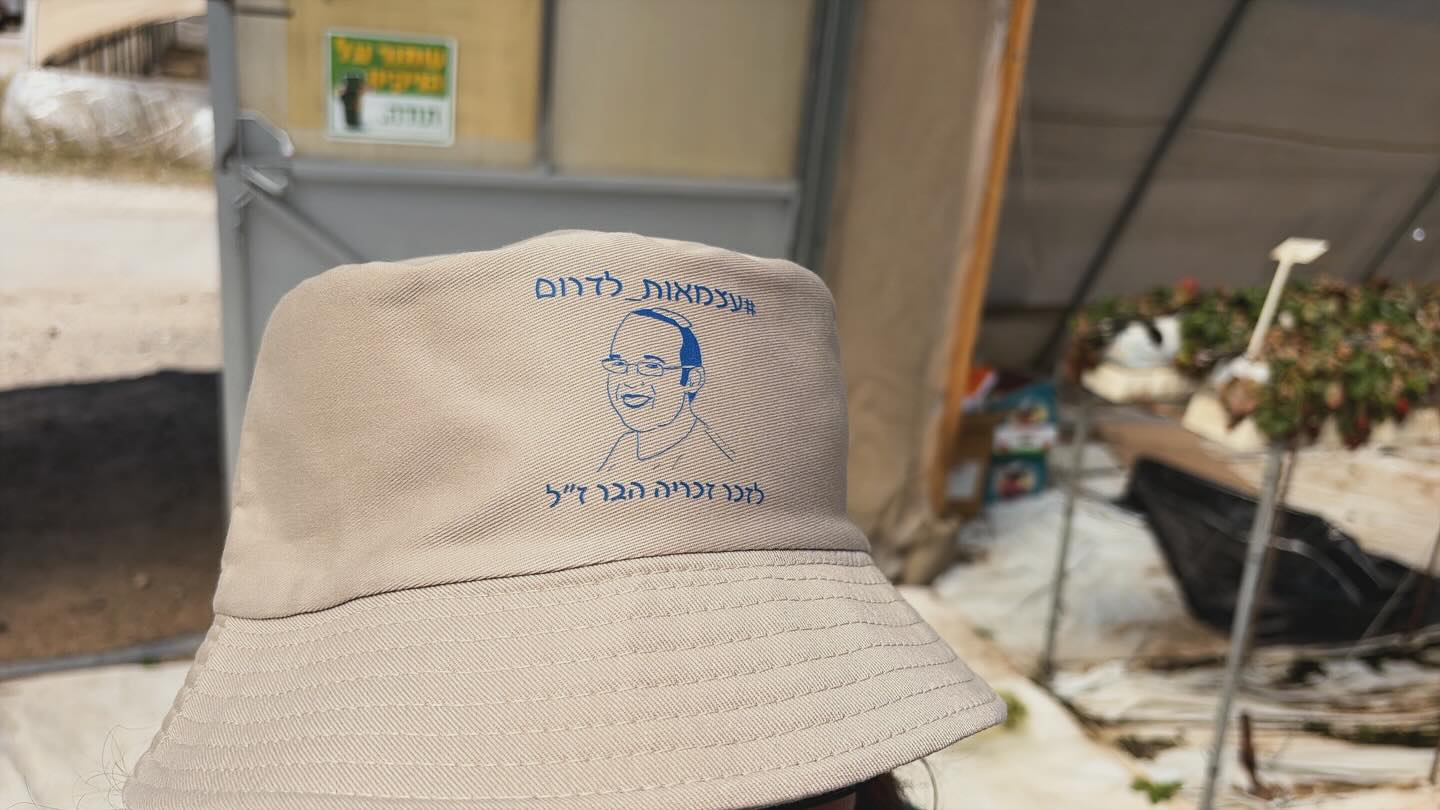
(courtesy, Dorit Hania)
Other than that, my planning was very limited since we hadn’t known whether there would be a ceasefire and whether the security situation would allow the activity to take place. Fortunately, at the last minute, I managed to find a strawberry farm (Meshek Nafrin) offering picking in its greenhouses in the moshav Netiv Ha’asara, and off we went. The weather cooperated and so did the ceasefire in the center and south of the country. I did not know whether or where we would find a place to picnic together as a large group, but, unlike my usual method of meticulous planning, I decided that we would improvise.
What a meaningful, fun day it turned out to be! The strawberries were delicious — and could be picked without bending down. An artist came to the farm at the owner’s invitation and ran a crafts workshop for the many children in the group. We were able to picnic in a beautiful shaded grove with an adjacent soccer field.
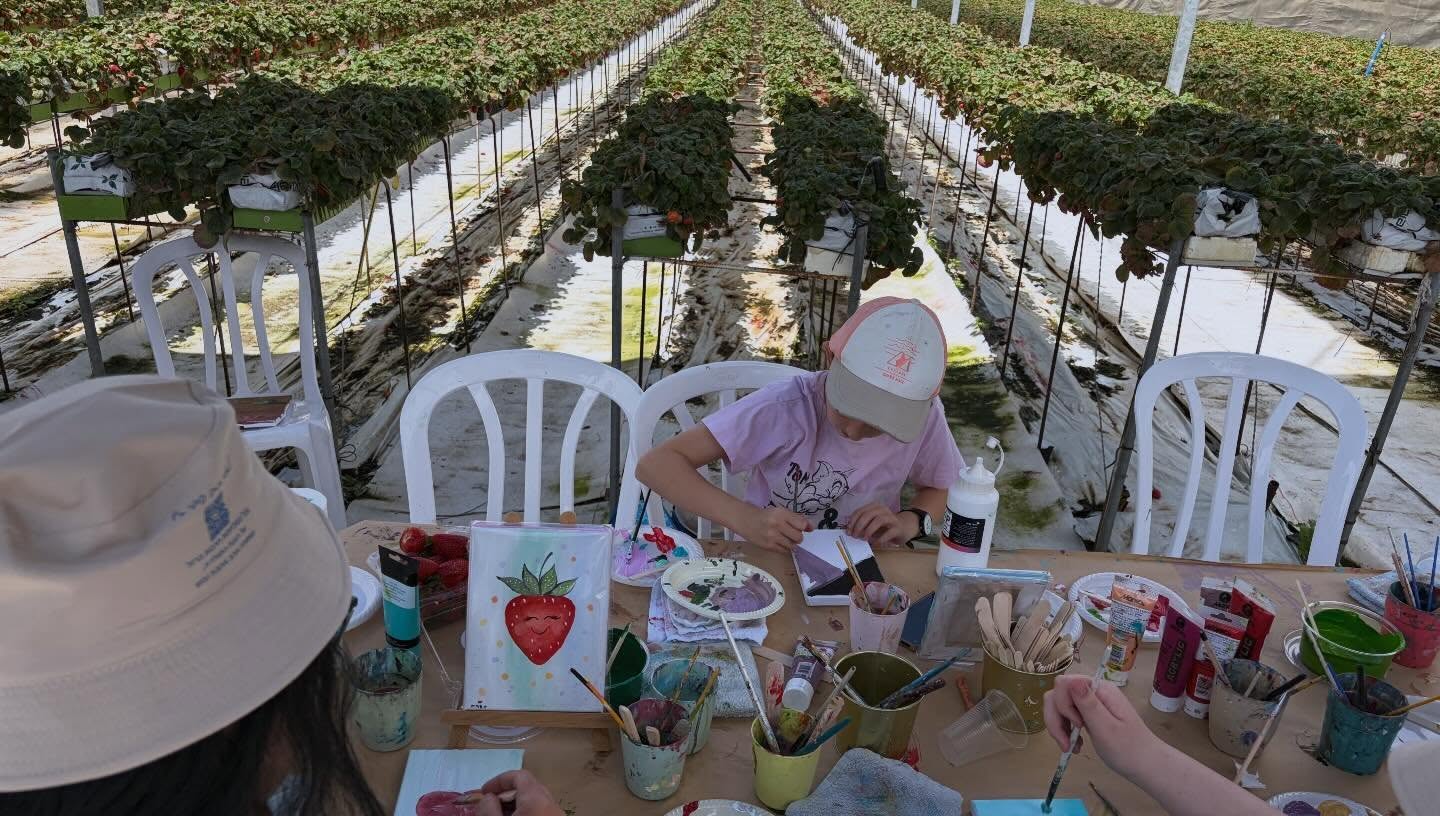
(courtesy, Dorit Hania)
The highlight, however, was hearing from Yechezkel, who owns the strawberry farm (with his wife, Ahuva), about how devoted the farmers in the Gaza envelope were and are to staying in the area, despite decades of rockets and mortars from Gaza. As he put it, where Israeli farmers are working the land is where the borders will be — and their return to the moshav and their farms following the horrors of October 7th and the war is the “Nitzachon Moochlat” — the absolute victory. I could not agree with him more.
As he explained his farming techniques and the global success of the seed production industry in the moshav, he invited questions. It was heartbreaking that Zechariah was not there with us to ask dozens of technical questions (as he no doubt would have done). But it was powerful and empowering to be together with so many of Zechariah’s loved ones on Yom HaAtzmaut in the area that he went to war to defend and to see that Yechezkel and other farmers in the Gaza envelope have gone back to working in their fields. And Zechariah himself left us a blueprint for how to get through Yom HaZikaron and bring meaning and fun to Yom HaAtzmaut along with so many other people who miss him dearly: to go south on Yom HaAtzmaut to show the residents of the south that we love and admire them, as he implored us (and everyone) to do, during his lifetime. Tragically, he was not able to meet Yechezkel and see the people in Netiv Ha’asara who have returned and are working hard to make the moshav flourish again. But we were, and he would have been so moved.
May his memory be a blessing.
Miriam Haber made aliyah to Israel in 1999 from New Jersey and now lives in Jerusalem. Miriam is first and foremost a wife, mom, and grandmother. She is also a lawyer.