
Denmark has sold the world hygge, the notion that a handful of candles and a beige blanket will make your life palpably better.
Swedish writers have pushed the concept of lagom, or the golden mean. There has even been a recent attempt to rehabilitate German brusqueness, or Direktheit, as a pathway to prosperity and contentment.
Finland, however, has struggled to formulate a glib cultural export brand of its own, despite having been named last month the world’s “happiest” country for the ninth year in a row.
That is about to change. Next year the film producers Johannes Lassila and Miikko Oikkonen will open a “Finnish happiness experience museum” in Helsinki, advertising the peculiar virtues of their nation’s way of life.
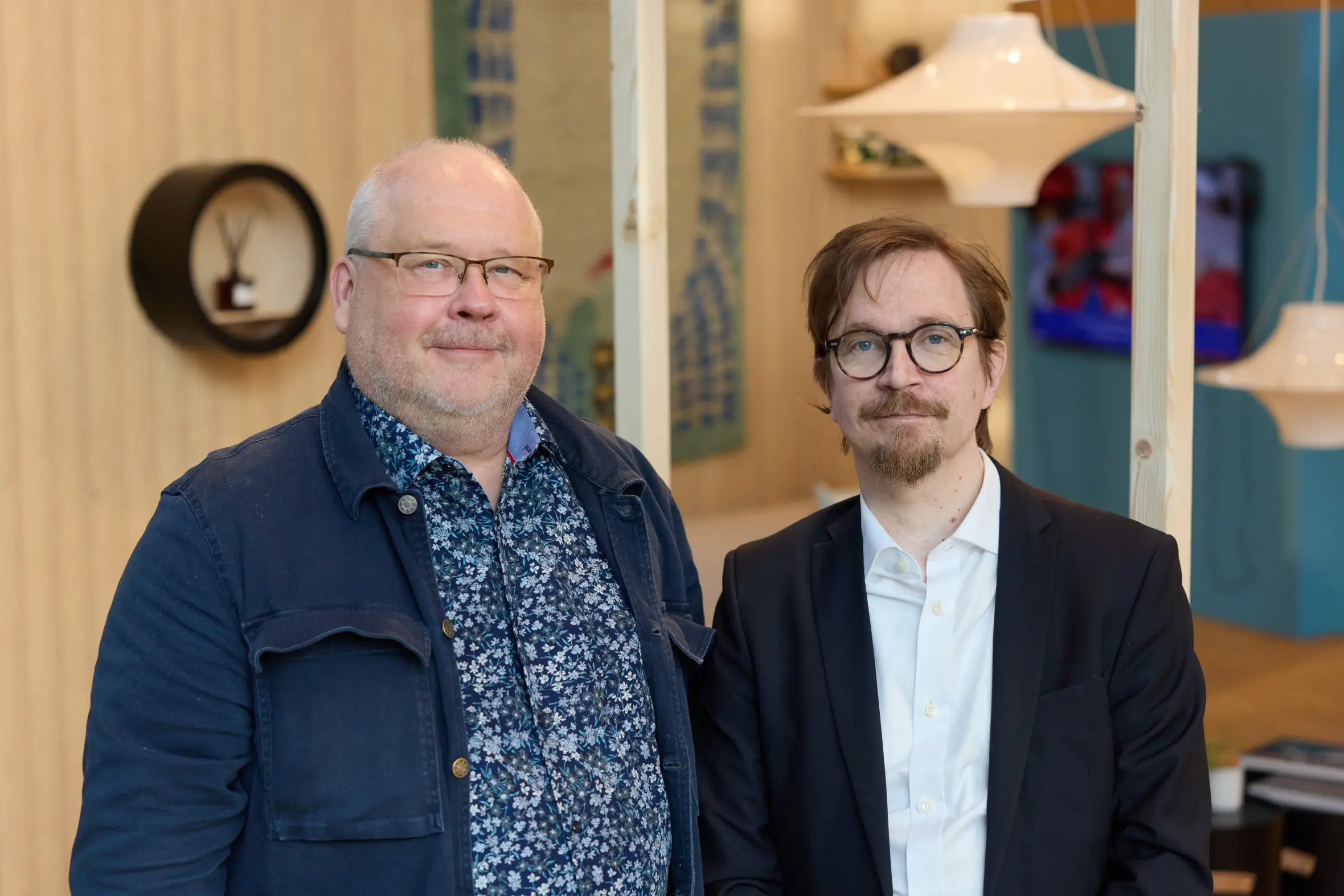 Johannes Lassila, left, and Miikko OikkonenBERNHARD LUDEWIG
“There’s a saying in Finland that whoever has happiness or fortune should hide it,” Lassila said. “The Finns have never been as good at self-marketing as the Swedes or the Danes. We’ve had more of an engineering mentality: if we built the best screw in the world, then we would assume it would sell itself.”
It is still quite hard for many Finns to think of themselves as a country uniquely blessed with wellbeing. Their economy has been going sideways ever since the global financial crash of 2007. Their politics are messy and dyspeptic. Their winters are long and harsh.
As a preview exhibition for the museum, which opened at the Nordic embassies compound in Berlin this week, emphatically underlines, they also conceive of themselves as a laconic and introverted people to whom nothing could be more alien than spontaneous displays of gaiety.
“If you imagine Finland as a Shangri-La, and then come here and stand here in the central square in November, you will be struck that nobody is smiling,” said Lassila.
A few sparsely drawn cartoons on one wall detail a series of “very Finnish problems”, such as when the bus shelter is already occupied by a single person and so everyone else feels obliged to stand outside in the rain, or when “you’ve already said to the salesperson that you don’t need help, but actually you do”.
“The Finns are not afraid of the Russians,” Oikkonen said at the show’s launch. “They are afraid of having to accidentally spend time in the lift with their neighbours.”
The truth is that what the surveys are really identifying in Finland is not happiness in the sense of jollity, but rather satisfaction with life.
Loosely speaking, this has two components. The first is an objectively very satisfactory quality of life, composed of high equality, trust, social cohesion, decent public services, and communities that often revolve around clubs, collective cultural activities and outstanding libraries.
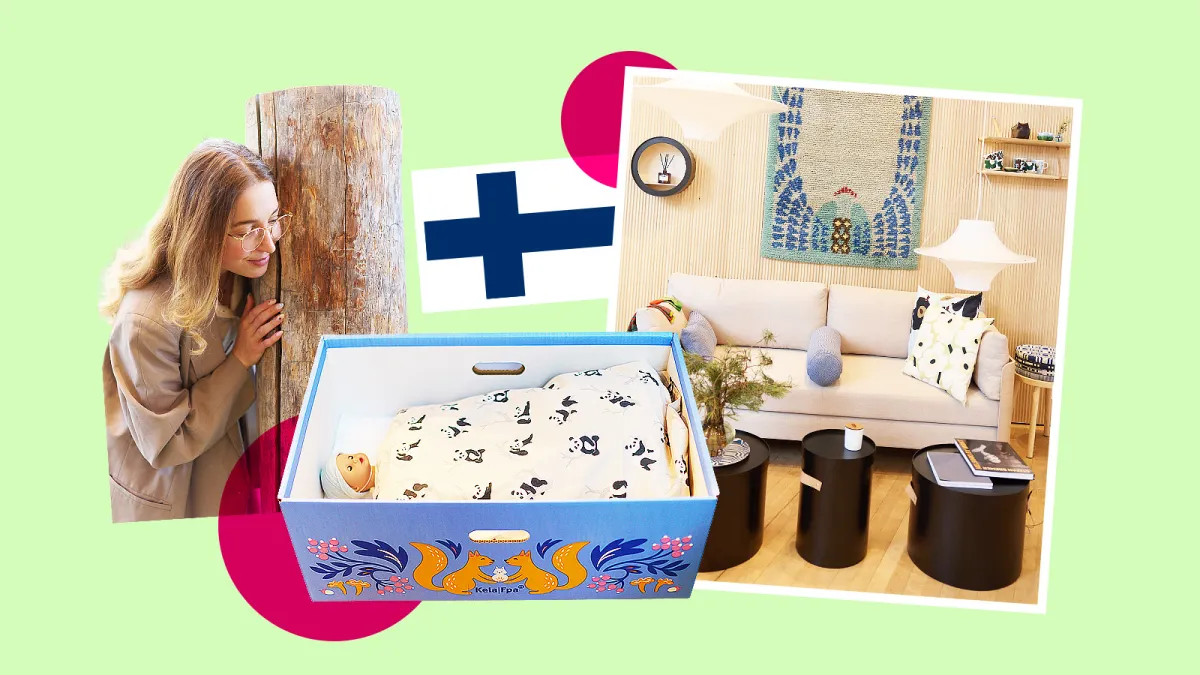
In the exhibition this is encapsulated by the €170 “baby boxes” handed out to the parents of every newborn, which include a set of clothing and a sleeping bag from one of the country’s most prominent fashion designers, condoms, lubricants, soaps and the cardboard box itself, which doubles as a bed. Scotland adopted the policy in 2017.
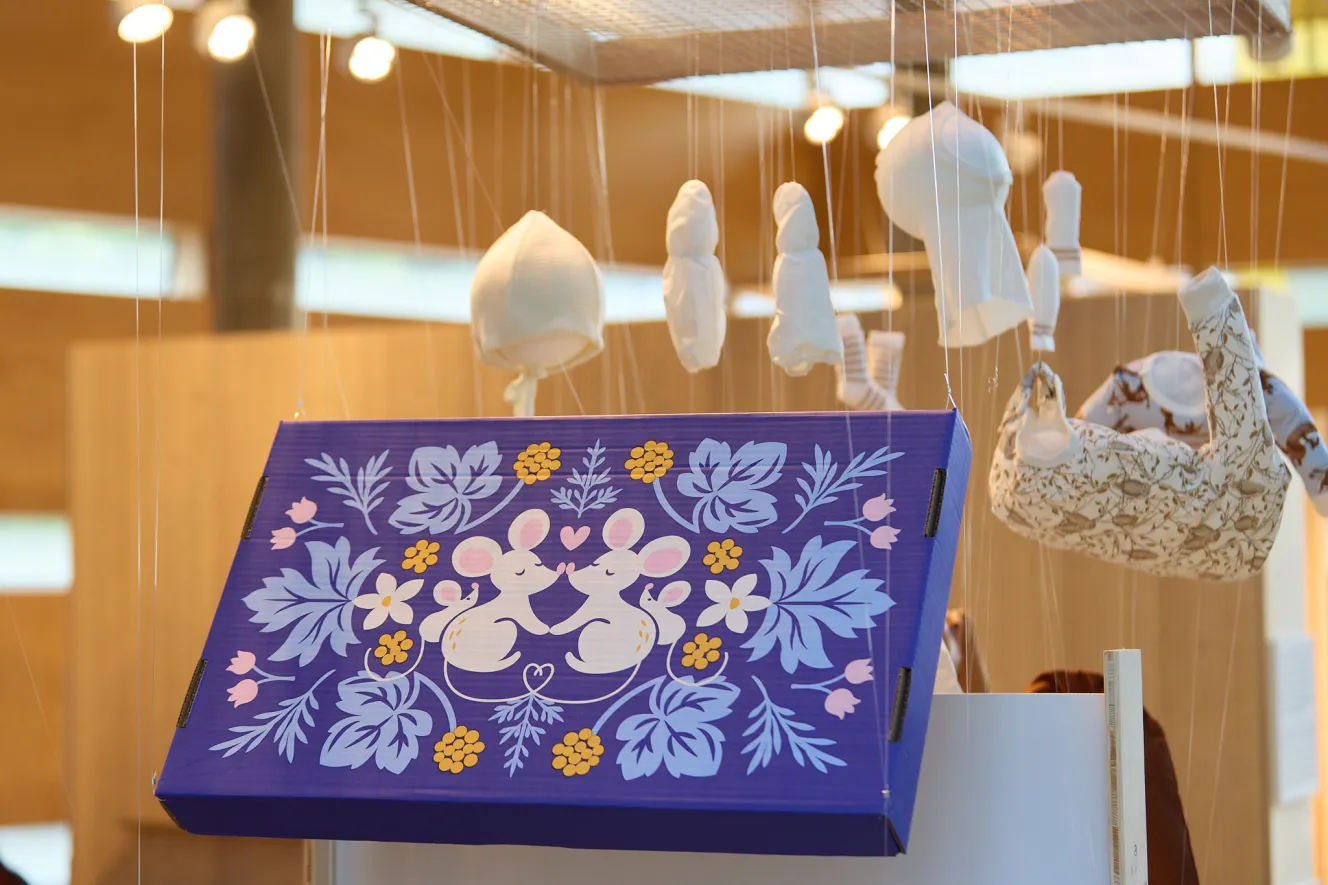 Finnish boxes for newbornsBERNNHARD LEDWIG
Finnish commentators readily acknowledge that their country’s sense of solidarity has much to do with being a young and quite homogenous nation who put a great deal of effort into healing the divisions left behind by a brutal civil war that followed independence from Russia in 1917, and cemented their society during the long slog against the Soviets in the Second World War.
These bonds are born more of necessity than of sentimentality, but that appears to make them all the stronger. “It’s not so much that we want to help each other as that we need to help each other,” said Lassila. “If you’re in trouble, I know that I need to help you. And I know that you would help me in the same situation.”
It also helps that Finns spend a great deal of time in nature. “It is said that the Japanese go out into the forest to commit suicide,” said one figure in the Finnish cultural scene. “We go out into the forest to breathe.”
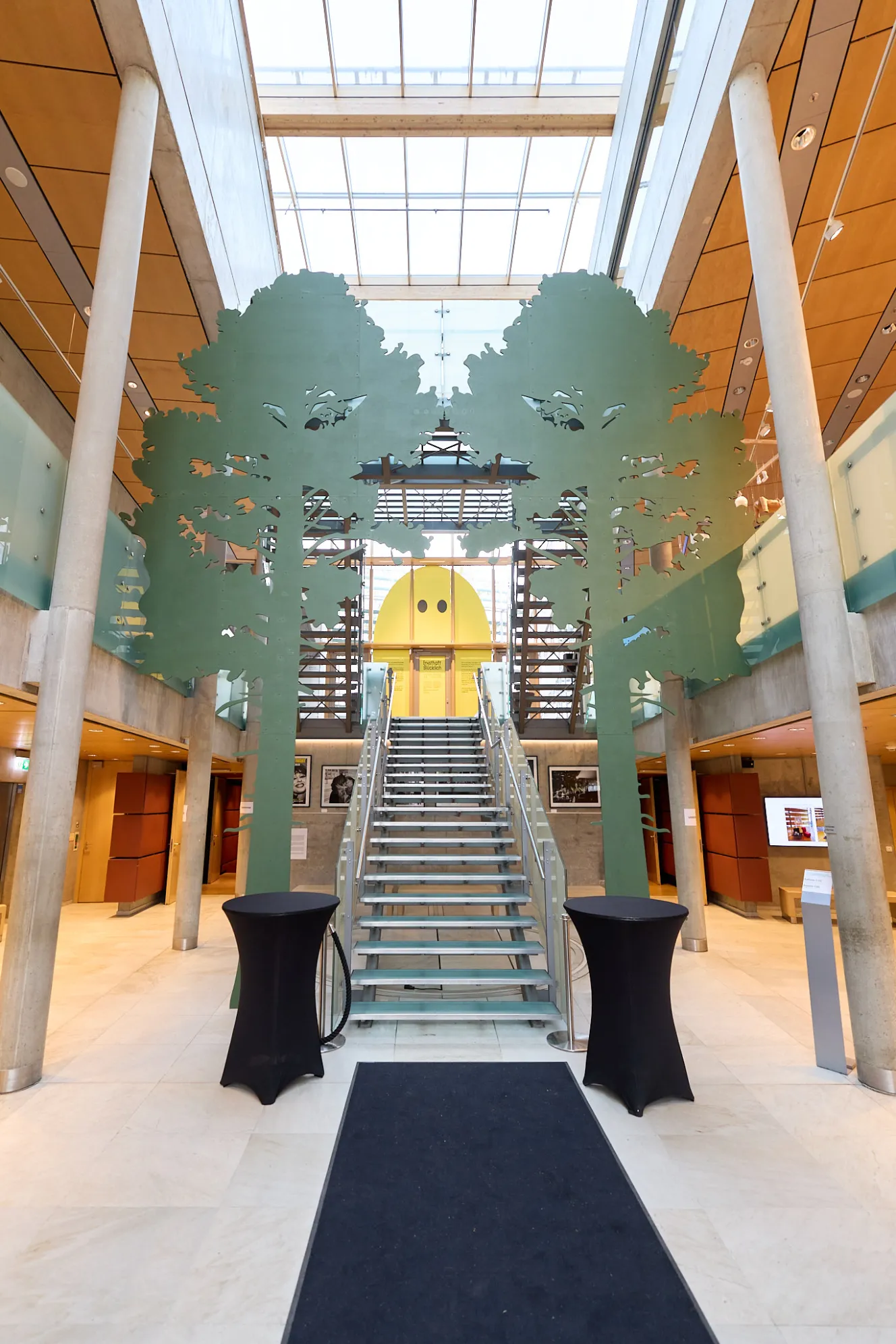 The museum interiorBERNNHARD LEDWIG
That is the demand side of the equation. Yet there is also a supply side. Finns, according to Lassila, are accustomed to doing “more with less” and making do with what they have got: they cut their expectations to match their cloth.
This equanimity has solid historical roots. Large parts of Finland barely eked out a living from subsistence agriculture and forestry until well into the early 20th century. Times were often so hard that families would make bread by roasting, grinding and baking the bark of birch trees, known as pettuleipa.
One of the country’s most cherished short stories, Juhani Aho’s 1883 work When Father Brought Home the Lamp, depicts the intense excitement and longing a farmer’s son feels when the family obtains a glass oil lantern for the first time.
The Frankfurter Allgemeine Zeitung, a German newspaper, recently praised Finland’s gift for Realitätsbewältigung, loosely meaning the ability to look reality in the face and master it.
There is no equivalent term in Finnish but the principle nonetheless pervades the country’s culture. Tiina Paavilainen, the architect who oversaw the building of the Berlin exhibition, said it had even shaped a good deal of Finnish design, which tends to hew closely to the natural shape, texture and colour of the underlying materials.
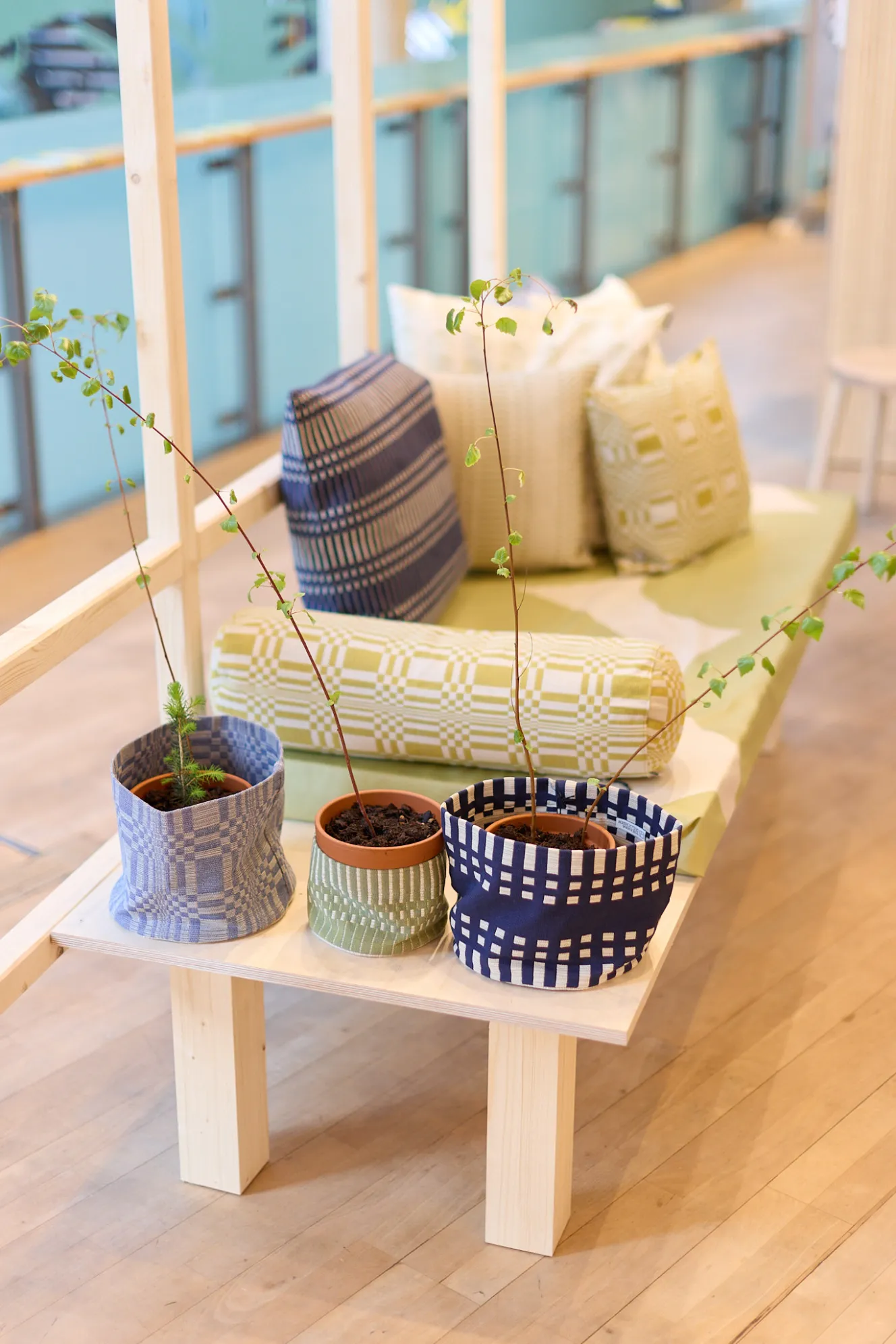 Finnish design on display in the museumBERNNHARD LEDWIG
In Lassila’s view, if Finland has anything to teach the rest of the world about happiness, it is precisely this art of pragmatically, untheatrically and uncomplainingly dealing with what is in front of you.
“Many of us take it for granted,” he said. “We have to recognise that it’s a good thing and that we have to ensure it stays with us and doesn’t just disappear to some place.”