
(Bloomberg) — Airlines around the world are raising prices for bags and seats, dialing back profit forecasts and openly discussing ways to link up with rivals as the chokehold from war-related fuel costs tightens.
Most Read from Bloomberg
Just in the past few days, United Airlines Holdings Inc. Chief Commercial Officer Andrew Nocella declared the industry in “uncharted territory,” while Alaska Air Group Inc. dispelled any hope that consumers might enjoy lower fares again anytime soon.
On the more upbeat end of the spectrum, Emirates President Tim Clark said that most people, after all, quickly move on, and that things will swing back to normal soon.
Whether the optimists or pessimists ultimately prevail, what’s certain is that this past week has brought into sharp focus the many challenges bearing down on the airline industry. That’s forcing executives to make some consequential decisions to stabilize their operations.
Complicating matters further is a US president openly tipping the scales of competition by touting a possible $500 million bailout of beleaguered Spirit Aviation Holdings Inc. while panning other potential transactions, including a discussed merger between United and American Airlines Group Inc. And not least, there’s the uncertainty stemming from Donald Trump’s vacillating pronouncements on the state of the Iran war.
Taken together, the industry is heading into months of insecurity in what should have been a year of strong demand, with initial projections for a record $41 billion in earnings and 5.2 billion passengers. Airlines have invested heavily in their products, from cabin upgrades to lounges to in-flight connectivity as they bet that spending on the more luxurious air travel experience would persist.
But now, the exuberance that propelled airlines in the first few months of the year has given way to a sense that the industry has lost a clear sense of direction.
“It’s not possible to know with confidence all the ways the industry could be impacted,” Southwest Airlines Co. Chief Executive Officer Bob Jordan said, pointing to “significant economic and geopolitical uncertainty.”
“I can’t predict exactly where fuel is going, and so you can’t predict exactly where pricing and fares are going,” he said.
For the immediate future, they’re going up. Consumers are being counted on to absorb the extra billions of dollars in jet fuel costs, so airlines are levying new surcharges and raising fees to check bags and select seats.
“The airlines never let a good crisis go to waste,” said William McGee, a senior fellow for aviation and travel at the nonprofit American Economic Liberties Project.
American Airlines said it’s facing $4 billion in extra fuel-related costs until the end of the year, a charge that it will try to pass on to the consumer as much as possible. Airfares are already about 15% to 20% higher now, and it’s unlikely they’ll retreat entirely when the war footing eases, United CEO Scott Kirby said Wednesday.
“The longer this lasts, the higher the probability goes that the pricing increases hold,” Kirby said.
And once the rush of summer travel subsides, carriers will probably take another hard look at capacity and weed out more routes that have become unprofitable.
Chicago-based United said it expects it can recapture as much as 100% of the higher fuel costs by the end of the year by increasing prices for customers.
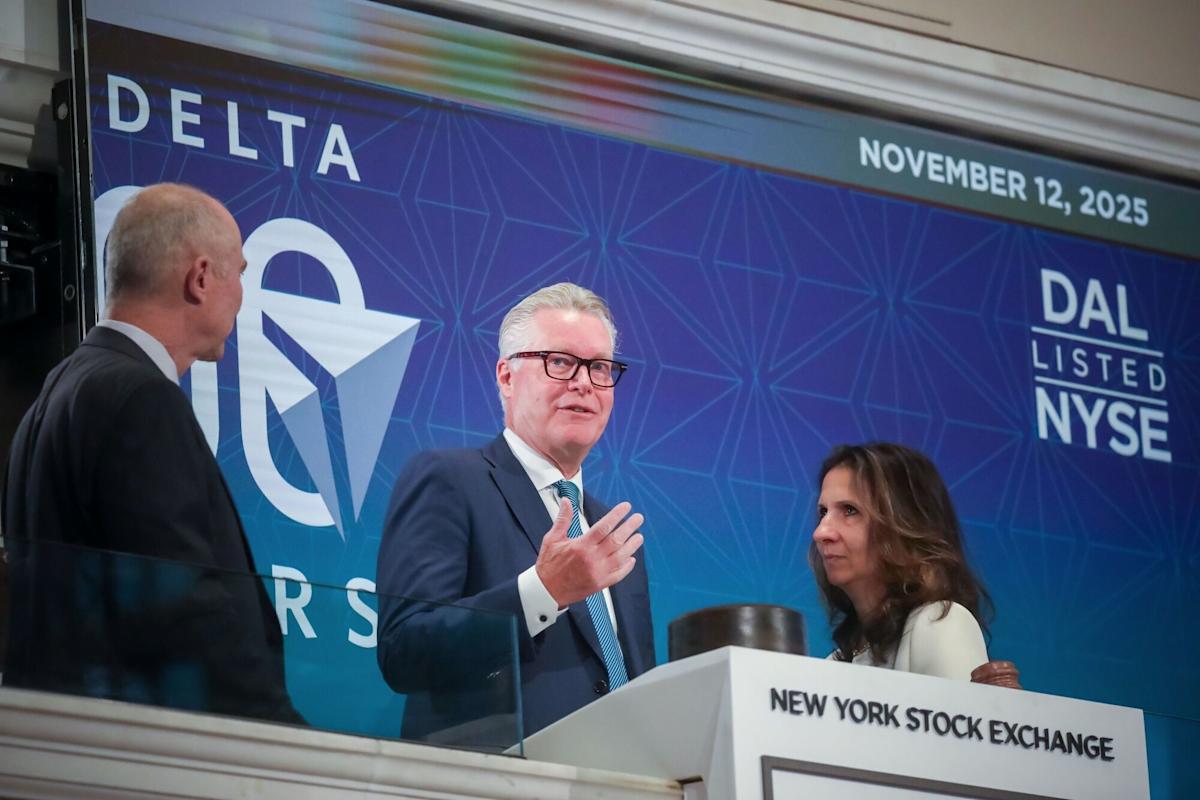
Delta Air Lines Inc. CEO Ed Bastian said in a recent earnings call that the company would look at the degree to which it could “retain any of the pricing strength” even after fuel costs come down.
The saving grace for the moment is that bookings remain strong with peak summer travel season arriving — though cracks are showing. United said current demand is resilient, but that likely won’t hold as more expensive tickets discourage flying.
Like American Airlines a few days later, the carrier slashed its full-year profit forecast.
American CEO Robert Isom said demand remains robust for now and he expects double-digit revenue growth in the current quarter, even as the carrier trims marginal flying.
Still, the company lowered its annual forecast and said it may end the year with a loss.
That U-turn comes as American and Alaska Air pursue potential revenue-sharing agreements and other strategic partnerships, Bloomberg News reported.
American also has been the subject of speculation about a potential merger with United. Kirby floated the idea during a February meeting with Trump, people familiar with the matter have said.
American and the usually business-friendly president swatted back the idea, saying it would reduce competition. Days later, Trump threw airline bosses another curveball, saying he’s weighing a government purchase of Spirit rather than letting it go under.
“The current administration doesn’t make long-term planning easy, and airline CEOs are being forced to think on their feet,” said Art Wheaton, director of labor studies at Cornell University’s School of Industrial and Labor Relations.
That includes C-suites around the world. There have been signs that Asian countries are hoarding jet fuel, and the International Energy Agency warned that Europe may deplete its supplies in weeks.
Deutsche Lufthansa AG, Europe’s largest airline group, is cutting about 20,000 flights from its summer schedule and adopting the pricing models of budget airlines by selling tickets that don’t include bags.
As in every crisis, there’s always one person telling everyone to calm down. In aviation, that’s Emirates’ Clark, whose Dubai-based carrier has been devastated by the conflict.
The world’s largest airline is operating at 65% of capacity after a near-total grounding as travelers avoid the Persian Gulf region. But once the Strait of Hormuz reopens, it should only take one-to-two months for business to rebound, he said.
“People have short memories,” Clark told a Berlin conference Thursday. Once the fighting stops and there’s a degree of stability, “things will be back to normal.”
–With assistance from Leen Al-Rashdan.
Most Read from Bloomberg Businessweek
©2026 Bloomberg L.P.