
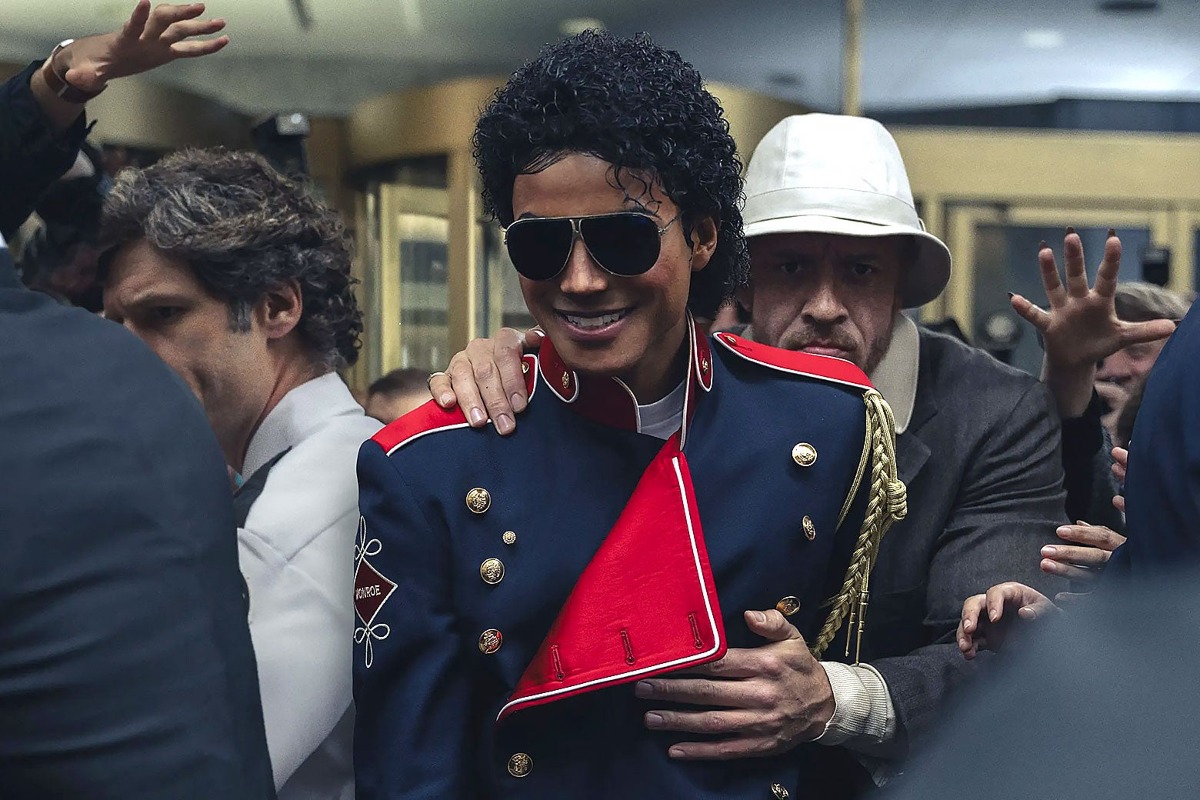
You’ll recognize the moonwalk. But when the mic turns live, whose voice are you really hearing — the nephew’s or the legend’s? The film makes a choice that might surprise both purists and biopic skeptics.
The biopic’s most delicate trick isn’t the moonwalk; it’s the voice. With Jaafar Jackson stepping into his uncle’s glittering loafers, every note becomes a test of fidelity and feeling. The filmmakers split the difference, weaving original recordings with on-set vocals and drawing a firm line against AI mimicry. What emerges is a careful negotiation between icon and interpreter, designed to let the music breathe without faking the man behind it.
A closer look at the Michael Jackson biopic
Antoine Fuqua’s “Michael” sets out to trace the rise of a singular artist, from family stages to stadium lights. Released in US theaters on April 22, 2026, the 2-hour-8-minute film follows Michael Jackson through the Motown pipeline and into the electric peak of the Bad World Tour in 1988. Jaafar Jackson, 29, plays the adult Michael, while Juliano Krue Valdi brings the early years to life.
Jaafar Jackson’s remarkable portrayal
Jaafar’s work lands with quiet confidence. He studies the posture, the clipped gait, the needle-precise timing that made Michael’s stagecraft so distinctive. In the film’s second half, when the icon’s myth hardens into reality, his performance deepens. Viewers have highlighted the emotional steadiness he brings to scenes that could tilt into imitation. Instead, he meets the role head on, and it shows.
The voice behind the music: live or archival?
So, is Jaafar actually singing in “Michael”? The answer is layered. In dialogue, you hear Jaafar’s real speaking voice, calibrated to Michael’s higher register. For musical sequences, the film blends original Michael Jackson recordings with live vocals by Jaafar and Juliano. According to music supervisor John Warhurst (speaking to The Hollywood Reporter), this approach preserves sonic authenticity while honoring the actors’ contributions, and no artificial intelligence was used.
Debates around musical authenticity
The decision has sparked lively debate. Some fans want only Michael’s original vocals, arguing that anything else muddies the legend. Others welcome the cast’s presence in the mix, especially in moments where no archival takes exist. This is the case with Jaafar’s studio improvisation of “Don’t Stop Til You Get Enough” and Juliano’s first-pass energy on “I Want You Back,” which introduce a fresh, lived-in texture to familiar hits.
A future for the “Michael” story?
“Michael” largely concentrates on the ascent and crest of a career that reshaped pop culture. Could a sequel explore later chapters, creative reinventions, or quieter interludes? The door is open, if the audience appetite holds. For now, the film stands on its bold musical choices, its measured performances, and a simple promise: to let the music lead, and let family carry the rest.