

Developments in the Middle East conflict are likely to remain at the forefront this week, but investors will also keep an eye on a string of US labour market figures. One of the most relevant releases for April will be Wednesday’s Employment Change report by the Automatic Data Processing (ADP) institute, which is expected to show a 99K increase in net jobs in April, accelerating from the 62K advance seen in March.
If the report comes in line with expectations, the figures might bring some calm to the markets in a context of growing concerns about a stalled conflict in Iran, which has triggered a sharp increase in energy prices, boosting costs for US businesses.
The ADP report tends to set the stakes for the all-important Nonfarm Payrolls (NFP) report, which is normally published two days later. ADP figures are considered an approximation, signaling the labour market’s trend, rather than a sort of preliminary release, as both indicators normally show significant deviations.
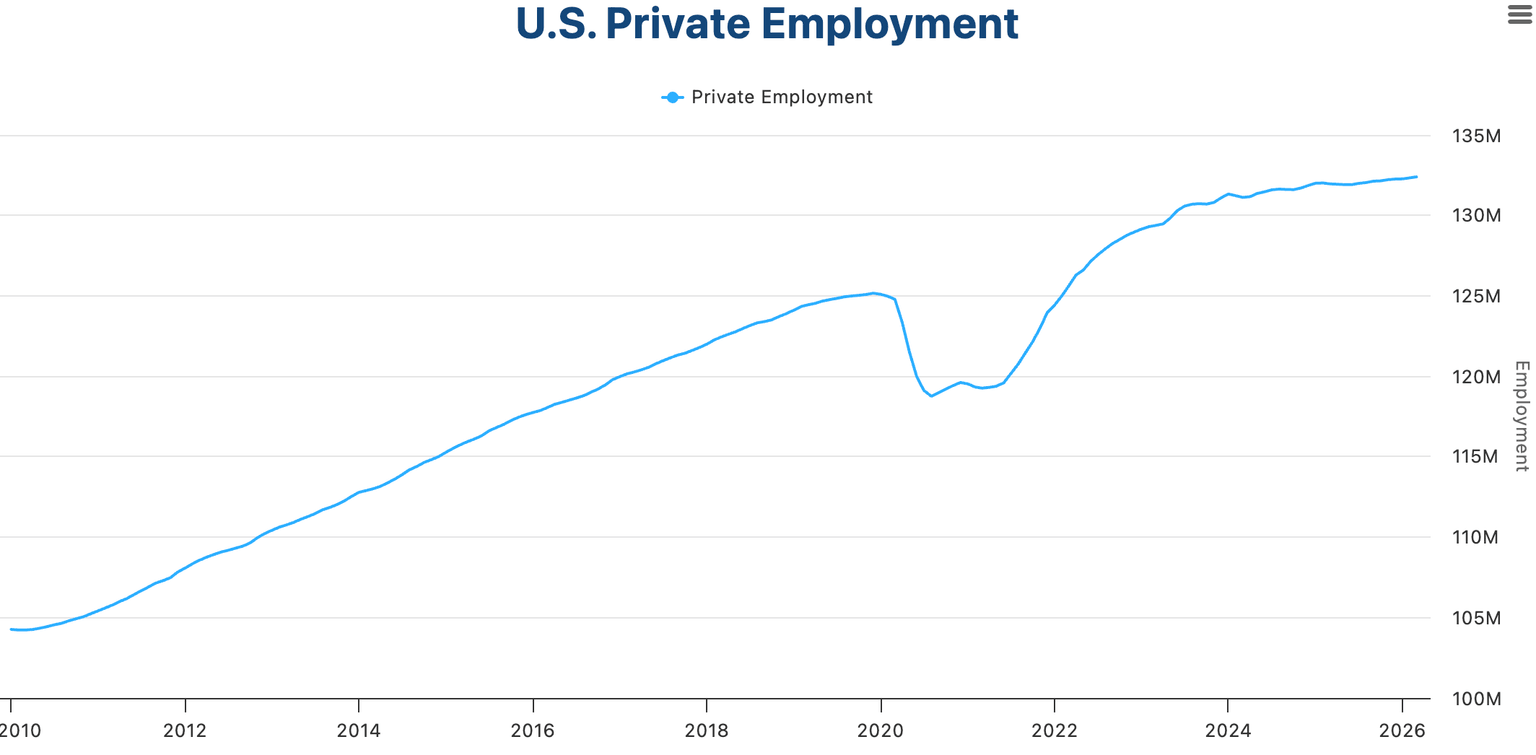 Source: Automatic Data ProcessingEmployment data might give some leeway to the Fed
Labour figures will draw particular attention this month, as the US Federal Reserve (Fed) is pivoting towards a hawkish forward guidance, pressured by the escalating inflation pressures stemming from the US-Iran war.
The Fed left rates on hold last week, but three policymakers claimed to remove the “easing bias” language from the central bank’s statement, as, in their opinion, it is no longer appropriate to think about cutting interest rates considering the inflation outlook. Investors abandoned hopes of further rate cuts following the meeting, and the CME Group’s Fed Watch Tool is now pointing to a rate hike in mid-2027 as the Fed’s next move.
Apart from inflation, the labour market remains the other primary monetary policy goal of the Fed, and in that sense, further signs that employment creation gathers pace are good news. An upbeat ADP and, above all, Nonfarm Payrolls numbers this week would spare Fed policymakers the dilemma of having to choose between fighting inflation and promoting employment, and buy them time to assess the full impact of the Iran war on the US economy.
When will the ADP report be released, and how could it affect the US Dollar Index?
The ADP Employment Change report for April will come out at 12:15 GMT. Market forecast anticipates a 99K increase in net jobs, which would be the strongest gain since July last year, following a 62K rise in March.
If these figures are confirmed, they might provide additional strength to the US Dollar, which is drawing support from the escalating tensions in the Middle East this week. A steady growth in employment eases pressure on the Fed to lower borrowing costs further and allows the central bank to focus on inflation, backing last week’s hawkish pivot.
The US Dollar Index (DXY) has been crawling higher this week, but it remains halfway through the monthly range. The Greenback seems to need a fresh catalyst to break this range, and a positive surprise in April’s employment numbers might be a good help. Weak ADP data, on the contrary, would weigh on the US Dollar, yet with downside attempts likely to remain limited as long as fears of a full-blown US-Iran war remain alive.
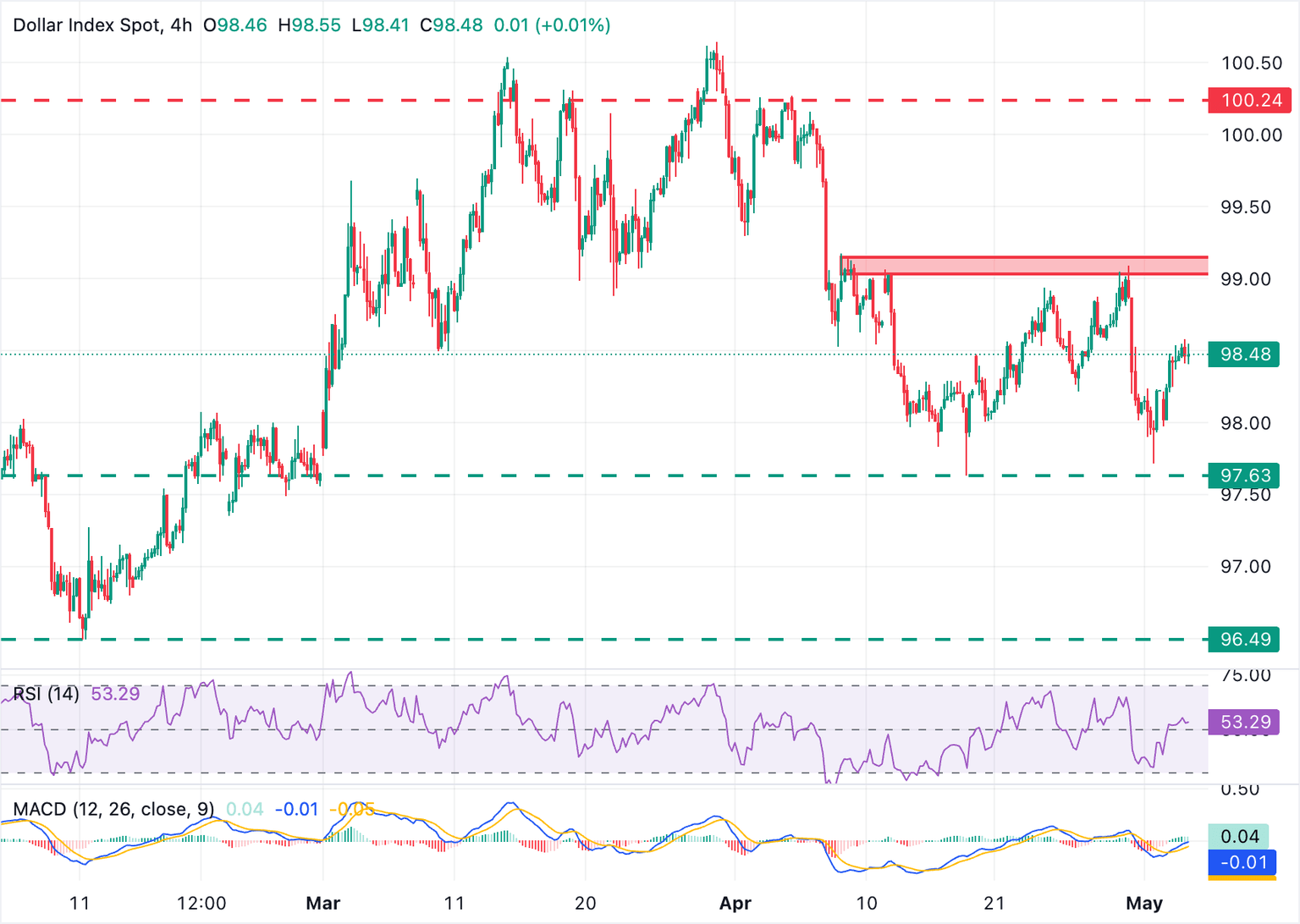
Guillermo Alcala, FX Analyst at FXStreet, sees the area above 99.00 as the main challenge for bulls: “The DXY is showing a moderate bullish momentum, but it remains trading sideways, with the 99.00-99.20 area closing the way towards the 100.00 psychological level and early April highs at the 100.20 area.”
“Bearish attempts, on the contrary, are likely to find support above the 97.60-97.70 area unless positive development in the Middle East allows for some risk appetite to return. In that case, we could see the DXY aiming for February’s lows at the 96.50 area,” says Alcala.
Fed FAQs
Monetary policy in the US is shaped by the Federal Reserve (Fed). The Fed has two mandates: to achieve price stability and foster full employment. Its primary tool to achieve these goals is by adjusting interest rates.
When prices are rising too quickly and inflation is above the Fed’s 2% target, it raises interest rates, increasing borrowing costs throughout the economy. This results in a stronger US Dollar (USD) as it makes the US a more attractive place for international investors to park their money.
When inflation falls below 2% or the Unemployment Rate is too high, the Fed may lower interest rates to encourage borrowing, which weighs on the Greenback.
The Federal Reserve (Fed) holds eight policy meetings a year, where the Federal Open Market Committee (FOMC) assesses economic conditions and makes monetary policy decisions.
The FOMC is attended by twelve Fed officials – the seven members of the Board of Governors, the president of the Federal Reserve Bank of New York, and four of the remaining eleven regional Reserve Bank presidents, who serve one-year terms on a rotating basis.
In extreme situations, the Federal Reserve may resort to a policy named Quantitative Easing (QE). QE is the process by which the Fed substantially increases the flow of credit in a stuck financial system.
It is a non-standard policy measure used during crises or when inflation is extremely low. It was the Fed’s weapon of choice during the Great Financial Crisis in 2008. It involves the Fed printing more Dollars and using them to buy high grade bonds from financial institutions. QE usually weakens the US Dollar.
Quantitative tightening (QT) is the reverse process of QE, whereby the Federal Reserve stops buying bonds from financial institutions and does not reinvest the principal from the bonds it holds maturing, to purchase new bonds. It is usually positive for the value of the US Dollar.
Economic Indicator
Nonfarm Payrolls
The Nonfarm Payrolls release presents the number of new jobs created in the US during the previous month in all non-agricultural businesses; it is released by the US Bureau of Labor Statistics (BLS). The monthly changes in payrolls can be extremely volatile. The number is also subject to strong reviews, which can also trigger volatility in the Forex board. Generally speaking, a high reading is seen as bullish for the US Dollar (USD), while a low reading is seen as bearish, although previous months’ reviews and the Unemployment Rate are as relevant as the headline figure. The market’s reaction, therefore, depends on how the market assesses all the data contained in the BLS report as a whole.
Read more.