
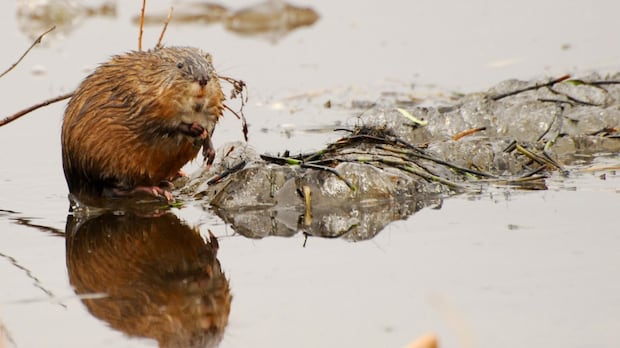
Muskrats are being recommended for the N.W.T.’s species at risk list, but at least one Indigenous hunter in the Mackenzie Delta says the animals’ population always rises and falls.
This week, the territory’s species at risk committee said it’s recommending muskrats be designated a species of special concern under the territory’s Species At Risk Act.
A species status report from the committee says knowledge keepers and experts have seen a drop in the muskrat population significant enough to warrant a “special concern” designation, but not enough to consider the species “threatened” at this point.
The report cites changes to muskrat habitat observed by knowledge holders, though it also says that there is not enough scientific data to determine the overall health of the muskrat population.
Muskrats an indicator of environment health
Jessica Norris, a biologist with the Wildlife Management Advisory Council (N.W.T.), said the apparent decline in the rodent’s population in the territory has been seen by Indigenous communities, especially in the Mackenzie Delta region.
She also pointed to changes to the animal’s habitat, as the N.W.T. has seen drought and periodic flooding in recent years.
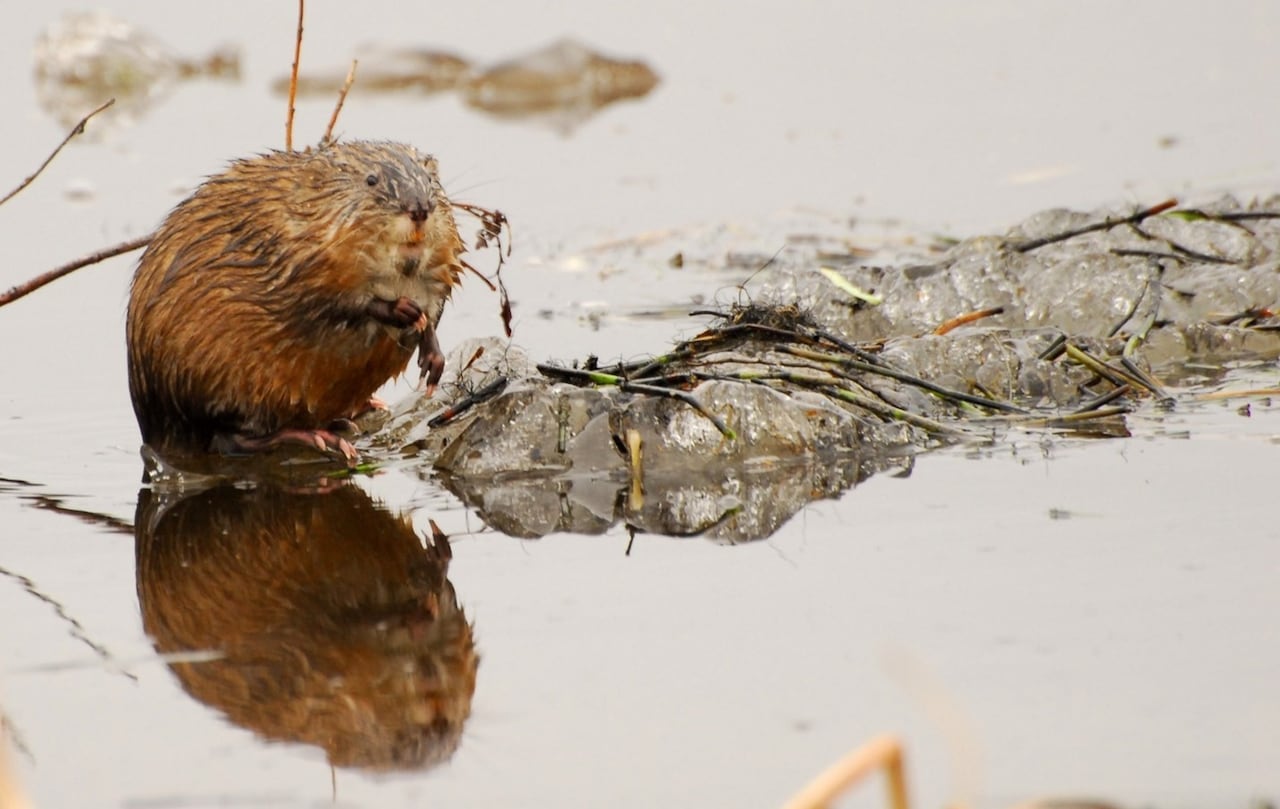 A species status report by the N.W.T. committee says muskrats were assessed as special concern, because knowledge keepers and experts have seen an apparent drop in the population. (Vicki St. Germaine/Species Status Report April 2026/Northwest Territories government)
“They are a wetland species. They prefer shallow, freshwater habitats like marshes or ponds,” she said. “They need stable water levels and sort of dense vegetation for them to have food and shelter.”
Norris said muskrats are an indicator species, and their presence shows that the environment is healthy.
“If they weren’t present anymore, then that’s kind of telling on, ‘hmm, there might be something going on here,'” Norris said. “That’s kind of what an indicator species is.”
Muskrats are beady-eyed, sharp-clawed rodents with light to dark brown fur, typically weighing about two kilograms. They eat plants along the shorelines and the beds of water bodies.
The animals usually live in burrows along banks, but in the winter they tend to stay in a den, called a pushup, which is insulated using vegetation.
‘They’ll always come back’
While wildlife officials in N.W.T. are concerned about habitat changes and long-term population decline, one local harvester in the Mackenzie Delta region says muskrat numbers appear to be up in recent years.
Jimmy Kalinek, an Inuvialuit hunter and trapper and the owner of Only Way Outfitting, a tour and game hunt company based in Inuvik, N.W.T., remembers seeing lots of muskrats around when he was growing up, in the 1990s.
“I started harvesting them as a young boy,” he said.
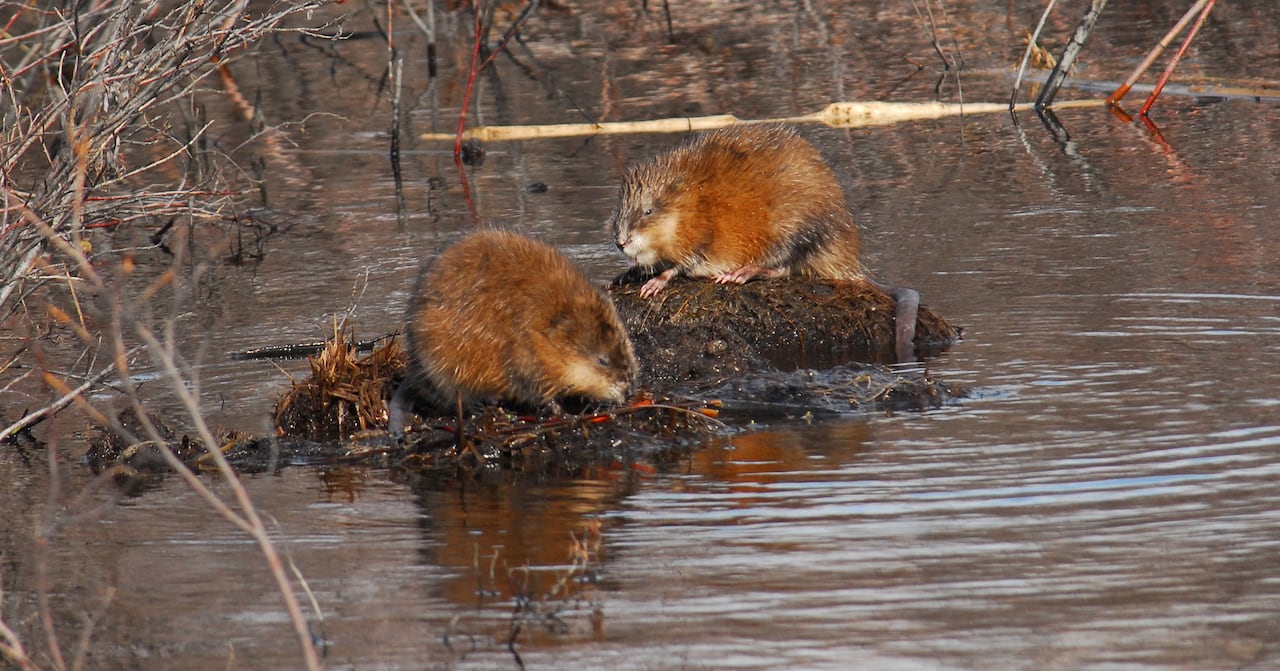 Muskrats are beady-eyed, sharp-clawed rodents with light to dark brown fur, typically weighing about 2 kilograms. They eat plants along the shorelines and the beds of water bodies. (Vicki St. Germaine/Species Status Report April 2026/Northwest Territories government)
And Kalinek said for the past three or four years, including this spring, he’s also been seeing “a lot” of pushups.
“We were trapping more muskrats this year,” he said. “They’re really healthy too. They’re fat. So that’s good.”
Kalinek says traditional knowledge from Inuvialuit elders suggests that the muskrat population has cycles.
“You might not see them around for a while … They’ll always come back.”
He’s concerned that designating the animal as a species of special concern could lead to population management measures, and discussions about how best to preserve muskrat numbers.
“There’d be a lot of meetings and a lot of talks on why ‘special concern,’” he said. “Those kind of things affect us.”
According to Norris, however, designating a species as one of special concern doesn’t change anything in terms of Indigenous rights.
“This is more of just a set of recommendations to protect the species,” she noted.
The process to actually add an animal to the territory’s species at risk list is also a long one, she added.
After the species at risk committee makes its assessment, the recommendation is then forwarded to another body made up of government and wildlife board representatives, Norris said.
“They would come together and … consider our assessment and then they have one year to either add — like from this case, the muskrat — on the list of species at risk, or not. So that’s kind of where we’re at,” she said.
Community input is also part of the process and a public engagement is scheduled for the fall, she added.
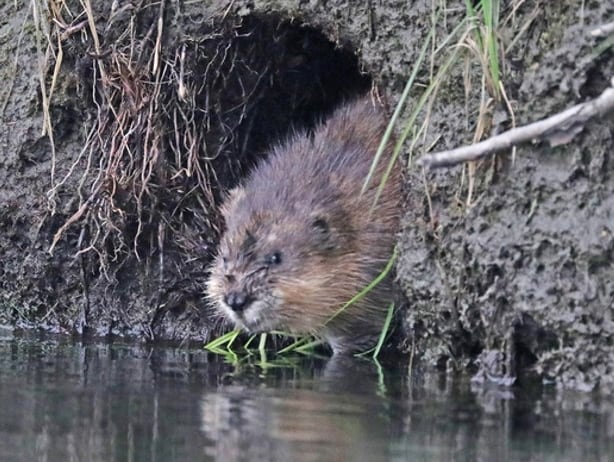 ‘We were trapping more muskrats this year,’ said one local harvester. ‘They’re really healthy too.’ (John Meikle/Species Status Report April 2026/Northwest Territories government)
Kalinek said muskrats are culturally important, and that’s part of why he still harvests them.
“It’s a delicacy for the Inuvialuit people. It was a food that sustained them in the spring alongside the geese,” he said.
“There was actually an income too. Everybody in the family did their part because you get one muskrat and back then you get $2 for it — and now you get maybe $5 to $10 for it.
“The prices haven’t gone up very much, but I still do it just to eat, and also just to practice and show the kids so they know how to do it.”
Muskrats are eaten baked, boiled, roasted or smoked, and the tail is considered a delicacy. The meat is considered to be high in protein, vitamin B and iron, according to the territory’s health and social services website.
“It’s a great – good tasting food,” Kalinek said with a chuckle. “I mean, you think it’s rats … other people might think ‘you eat muskrats,’ but until you eat it, you never know how good it is.”