

Listen to this article
Estimated 2 minutes
The audio version of this article is generated by AI-based technology. Mispronunciations can occur. We are working with our partners to continually review and improve the results.
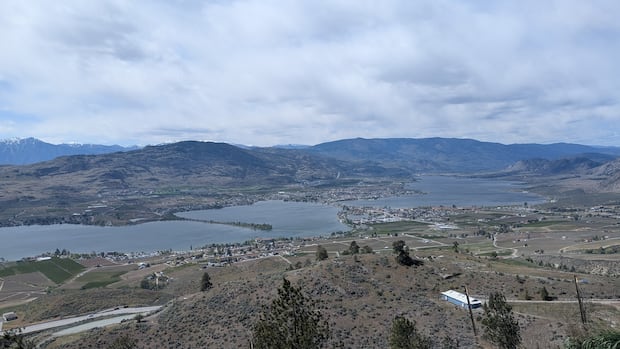
Officials have declared drought conditions for Osoyoos Lake in B.C.’s Okanagan region due to low snowpack and persistent dry conditions.
The International Osoyoos Lake Board of Control issued the declaration Tuesday, giving authorities more flexibility to manage lake levels. For now, that means raising the water level via the Zosel Dam to capture whatever spring runoff remains.
The board oversees the Washington State Department of Ecology’s operation of the Zosel Dam, which manages water levels in Osoyoos Lake, a body of water that crosses the Canada-U.S. border.
Osoyoos Lake has been raised to normal operating levels of about 278 metres. The board said it will likely be raised further in coming days.
The board said it declares a drought based on three criteria: the volume of flow into the Similkameen River from April 1 to July 31, the net inflow into Okanagan Lake during that same period and the peak level of Okanagan Lake in June or July.
“Current forecasts show that all three of the drought criteria are likely to be met,” the board said in a news release.
It said low-elevation snowpack has melted weeks earlier than normal.
The latest bulletin from B.C.’s River Forecast Centre says low snowpack, early snowmelt and warm weather are increasing the risk of drought, particularly in the southern part of the province — and it doesn’t get much more south than Osoyoos.
The Okanagan basin had only 31 per cent of its usual snowpack on May 1, according to the bulletin, while the Similkameen basin had 61 per cent.
Environment Canada is forecasting temperatures above normal in B.C. for May through to the end of July, while some climatologists say we could be in for a “super” El Niño this year — bringing much warmer temperatures, and with it, drought.
Meanwhile Washington state declared a drought back in April because the snowpack was so “dismal.”
The board said it will monitor lake levels and river conditions.