

With US-Iran negotiations on a deal to permanently end the war making little headway, Israel’s leaders are expecting and preparing to rejoin fresh US strikes on the Islamic Republic, Channel 12 reported Tuesday, as US President Donald Trump indicated his patience was running out.
Trump said on Monday he had halted attack plans for Tuesday because Gulf states convinced him that reaching a deal with Tehran was possible.
But in new comments, the US leader said Tuesday that Tehran had only days to make a deal.
Channel 12 reported that officials in Israel believe Trump’s comments the previous day had narrowed his options, assessing that unless Tehran presents a dramatically improved proposal for a permanent end to the war– which they view as unlikely — the president will ultimately feel compelled to act militarily.
The TV report pointed to multiple developments suggesting heightened Israeli preparations for an American strike, adding that Jerusalem was likely to coordinate with the US on any potential attack.
Get The Times of Israel’s Daily Edition
by email and never miss our top stories
By signing up, you agree to the terms
Monday night’s limited security cabinet meeting convened by Prime Minister Benjamin Netanyahu lasted nearly five hours – with the IDF chief of staff, air force chief, head of military intelligence, head of the Operations Directorate, and other senior defense officials in attendance – to ensure full preparedness for the possibility of an American strike, the report said.
In addition, it noted that Netanyahu had canceled his court testimony for Wednesday with no opposition from the prosecution, and that President Isaac Herzog had informed organizers of an upcoming event in New York City that he would not be attending “due to the sensitive situation in the Middle East.”
The Axios news site, meanwhile, reported that despite announcing he was calling off the strikes, Trump received a briefing on potential military options against Iran from top national security advisers later Monday.
Trump on Tuesday said he had not decided how long he would hold off on striking Iran and ending the ceasefire in place since last month.
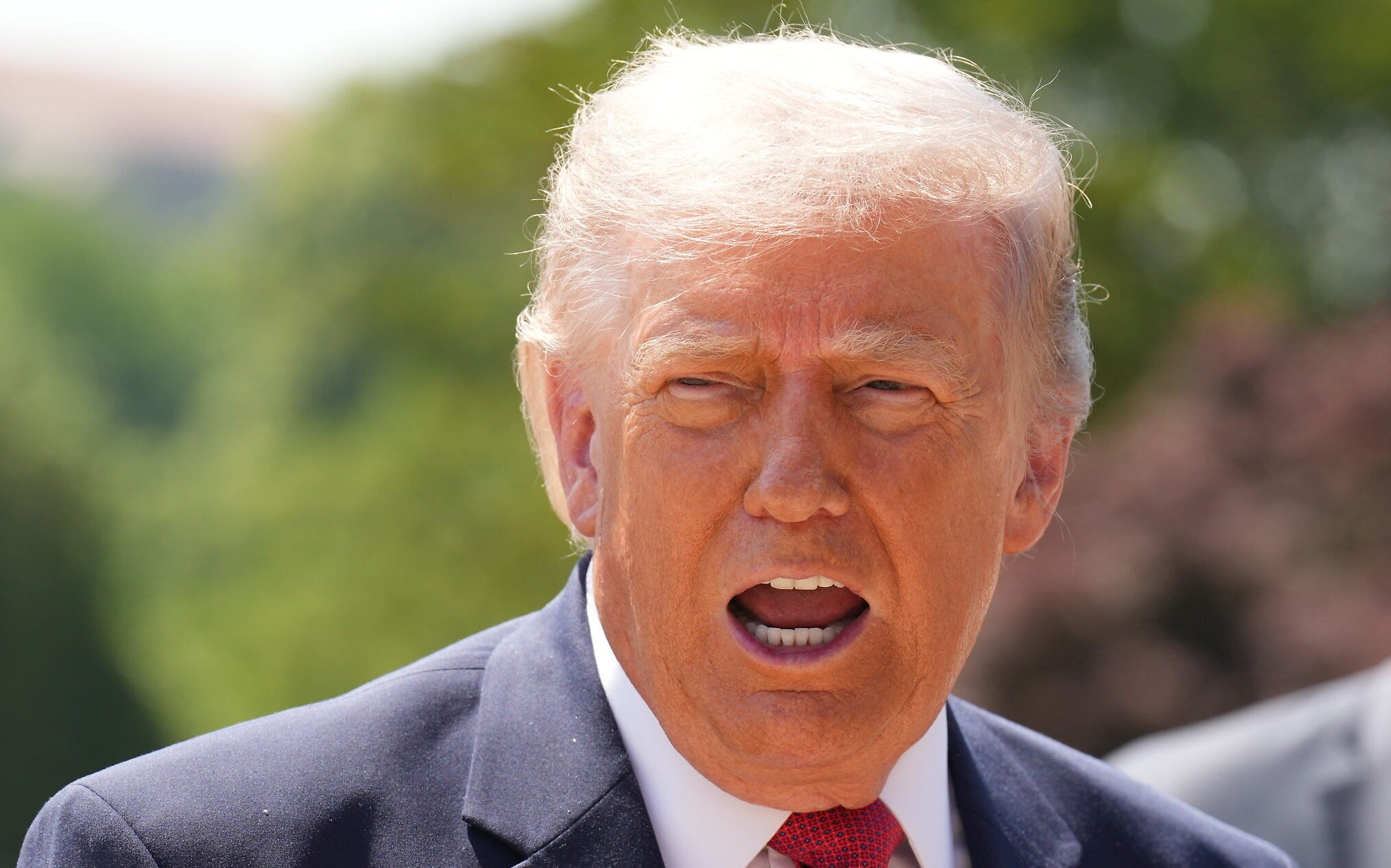
US President Donald Trump speaks as he tours Ballroom construction around the outside of the White House, May 19, 2026, in Washington. (AP Photo/Jacquelyn Martin)
Asked how long he was willing to wait, while showing off the construction of the White House ballroom to a group of reporters, Trump gave a vague timeline.
“I’m saying two or three days — maybe Friday, Saturday, Sunday, maybe early next week — a limited period of time,” Trump said.
“I hope we don’t have to do the war, but we may have to give them another big hit… I’m not sure yet, you’ll know very soon,” he added.
‘Locked and loaded’
US Vice President JD Vance said later Tuesday that the Trump administration prefers a diplomatic solution but is prepared to resume the war.
He told a White House press briefing that the US is committed to ensuring that Iran doesn’t have access to nuclear weapons because if it did, it would lead to a regional arms race that would make the world less safe.
Vance argued that the US has degraded Iran’s conventional military capability and that the Iranians are seeking an accord. “That has been successfully done. You could always do a little bit more, but where we are now is the president has told us to aggressively negotiate with the Iranians,” he said. “We’ve made a lot of progress. We think the Iranians want to make a deal.”
“So we’re in a pretty good spot here, but there’s an option B, and the option B is that we can restart the military campaign to continue to prosecute the case to try to achieve America’s objectives,” he said. “But that’s not what the president wants, and I don’t think it’s what the Iranians want either.’
“We are not going to have a deal that allows the Iranians to have a nuclear weapon. So, as the president just told me, we’re locked and loaded,” he added.
Vance reiterated the US belief that Iran’s leadership is divided. “It’s not sometimes totally clear what the negotiating position of the team is, and I don’t know if that’s sometimes bad communication, if that’s bad faith,” Vance said.
Asked about reports that Iran’s highly enriched uranium could be transferred to Russia in the event of a deal, Vance said that is not an idea currently being considered by the US, nor was it requested by Tehran.
‘Nuclear holocaust’
Tehran’s latest peace proposal to the United States involved ending hostilities on all fronts, including in Lebanon, the exit of US forces from areas near Iran, and reparations for destruction caused by the US-Israeli war, Iranian state media reported on Tuesday.
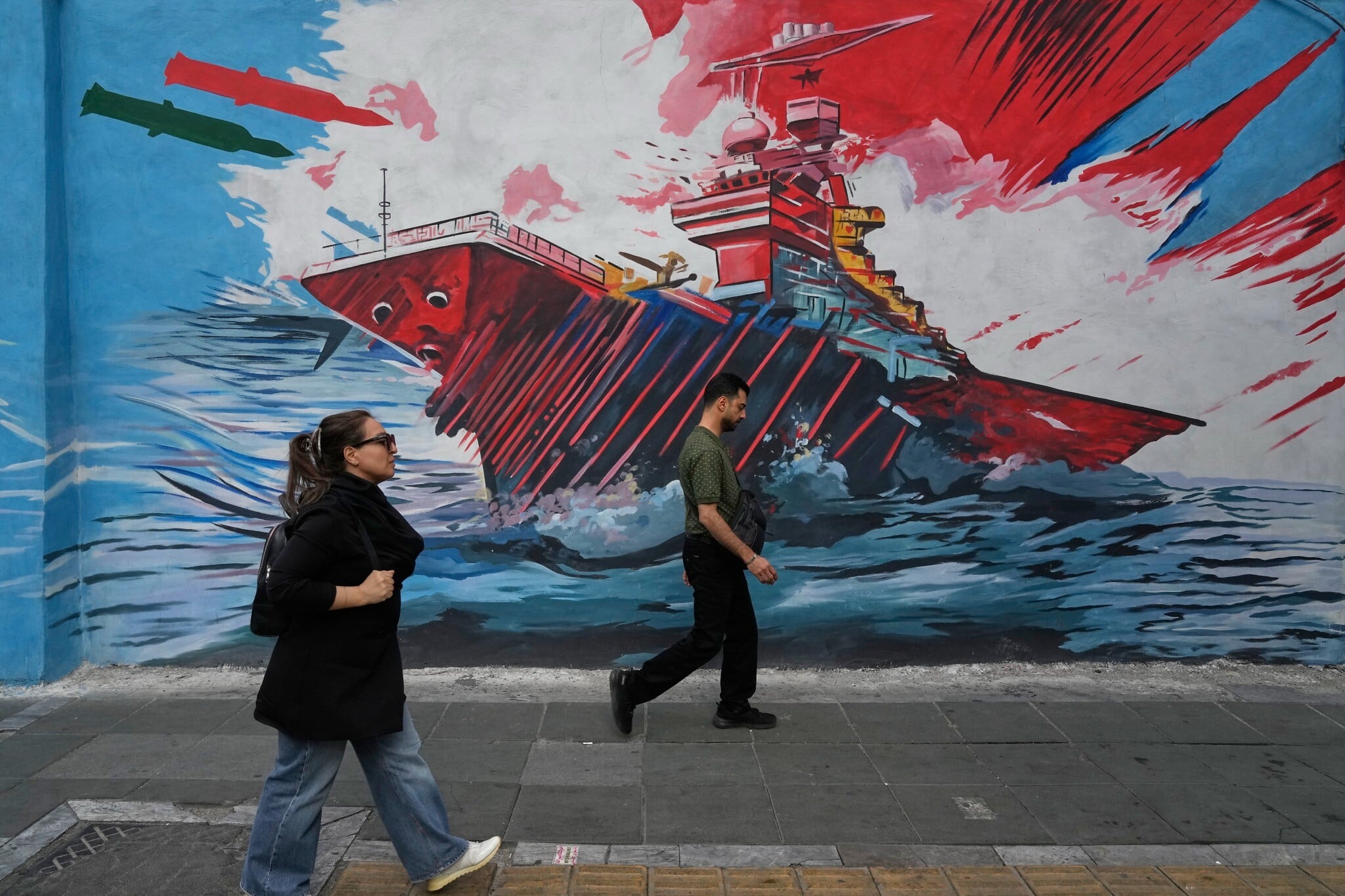
People walk past a mural depicting a US aircraft carrier under missile attack in downtown Tehran, Iran, May 17, 2026. (AP Photo/Vahid Salemi)
In Tehran’s first comments on the proposal, Deputy Foreign Minister Kazem Gharibabadi said Tehran also sought the lifting of sanctions, the release of frozen funds, and an end to the US maritime blockade on the country, according to the IRNA news agency.
The terms as described in the Iranian reports appeared little changed from Iran’s previous offer, which Trump rejected last week as “garbage.”
A Pakistani source confirmed that Islamabad, which has conveyed messages between the sides since hosting the only round of peace talks last month, had shared the Iranian proposal with Washington.
The sides “keep changing their goalposts,” the Pakistani source said, adding: “We don’t have much time.”
Trump said Tuesday that he had been “an hour away from making the decision” on Monday to strike Iran the next day. He then contradicted himself and said he had already “made the decision” to strike when Gulf leaders purportedly reached out to convince him to hold off.
Trump repeated his claim that he had brought about regime change through strikes on Iran’s previous leaders, before later calling Tehran’s current leaders “extremely radicalized” and saying they would be willing to use a nuclear weapon against the US if they obtained one.
“Everyone tells me [the war is] unpopular, but I think it’s very popular,” Trump said. Polls of Americans have routinely shown that most object to the war. A recent New York Times/Siena poll found that 64 percent of US respondents felt going to war with Iran was the wrong decision.
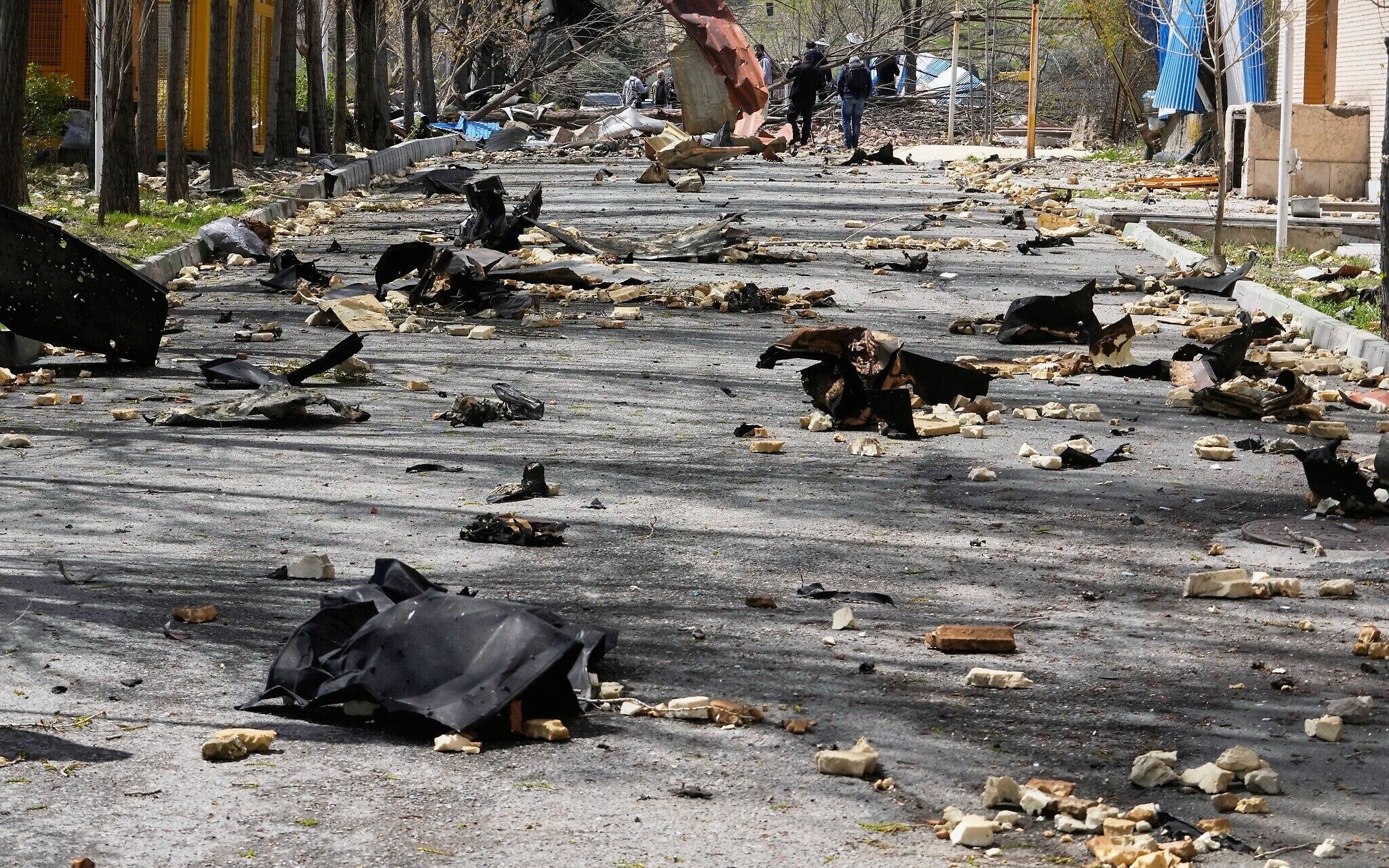
Debris lies on a street next to the site of US-Israeli airstrikes at Shahid Beheshti University in Tehran, Iran, April 4, 2026. (AP Photo/Vahid Salemi)
Trump claimed that opponents of the war changed their minds when asked if they’d want Iran to have a nuclear weapon.
“When we explain it to people — I don’t really have enough time to explain to people, I’m too busy getting it done — when they understand, it’s frankly very popular,” Trump said, amid the banging from the ballroom construction behind him.
He repeated that Iran cannot be allowed nuclear weapons: “They would start with Israel. They would blow it up, and they would blow it up fast.” Then, “they go after Saudi Arabia, they go after Kuwait, they go after UAE, they go after Qatar… I think they go after the entire Middle East… It would be [a] nuclear holocaust.”
Iran, which openly seeks Israel’s destruction, denies seeking nuclear weapons, but has enriched some 440 kilograms of uranium to 60%, a level near weapons-grade that has no civilian application. In negotiations, it has refused US demands to fully transfer that stockpile out of the country, and insisted on an ostensible right to enrich uranium.
Under pressure to reach an accord that would reopen the Strait of Hormuz — a key supply route for global supplies of oil and other commodities — Trump has previously expressed hope that a deal was close on ending the conflict, and similarly threatened heavy strikes on Iran if Tehran did not reach a deal.
Trump has repeatedly said he’d called off military strikes amid claims that progress was being made in negotiations.
Amid the ongoing blockade of the Islamic Republic’s ports, the US seized an Iran-linked oil tanker in the Indian Ocean overnight, the Wall Street Journal reported Tuesday, citing three US officials.
The tanker, known as the Skywave, was sanctioned by the US in March for its role in transporting Iranian oil and was likely loaded with more than a million barrels of crude at Iran’s Kharg Island in February, the report said.
Also, top NATO commander Alexus Grynkewich of the US said on Tuesday that a potential mission of the military alliance in the Strait of Hormuz would be a political decision.
“The conditions under which NATO would consider operating in the Strait of Hormuz are ultimately a political decision,” Grynkewich said, speaking in Brussels where he met with military chiefs from NATO countries.
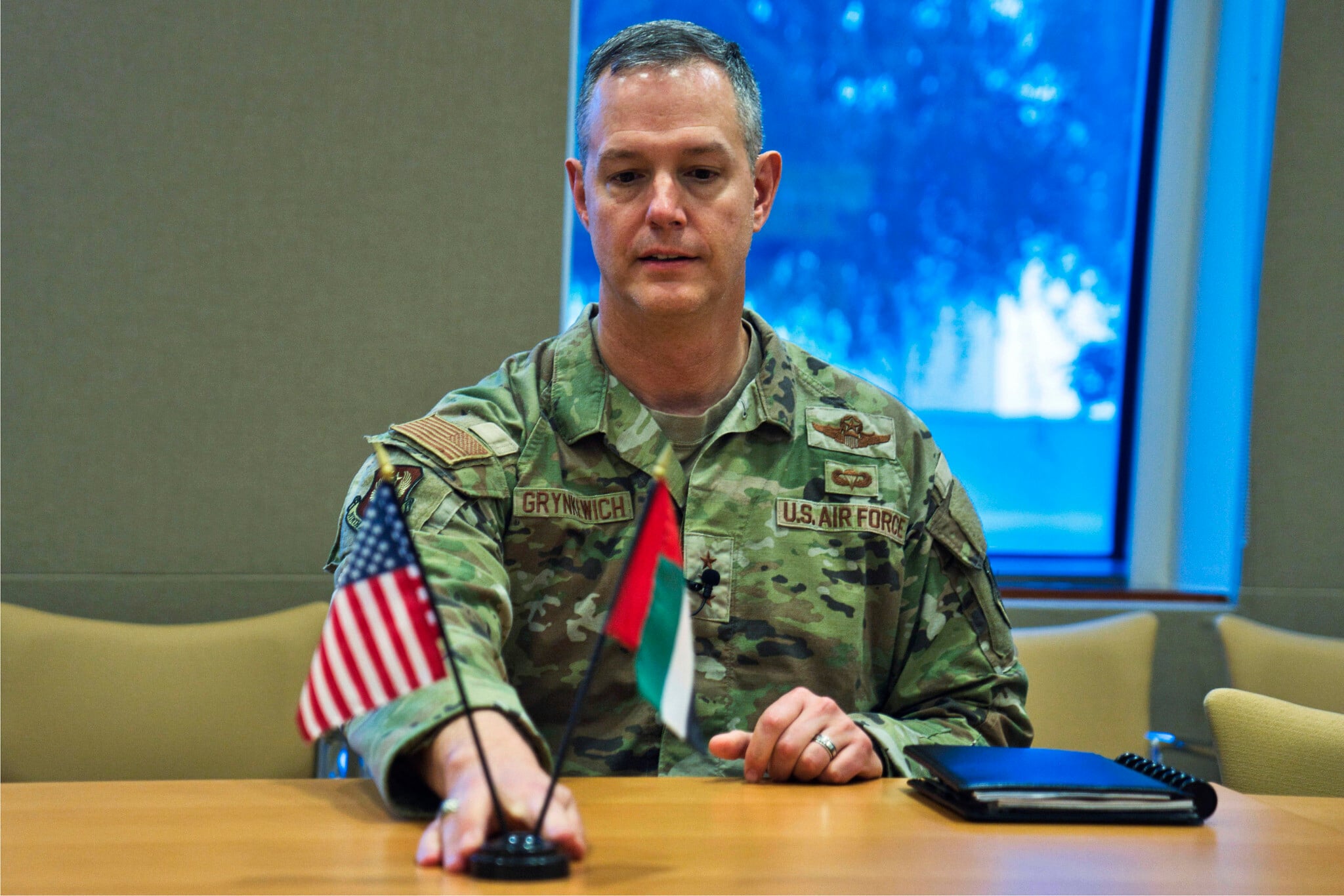
Lt. Gen. Alexus Grynkewich, the head of US Air Force Central, adjusts a stand displaying small American and Emirati flags at the US Embassy in Abu Dhabi, United Arab Emirates, Wednesday, Sept. 20, 2023. (AP Photo/Jon Gambrell)
European countries, spearheaded by Britain and France, have been scrambling to put together a possible plan for how they could help keep the strait open if the war ends.
So far, NATO has steered clear of seeking any direct involvement in the conflict — despite pressure from Trump.
“Each nation is considering their response, with many, including Belgium, France, Germany, Italy, and the United Kingdom, sailing ships to the region,” Grynkewich said. “We all agree it’s in our interest to ensure freedom of navigation in international waters.”
European diplomats at NATO have played down the prospect of the alliance playing a major role in the strait given internal divisions. But they say it could be involved in some way in any eventual operations led by France or Britain if they materialize.
CENTCOM head: Bombed girls’ school was on active missile site
The US military investigation into a blast at a girls’ school in Iran at the start of the war was “complex,” given that it was located on an active Iranian cruise missile site, US Admiral Brad Cooper, head of US Central Command, testified before Congress Tuesday.
Reuters first reported that an initial internal US military investigation showed US forces were likely responsible for the destruction of the girls’ school in Minab. The Pentagon has since elevated the probe.
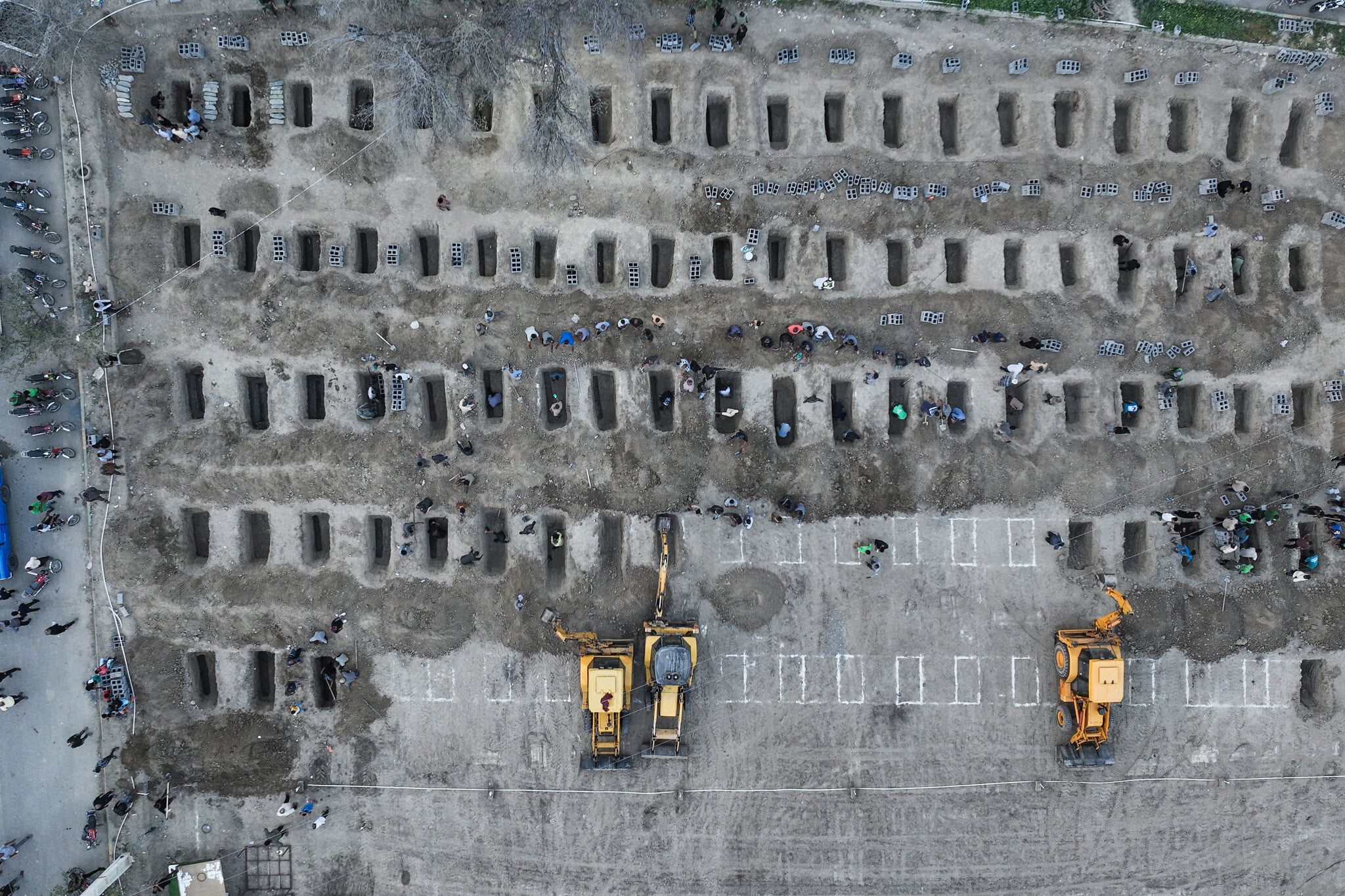
In this aerial handout picture released by the Iranian Press Center, mourners dig graves during the funeral for children killed in a reported strike on a primary school in Iran’s Hormozgan province in Minab on March 3, 2026. (Iranian Press Center / AFP)
The incident took place on February 28, on the first day of the conflict, and killed 168 children, mostly girls, Iranian officials say.
New sanctions
Also on Tuesday, the Trump administration imposed sanctions on an Iranian foreign currency exchange house and what it says are front companies overseeing transactions on behalf of Iranian banks.
The Treasury Department imposed sanctions on the Iran-based Amin Exchange, also known as Ebrahimi and Associates Partnership Company, which it said has a widespread network of front companies spanning multiple jurisdictions, including in the United Arab Emirates, Turkey, and Hong Kong.
The US also blocked 19 vessels it says are involved in shipping Iranian petroleum and petrochemicals to foreign customers.
The Treasury Department said Iranian exchange houses facilitate billions of dollars in foreign currency transactions a year, enabling the government to evade sanctions and access the international financial system. It said the front companies oversee hundreds of millions of dollars in transactions on behalf of Iranian banks.
“Iran’s shadow banking system facilitates the illicit transfer of funding for terrorist purposes,” Treasury Secretary Scott Bessent said. “As Treasury systematically dismantles Tehran’s shadow banking system and shadow fleet under Economic Fury, financial institutions must be alert to how the regime manipulates the international financial system to wreak havoc.”
The sanctions block US assets of those designated and prevent Americans from doing business with them.
The US also designates vessels for transporting Iranian-origin oil, petroleum products, and petrochemicals, including the Barbados-flagged liquefied petroleum gas tanker Great Sail, the Palau-flagged products tanker Ocean Wave, and the Panama-flagged chemical/oil tanker Swift Falcon.
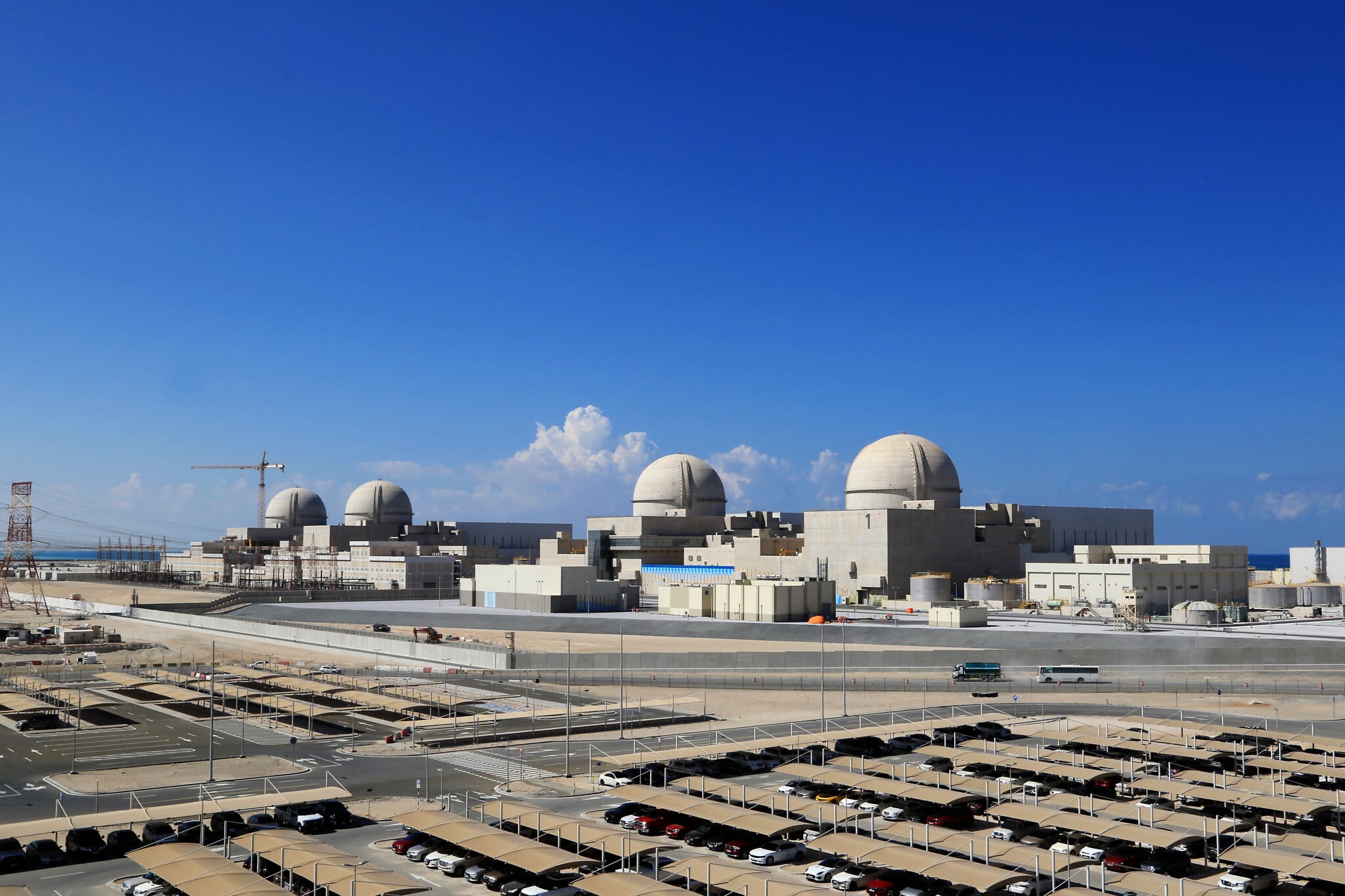
FILE: A handout picture of the Barakah Nuclear Power Plant on February 13, 2020 (Barakah Nuclear Power Plant / AFP)
Drone attacks
The Iran ceasefire has mostly held, although drones have lately been launched from Iraq toward Gulf countries, including Saudi Arabia and Kuwait, apparently by Iran and its allies.
The United Arab Emirates intercepted six UAVs targeting “civilian and vital areas in the country” over the past 48 hours, the UAE defense ministry said in a statement on Tuesday, adding that the attacks originated from Iraqi territory and caused no casualties or serious damage to facilities.
Three of the drone attacks occurred on Sunday, including a “brazen attack” on the Barakah Nuclear Energy Plant, the statement noted. The attack on the plant sparked concerns amid reports of renewed war with Iran.
“The Defense Ministry emphasizes the full readiness of the armed forces to deal with any threats targeting the security of the state and its national capabilities,” the statement concluded.
Trump and Netanyahu said they launched the war to curb Iran’s support for regional militias, dismantle its nuclear program, destroy its missile capabilities, and create conditions for Iranians to topple their rulers.
But the war has yet to deprive Iran of its stockpile of near-weapons-grade enriched uranium or its ability to threaten neighbors with missiles, drones, and proxy militias.
The Islamic Republic’s clerical leadership, which had faced a mass uprising at the start of the year, withstood the superpower onslaught with no sign of organized opposition.