

New details of the potential 60-day ceasefire extension and peace agreement between the United States and Iran were revealed by Axios on Sunday, including what elements of the agreement had been accepted by both parties and which are expected to remain under negotiation.
The Memorandum of Understanding (MOU) that both parties are expected to sign would include concessions from both sides, with the possibility of extension during the 60-day period.
One important element of the deal is the reopening of the Strait of Hormuz. According to Axios, the current draft of the MOU specifies that the Strait would be open without tolls, and Iran would clear the mines it had deployed there.
In exchange, the US would lift its blockade on Iranian ports and waive some sanctions it had imposed, allowing the country to sell oil freely.
Issues relating to Iran’s nuclear capabilities and enriched uranium stockpile would still be largely under negotiation, although the MOU would call for Iran to cease any pursuit of nuclear weapons.
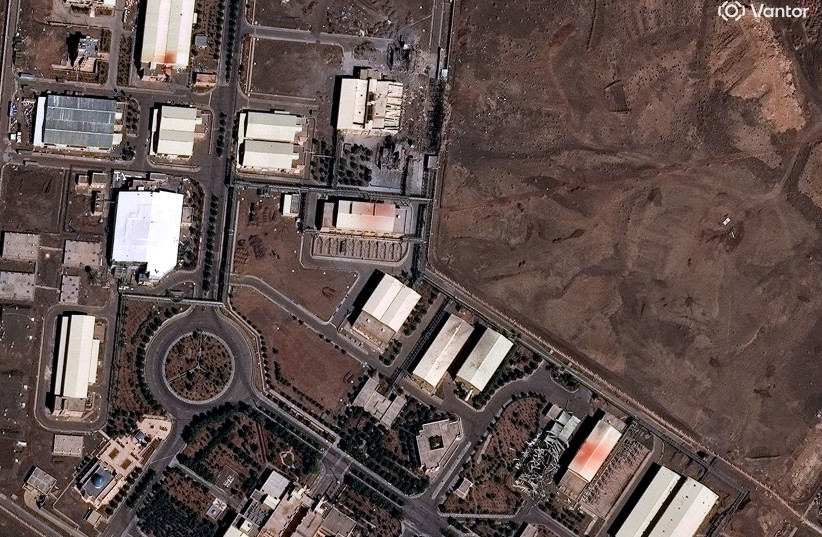 A SATELLITE image shows a closer view of the Natanz Nuclear Facility with new building damage, amid the US-Israeli conflict with Iran, near Natanz, Iran, March 2, 2026. (credit: VANTOR/HANDOUT VIA REUTERS)
One US official told Axios that the deal might not last the full 60 days if the US believes that Iran is not serious about the nuclear negotiations.
“It will be interesting to see how far Iran will be truly willing to go, but if they are capable of and want to change their trajectory, this next phase will force them to make some critical decisions on what they want to be as a country,” the official said.
Hossein Shariatmadari, editor-in-chief of Iran’s conservative Kayhan newspaper, claimed that Iran should charge transit fees on vessels passing through the Strait of Hormuz, according to Iran International.
“The Strait of Hormuz is part of Iran’s territorial waters, and we retain the legal right to collect transit fees from ships and vessels passing through our territorial waters,” Shariatmadari wrote, Iran International reported. “The United States also collects fees at maritime chokepoints.”
“It is as if our sovereignty over the Strait of Hormuz, which is the country’s definite and legal right, does not exist.”
Agreement to include end to Lebanon war
Another issue the MOU addresses, Axios reported, is the ongoing war in Lebanon between Israel and the Hezbollah terrorist group. It specifies that the war will end, with a US official telling Axios it would not be a “one-sided ceasefire,” and that if “Hezbollah behaves, Israel will behave.”
“Bibi has his domestic considerations, but Trump has the interests of the US and the global economy to think about,” the official said.
This is a developing story.