
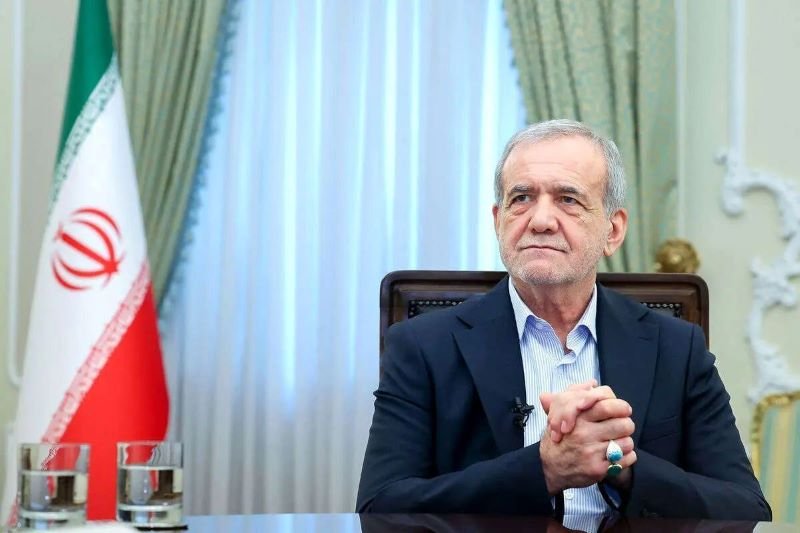
Tehran (TDI): Iranian President Masoud Pezeshkian has said that any final decision on signing a deal with the US will ultimately rest with Supreme Leader Mojtaba Khamenei as reports from Tehran and Washington suggest that negotiations are moving closer to a potential agreement aimed at ending ongoing hostilities.
He emphasized that no major national decision can be taken outside the framework of the Supreme National Security Council or without the Supreme Leader’s consent, adding that governance requires unified decision-making.
A senior Iranian source cited by Reuters said that once Iran’s security council approves the draft memorandum, it would be forwarded to the Supreme Leader for final endorsement. Iranian officials also stressed that Tehran is not seeking nuclear weapons and is prepared to offer assurances to the international community, while maintaining its position on national dignity and sovereignty.
On the US side, President Donald Trump said negotiations were continuing in a “structured and constructive” manner and urged against rushing a final deal. He argued that time remained in their favour and insisted that any agreement must be carefully completed and formally signed before easing pressure measures.
Read More: Trump Says Iran Deal ‘Largely Negotiated,’ Includes Hormuz Reopening
Trump also maintained that restrictions would remain in place until a binding agreement is reached, while reiterating his position that Iran must not be allowed to develop nuclear weapons. He added that ongoing talks could lead to a more effective outcome than the 2015 nuclear agreement.
Despite reported progress, several key issues remain unresolved. Iranian media indicate that disagreements persist over a small number of clauses, while some reports suggest that Tehran has not agreed to transfer its highly enriched uranium stockpile abroad, leaving the matter for future negotiations.
Read More: Dar To Lead Pakistan’s Diplomatic Push on US-Iran Conflict at UNSC Session
The emerging framework reportedly includes phased timelines, with initial provisions addressing maritime tensions in the Strait of Hormuz followed by longer-term nuclear discussions. However, officials on both sides acknowledge that significant gaps remain, and final agreement could still take time depending on political approvals and further negotiations.
