
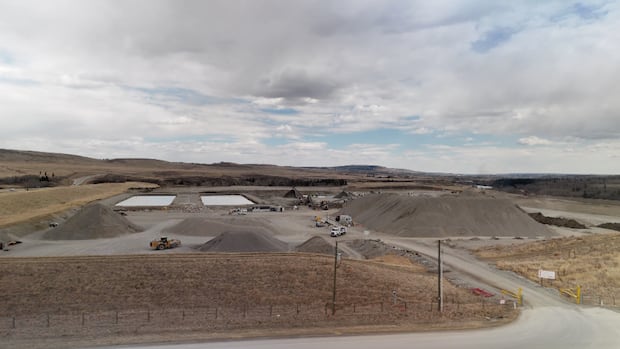
Seven local residents are challenging the provincial government over a gravel pit west of Cochrane, Alta.
The pit, opened by Calgary-based BURNCO Rock Products Ltd. in 2016, covers an area of about 100 football fields. It’s uphill from the Bow River, a hundred metres away at the closest point.
In 2023, the provincial government approved the company’s plan to expand the site footprint by about five times. BURNCO says it won’t mine more than a sixth of the larger site at any given time; it plans to reclaim the land in phases, to its original state as pasture and farmland.
But local residents are worried about what they see as the operation’s potential environmental impacts, especially risks to groundwater.
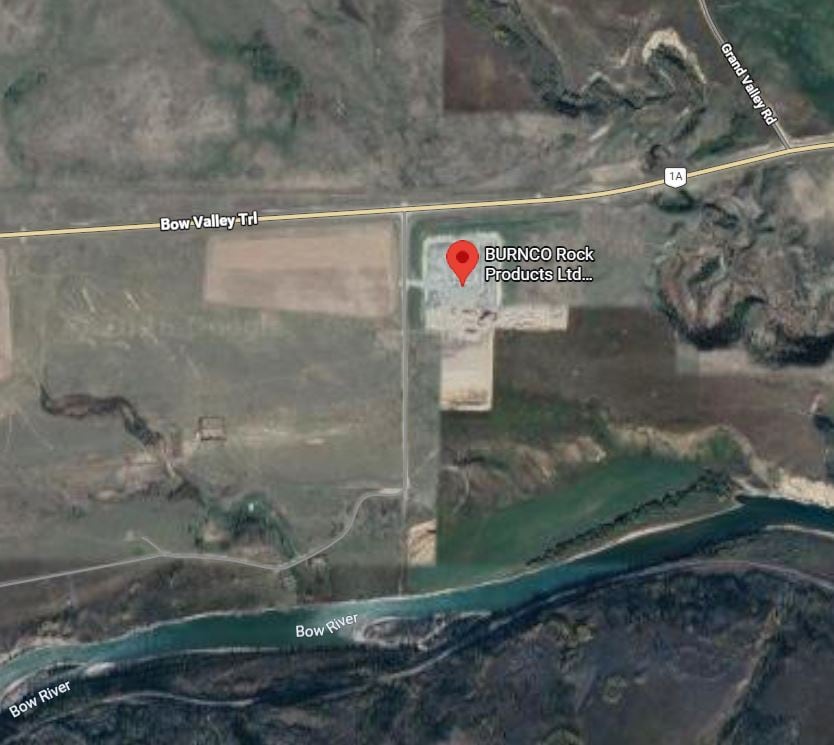 The existing gravel pit is at the southeast of the intersection of Highway 1A and Range Road 51. (Google Maps)
Now a dispute centres on the water use approval the province granted BURNCO for the expanded site in 2024. It’s in front of the provincial Environmental Appeals Board (EAB). A virtual appeal hearing was set for mid-March, but was postponed when all sides raised procedural and legal issues. As of publication, no new date has been set.
The Stoney Nakoda are also involved in the appeal. In the First Nation’s application to the EAB to appear at the hearing, it told the board its land “may be impacted by adverse effects on the groundwater, surface water and wetlands in the area.”
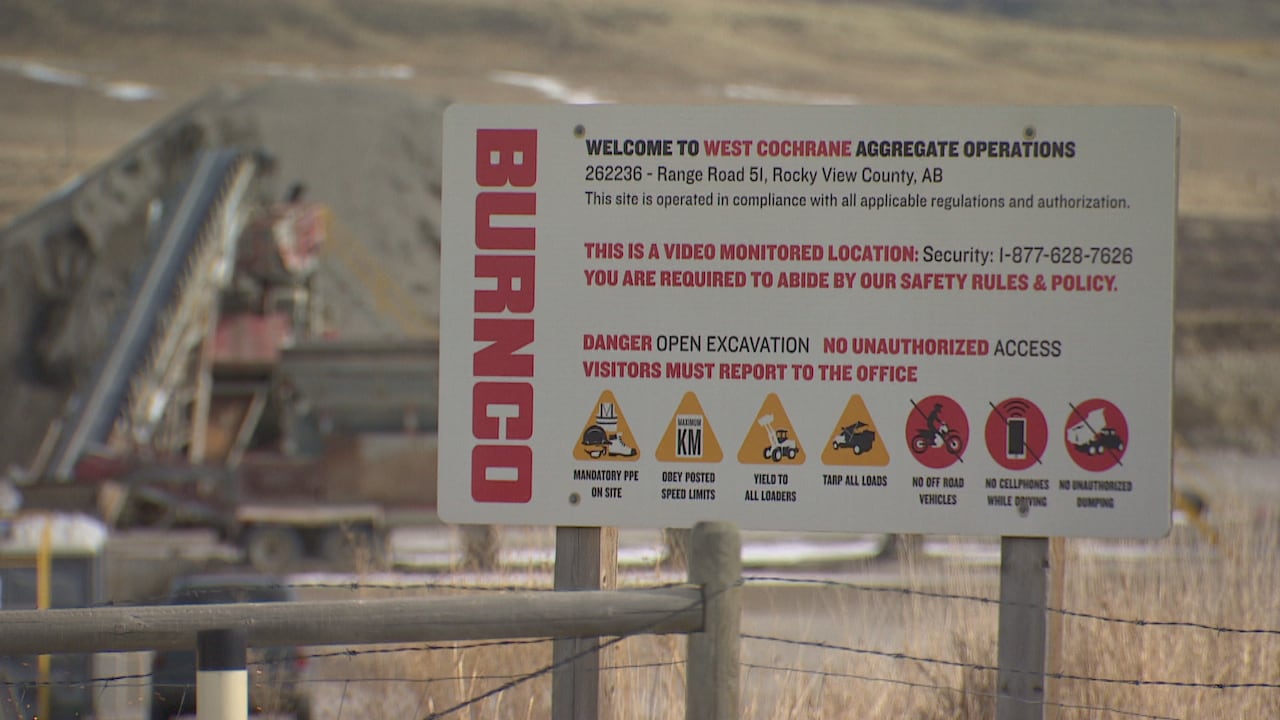 In addition to the seven residents challenging the gravel pit’s water use approval, the Town of Cochrane, Rocky View County and Stoney Nakoda Nations have been granted intervenor status in the appeal hearing. (Nate Luit/CBC)
In April, the Town of Cochrane told CBC it doesn’t oppose BURNCO’s project, but it did successfully apply for standing to appear at the EAB hearing, and it says “additional clarity and assurance are needed to fully understand and manage” the pit’s “potential impacts.”
Rocky View County is also a party to the appeal. It did not respond to CBC’s questions about its participation.
The City of Calgary is not involved. In 2022, it wrote to the province expressing concerns about the pit’s impact on Bow River water quality. After discussions with BURNCO the following year, Calgary concluded that risk is low.
The appellants say the provincial government’s rules don’t go far enough to assess the environmental risk before allowing these kinds of projects to proceed.
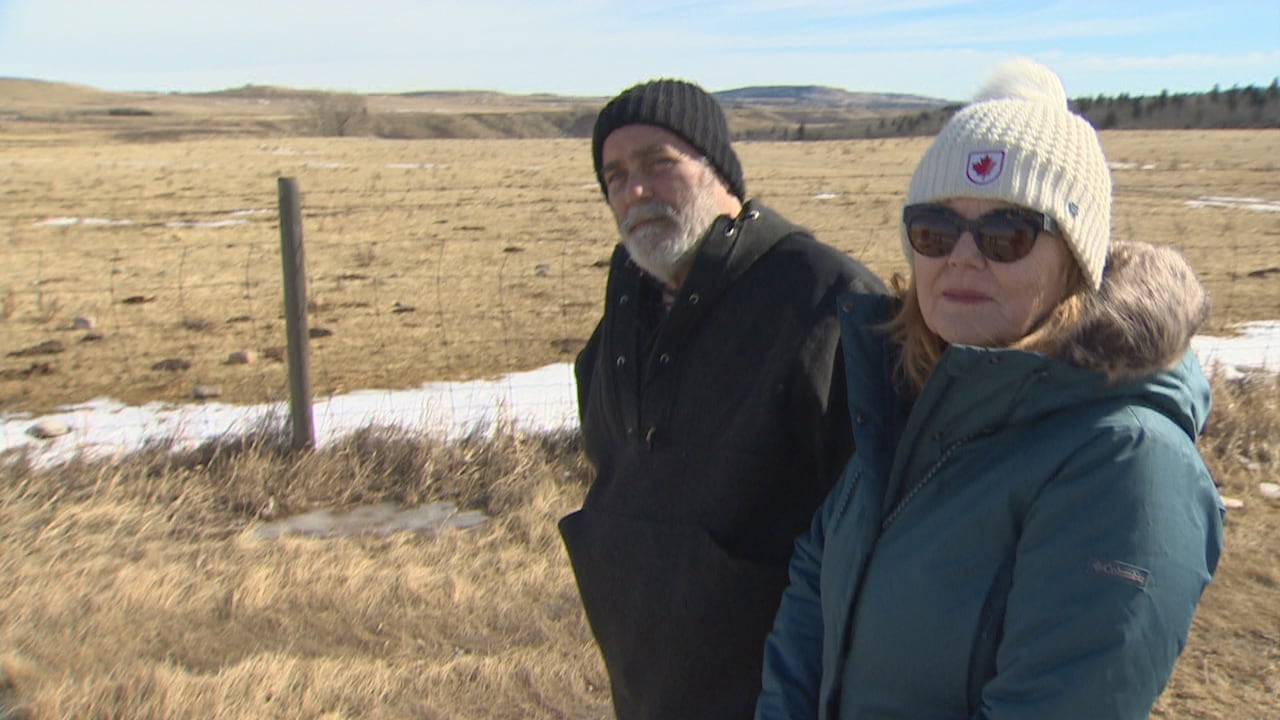 Ann McKendrick McNabb, right, and Darryl Cornish, left, are two of the seven local residents participating in the appeal. (Nate Luit)
Ann McKendrick McNabb’s family land extends north and west of the existing pit and east of the expanded site. She is one of the appellants challenging the pit’s water use approval.
She says she and her co-appellants want more data about the potential environmental impacts on local creeks, natural springs, soil and groundwater.
“The current regulations are outdated,” McKendrick McNabb told CBC News.
“A pit that isn’t near water, they can have simpler regulations. But when you are affecting this whole Bow River corridor, you need to have sound policies and you need to have audits and you need to have transparency and trust to make sure that it’s done right.”
BURNCO commissioned and submitted multiple studies to the province, including a wetland assessment; and storm water and drainage, erosion control and reclamation plans.
But McKendrick McNabb and others involved in the appeal want the government to require the company to undergo an independent, audited environmental impact assessment (EIA).
In Alberta, an EIA is a pre-project approval requirement under provincial environmental protection legislation.
It’s mandated, the government says, “where the complexity and scale of a proposed project, technology, resource allocation, or siting considerations create uncertainty about the exact nature of environmental effects, or result in a potential for significant adverse environmental effects.”
The list of projects subject to mandatory EIAs includes large dams or reservoirs, oilsands mines, power plants, large tourist facilities, steel mills with coke ovens and more.
Gravel pits have been exempt from mandatory EIAs since 2020, when the government made a regulation change to Alberta’s Environmental Protection and Enhancement Act.
Even if a project is not required to undergo an EIA under the regulations, the environment minister can still order one at their discretion. That hasn’t happened for the Cochrane West gravel pit.
BURNCO told CBC News it’s “already gone through Alberta’s established environmental provincial permitting process, which includes a thorough review of environmental considerations.”
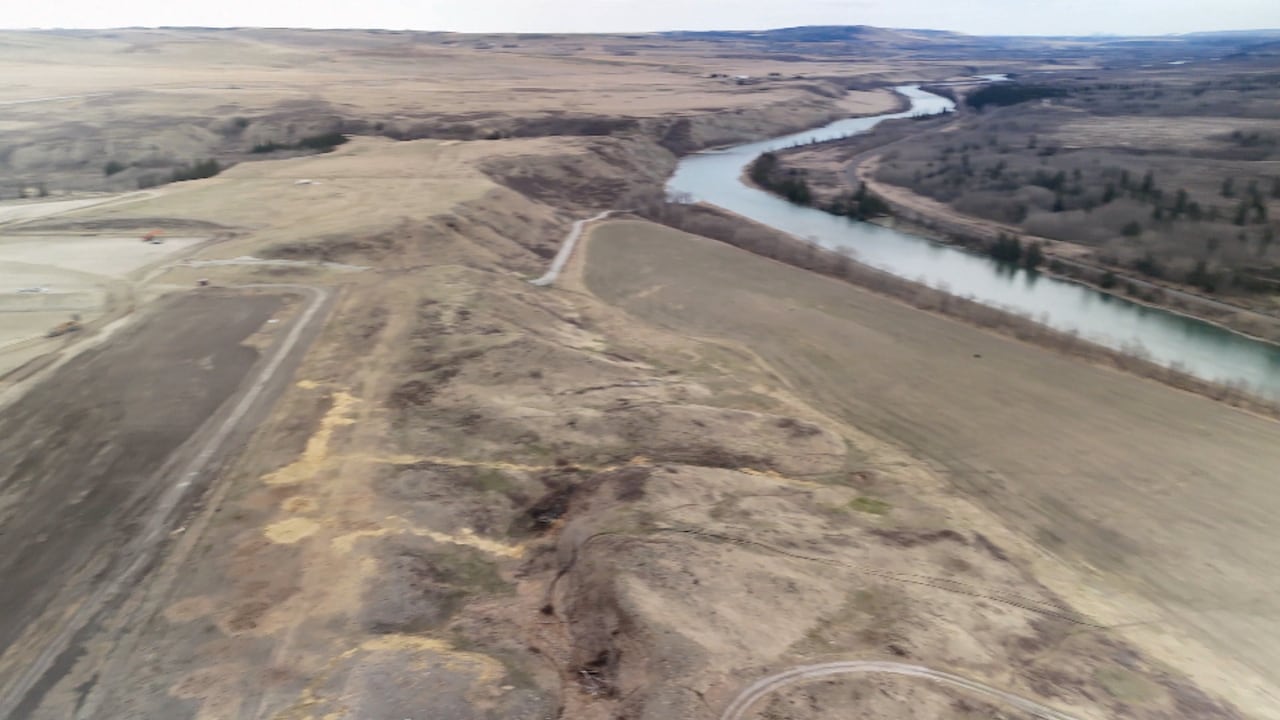 At its closest point, the Cochrane West gravel mine is 100 metres from the Bow River. (Monty Kruger/CBC)
The company declined an interview, but in a written response told CBC it’s run gravel pits for decades along the Bow River “with no history of the types of impacts suggested by the appellants.”
The appellants challenging the project’s water use approval say participating in the province’s environmental appeal process has come at a huge cost: about $200,000 out of their pockets and many hours of work and meetings.
Darryl Cornish, another appellant, says the appeal system is broken and puts ordinary Albertans at a disadvantage.
“We’ve put countless hours into analyzing the data, into hiring experts,” he said.
“It forces the landowners to do all the work that, really, if proper environmental impact assessment was done, then all that work would be done. And it would be paid for by the aggregate companies that are benefiting from the proposed mine.”
Jason Unger, executive director with the Environmental Law Centre, says the current approvals system sometimes limits public participation in early resource project application phases, when people have questions and concerns about environmental impacts.
“So the problem becomes: an applicant comes in, and then residents are forced to kind of scramble to hire people and to address these things,” he said.
“Whereas a proper planned system where things are kind of zoned for these things, and the broader discussion as a community can enable a clear process moving forward.”
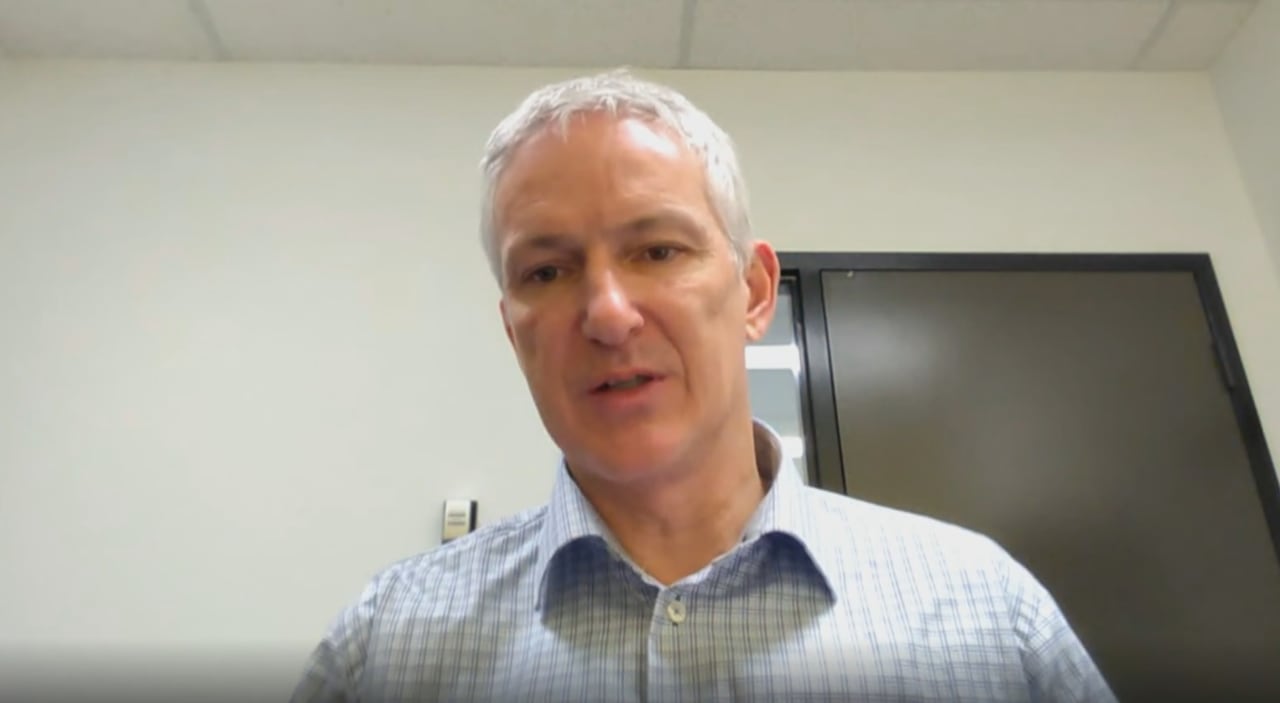 Jason Unger, executive director with the Environmental Law Centre, says the Water Act approval appeal process is often a flawed way to address public concerns about projects like gravel mines. (CBC News)
The environment ministry disputes the view the system unfairly burdens ordinary Albertans, saying there are “multiple opportunities” for the public to give input “while keeping the process fair and focused.”
The opponents have asked the appeal board to pause the company’s water use approval until the environment minister makes a final decision after the hearing.
So far the board has declined. Meanwhile, the government says “BURNCO can elect to carry out its operations.”
Alberta Environment and Protected Areas defends the province’s existing rules for gravel pit approvals, calling them “a common-sense approach to regulation that protects our environment.”
The ministry declined to comment on the Cochrane West gravel pit dispute, citing the appeal in progress.