

Listen to this article
Estimated 4 minutes
The audio version of this article is generated by AI-based technology. Mispronunciations can occur. We are working with our partners to continually review and improve the results.
A sewage leak in the Comox Valley area of Vancouver Island has now been resolved, after a day where residents in the area were issued a “do not flush” order.
The Comox Valley Regional District had issued the order to residents in Courtenay, K’ómoks First Nation and Comox because of an emergency failure at a wastewater pump station undergoing upgrades.
The district had asked residents to temporarily stop flushing toilets, taking showers or washing dishes in order to reduce the amount of waste flowing into the ocean.
Potable drinking water was unaffected by the pipe issue, the district said.
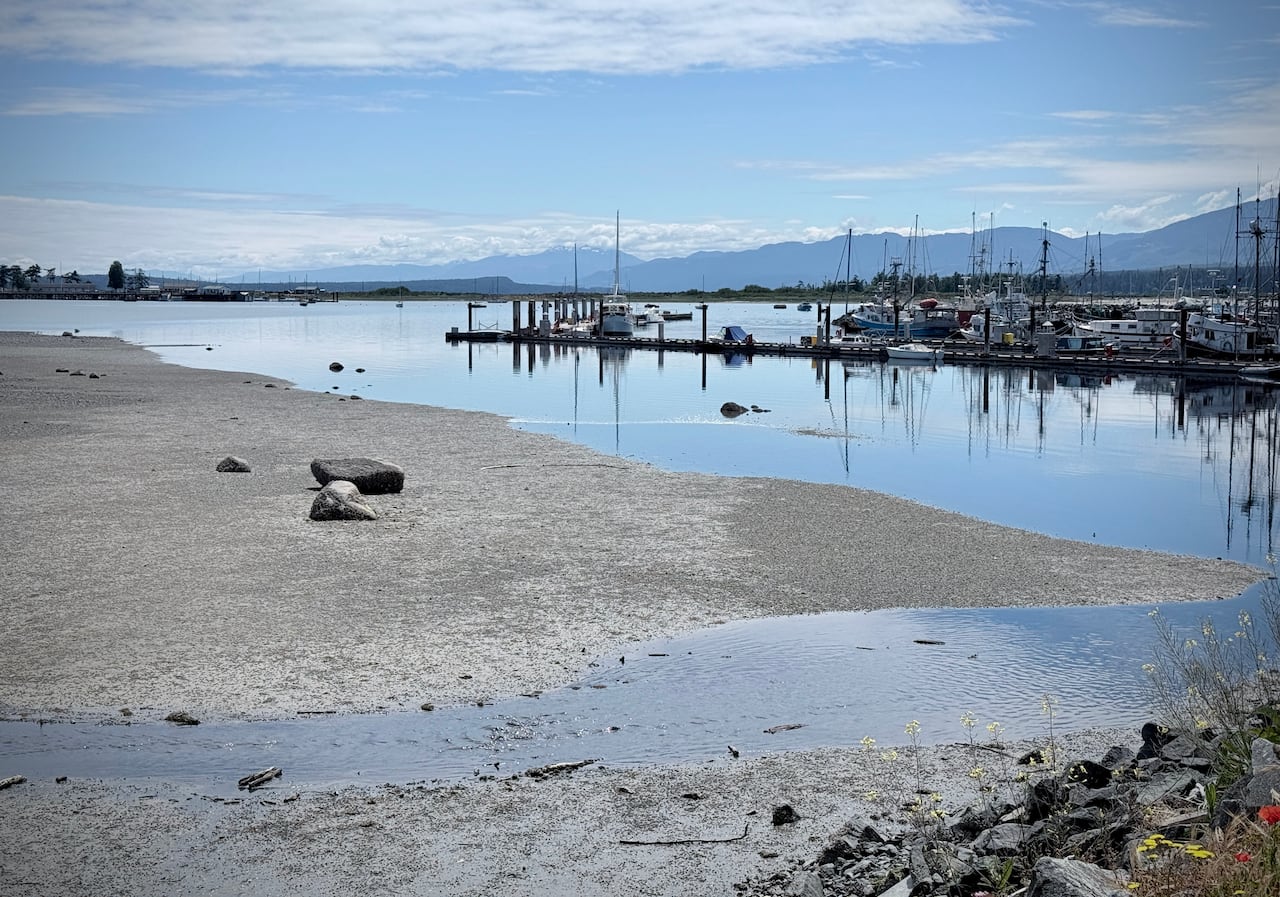 People remain asked to avoid the shoreline and water at the Comox Valley Marina as the regional district fixes a nearby wastewater pipe failure on Tuesday. (Maryse Zeidler/CBC)
“Spill response is underway,” reads an update from the regional district issued just after 6:30 p.m. PT.
“[Tuesday night] residents close to the Comox Marina and Goose Spit may hear loud noises, as environmental clean-up continues.”
While the sewage leak has now been resolved, it prompted federal authorities to prohibit the harvesting of shellfish nearby due to contamination concerns.
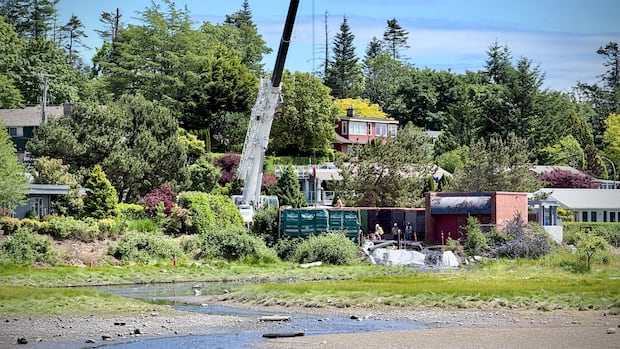
District general manager of engineering services Kris La Rose told CBC News the failure happened along a temporary pump station pipe, located near the Comox Valley Marina, at around 9:30 a.m. PT Tuesday.
“As a result, the excavation next to the construction project rapidly filled up with wastewater, and since then has been overflowing down the foreshore into the marine environment,” he said on Tuesday morning.
“It’s definitely a big deal.”
In the statement confirming the successful repairs, La Rose said efforts would now turn to spill response and co-ordinating with other levels of government.
“The support and [co-operation] of our community made a big difference to sewage flows and helped us to resolve this situation faster,” he said.
Several businesses in Comox and Courtenay, including restaurants and a dog-grooming business, closed on Tuesday due to the issue.
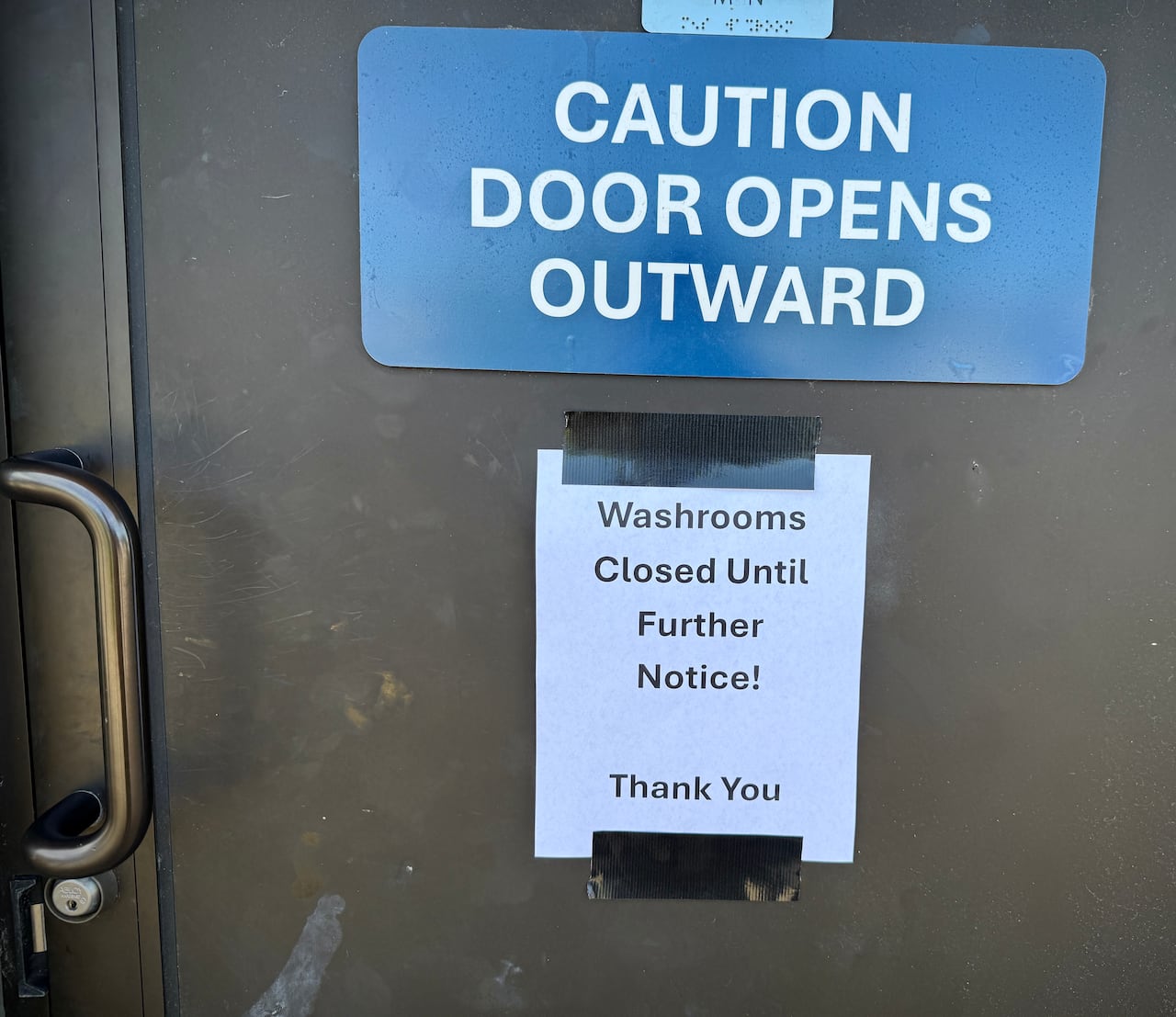 A public washroom was closed at the Comox Marina on Tuesday amid the water pipe issue. (Maryse Zeidler/CBC)
Comox and Courtenay have a combined population of more than 43,000 people, according to the regional district.
The regional district said all district sports and aquatics centres were closed Tuesday, but would reopen on Wednesday.
People are also asked to avoid any water-related activities near the shoreline and around Goose Spit Park and Comox Valley Marina.
Shellfish harvest
Environment and Climate Change Canada (ECCC) said in a notice on Tuesday that there would be an emergency closure of a fishery due to the sewage discharge — affecting bivalve shellfish harvesting in the Courtenay River Estuary.
According to the notice, modelling indicates that sanitary conditions in several harvesting areas would pose a risk to public health if shellfish were harvested for consumer use.
“Without verification sampling, the closure shall remain in place for a minimum of 21 days after flows cease,” the notice reads.
“Alternatively, ECCC may consider verification sampling of both water and shellstock after a minimum of 7 days following spill cessation.”
A spokesperson for the B.C. Shellfish Growers Association said it is in close communication with industry.
“At this stage, based on the timing of precautionary harvest restrictions, it appears unlikely that shellfish potentially exposed to contamination would have entered the marketplace,” the spokesperson said in a statement.
“This situation demonstrates that Canada’s shellfish food safety system is working as intended, when there is a potential contamination event, precautionary measures are implemented quickly to protect public health and consumer confidence.”
The spokesperson added that the Baynes Sound area, where the closure is taking effect, represents 60 per cent of the economic value of B.C. shellfish farming.
“Depending on the duration of closures, financial impacts to growers could be significant, particularly for smaller farms and businesses that rely exclusively on harvest areas within the affected region,” they wrote.