
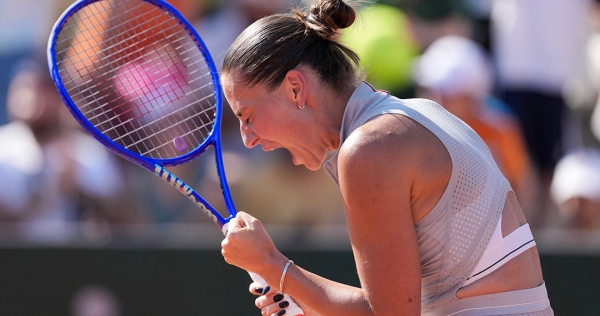
That was her only previous tour-level title, making her back-to-back efforts in Rouen and Madrid all the more notable. Plus, she also reached the 2026 Brisbane International final, making this the first time she’s reached three WTA finals in one season.
The mental gains Kostyuk has made, contributing to her career-best form and recent top-15 debut, come from specific “mental economy training” she has embraced since the Australian Open.
“I don’t know exactly what has changed, like, because I didn’t do also that much. But I think the biggest difference that I see is that I care way less on the court, and I don’t spend too much of my brain energy on things. I just let it go faster,” she explained.
“And I know the feeling that I have when I practice this thing, when I don’t use my brain energy, and I’m trying to find that feeling. So that helps me to not burn out, or to be exhausted after long matches.
EXPERT PICKS: Who will win Roland Garros in 2026?
“That was very difficult part for me, because I felt like everything is very important and everything costs a lot. For sure that changed, and this is what helped me to not be tired after the weeks.
“Like, it took me just a few days to recover from Madrid. When before, even if we take Brisbane [as an example], I didn’t have enough time to recover from Melbourne. I was really, really tired. I mean, Brisbane was really good week, but it just cost me a lot of energy.
“I think that changed the most, but I was working on that part for a long time, as well. It’s just that I work it in different ways.
“My biggest problem before was that mentally it was difficult for me to sustain the level. Right now it’s less of an issue, for sure.”