
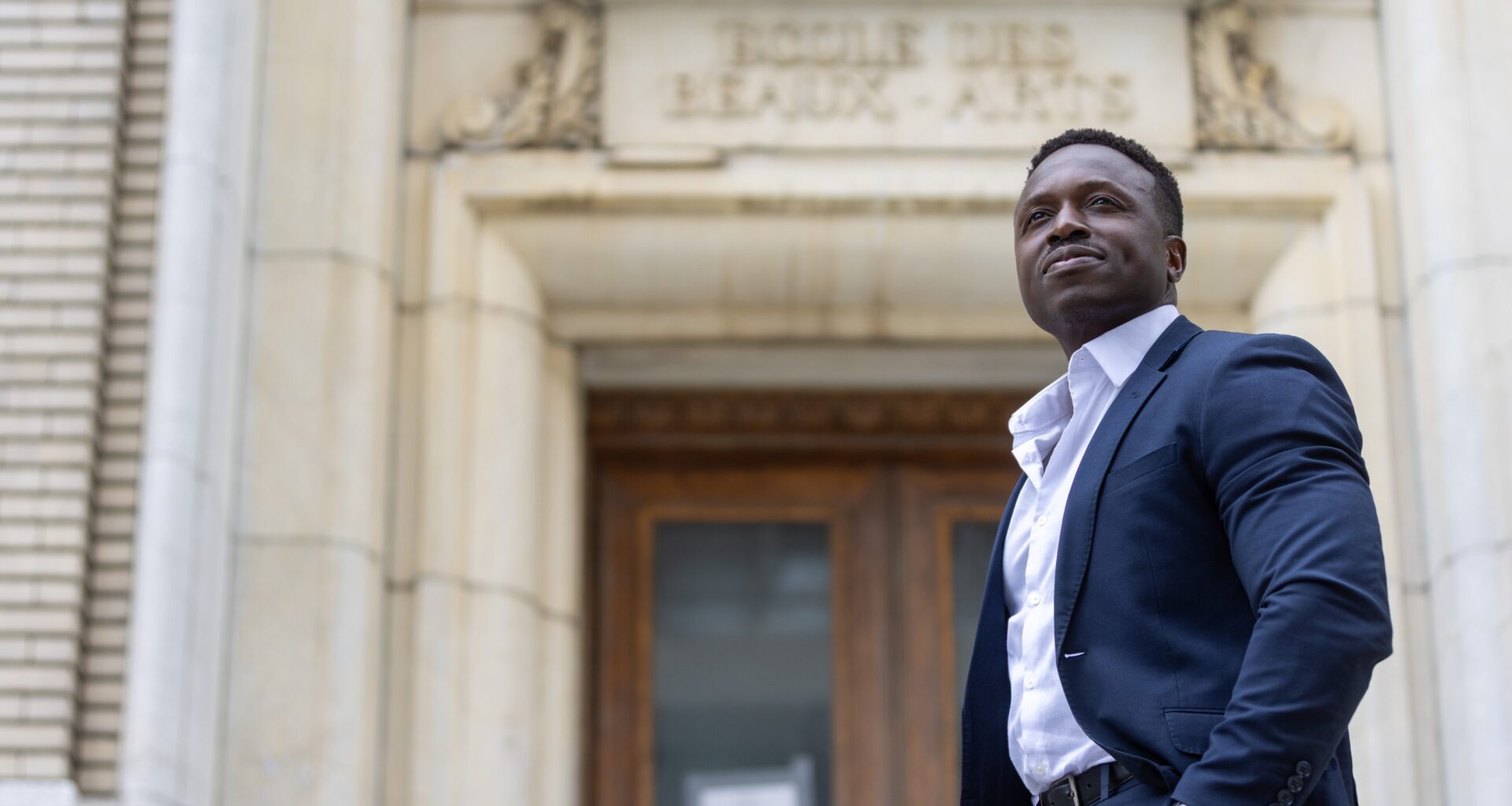
A downtown heritage building is getting a new lease on life. Built in 1922, the former École des Beaux-Arts at the corner of St-Urbain and Sherbrooke Sts. will undergo a more than $26-million makeover to become the new home of the Afro-Canadian Cultural Centre of Montreal.
“This was a dream for me,” said executive director Allen Alexandre, who founded the organization in 2021 “with a mission to preserve and promote the art, history and culture of Black Canadians.”
Alexandre had spent the previous half-decade working in the federal government as a senior adviser in the cabinet of Justin Trudeau and as director of parliamentary affairs and Quebec adviser in the office of the Ministry of Diversity, Inclusion and Youth.
Following the death of George Floyd in 2020, he began reflecting on initiatives to spark societal change on a more tangible level.
“It was a generational opportunity to do something instead of asking others to do something for us,” he said. “I saw an opportunity for us to stand up and use this window to create something lasting so that when future generations ask, ‘When you had the opportunity to do something, did you answer the call?,’ we can say, ‘Yes.’”
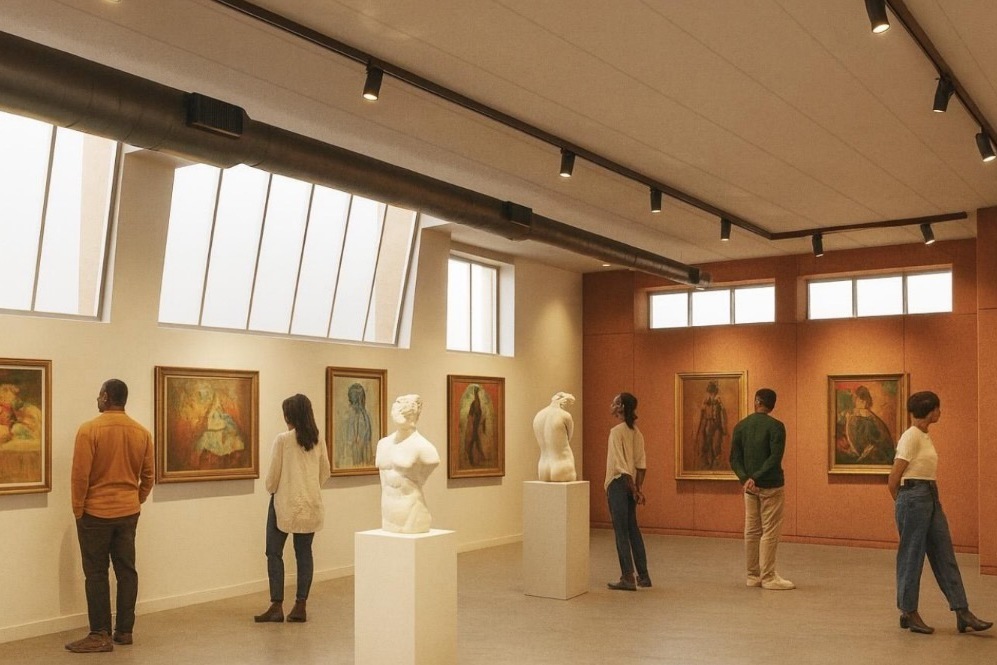 Plans for the Afro-Canadian Cultural Centre of Montreal’s renovation project for the former École des Beaux-Arts include space for an art gallery. Afro-Canadian Cultural Centre of Montreal
The idea for the Afro-Canadian Cultural Centre of Montreal came to him out of the blue; once it entered his mind, he couldn’t shake it. Using his contacts in government, Montreal’s Black community and the business community, he began to seek out collaborators and investors.
“My experience working on national initiatives made it clear to me that talent and ambition weren’t the issue,” Alexandre said. “Infrastructure and support were the issue.”
The former École des Beaux-Arts will be completely renovated with more than $26 million in public and private funding. Nearly $14 million of that comes from Housing, Infrastructure and Communities Canada’s Green and Inclusive Community Buildings Program, which will allow the centre to seek zero carbon certification.
Other funding includes $5 million from Canadian Heritage, funds from Employment and Social Development Canada and the City of Montreal, as well as private donations.
“It’s a $40-million project, including the acquisition of the building,” Alexandre said. The centre has operated without a physical location so far.
Plans for the building include an art gallery, archive space, multi-functional rooms and resources for various groups to use, a dance studio, a space for digital and augmented reality works, and a 226-capacity concert hall and event space.
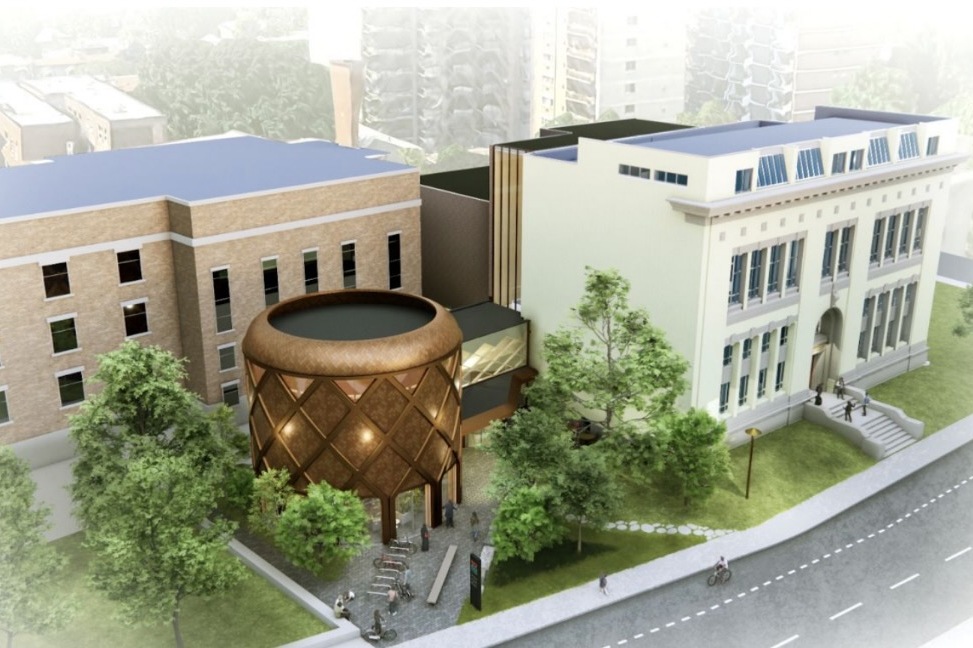 Artist’s rendition of the Afro-Canadian Cultural Centre of Montreal at the corner of St-Urbain and Sherbrooke Sts. Afro-Canadian Cultural Centre of Montreal
“It’s something out of left field in terms of architecture and design in Montreal,” Alexandre said. “It’s inspired by African architecture and the baobab tree, which in West African traditions is where elders and the entire community get together to speak about issues. This brings a modern twist to it and reflects the idea of the centre as something African-inspired and Black-inspired.”
Decontamination has already begun on the existing building. On Monday, digging will begin on two additional wings connected to the current structure. Those additions comprise audacious architectural elements that Alexandre believes get to the heart of the bold approach infusing the Afro-Canadian Cultural Centre of Montreal.
“It’s a statement we felt was necessary. It would have been a missed opportunity to have something like this, which is so unique in the country, and not use it to make a powerful statement about Black history and the presence of Black people in this country.”
Alexandre envisions the Afro-Canadian Cultural Centre of Montreal as a welcoming space “for all Black communities,” on both sides of the linguistic divide. Born to Haitian parents and raised in French, he earned his law degree in English at the University of Ottawa, giving him an understanding of “the need to bring Black communities together.”
The project is scheduled for completion at the end of 2027.
Editor’s Picks