
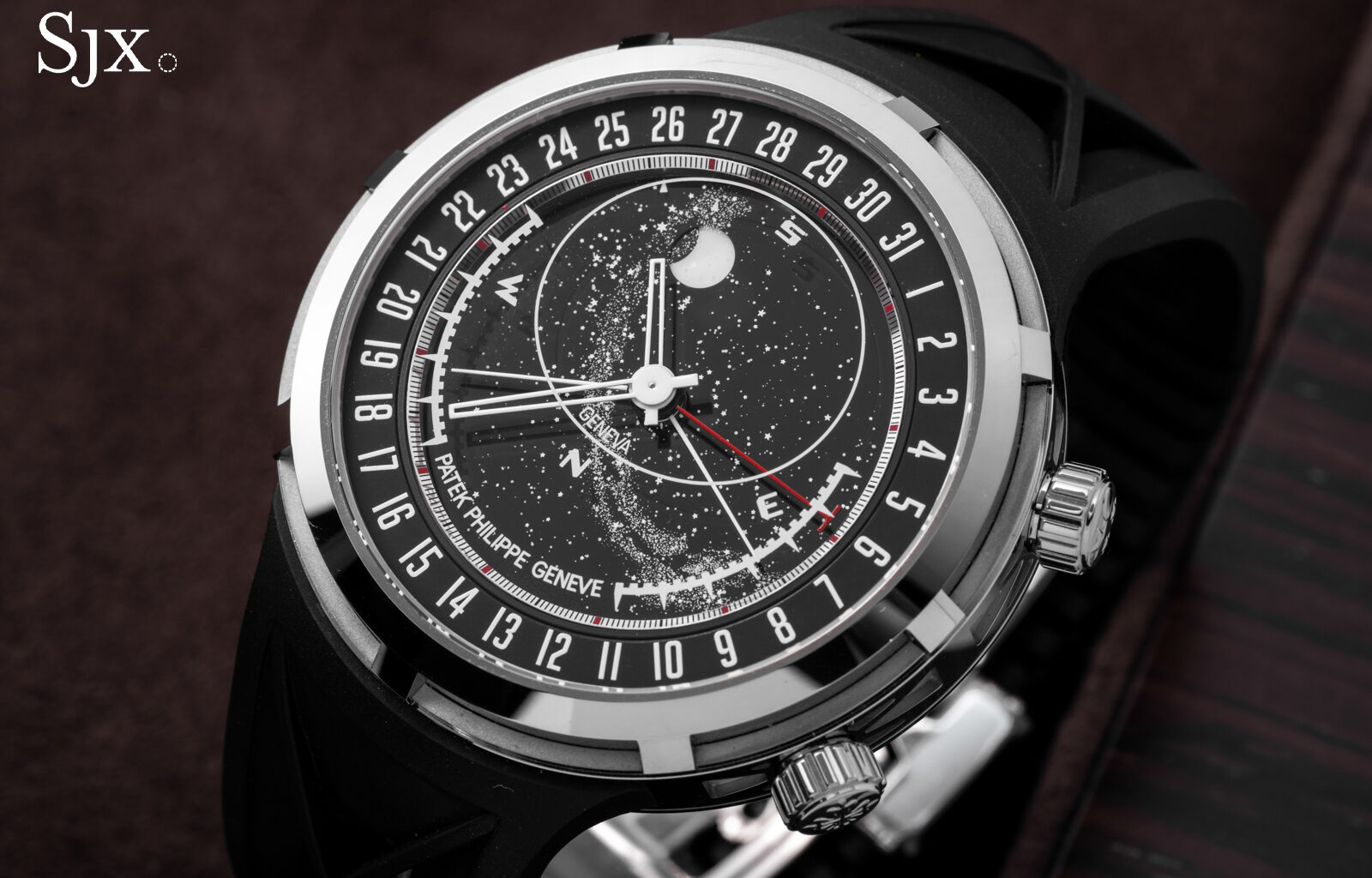
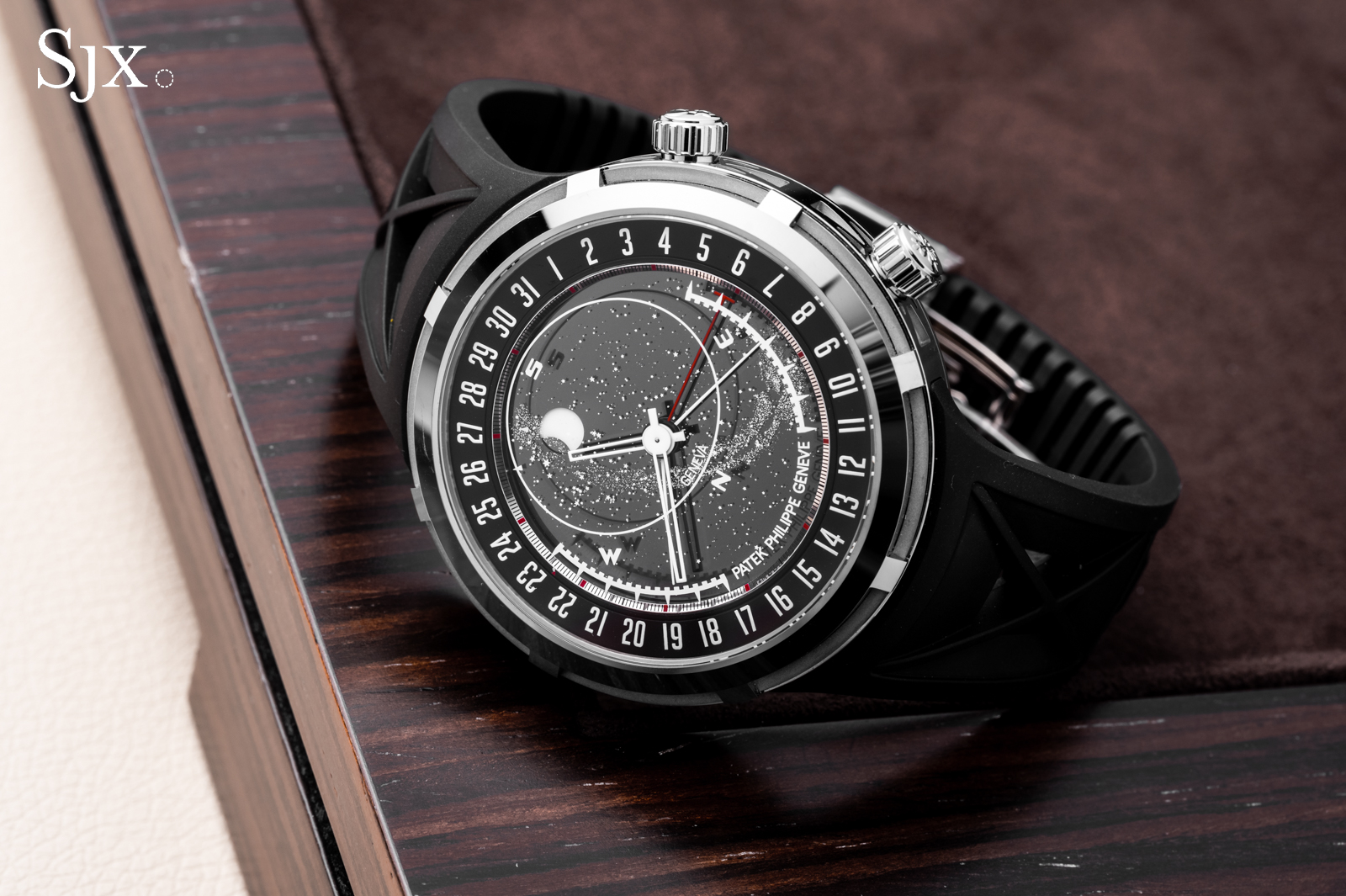
The standout piece from Patek Philippe at Watches & Wonders 2026 was certainly the Celestial Sunrise and Sunset Ref. 6105G-001. The astronomy-oriented watch was a decade in the making and compared to its more conservative predecessor, the ref. 6102, the new model benefits from a complete makeover, both aesthetically and mechanically.
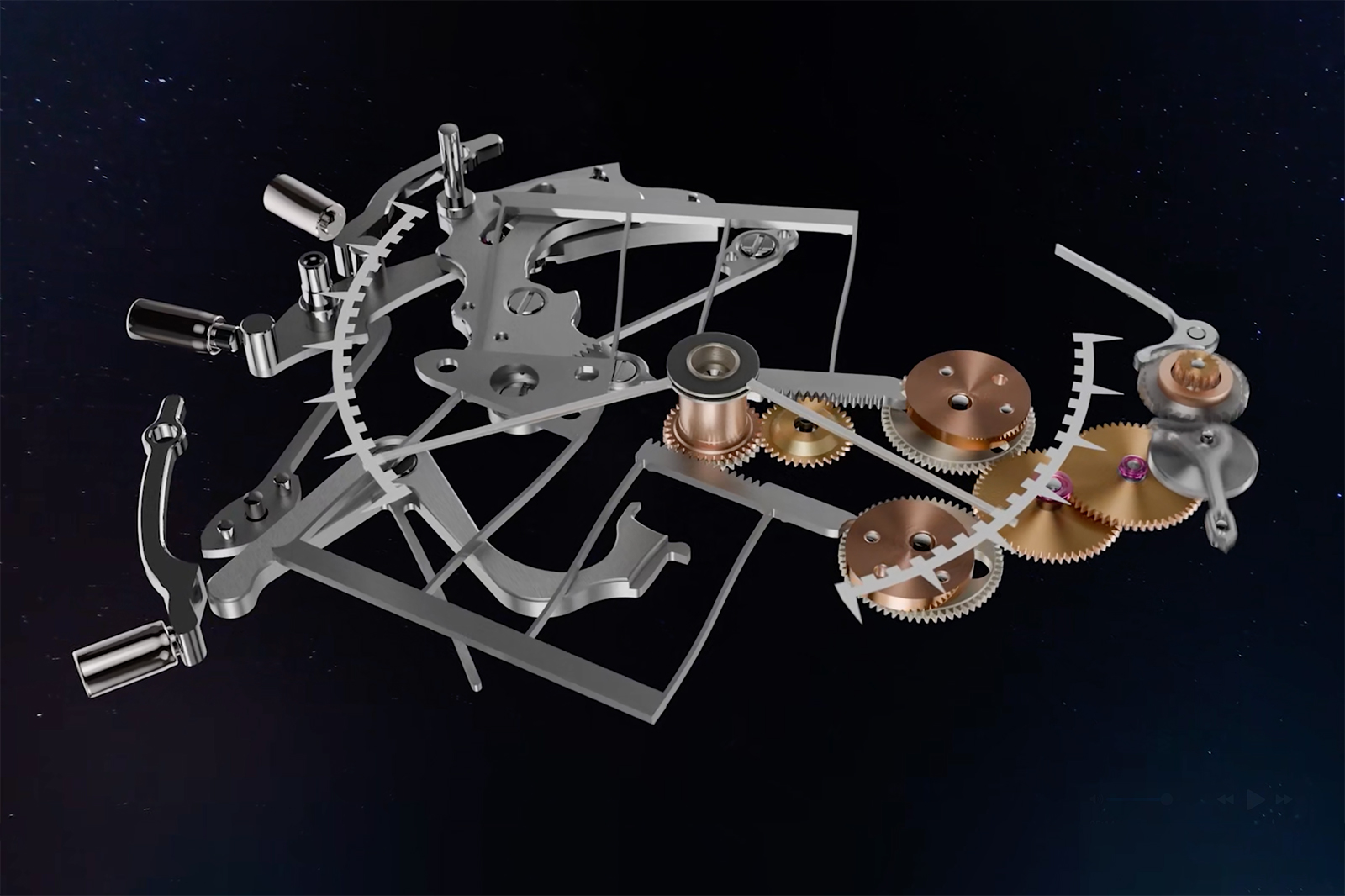
Hidden within the 47 mm white gold case is an unusual component that didn’t get the attention it deserved at launch: a butterfly-shaped compliant cam-and-rack mechanism. The system is used for the sunrise/sunset indicators and proves Patek Philippe’s almost savant-like mastery of compliant micro-mechanics.
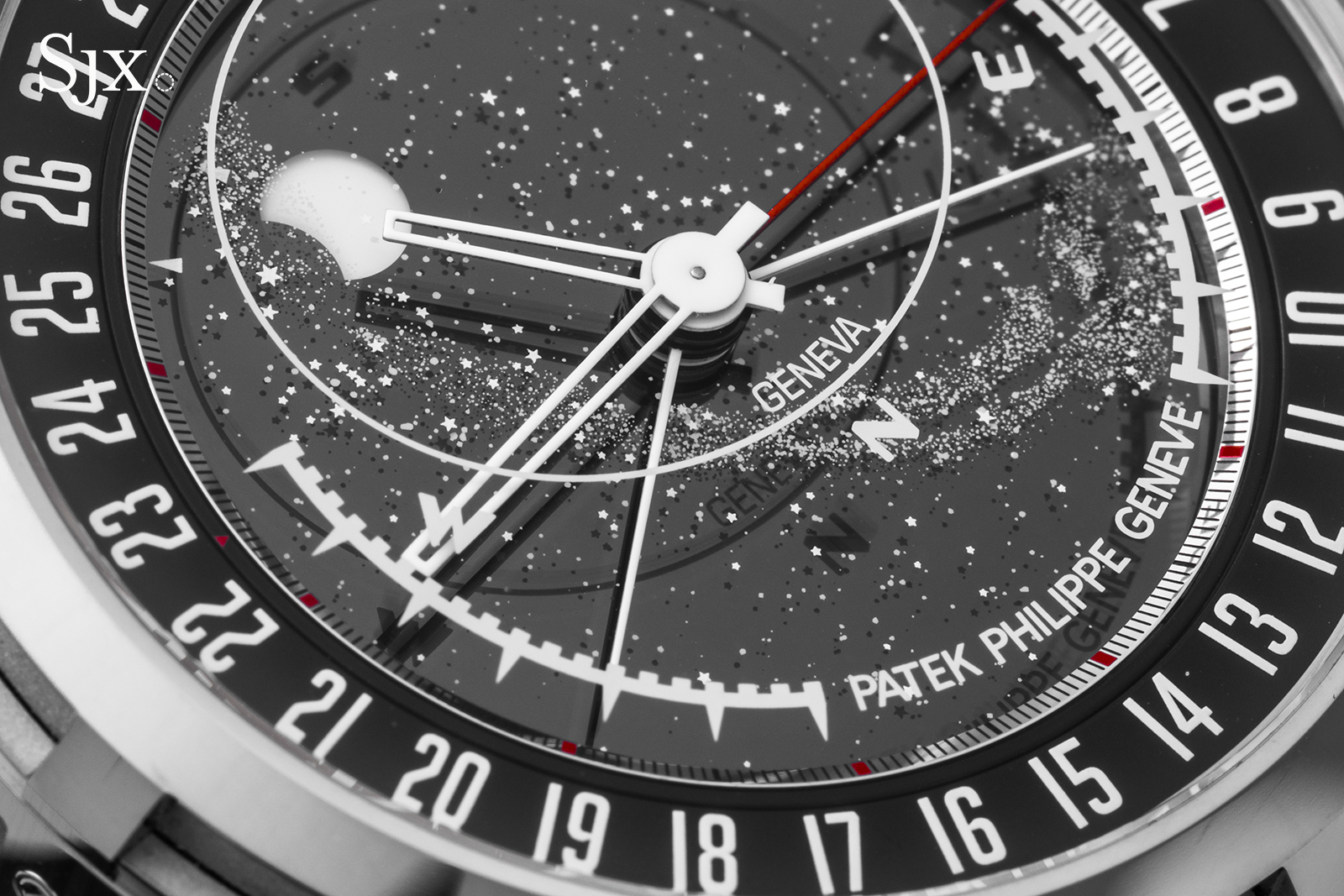
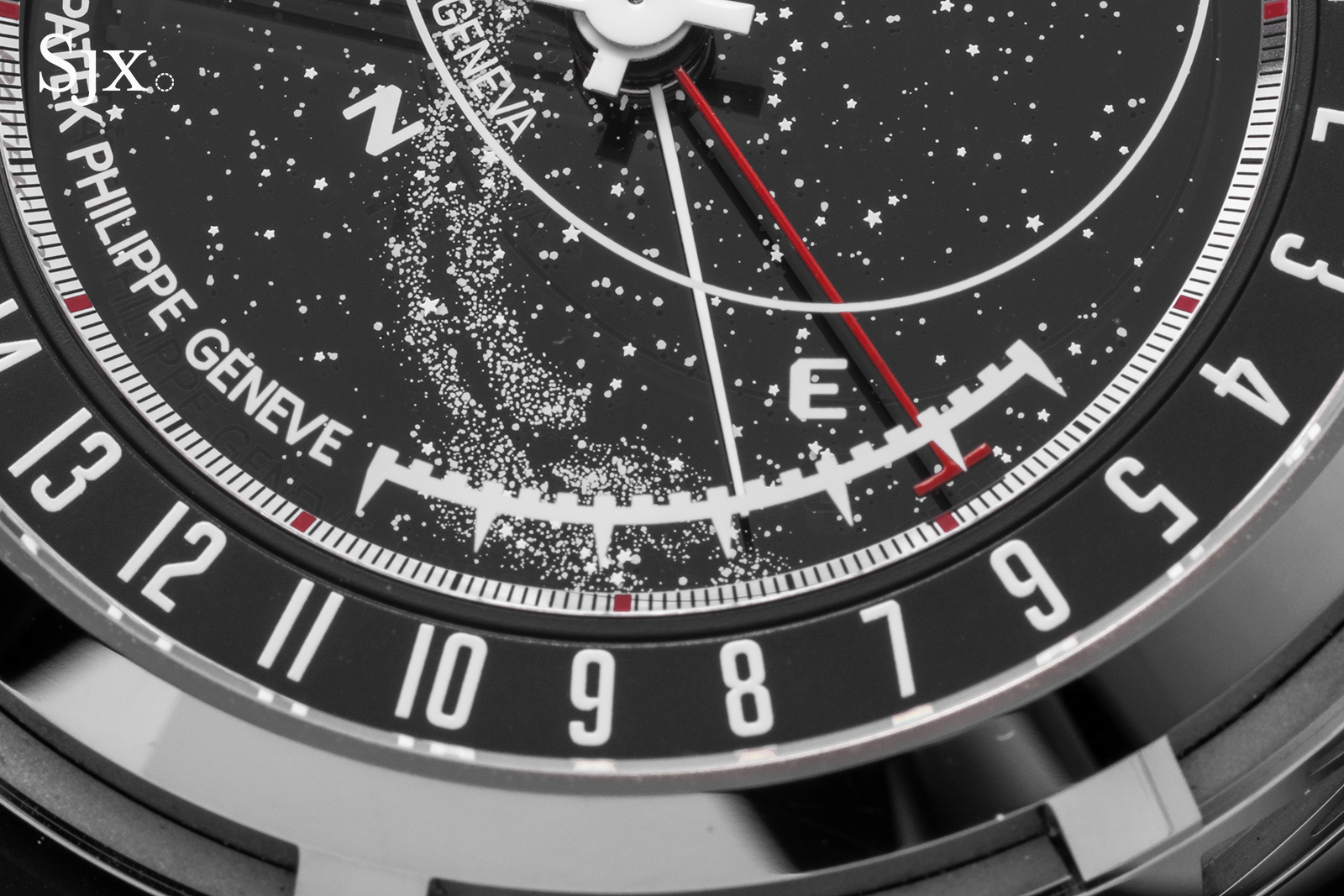
The Celestial ref. 6105 is pictured showing a sunrise of around 8 AM, and a sunset time of about 7 PM. Note the date ring pulls double duty as the sunrise/sunset scale.
Fixing something that may be broken
Although still quite rare compared to other complications, there are more sunrise/sunset watches on the market than seemingly ever before. They mostly follow the same basic construction: a cam that works with a follower. As the year progresses, the cam slowly turns, displacing the follower.
In pairs, such systems are used to show both the sunrise and sunset times, which synchronously vary throughout the year.
So why fix something that doesn’t appear to be broken? Or more specifically, why use an elaborate compliant system when a basic cam and follower is a fixture in classical watchmaking? European patent EP3740821B1 granted to Patek Philippe at the beginning of 2022 sheds some light on the matter.
The patent suggests that cams with pivoted followers are inherently faulty, since the follower component moves in a circular motion, thus not truthfully translating the cam’s profile. As such, the cam shape needs a corrective factor to account for this geometry error.
Having a purely translational follower means the exact variations in the cam’s profile are directly displayed — thus making the cam’s geometry much simpler.
Admittedly this subtlety has previously escaped me but seems rooted in reason. The larger the difference between the cam’s smallest and largest radius is, the more drastic the corrective factor becomes.
Patek Philippe argues that having a linear follower paired to a simpler cam profile means the system can be adapted for different parts of the world more easily, whereas classic systems would require some thorough rethinking of the transmission ratios involved.
There are also the classic issues of the pivot play, friction and the need for numerous parts, each devoted to one function — all of which are mitigated by using a compliant mechanism instead.
Compliant mechanisms are no longer that much of a novelty in watchmaking today; We have seen oscillators, escapements and even chronograph mechanisms relying on these systems. But the particular setup hidden inside the Patek Philippe ref. 6105G marks a real first in watchmaking, by using a self-compensating translational compliant mechanism.
The harmful parasitic shift
Before understanding why the structure employed by Patek Philippe here is so special, we must first take a look at what is referred to as the parasitic shift of compliant mechanisms. As the name already suggests, the parasitic shift is an inherent defect of all compliant mechanisms, which is mitigated through inventive geometry.
All compliant mechanisms rely on thin elastic blades to allow a certain degree of movement. A rudimentary translational compliant mechanism (or guidage flexible — ‘flexible guiding’ in French) can be seen in the figure below. The contraption is simple enough, with two parallel blade springs joined by a rigid block.
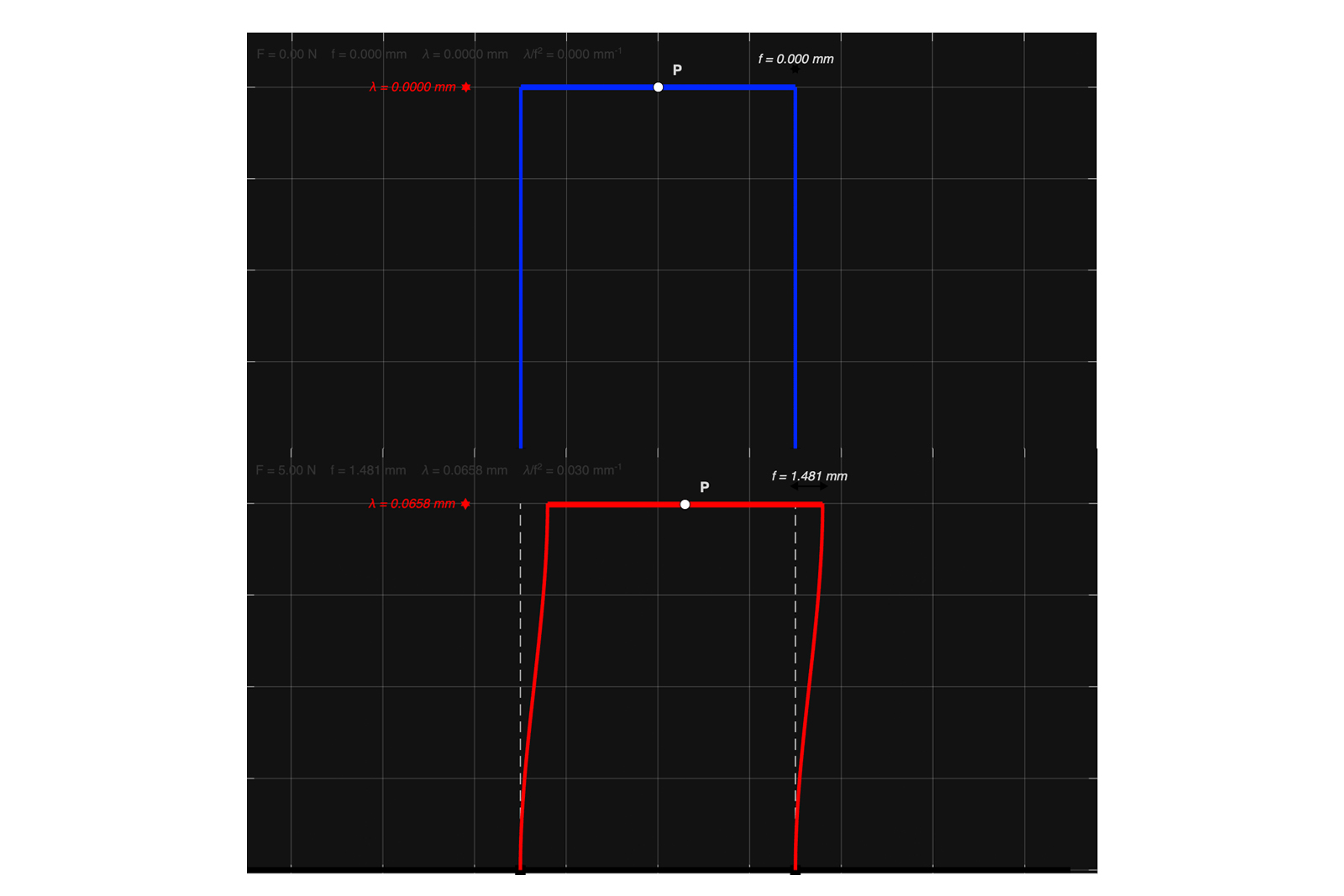
MATLAB simulation of a basic parallel flexure.
If some sort of lateral force is applied to the block, the twin blades will deflect (bend) and allow the block to move laterally. However, as they bend, the distance between the base and the block decreases, since the springs take on a S shape, shortening the linkage.
Although this setup theoretically only allows one degree of freedom (horizontal translation), the bending of the blades constrains the block to also slightly move downward — an effect which is called the parasitic shift.
The effect is made more visible in the figure below. Thankfully, there is a mathematical relation between the amount of horizontal motion and the λ amount of shift, so the engineer will be able to accurately predict the parasitic motion.
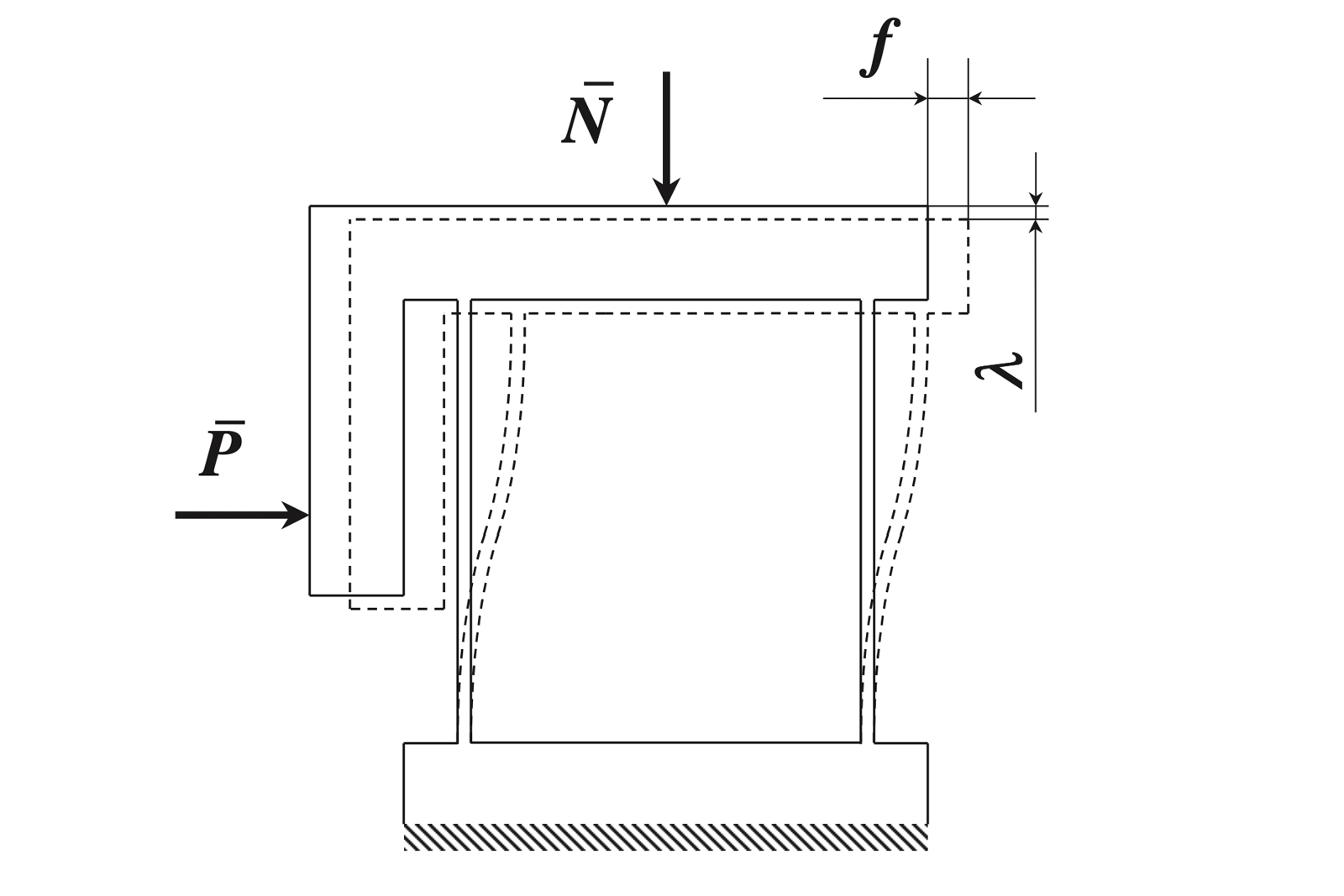
Figure adapted from Cosandier et al., The Art of Flexure Mechanism Design (EPFL Press, 2017), p. [50].
Since we can theoretically predict λ, there should be ways to compensate for it. An intuitive fact is how two blade springs of the same specifications (size, material) will behave the same under bending when coupled in parallel.
By manipulating deflections, the engineer can cleverly make two parasitic shifts cancel each other out for a specific portion of the mechanism. A classic example of a compensated translational compliant mechanism can be seen in the figure below, adapted from The Art of Flexure Mechanism Design.
The idea is for the mobile block (effector) to follow a sensibly linear translation between the fixed bases. The trick is that two pairs of serially-linked blade springs are then coupled in parallel. As such, there is an intermediate block joining the base to the end effector. One blade spring joins the base to this intermediate piece and another (serial pair) joins the intermediate piece to the mobile block.
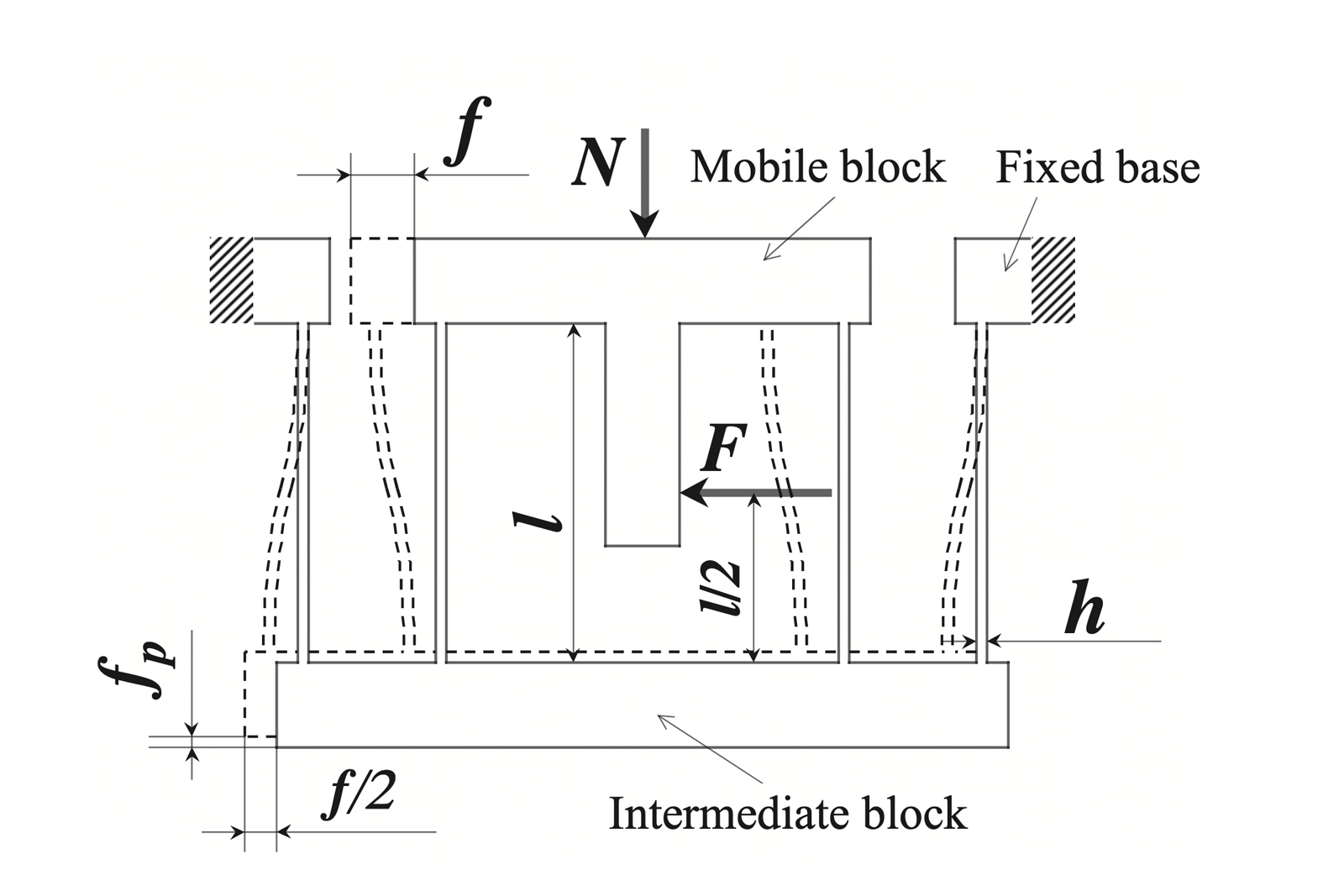
Figure adapted from Cosandier et al., The Art of Flexure Mechanism Design (EPFL Press, 2017), p. [118].
The same construction is mirrored on the other side — parallel connection between these two pairs. When some lateral force is applied to the mobile block, all the parasitic shift appears on the intermediate block, as it slightly raises. This is called an interior degree of freedom, but in strict terms of base-to-end effector movement, the intermediate block’s shift is not considered important.
A parallel can be made to early temperature compensation devices: if a change in temperature affected the hairspring in a certain way, an intentional opposed action was added to the balance, such that the two effects would cancel out one another.
So while the intermediate block raises to compensate for the mirrored deflection of the springs, the mobile block follows an almost perfect rectilinear path. Especially for precise, mono-block components crafted by LIGA, any residual shift is suppressed.
Having handled such linkages in real life, the effect feels almost like magic. Moreover, the mobile block remains remarkably stable even under strong compressive stress, which would have caused a basic construction to buckle.
Turning the discussion back to the remarkable component inside the Patek Philippe ref. 6105G, we can immediately see some similarities. Still, compared to the basic compensated rectilinear guiding, the setup inside the Patek is slightly different.
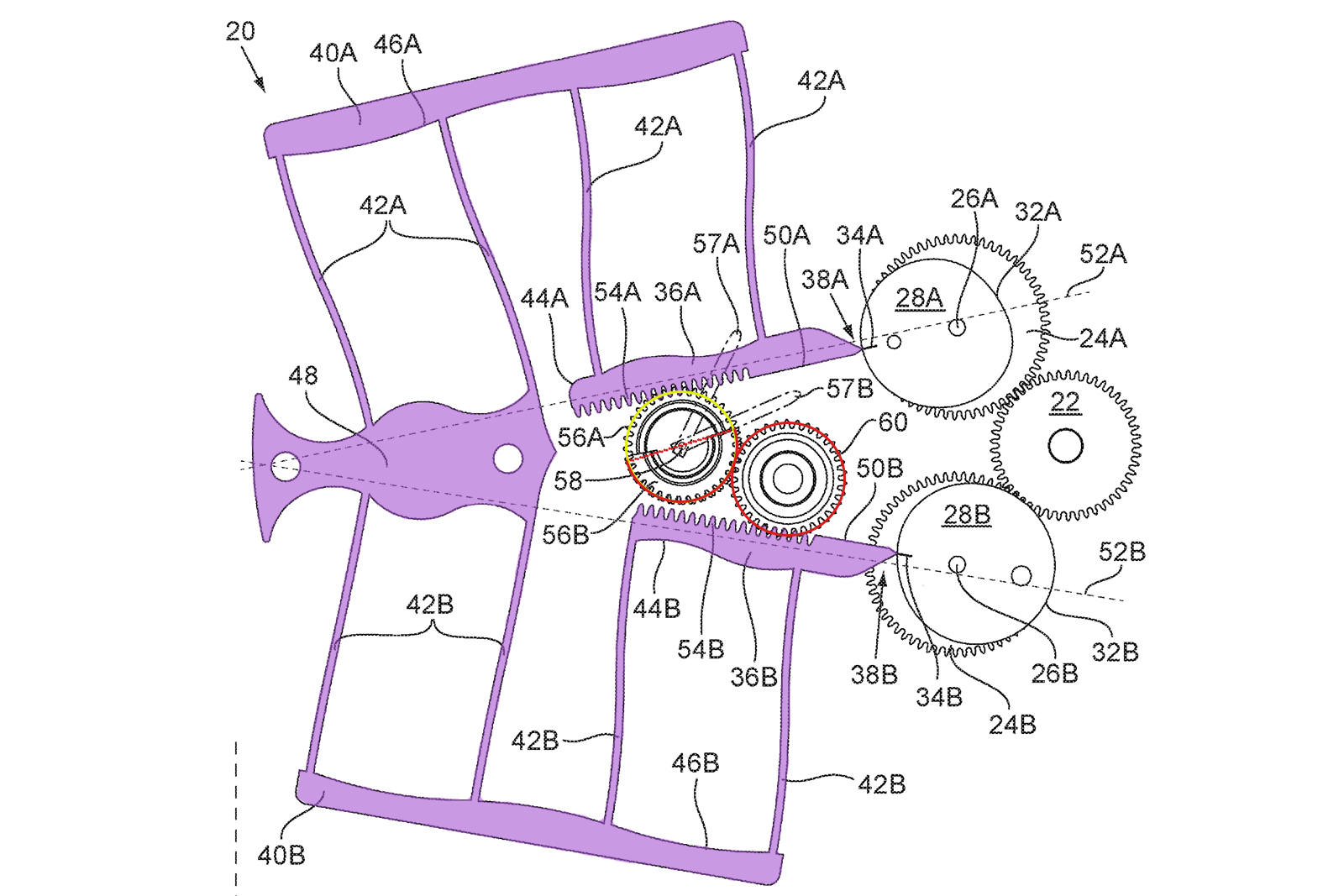
Figure adapted from European Patent EP3740821B1
The end-effector is in fact the feeler, pressed against the cam. The intermediate block is broader and works with two long pairs of springs. The feeler is linked via two parallel springs to the intermediate block, with an identical pair joining this block to the base.
Since we are talking about sunrise/sunset indications, the system is mirrored and works with the two cams. As the figure below shows, the system has a rather large stroke. The upper portion shows the sunrise in this setup and feeler 38A can be seen resting against the largest radius of the cam.
The lower system works with a similar kidney-shaped cam that shows the sunset. The feeler 38B rests against the smallest radius of the cam. The mechanism is visibly under pre-tension, as is the case with all cam-and-feeler mechanisms.
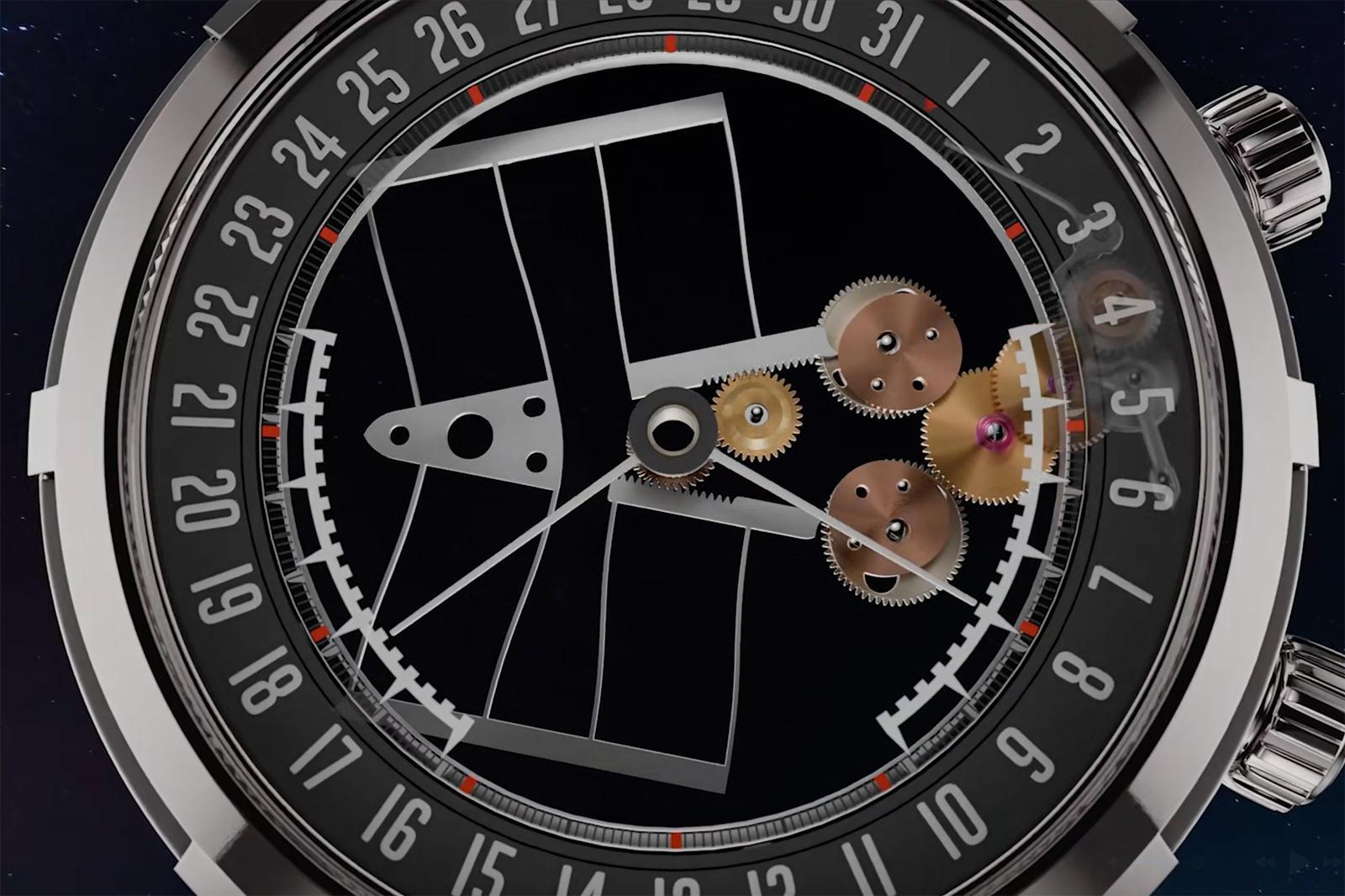
The implementation of the compliant mechanism. Image — Patek Philippe
The cams slowly turn over the year, engaging the racks and displaying the variation of sunrise/sunset times. The intermediate block will always move towards the centre of the movement, while the feelers travel in a straight path engaging pinions.
The blade springs measure only 0.48 mm in thickness and the piece is manufactured using LIGA lithography. This ensures the component is made to very tight tolerances — a paramount consideration for compliant mechanisms.
Parasitic shifts in other compliant mechanisms
The specific mechanism used inside the Patek Philippe ref. 6105G required a compensating method for suppressing the parasitic shift. Without this clever implement, the rack and pinion engagement would not be reliable.
The Aquanaut Travel Time ref. 5650 of 2017 was the first Patek Philippe to include a compliant mechanism, proudly shown in a cutout in the dial. A steel mono-block component, the compliant system was a double cross-pivot linkage for correcting the home time.

The issue of parasitic shift is not that important in such a setup, since the engagement is basically a sprung finger that ratchets over a type of click wheel. There are parasitic shifts involved in the cross pivots, but as long as the general trajectory is followed, the system will work.
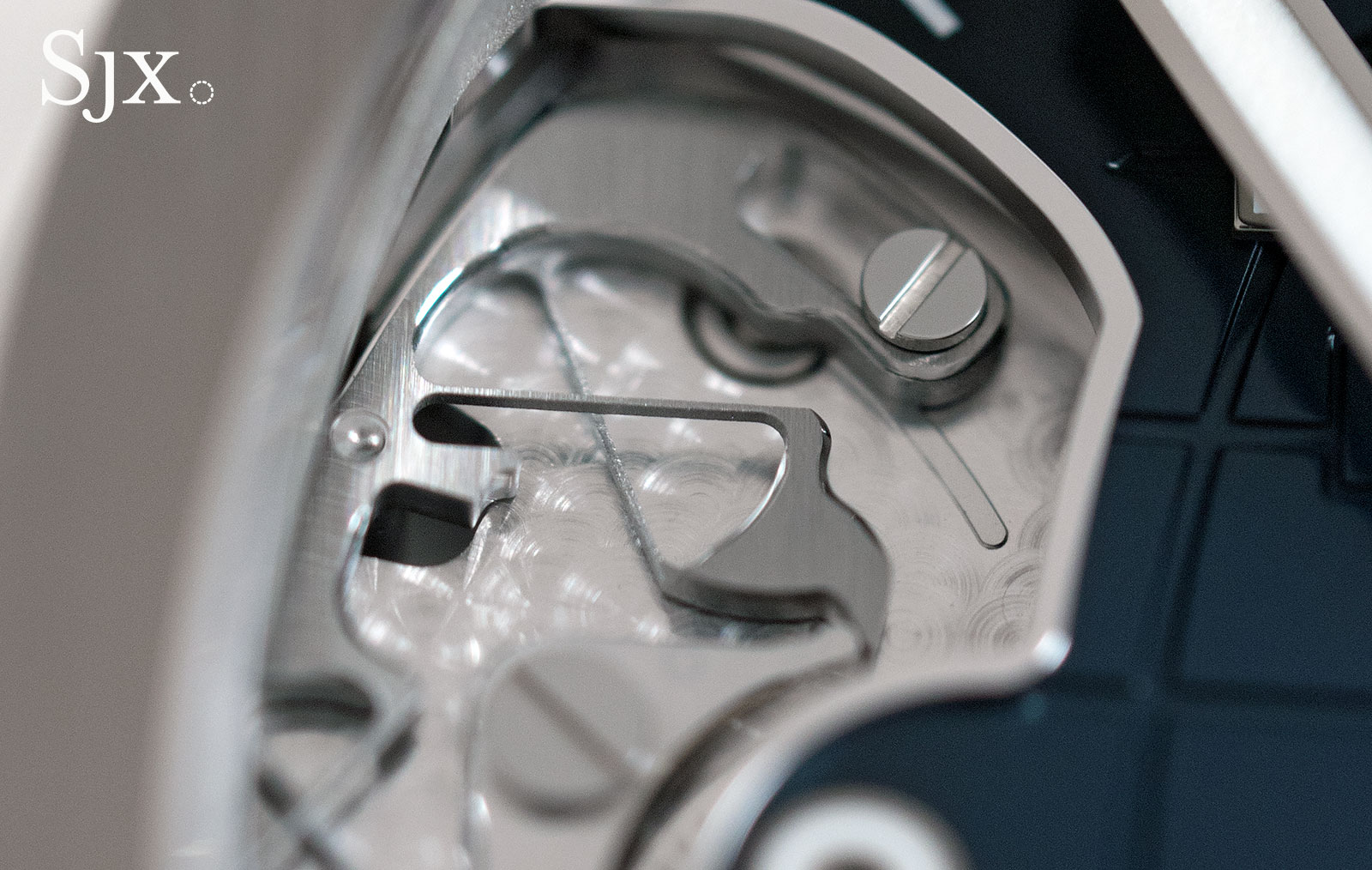
Close-up of the cross pivot compliant joint.
Perhaps the most notable use of compliant mechanisms in watchmaking is in oscillators, where the question of mitigating parasitic shifts becomes all the more important. The virtual centre of rotation of the component needs to remain stationary over the oscillations and parasitic shifts are directly linked to isochronal defects.
The methods for suppressing parasitic shifts for oscillators are conceptually similar to the linear compensation used by Patek Philippe inside the ref. 6105G, but they come with their own host of issues. Mechanical flexural oscillators remain an interesting and slowly developing field of study.
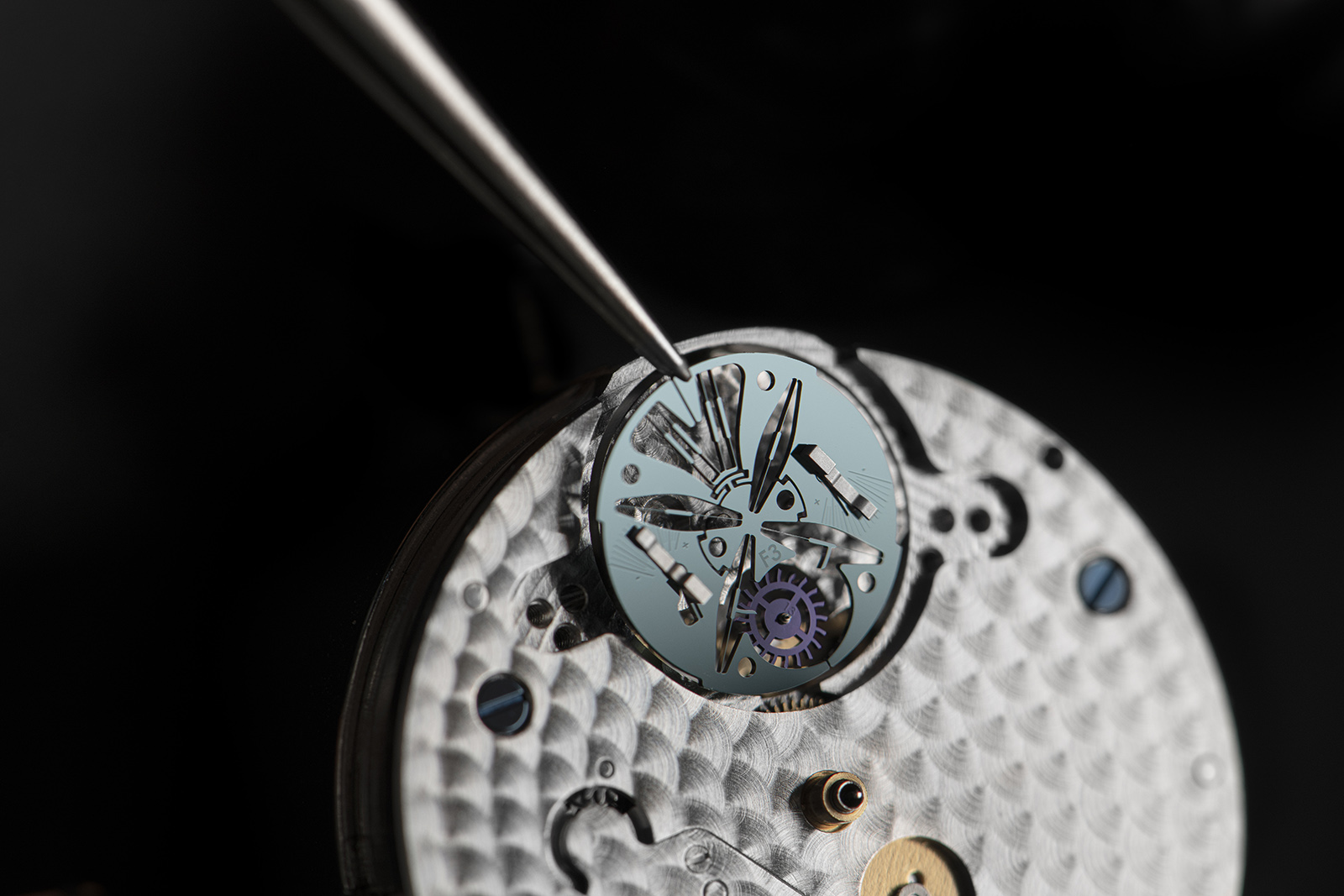
Frederique Constant Monolithic oscillator crafted by Dutch company Flexous Mechanisms. Image – Frederique Constant
Closing thoughts
The compliant mechanism used by Patek Philippe is a first in watchmaking and yet it managed to fly under the radar at Watches & Wonders. The TAG Heuer Evergraph was hailed as one of the fair’s most interesting novelties from a mechanical point of view, but the ref. 6105 is truly a sleeper in terms of innovation.
The obvious benefits of the compliant architecture mean that we will probably see it again in other calendar-related mechanisms if it proves reliable. That said, it probably won’t be applied to fast-moving indications, as compliant mechanisms remain somewhat limited in terms of range of motion (stroke).
In this context, the sunrise/sunset implementation is a perfect proof of concept, since the variation of the cam profile is not that sharp (compared to snail cams for retrograde mechanisms for example) and the motion is slow and gradual.