

A well-executed movie trilogy is a great achievement for any filmmaker, and a highly marketable one at that. After all, a collection of three great movies is (usually) better than just one, and easier to sell to an audience. But beyond the big mainstream trilogies like The Lord of the Rings movies or The Dark Knight trilogy, there are some underrated and relatively underwatched movie trilogies that are true artistic masterworks, even if they don’t always get the wide acclaim they deserve.
Born from the minds of some of the greatest filmmakers in history, these trilogies may not have grossed hundreds of billions or inspired multimedia franchises, but their impact on cinema and culture is undeniable. And with the best of them, the ones we’re talking about here in this article, every single film in the collection is technically and thematically perfect in its own right. So, without further ado, here’s our handpicked selection of some of the greatest underrated movie trilogies, where every film is a masterpiece.
1
The Pusher Trilogy (1996–2005)
‘Pusher’ (1996), ‘Pusher II’ (2004), and ‘Pusher 3’ (2005)

Mads Mikkelsen as Tonny in Pusher (1996)Image via Magnolia Pictures
The 1996 crime thriller Pusher marked the film debuts of Mads Mikkelsen and acclaimed Danish filmmaker Nicolas Winding Refn. Starring Kim Bodnia, the movie follows a low-level drug dealer as he desperately tries to pay back a powerful Serb drug lord (Zlatko Burić) after losing his money in a deal gone wrong. Though Refn didn’t initially intend to make a sequel, after suffering financial troubles in the early 2000s, the director returned to his masterpiece and expanded it with two follow-ups, Pusher II (focusing on Mikkelsen’s character from the first film) and Pusher 3, which focuses on Burić’s crime boss character, Milo.
Though set in an interconnected world, each Pusher film is essentially a standalone story that explores Copenhagen’s criminal underworld with gruesome realism. All the films in the trilogy have been well-received by critics and fans, with the first effectively launching Refn’s, Bodnia’s, and Mikkelsen’s careers. Though they are essentially gangster movies, what sets these films apart from others in the genre is their keen exploration of internal psychological struggles, which form the subtext and motivation for all the violence we see on screen.
2
The Apu Trilogy (1955–1959)
‘Pather Panchali’ (1955), ‘Aparajito’ (1956), and ‘The World of Apu’ (1959)
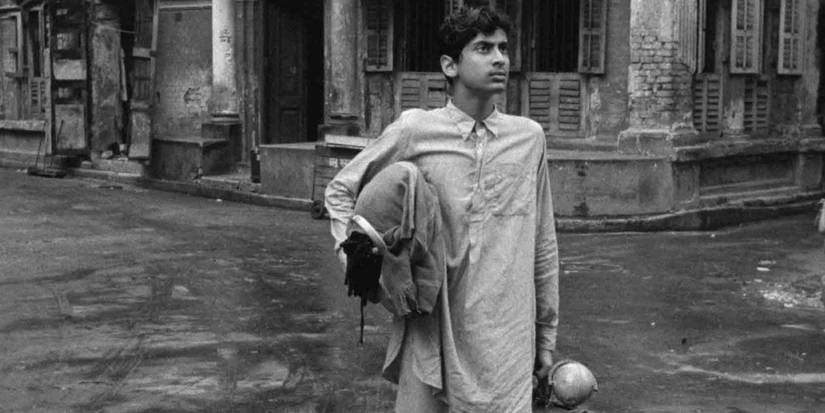
Image via Merchant Ivory Productions
Adapted from two of the most celebrated Bengali novels of all time, the Apu Trilogy is a collection of three Bengali-language dramas directed by Satyajit Ray that chronicle the life of its titular protagonist from childhood to maturity. The series begins with 1955’s Pather Panchali, which stars Subir Banerjee as the young Apurba “Apu” Roy, a boy growing up in the countryside in late-1910s Bengal. The second film, Aparajito, stars Pinaki Sengupta and Smaran Ghosal and continues Apu’s story, now as an adolescent living in Varanasi. The final movie, 1959’s The World of Apu, stars Soumitra Chatterjee as an adult Apu and Sharmila Tagore as his wife, Aparna, following their life in Calcutta.
Though the Apu Trilogy isn’t as widely known outside of film circles these days, the series is recognized by scholars and cinephiles as one of cinema’s greatest masterpieces. Each film in the trilogy has earned universal acclaim and won accolades, and the series has been cited as an important influence on the works of many prominent contemporary filmmakers, including Martin Scorsese, Wes Anderson, Barry Jenkins, and more.
3
Three Colours Trilogy (1993–1994)
‘Three Colours: Blue’ (1993), ‘Three Colours: White’ (1994), and ‘Three Colours: Red’ (1994)

A close-up shot of Irène Jacob in Three Colours: Red.Image via Miramax
Directed and co-written by Krzysztof Kieślowski, The Three Colours trilogy is a collection of psychological drama films, each named after a color from the Flag of France and examining the revolutionary ideal the color represents. An international co-production between France, Poland, and Switzerland, the films are not directly linked, but they are connected through cameo appearances of characters, establishing a shared world. The trilogy stars Juliette Binoche and Benoît Régent in Three Colours: Blue; Zbigniew Zamachowski and Julie Delpy in Three Colours: White; and Irène Jacob and Jean-Louis Trintignant in Three Colours: Red.
The Three Colours trilogy was Kieślowski’s final masterpiece, the capstone on an acclaimed filmmaking career that kicked off with the 1993 release of Blue. The next year saw the release of White and Red, and all three films earned universal praise for their grounded exploration of human interactions, greater introspection on political ideals, and subversion of established narrative tropes. The series also earned several accolades, with Three Colours: Red in particular receiving Academy Award nominations for Best Director, Best Original Screenplay, and Best Cinematography.
Collider Exclusive · Oscar Best Picture Quiz
Which Oscar Best Picture
Is Your Perfect Movie?
Parasite · Everything Everywhere · Oppenheimer · Birdman · No Country
Five Oscar Best Picture winners. Five completely different visions of what cinema can be — and what it can do to you. One of them is the film that was made for the way your mind works. Ten questions will figure out which one.
🪜Parasite
🌀Everything Everywhere
☢️Oppenheimer
🐦Birdman
🪙No Country for Old Men
FIND YOUR FILM →
01
What kind of film experience do you actually want?
The best movies don’t just entertain — they leave something behind.
ASomething that pulls the rug out — that makes me think I’m watching one kind of film and then reveals I’m watching another entirely.
BSomething overwhelming — funny, sad, absurd, and genuinely moving, all at once.
CSomething grand and weighty — a film that makes me feel the full scale of what I’m watching.
DSomething formally daring — a film that pushes what cinema can even do.
ESomething lean and relentless — pure tension with no wasted frame.
NEXT QUESTION →
02
Which idea grabs you most in a film?
Great films are driven by a central obsession. What’s yours?
AClass, inequality, and what people are willing to do when desperation meets opportunity.
BIdentity, family, and the chaos of trying to hold your life together when everything is falling apart.
CGenius, moral responsibility, and the catastrophic weight of a decision you can never take back.
DEgo, legacy, and the terror of becoming irrelevant while you’re still alive to watch it happen.
EEvil, chance, and whether moral order actually exists or if we just tell ourselves it does.
NEXT QUESTION →
03
How do you like your story told?
Form is content. The way a story is shaped changes what it means.
AGenre-twisting — I want it to start in one lane and migrate into something completely different.
BMaximalist and genre-blending — comedy, action, drama, sci-fi, all in one ride.
CEpic and non-linear — cutting between timelines, building a mosaic of cause and consequence.
DA single unbroken flow — I want to feel like I’m living it in real time, no cuts to safety.
ESpare and precise — every scene doing exactly what it needs to do and nothing more.
NEXT QUESTION →
04
What makes a truly great antagonist?
The opposition defines the protagonist. What kind of opposition fascinates you?
AA system — invisible, structural, and almost impossible to fight because it has no single face.
BThe self — the ways we sabotage, abandon, and fail the people we love most.
CHistory — the unstoppable momentum of events that no single person can stop or redirect.
DThe industry — the machinery of culture that chews up talent and spits out irrelevance.
EPure, implacable evil — a force so certain of itself it becomes almost philosophical.
NEXT QUESTION →
05
What do you want from a film’s ending?
The final note is the one that lingers. What do you want it to sound like?
AShock and inevitability — a conclusion that recontextualises everything that came before it.
BEarned emotion — I want to cry, laugh, and feel genuinely hopeful, even if the world is a mess.
CDevastation and grandeur — an ending that makes me sit in silence for a few minutes after.
DAmbiguity — something that leaves enough open that I’m still thinking about it days later.
EBleakness — an honest refusal to pretend the world is tidier than it actually is.
NEXT QUESTION →
06
Which setting pulls you in most?
Where a film takes place shapes everything — mood, stakes, what’s even possible.
AA gleaming modern city with a hidden underside — beauty masking rot, wealth masking desperation.
BA collapsing suburban life that opens onto something infinite — the multiverse of a single ordinary person.
CThe corridors of power and science at a world-historical turning point — where decisions echo for decades.
DThe grimy, alive chaos of New York and Hollywood — fame as both destination and trap.
EVast, indifferent landscape — desert and highway where violence arrives without warning or reason.
NEXT QUESTION →
07
What cinematic craft impresses you most?
Every great film has a signature — a technical or artistic element that makes it unmistakable.
AProduction design and mise-en-scène — every frame composed to carry meaning beneath the surface.
BEditing and tonal control — the ability to move between registers without losing the audience.
CScore and sound design — music that becomes inseparable from the dread and awe of what you’re watching.
DCinematography as performance — the camera not recording events but participating in them.
ESilence and restraint — what’s left unsaid and unshown doing more work than any dialogue could.
NEXT QUESTION →
08
What kind of main character do you root for?
The protagonist is the lens. Who you choose to follow says something about you.
ASomeone smart and resourceful who makes increasingly dangerous decisions under pressure.
BSomeone overwhelmed and ordinary who turns out to be capable of something extraordinary.
CA brilliant, tortured figure whose gifts and flaws are inseparable from each other.
DA self-destructive artist whose ego is both their superpower and their undoing.
EA quiet, principled person trying to make sense of a world that has stopped making sense.
NEXT QUESTION →
09
How do you feel about a film that takes its time?
Pace is a choice. Some films sprint; others let tension accumulate slowly, deliberately.
AI love a slow build when I know the payoff is going to be seismic — patience for a devastating reveal.
BGive me relentless momentum — I want to feel breathless and emotionally spent by the end.
CEpic runtime doesn’t scare me — if the material demands three hours, give me three hours.
DI want it to feel propulsive even when nothing is technically happening — restless energy throughout.
EDeliberate and unhurried — I want dread to accumulate in the spaces between the action.
NEXT QUESTION →
10
What do you want to feel walking out of the cinema?
The best films leave a mark. What kind of mark do you want?
AUnsettled — like I’ve just seen something I can’t fully explain but can’t stop thinking about.
BMoved and energised — like the film reminded me what actually matters and gave me something to hold onto.
CHumbled — like I’ve been in the presence of something genuinely important and overwhelming.
DExhilarated — like I’ve just seen cinema doing something it’s never quite done before.
EHaunted — like a cold, quiet dread that stays with me for days.
REVEAL MY FILM →
The Academy Has Decided
Your Perfect Film Is…
Your answers have pointed to one Oscar Best Picture winner above all others. This is the film that was made for the way your mind works.
Parasite
You are drawn to films that operate on multiple levels simultaneously — that begin in one genre and quietly, brilliantly migrate into another. Bong Joon-ho’s Parasite is a film about class, desire, and the architecture of inequality that manages to be darkly funny, deeply suspenseful, and genuinely shocking across a single extraordinary running time. Your instinct is for cinema that hides its true intentions until the moment it’s ready to reveal them. Parasite is exactly that — a film that rewards close attention and punishes assumptions, right up to its devastating final image.
Everything Everywhere All at Once
You want it all — and this film gives you all of it. The Daniels’ Everything Everywhere All at Once is one of the most maximalist films ever made: action comedy, multiverse sci-fi, family drama, existential crisis, and a genuinely earned emotional core that sneaks up on you amid the chaos. You are someone who responds to ambition, who doesn’t want cinema to choose between being entertaining and being meaningful. This film refuses that choice entirely. It is overwhelming by design, and its overwhelming nature is precisely the point — because the feeling of being crushed by infinite possibility is exactly what it’s about.
Oppenheimer
You are drawn to cinema on a grand scale — films that understand history not as a backdrop but as a force, and that place their characters inside that force and watch what happens. Christopher Nolan’s Oppenheimer is a film about the terrifying gap between what we can do and what we should do, told with the full weight of one of the most consequential moments in human history behind it. You want your films to feel important without feeling self-important — to earn their ambition through sheer craft and the gravity of their subject. Oppenheimer does exactly that. It is enormous, complicated, and refuses easy comfort.
Birdman
You are drawn to films that foreground their own construction — that make the how of the filmmaking part of the what it’s about. Alejandro González Iñárritu’s Birdman, shot to appear as a single continuous take, is cinema examining itself through the cracked mirror of a fading actor’s ego. You respond to formal daring, to the feeling that a film is doing something that probably shouldn’t be possible. Michael Keaton’s performance and Emmanuel Lubezki’s restless camera create something genuinely unlike anything else — a film that is simultaneously about creativity, relevance, self-destruction, and the impossibility of ever truly knowing if your work means anything at all.
No Country for Old Men
You are drawn to cinema that trusts silence, that refuses to explain itself, and that treats dread as a form of meaning. The Coen Brothers’ No Country for Old Men is a film about the arrival of a new kind of evil — implacable, arbitrary, and utterly indifferent to the moral frameworks we use to make sense of the world. It is one of the most formally controlled films ever made, and its controlled restraint is what makes it so terrifying. You want your films to haunt you, not comfort you. You are not interested in resolution if resolution would be dishonest. No Country for Old Men is honest in a way that most cinema never dares to be.
↻ RETAKE THE QUIZ
4
The Death Trilogy (2000–2006)
‘Amores Perros’ (2000), ’21 Grams’ (2003), and ‘Babel’ (2006)
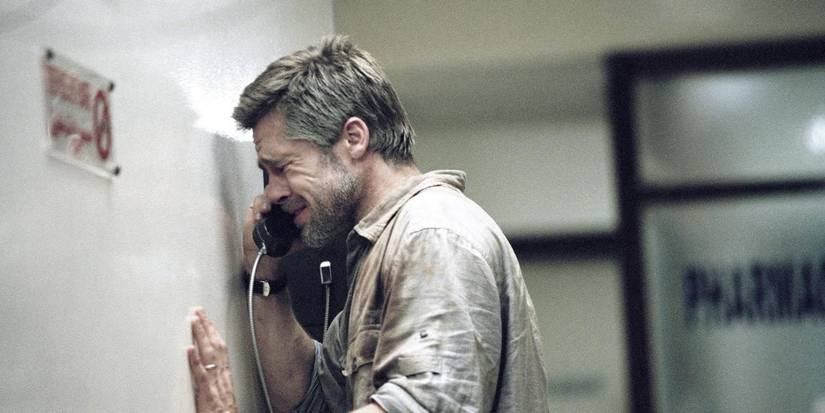
Image via Paramount Pictures
Directed by Alejandro González Iñárritu and written by Guillermo Arriaga, The Death Trilogy is a thematic and stylistic collection of three feature films that began with Iñárritu’s feature directorial debut, Amores Perros. The movie, which also marked the film debut of actor Gael García Bernal, follows three interconnected stories that explore life in Mexico City. The film’s success led to the development of the 2003 film 21 Grams (starring Benicio del Toro, Naomi Watts, and Sean Penn) and 2006’s Babel (starring Bernal, Brad Pitt, Cate Blanchett, and more), both of which also follow similar intertwining stories.
Highly acclaimed by critics around the world, the Death Trilogy brought Iñárritu international fame and established the filmmaker’s reputation as one of the brightest minds in the industry. All three movies were very well-received and earned accolades: Amores Perros received an Oscar nomination for Best Foreign Language Film; 21 Grams competed for the Venice Film Festival’s Golden Lion, won Sean Penn the Volpi Cup, and earned Del Toro and Watts Oscar nominations; and Babel, the most celebrated of all, received seven Oscar nominations and a Golden Globe.
5
The Mexico Trilogy (1993–2003)
‘El Mariachi’ (1993), ‘Desperado’ (1995), and ‘Once Upon a Time in Mexico’ (2003)

El Mariachi (Antonio Banderas) and Carolina (Salma Hayek) share a tender moment in ‘Desperado’.Image via Sony Pictures Releasing
Also known as the Desperado Trilogy and El Mariachi Trilogy, The Mexico Trilogy is a series of American/Mexican westerns written and directed by Robert Rodriguez. The first movie, El Mariachi, was an ultra-low-budget film self-produced by Rodriguez with Carlos Gallardo starring as the titular hero. The film’s unexpected success led to the development of two sequels starring Antonio Banderas, 1995’s Desperado and 2003’s Once Upon a Time in Mexico.
The Mexico Trilogy is a highly enjoyable collection of old-school gunslinger Westerns with energetic stories, great music, and charismatic performances that have earned praise from critics and genre fans. It’s also the main reason why Robert Rodriguez is one of the most respected and influential filmmakers in the world today, as he proved that you can make a truly entertaining film on a shoestring budget. El Mariachi, most notably, drew international attention by setting a Guinness World Record for being the lowest-budgeted film ever to gross $1 million at the box office, and while the latter films had much bigger (but still relatively modest) budgets, they’re all equally brilliant works of cinema.
6
Salta Trilogy (2001–2008)
‘La Ciénaga’ (2001), ‘The Holy Girl’ (2004), and ‘The Headless Woman’ (2008)
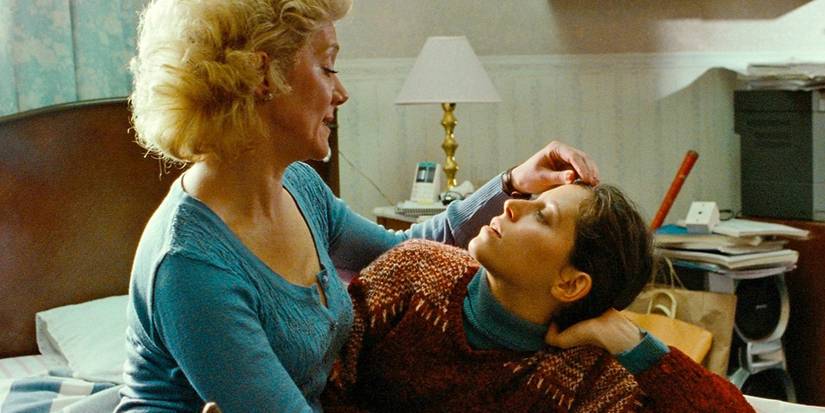
Vero (María Onetto) brushing a friend’s hair with her finger’s in The Headless Woman (2008)Image via Focus Features International
Written and directed by Lucrecia Martel, the Salta Trilogy is a collection of films that explore stories of various women in Salta, Argentina, her hometown. The first, La Ciénaga, was Martel’s debut film, starring Graciela Borges, Mercedes Morán, Martín Adjemián, and Daniel Valenzuela. The second film, The Holy Girl, stars Morán, María Alche, and Julieta Zylberberg and was executive produced by Pedro Almodóvar. The Headless Woman, the final film of the trilogy, stars María Onetto and follows a psychological thriller story, though its approach is vastly different from other films in the genre.
All three films in the Salta Trilogy have been widely acclaimed for their explorations of gender, sexuality, and feminine identity. The series has also earned many accolades, with The Holy Girl and The Headless Woman receiving nominations for the Cannes Film Festival’s Palme d’Or award. Martel’s films are far from mainstream, with a severe arthouse style and diffuse narratives that can be difficult for the casual viewer. However, the Salta films are undeniable masterpieces that are regularly hailed as among the greatest works of Argentine cinema and one of the best trilogies ever completed in cinematic history.
7
The Human Condition Trilogy (1959–1961)
‘No Greater Love’ (1959), ‘Road to Eternity’ (1959), and ‘A Soldier’s Prayer’ (1961)
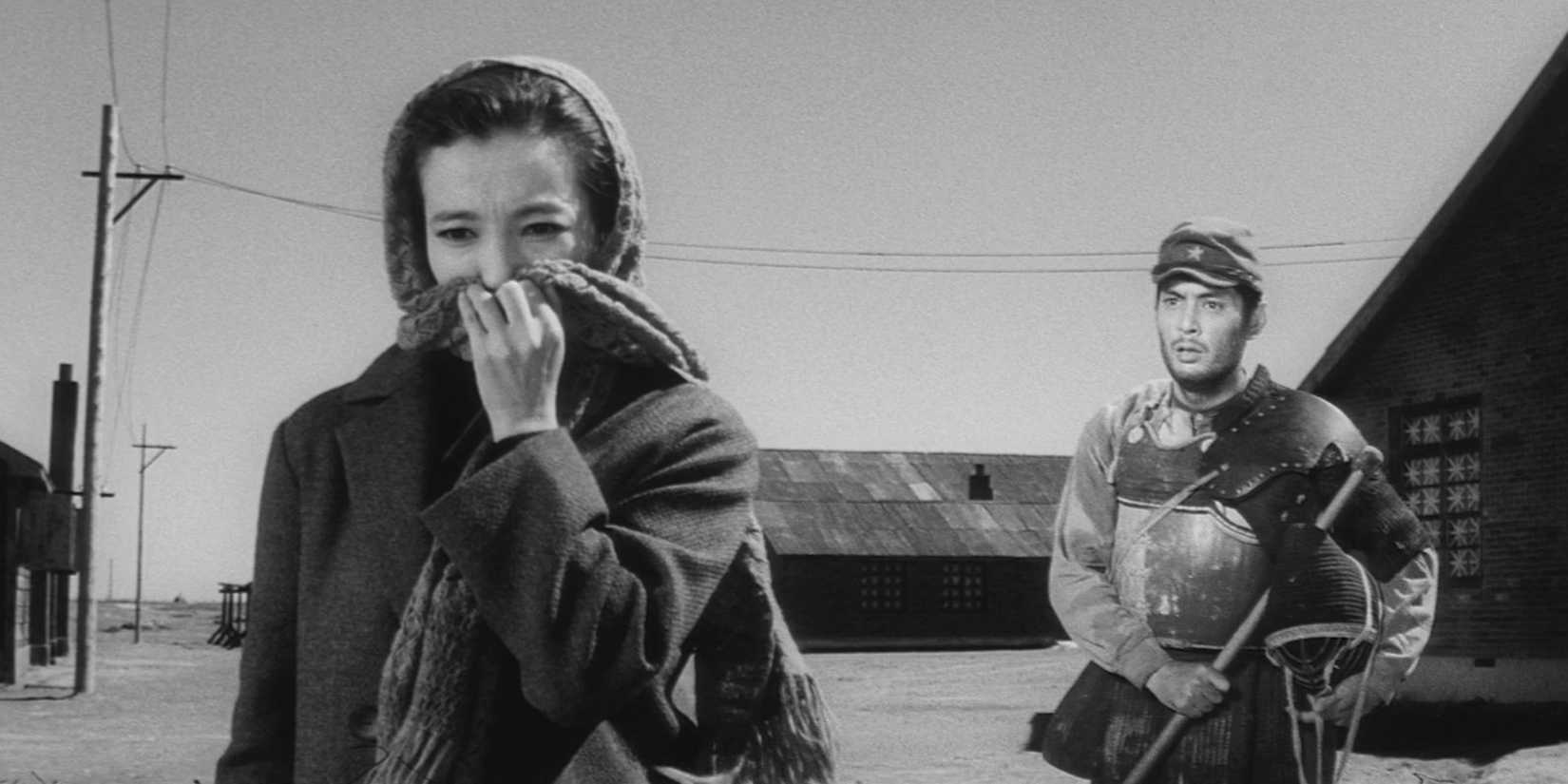
Image via Shochiku
Directed and co-written by Masaki Kobayashi, The Human Condition is a single continuous story split between three films: No Greater Love (1959), Road to Eternity (1959), and A Soldier’s Prayer (1961). Based on Junpei Gomikawa’s novel, the war drama trilogy stars Tatsuya Nakadai as Kaji, an idealistic and good-hearted man who suffers unending tragedies due to the clash between his ideals and the cruel realities of life under the Imperial Japanese government during World War II. Over the course of the trilogy, Kaji becomes a labor camp supervisor, an Imperial Army soldier, and a Soviet POW, facing soul-crushing experiences in each role as he desperately clings to the hope of one day reuniting with his loving wife Michiko (Michiyo Aratama).
As you might expect from its anti-imperial narrative, Kobayashi’s Human Condition series was highly controversial in Japan at the time of its release, but it has been widely acknowledged in the years since as an epic cycle on par with classical Greek tragedies. Internationally, the series earned high critical acclaim, received multiple awards, and established its director as one of Japan’s most important filmmakers. It’s a highly emotional and extraordinarily compelling drama that beautifully explores the human-made horrors of war and the undying resilience of the human spirit.