

Finance Minister Bezalel Smotrich on Wednesday instructed his ministry to create a dedicated task force to help Israel’s technology sector cope with the effects of the shekel’s sharp rise in value, signaling a shift in the government’s approach to the issue, which it has largely remained silent on.
The move comes amid growing concern within the country’s tech industry and after several Israeli companies announced mass layoffs, partly due to the currency spike.
The shekel has traded as high as NIS 2.8 to the dollar, the highest rate since 1993. So far this year, the currency has appreciated by over 4% against the dollar and by 15% over the past year.
According to the Finance Ministry, the team will build support programs and seek ways to limit broader economic repercussions while “respecting the independence” of the Bank of Israel and its monetary policy responsibilities.
The task force will include senior officials from across the ministry, including the budget director, accountant general, chief economist, tax authority chief, capital markets regulator and advisers to the finance minister, the ministry’s statement said.
Get The Times of Israel’s Daily Edition
by email and never miss our top stories
By signing up, you agree to the terms
Earlier Wednesday, Finance Ministry officials met with representatives from major tech companies, who highlighted the dual challenges posed by the shekel’s rise and the transformation of global markets driven by artificial intelligence. Industry leaders warned that currency movements are making it more difficult for exporters and technology firms to remain competitive internationally, the Calcalist business daily reported.
At the meeting, the officials stressed that the government does not intend to intervene directly in the foreign-exchange market or attempt to manipulate the exchange rate, and said that measures to artificially stabilize the shekel could be both difficult and potentially ineffective given the size and liquidity of currency markets.

Illustrative photo of US dollar, euro and Israeli shekel banknotes, May 9, 2026. (Nati Shohat/Flash90)
“It is impossible to maintain an artificial exchange rate forever,” a ministry official told Calcalist. “The market is deep, trading volumes are enormous, and it is not even certain that intervention would be effective.”
“We’re not China,” another official said.
The ministry has said it has also ruled out using government debt as a tool to weaken the shekel, citing concerns that such a move could raise concerns among international credit-rating agencies and potentially affect Israel’s credit standing.
Officials said they are assessing whether the currency’s appreciation reflects speculative trading or genuine economic factors, the report added. Their current assessment is that the shekel is being supported primarily by real capital inflows, including foreign investment, export revenues and activity linked to major sectors such as defense.
The decision to prepare an assistance package marks a notable change in tone from Smotrich, and suggests the government increasingly views the issue as one requiring attention.
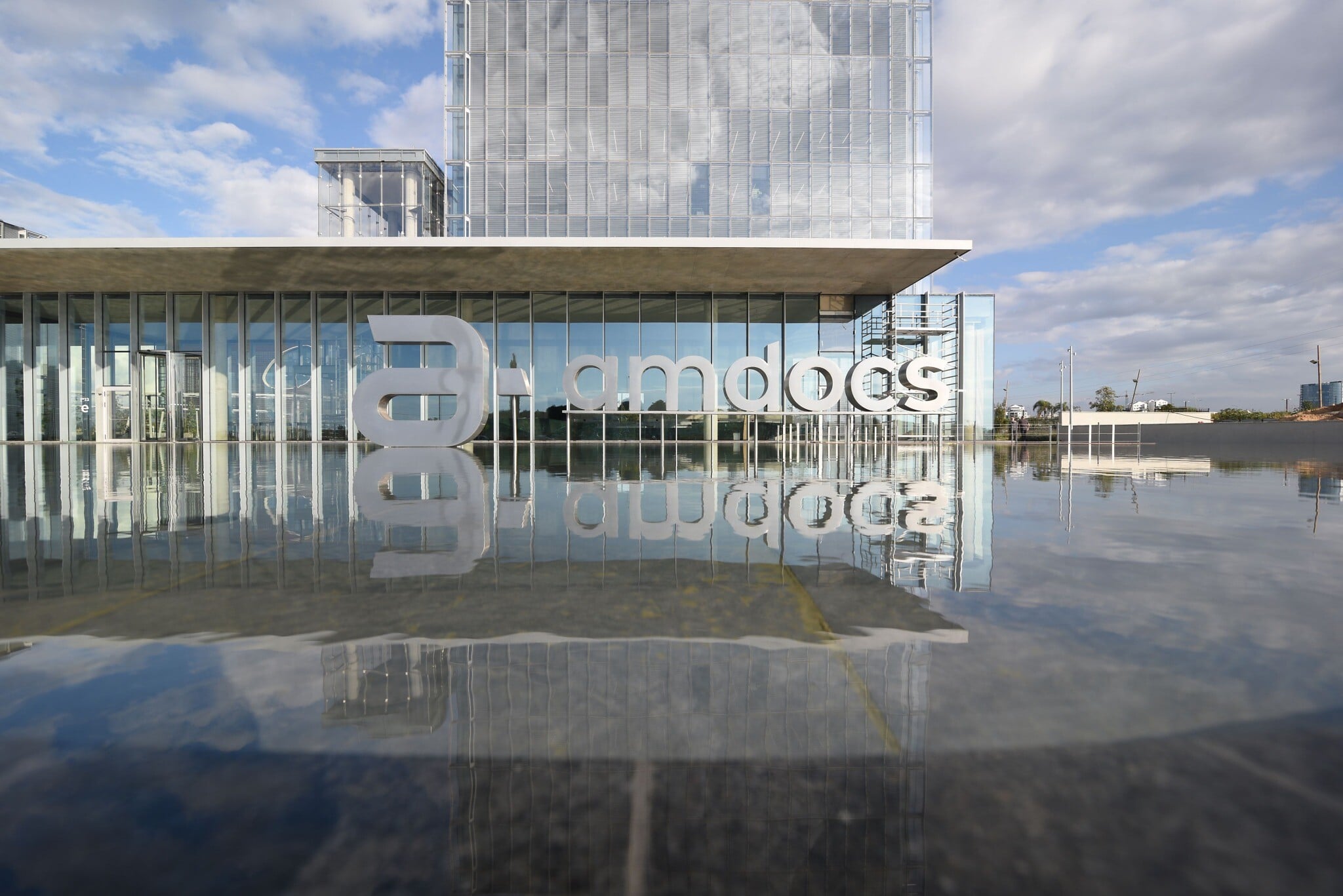
Amdocs Park in Ra’anana. (Courtesy of Oron Golkarov)
It comes after major Israeli tech companies Wix, Rapyd and Amdocs all announced mass layoffs in recent weeks.
Wix, a maker of do-it-yourself website building software, on Thursday confirmed reports that it is cutting as many as 1,000 employees — or about 20 percent of its workforce in Israel and abroad — as the continued strength of the shekel has been driving up costs.
Rapyd, a fintech unicorn, did not disclose any details regarding the scale of the planned layoffs, other than that it will rely on a more focused and professional team. Rapyd employs around 700 people globally, including its Tel Aviv-based workforce.
Amdocs, a software and communications firm, is said to be preparing to reduce its global workforce by 10 percent, which is slated to affect as many as 3,000 employees, including hundreds in Israel, according to Hebrew media reports.
Local tech exporters and manufacturers have long been warning about the increasingly damaging impact of the strong shekel on Israel’s industry and economy, while urging the Bank of Israel and the Finance Ministry to intervene and slow the continued appreciation of the local currency.
Discover Israel’s most beloved poet

She died more than four decades ago, but Leah Goldberg remains a magnetic and enigmatic figure: Israel’s most beloved poet, a powerful woman who lived with her mother and never married, who reinvented herself from the ashes of World War I through her magical writing.
You can screen ‘The Five Houses of Leah Goldberg’ June 4-11. Join The Times of Israel Community today to support our work and watch this and other outstanding documentary films in our DocuNation series.
Already a member? Sign in to stop seeing this
You’re a dedicated reader

That’s why we started the Times of Israel – to provide discerning readers like you with must-read coverage of Israel and the Jewish world.
So now we have a request. Unlike other news outlets, we haven’t put up a paywall. But as the journalism we do is costly, we invite readers for whom The Times of Israel has become important to help support our work by joining The Times of Israel Community.
For as little as $6 a month you can help support our quality journalism while enjoying The Times of Israel AD-FREE, as well as accessing exclusive content available only to Times of Israel Community members.
Thank you,
David Horovitz, Founding Editor of The Times of Israel