
Every ocean fish swallows seawater to survive, and what comes in must come out. Excess calcium and carbonate end up packed into solid white pellets inside the gut, then shed back into the sea. Scientists have mapped which fish proteins drive that process.
In 1991, researchers took a close look at those pellets and found bacteria clinging to the mineral surfaces. Nobody looked more closely at why for 30 years. A new study just did.
Pellets from a fish’s gut

To stay hydrated in saltwater, bony ocean fish drink the ocean, then process the excess minerals out of their intestines as solid deposits.
These deposits, called ichthyocarbonates, get pushed out with their waste. The whole routine keeps the fish from drying out.
For decades, scientists chalked this up to fish physiology alone – enzymes and transporters in the gut doing the chemical heavy lifting.
A handful of fish proteins were identified, the process seemed reasonably well mapped, and the story looked more or less finished.
New work out of the University of Miami (UM) complicates that picture. Anthony Bonacolta, a former graduate student in the school’s Department of Marine Biology and Ecology, led the research.
He and his colleagues found that bacteria living in the fish’s gut may also be part of the process. The fish may not be acting alone.
Inside the toadfish experiment
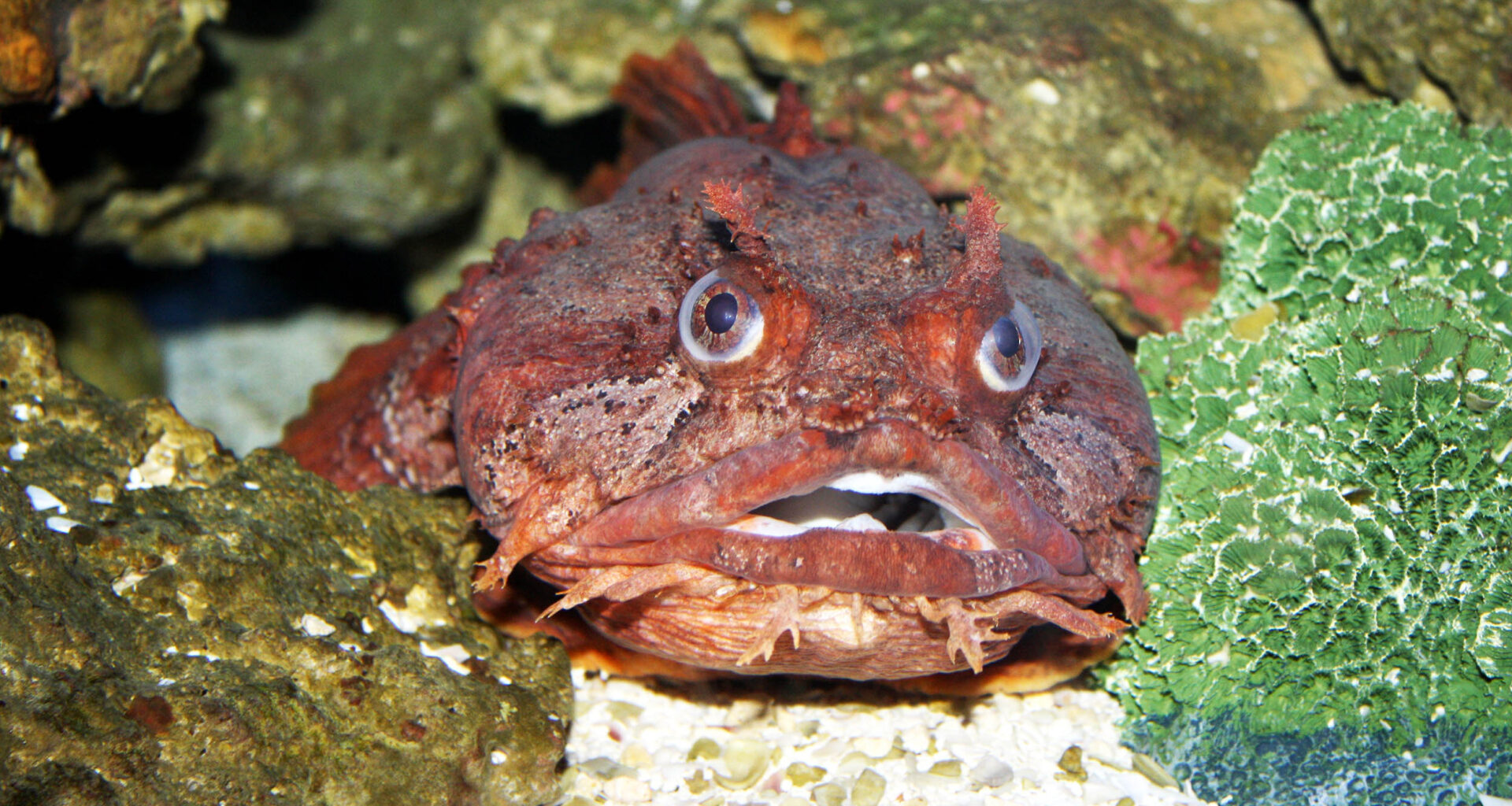
The Gulf toadfish is a stout, unglamorous bottom-dweller common in the shallow bays of Florida. Physiology labs have kept it for decades, which made it a sensible choice for a question this old.
Researchers kept the toadfish at three salt levels – brackish, normal seawater, and saltier than the open ocean. Fish in brackish water made no pellets.
At higher salinities, production climbed, peaking in the saltiest tanks, exactly as the chemistry predicted.
Then the team examined what was living inside those guts and clinging to the pellets. They pulled genetic material from different sections of the intestine and from the pellets themselves. Researchers analyzed it to see which microbes were there and which genes were active.
Tiny gut microbes with a purpose
One group stood out. Vibrio and their close relatives swarmed the pellets, far more concentrated there than anywhere else in the gut.
One species in particular, Photobacterium damselae – which breaks down urea – clustered densest where the minerals were forming.
These bacteria were not just clinging there. Gene activity in those bacteria pointed toward bicarbonate production, and bicarbonate is the raw ingredient those pellets are built from. A lab analysis confirmed the same capacity was encoded throughout the microbial community.
The fish may be supplying part of the chemistry, and the bacteria potentially more. No previous study had examined whether gut microbes in fish could contribute to the process at all.
Fish and gut microbes team up
What the researchers describe is a possible partnership, each side potentially contributing something the other needs.
Dr. Martin Grosell, a professor of ichthyology who chairs the department at the school, helped lead the study. He draws a comparison to alliances well documented elsewhere in the sea.
The ocean runs on such arrangements, from coral reefs that depend on symbiotic microbes to the bond between the bobtail squid and a glowing bacterium that helps it hide from predators. A toadfish-microbe partnership may be the newest entry on that list.
“What was previously thought to be a process driven solely by the fish may actually reflect a close symbiosis between the fish and its gut microbial community,” said Dr. Grosell. The bacteria, long dismissed as bystanders, may be active contributors.
Small fish, huge impact
This is where the toadfish stops being a curiosity. Ocean fish together churn out an enormous volume of mineral pellets every year, and recent estimates put them among the ocean’s top carbonate producers – rivaling the floating plankton usually credited with the job.
That output connects directly to how the ocean handles carbon. As the pellets dissolve while sinking, they alter seawater chemistry in ways that affect how much the ocean can absorb.
A study found that organic coatings on the minerals slow their breakdown, letting some sink deep before they dissolve.
Warmer, more acidic oceans push fish to make even more pellets, so the contribution is set to grow as the climate changes. The ocean’s response to that added carbonate is a question now drawing more research attention.
Rethinking how oceans store carbon
The takeaway is straightforward. A process long credited entirely to fish appears to be a joint effort with bacteria, and the leading microbial contributor was previously known mainly as an occasional troublemaker. Ocean carbon models may need to account for it.
The work comes with honest limits. Researchers studied one species in tanks, with a modest number of fish, and they have not yet measured exactly how much of each pellet the bacteria build versus the fish.
Whether this partnership holds across other ocean fish species is the obvious next question.
If it does, models estimating how the ocean stores carbon may need to account for gut microbes in fish they have never included.
A separate paper on deep-sea fish has already flagged the barely studied midwater zone as another likely contributor. It is a new variable to chase, hidden in the guts of fish swimming in every ocean on Earth.
The study is published in the journal PLOS Biology.
—–
Like what you read? Subscribe to our newsletter for engaging articles, exclusive content, and the latest updates.
Check us out on EarthSnap, a free app brought to you by Eric Ralls and Earth.com.
—–