
We’ve seen plenty of weekend rainfall across Massachusetts and New England since the start of meteorological spring, March 1, but the amount of precipitation has been nowhere near what the region needs to get out of this prolonged drought.
Massachusetts officials said Tuesday that the state continues to slip deeper into drought, prompting towns and cities to institute bans limiting water use across the Commonwealth.
The Drought Management Task Force noted that the excessively dry conditions have worsened in southeastern parts of the state as well as on Cape Cod and the islands, placing them now under a Level 2, “significant drought,” with the most of the state. The Boston metro area and northeast corner of the state remain in a more severe Level 3 or “critical drought” status.
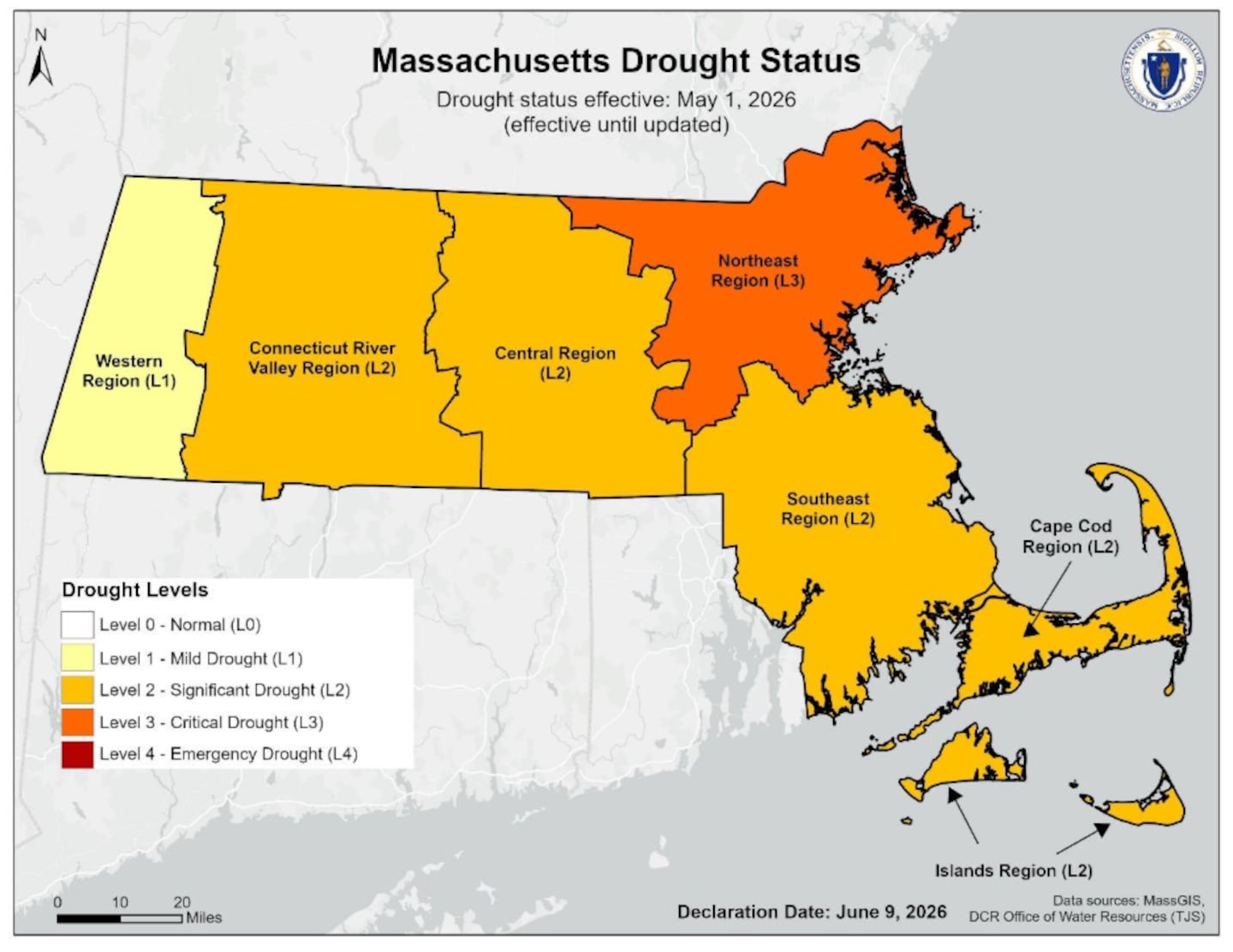 Drought conditions have reached critical levels across portions of Northeast Massachusetts.DCR of Massachusetts
Months of below-average rainfall have led to declining streamflows and groundwater levels. In fact, we’ve been dealing with the effects of long-term rainfall deficits across the state, stretching back nearly two years.
Many Boston area residents are being asked to halt any nonessential outdoor water use. Other communities across the state are telling residents to limit outdoor watering, and instead do so either in the early morning or evening, so the water doesn’t simply evaporate and has some time to drain into the soil.
May was particularly dry, with most areas picking up just 1 to 3 inches of rain, which is 1 to 3 inches below the monthly norm. Any rain event we saw in recent weeks only temporarily boosted the water supply, since the hot temperatures quickly purged the water from the topsoil, with groundwater supplies dipping quickly.
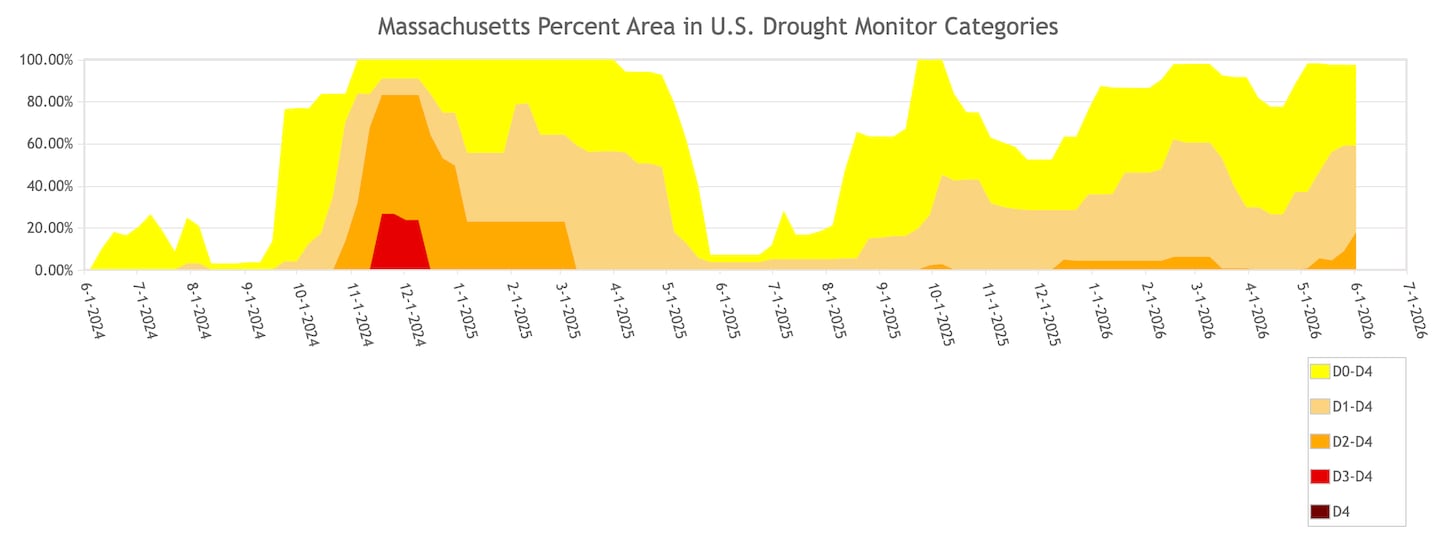 Half of Massachusetts has been abnormally dry or worse since August 2025.U.S. Drought Monitor
The concern here is that groundwater supply and streamflows act as a savings account, and those reserves have been steadily shrinking despite the occasional rainfall. The region needs a persistent stormy weather pattern that delivers steady rain that actually accumulates under our feet.
Taking a quick peek at how much rain the region has received compared to normal (100 percent) over the past 30 days, only portions of Northern New England have seen a noticeable jump in precipitation.
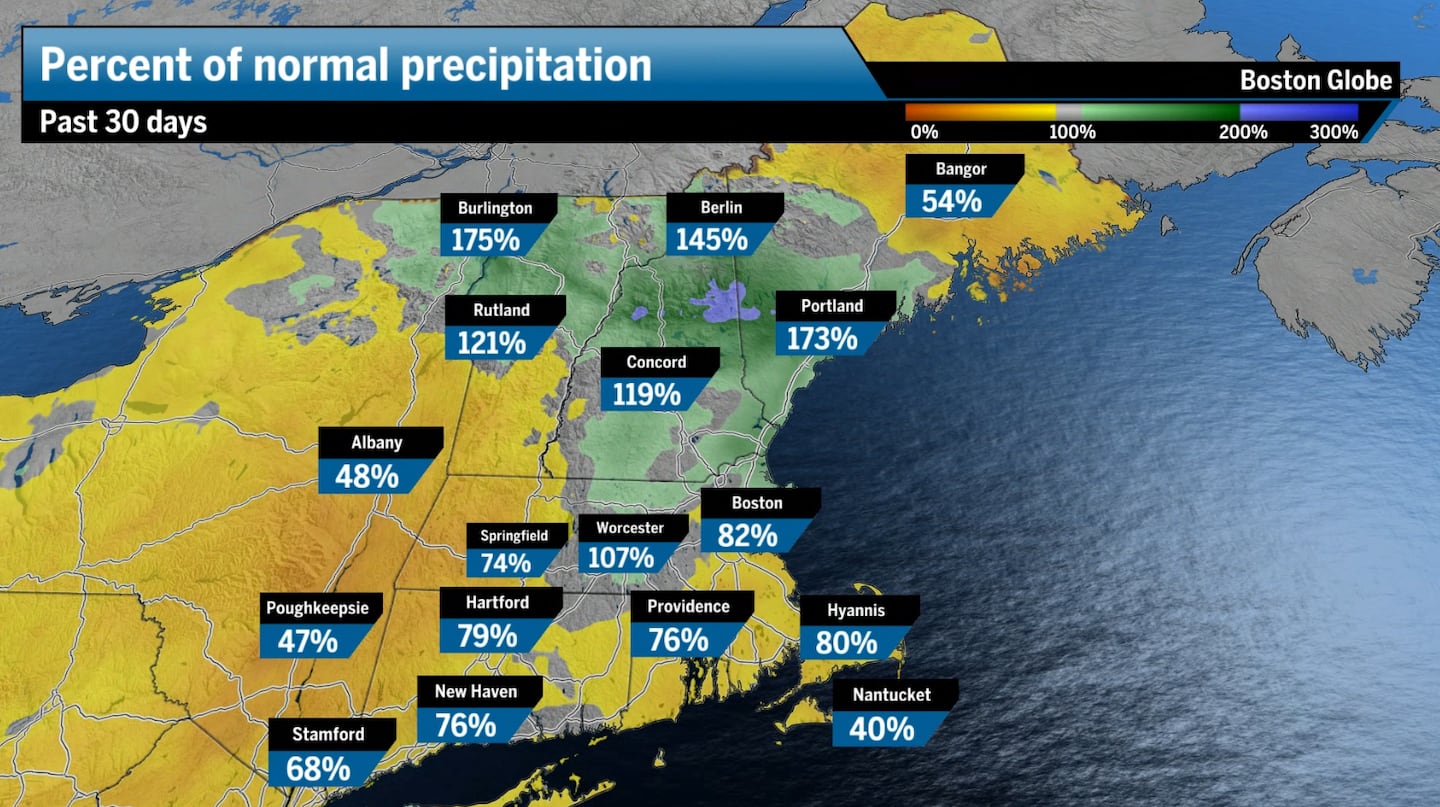 Only portions of Northern New England have seen significant rainfall over the last 30 days.Boston Globe
The U.S. Drought Monitor, which uses different thresholds to measure drought conditions, still has the majority of New England running abnormally dry to severe drought levels.
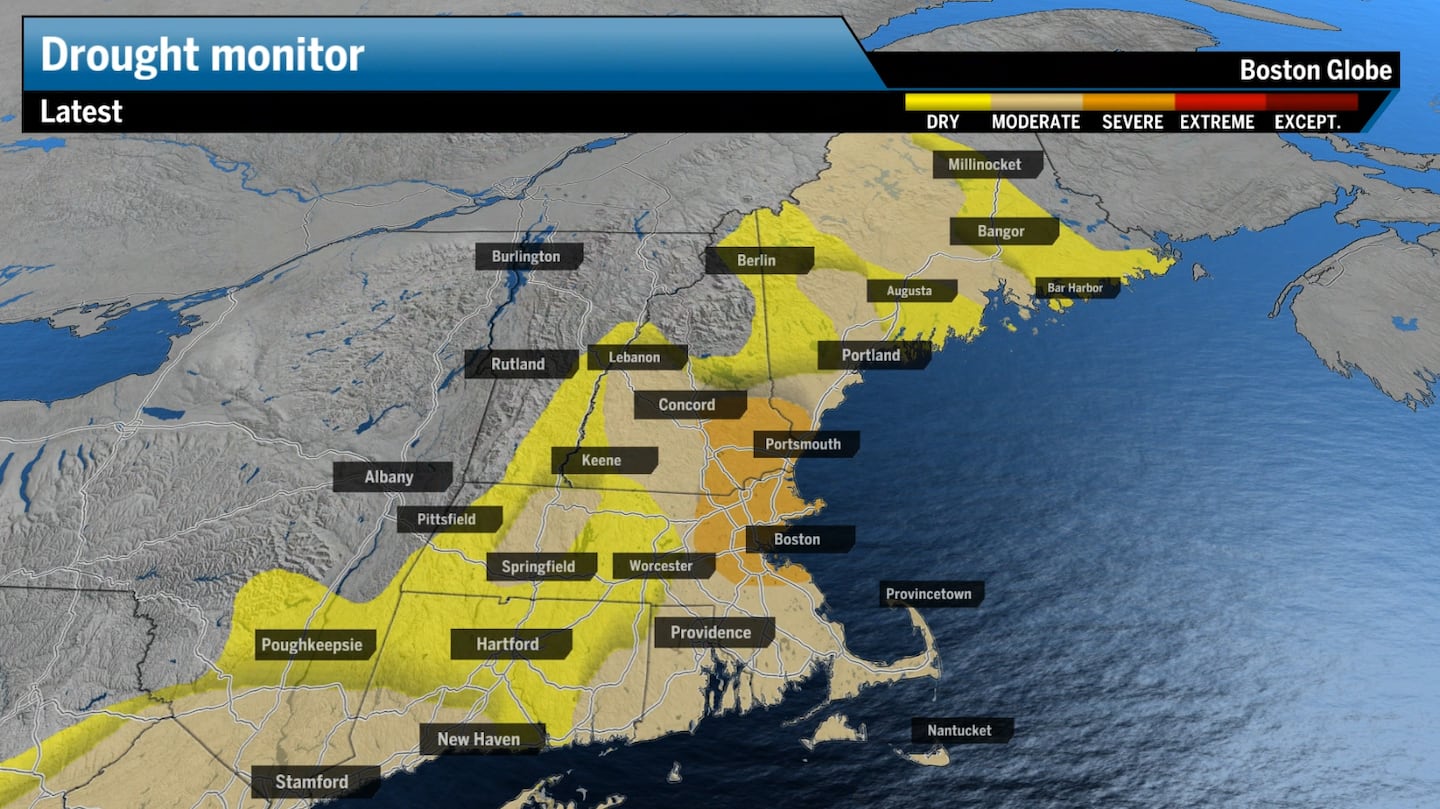 The US Drought Monitor shows a good portion of Southern New England still in drought. The Boston area, northeastern Mass., and southeastern New Hampshire are now under a “severe drought.”Boston Globe
The good news is that no widespread water emergencies have developed — yet. Water conservation now can help prevent bigger problems down the road as we head deeper into summer.
Ken Mahan can be reached at ken.mahan@globe.com. Follow him on Instagram @kenmahantheweatherman.