
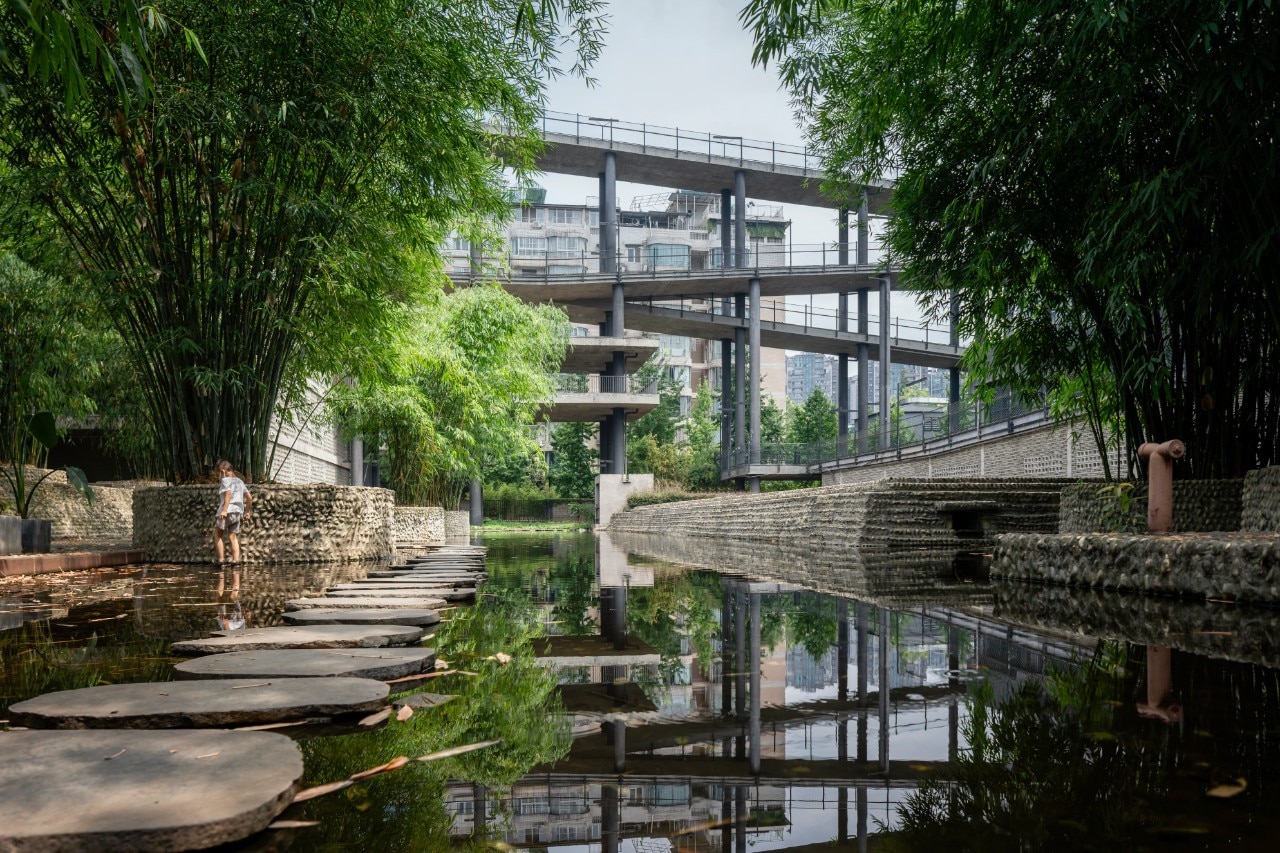
Every demolition produces a mountain of materials. Bricks, beams, concrete, glass: what was architecture just the day before suddenly becomes waste. Natural disasters, urban regeneration and ever-shorter building cycles are fuelling a growing volume of waste that, in most cases, is destined to be removed from the construction process.
Yet, what is rejected can become a resource. Recycling means working with what is already available, reducing the consumption of new raw materials and limiting the environmental and economic impact of disposal. A choice often dictated by necessity rather than ideological motivations, but in recent decades also taking on an increasingly broad design and cultural meaning.
Over time, architecture has progressively broadened the definition of reuse. Waste has ceased to be merely a response to emergency situations and has become a genuine design material. Waste is no longer a worthless leftover, but a material that preserves traces of buildings, places and communities. From this perspective, recycling can also take on a symbolic function, transforming fragments of the past into elements of a new construction. One example is Piero Bottoni’s Monte Stella, built from the rubble of the Second World War and which has become one of the symbols of Milan’s rebirth.
More recently, technological advances have opened up new possibilities for the recovery and transformation of materials, thanks to increasingly sophisticated processes of selection, processing and reuse. In urban contexts, the housing crisis, property market constraints and the increase in land and raw material costs have further encouraged experimentation: from Keetwonen containers, designed by Tempohousing in Amsterdam to address the shortage of student accommodation, to residential projects built largely from reclaimed materials, such as Upcycle Studios or Resource Rows by Lendager in Copenhagen.