
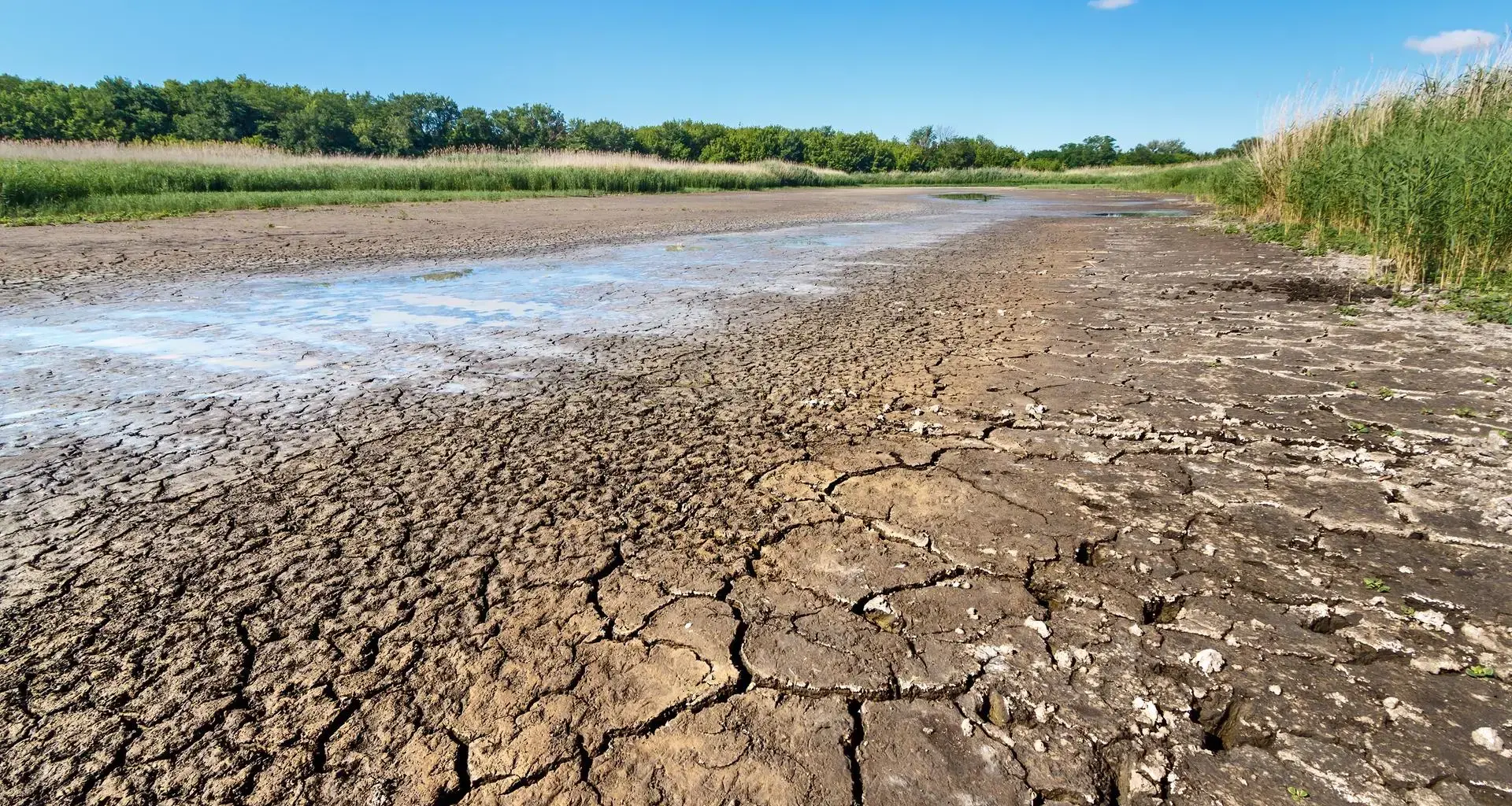
While drought is a recurring seasonal event, it is rarely a uniform phenomenon. To measure how changing climate patterns affect agriculture and municipal infrastructure, environmental scientists evaluate three distinct phases of a dry spell: meteorological, agricultural, and hydrological.
1. Meteorological drought: atmospheric deficit
Meteorological drought is defined by a prolonged lack of precipitation. Essentially, the region gets less rain or snow than it normally would over a period of weeks or months.
This phase is purely atmospheric. A meteorological drought measures what is happening in the sky, not in the ground; it does not indicate soil moisture levels or water supply status. It is simply the initial shortage that triggers broader environmental impacts.
2. Agricultural drought: soil depletion
When a lack of rainfall persists, it advances into agricultural, or soil moisture drought. This phase impacts the top layers of earth, typically down to about 6 feet (2 meters).
Because topsoil reacts quickly to immediate weather patterns, an agricultural drought can set in rapidly during a hot, dry spell, but it can also recover just as fast with a few days of heavy rain.
This volatility causes immediate issues for farming, local ecosystems, and landscaping, but it is not an indicator of a broader water shortage. Topsoil can be completely parched while deeper municipal reservoirs and groundwater levels are stable.
Even without looking to the future, the current trend is already clear. Data compiled by the United Nations Convention to Combat Desertification shows that the global frequency and duration of dry spells have already surged by 29% since the year 2000 compared to the previous two decades, with the agricultural sector absorbing over 80% of the resulting economic impact.
3. Hydrological drought: systemic exhaustion
Hydrological drought is the most severe stage, occurring when a long-term lack of rainfall bypasses the topsoil and depletes deeper water systems.
During a hydrological drought, the water levels in aquifers, rivers, and reservoirs drop significantly. Any drop in these reserves threatens the core water supply, as underground aquifers and surface reservoirs provide nearly all of our usable water.
Once aquifer levels drop, strict usage restrictions follow. Severe shortages can shut down municipal drinking supplies completely, turning a surface level agricultural issue into a full scale infrastructure failure