
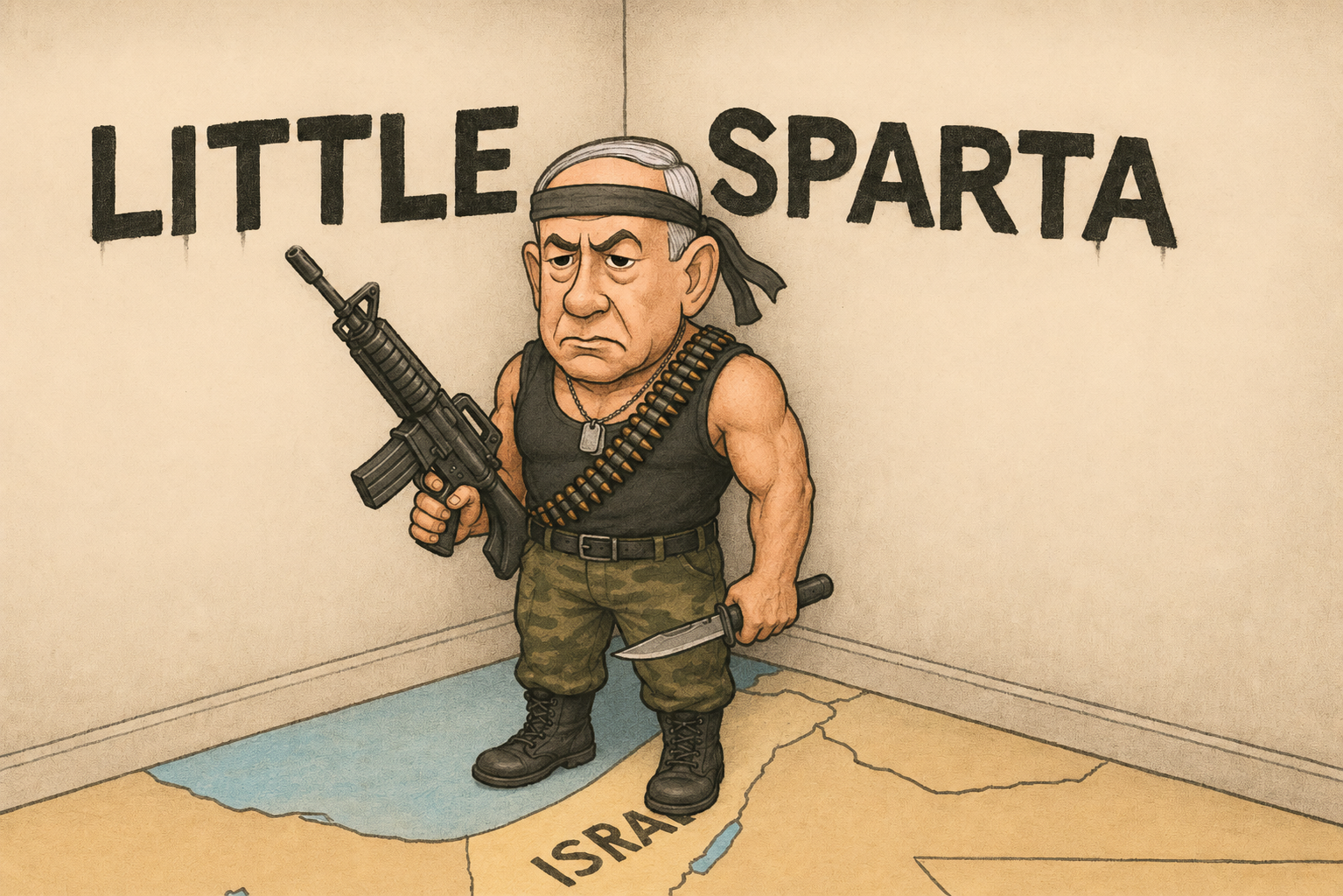
The Strategic Shift
The last three years has made a simple truth unavoidable: military dominance is no longer a reliable path to lasting security in the Middle East. Where states once sought regional order through overwhelming force, a different logic is taking hold — one built on interdependence, economic ties, and diplomatic engagement. That shift does not erase real threats, but it changes the means by which durable security is most likely to be achieved. Retreat from maximalist aims can be a strategic choice rather than a moral or political capitulation, if it is framed and executed as a deliberate repositioning toward a more defensible posture.
Public Consent and Democratic Limits
In democracies the public is not a passive audience; it is the engine of strategy. Wars are sustained not only by tanks and missiles but by the willingness of citizens to bear the human, economic, and moral costs. Two publics can perceive the same threats and reach very different conclusions about how to respond. One accepts the limits of force and invests in diplomacy, economic integration, and deterrence. The other insists on maximal military solutions and treats any withdrawal or compromise as existential failure. The difference is not merely intellectual; it is about what a society is willing to sustain politically and economically over time. The American public has already rendered its verdict. Shaped by three decades of inconclusive warfare in Vietnam, Afghanistan, and Iraq, it has largely concluded that military campaigns without defined endpoints and achievable objectives are not worth the cost. That verdict is not isolationism — it is a recalibration of what force can accomplish and at what price. It constitutes a structural constraint on any strategy that requires sustained American military participation.
Why Fear Is Real But Doctrine Is Failing
Israeli fears are legitimate. Asymmetric attacks, proxy networks, and a hostile state actor armed with ballistic missiles — and potentially nuclear warheads — present immediate and consequential dangers. The question is not whether threats exist but whether the doctrine deployed to address them is producing security or its opposite.
For decades, Israeli strategic culture — and Netanyahu’s government in particular — has operated on a foundational premise: that Arab and Muslim adversaries respond only to military pressure, rendering diplomacy either premature or structurally naive. That premise has shaped nearly every major Israeli strategic decision since Oslo, and it has produced a specific set of consequences now fully visible.
Netanyahu has stated his post October 7 doctrine with unusual candor. He has insisted that Israel “must have security control over the entire territory west of the Jordan River,” then dismissed the sovereignty implications with the words: “That collides with the idea of sovereignty. What can you do?” He has endorsed the transfer of Gaza’s population as “the only viable plan to enable a different future” for the region. When asked about Saudi Arabia’s position that normalization requires a Palestinian state, he rejected the idea dismissively: “Unless you want the Palestinian state to be in Saudi Arabia — they have plenty of territory.” These are not negotiating positions subject to adjustment. They are a coherent doctrine: Palestinian political legitimacy is foreclosed, population displacement and territorial annexation is the operational solution, and regional hegemony through military dominance is the strategic objective.
The problem is not that this doctrine is morally objectionable, though many would argue it is. The problem is that it is strategically self-defeating at precisely the moment when an alternative architecture was available and being actively offered.
The Diplomatic Architecture Israel Is Foreclosing
In 2002, the Arab League — including states with no prior history of accommodation with Israel — adopted the Arab Peace Initiative, offering full normalization with Israel in exchange for a Palestinian state on 1967 borders with East Jerusalem as its capital. That offer has stood for over two decades. The Abraham Accords of 2020 represented a partial deviation from that sequencing, with the UAE, Bahrain, Morocco, and Sudan moving toward normalization ahead of Palestinian statehood resolution. But Saudi Arabia, has consistently maintained that comprehensive normalization — the strategic prize Netanyahu has long sought — remains conditioned on meaningful progress toward Palestinian statehood. Saudi Foreign Minister Prince Faisal bin Farhan stated the kingdom’s position without ambiguity: “True normalization and true stability will only come through giving the Palestinians hope, through giving the Palestinians dignity. That requires giving the Palestinians a state.”
This is the load-bearing fact the force doctrine cannot accommodate. The Arab world executed a generational strategic pivot — from military confrontation to conditional normalization — and Israel’s response has been to treat that pivot as irrelevant. Netanyahu’s displacement doctrine and his categorical rejection of Palestinian sovereignty have foreclosed the Saudi normalization that would have anchored a new regional order, isolated Iran, and provided Israel the strategic depth that military campaigns alone cannot purchase.
Israel has been consequently fighting Iran and its proxies without the regional partner that rejection foreclosed, without U.S. public support for the sustained ground campaign that maximalist objectives would require, and with a population displacement and annexation policy that has alienated the overwhelming majority of the international community. This is not misfortune. It is the logical consequence of a doctrine that treats every diplomatic offer as a threat to be neutralized rather than an opportunity to be shaped.
Iran belongs in this analysis but as a distinct category. Unlike the Sunni Arab states, Iran has not pivoted toward accommodation — its strategy is explicitly designed to prevent the normalization architecture from consolidating, precisely because that architecture would isolate Tehran regionally. Israeli conflation of Iran with Hamas, Hezbollah, and the broader Arab world is therefore not just analytically imprecise; it is strategically self-defeating, because it forecloses alignment with the Sunni coalition that is likely the most credible instrument for containing or reshaping Iranian influence over the long term.
Reframing Retreat as Strategy
Retreat need not be surrender. The enlightened warrior treats repositioning as an opportunity to assume a more defensible stance and then makes that stance strong. Practically, this requires two linked moves. First, recast the narrative so that restraint is presented as deliberate strategy aimed at long-term security and prosperity rather than as concession extracted by adversaries. Second, sequence restraint with reciprocity: pair visible, time-bound restraint measures with the concrete diplomatic and economic initiatives — beginning with a credible phased pathway to a demilitarized Palestinian state — that unlock the regional architecture the Arab League has held open for twenty-four years. These steps preserve deterrence while opening avenues for influence that do not rely on perpetual warfare.
Conclusion
The Arab world has already made its strategic choice. Over two decades it has moved, imperfectly and incompletely, from confrontation toward a conditional but genuine offer of regional integration. That offer has a price — Palestinian statehood — and it has remained on the table through wars, assassinations, and the collapse of the Oslo process. Saudi Arabia has not withdrawn it. The Arab League has not rescinded it. The nascent Abraham Accords demonstrate that normalization is achievable when political will exists.
Israel under its current doctrine has declined to pay that price. The consequences are now visible: diplomatic isolation deepening, the Saudi normalization prize receding, Gaza’s destruction generating a generational cohort of adversaries, and the United States public unwilling to absorb the costs of campaigns whose strategic logic it no longer accepts.
The choice before Israeli society — and before the American public that underwrites Israeli security — is stark. The unenlightened warrior sees any concession as defeat and, by refusing to adapt, ensures the defeat he feared. The enlightened warrior sees repositioning as opportunity, assumes a more defensible position, and then makes that position strong. The current doctrine of uncompromising force has had decades to produce durable security. It has instead produced the conditions for its own failure.