
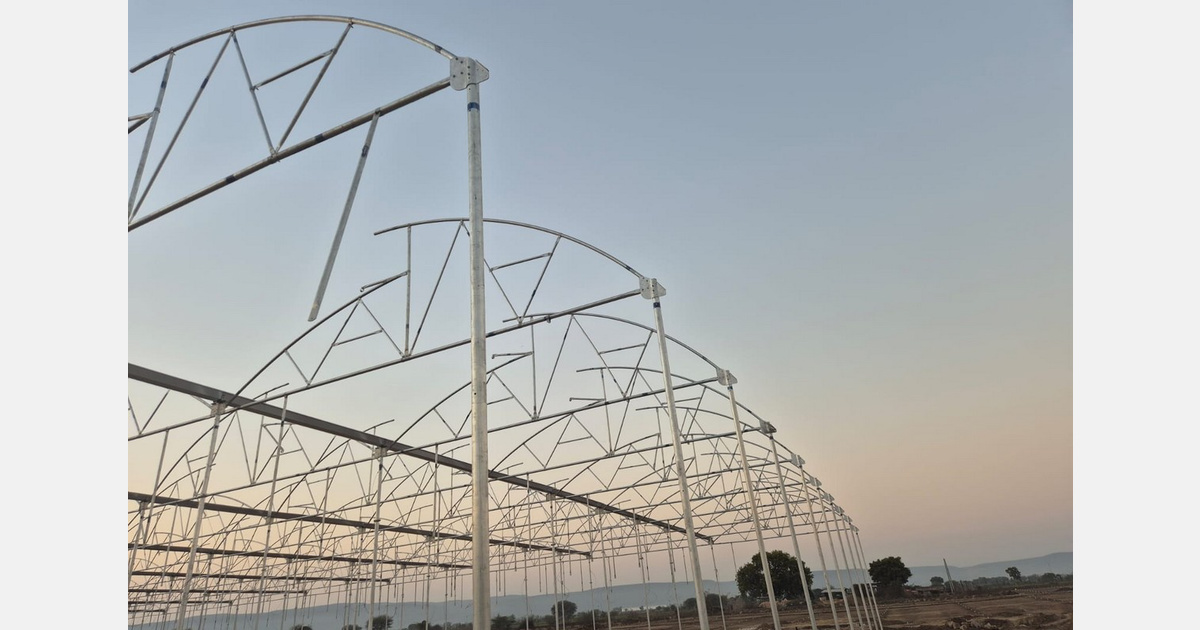
“India is not a market you simply enter; it is a market you decode,” says Vishal Kothari, Founder and CMD of greenhouse manufacturer Agrolt Solutions, when asked about the potential of this rapidly developing market — fresh vegetables and flowers, residue-free food, and rising demand for exotic varieties — in a sector shaped by climatic variation, state-level subsidy administration, and differences in execution conditions across regions. “A supplier who has mastered Maharashtra has not thereby entered Haryana.”
India’s protected cultivation sector is estimated at approximately US$1.15 billion, with projections of approximately US$1.9 billion by 2030 according to the Indian Greenhouse Manufacturers Association (IGMA). The sector is predominantly supported by central and state government grants and subsidies under schemes such as NHM, NHB programmes and RKVY, alongside collateral-free financing under the Agriculture Infrastructure Fund (AIF). Growth is linked to demand for residue-free horticultural produce, variability in open-field production conditions, government support under the Mission for Integrated Development of Horticulture (MIDH), and gradual adoption of controlled environment systems in commercial horticulture. The sector is also shaped by state-level implementation differences in subsidy administration and procurement processes.
Within this context, Agrolt Solutions Pvt. Ltd., based in Rajkot, operates as a manufacturer of greenhouse structures, components and systems, supplying through a national partner network. The company was founded in 2014 by Kothari after a decade on the agri-plastics side of the industry, with the aim of engineering structures and components that allow coverings — and therefore greenhouses — to perform. The company does not execute installation or EPC work directly. Its revenue structure is split approximately 55% from standardised components and accessories, 30% from complete CKD greenhouse kits, and 15% from automation and IoT systems.
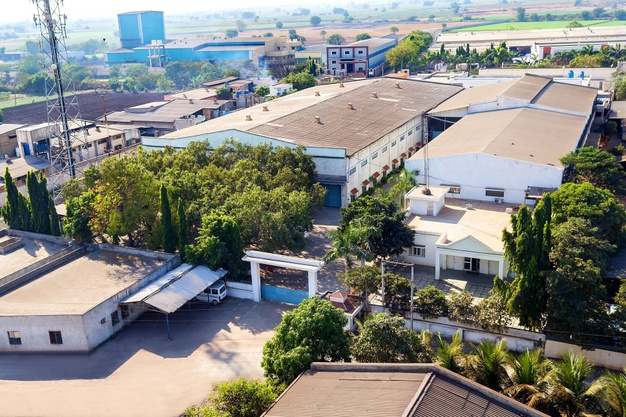 © Agrolt Solutions Pvt. Ltd.Agrolt’s manufacturing facilities in Rajkot — one of India’s engineering hubs — spread across 115,000 sq ft at two locations; among the largest integrated greenhouse manufacturing setups in India
Vishal Kothari describes the Indian greenhouse sector as structurally non-uniform. He links this variation to both climatic diversity and administrative fragmentation. India’s 28 states and 8 union territories operate separate MIDH subsidy frameworks, with differences in empanelment, approvals and implementation. Alongside this, agro-climatic conditions vary widely, ranging from arid high-temperature regions in Gujarat, high rainfall belts in Maharashtra’s Konkan, and cold desert conditions in Ladakh where winter temperatures can fall below minus 20 degrees Celsius.
Even within individual states, he notes, multiple sub-zones affect design requirements. Maharashtra includes coastal humidity zones in Konkan, dry inland heat in Vidarbha, and high rainfall areas in the Western Ghats. Gujarat includes arid Kutch, semi-arid Saurashtra and wetter southern regions. “The Indian greenhouse sector is fragmented, driven by climatic variation, subsidy administration differences and installation-based delivery constraints. Within states such as Maharashtra and Gujarat, multiple agro-climatic zones create different engineering requirements over short geographic distances. These include variations in humidity, rainfall intensity, wind exposure and temperature ranges. As a result, structural and operational specifications differ even within single procurement regions.”
These variations influence ventilation design, structural load requirements, drainage systems and material selection.
Agrolt structures its operations around a centralised production system supplying prefabricated greenhouse kits to a national partner network: “Manufacturing as a Service” (MaaS), where manufacturing is decoupled from installation and after-sales execution. “A partner in any district effectively shares a national-scale factory,” says Vishal. Installation and servicing are carried out by trained local partners, fabricators and dealers, while design and production remain centralised. Demand is aggregated across regions into standardised production streams
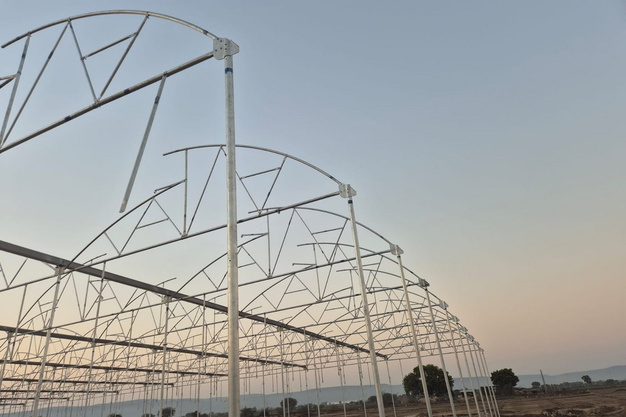 © Agrolt Solutions Pvt. Ltd.A tropical-vent greenhouse structure with 50% more ventilation area than the popular gothic vent on roof gables, optimised by Agrolt at 9-metre ridge height for effective temperature and humidity regulation in hot-humid tropical and semi-arid conditions
Engineering system and design standardisation
The company’s engineering model is based on a library of more than 150 standardised components and 16 greenhouse structure designs, supported by over 20 proprietary developments under intellectual property registration. These include structural profiles, ventilation systems and in-house climate automation and IoT solutions. Design output is generated through an internal algorithmic system, which converts site-specific climate data, crop requirements and structural load parameters into greenhouse designs and bills of material. The system is currently used internally across all projects, with external release planned. Engineering data includes regional wind, rainfall and temperature inputs, enabling pre-defined structural variants rather than project-specific design adaptation.
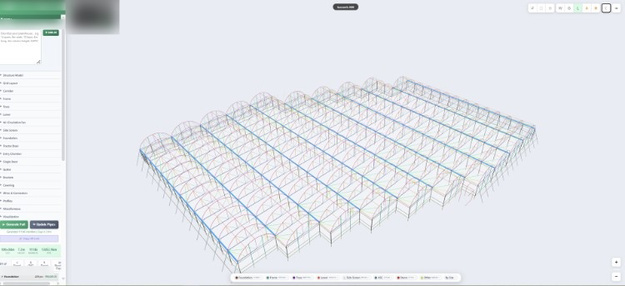 © Agrolt Solutions Pvt. Ltd.Indigenously developed Greenhouse Design Engine: Algorithmic 3D modelling, BOM generation, and instant quoting — from description to design in seconds
Traditional regional systems are also referenced in the company’s engineering approach. In Ladakh, passive solar greenhouses using thick mud walls for thermal regulation during sub-zero nights are cited as an example of local adaptation incorporated into engineered systems. “We engineer structures and components that convert that local evolution into a commercial-scale greenhouse solution,” says Vishal.
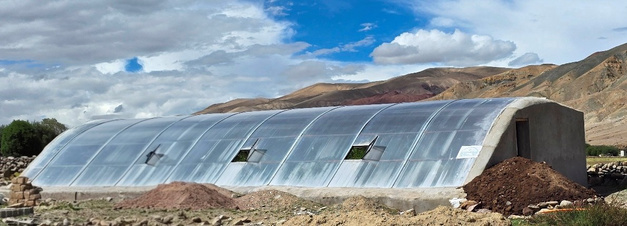 © Agrolt Solutions Pvt. Ltd.Passive solar greenhouses in the high-altitude desert of Ladakh
Technology integration and international suppliers
Agrolt integrates selected international components into its systems, including self-ventilating covering films from Daios Plastics and planetary gear motors from Maxpower. Technology selection is based on technical fit within Indian operating conditions and cost parameters. “We are completely agnostic about where good technology comes from,” says Vishal. “What we are not agnostic about is who carries it to the Indian grower.” The company positions its approach as integration of external technologies into domestic manufacturing and distribution systems, rather than import of complete greenhouse solutions.
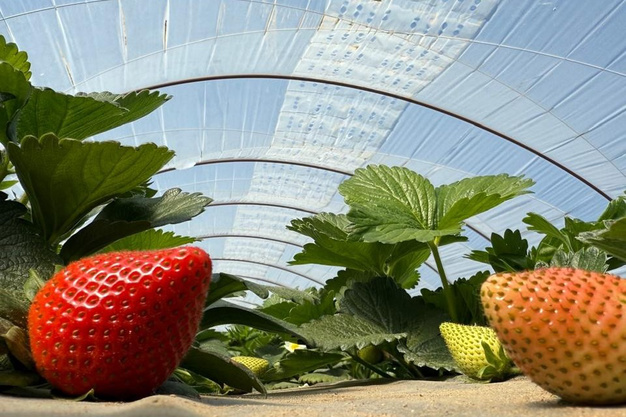 © Agrolt Solutions Pvt. Ltd.Greenhouse tunnels with self-ventilating plastic films from Daios Plastics SA, Greece
According to Vishal, the same model is the route the company proposes to established international suppliers seeking a position in the Indian market. “For reputed international suppliers, the practical way into India is technology transfer rather than commodity selling,” he says. “Bring the climate science, the experience, the growing know-how — and let it ride on an Indian manufacturing and distribution platform that already operates in these conditions. That is a partnership we are actively open to.”
Vishal explains that its engineering systems, developed for heat, wind and humidity stress conditions, are applicable to other warm-climate regions, including the Gulf and Middle East, where cooling-dominant greenhouse design is required. Cold-climate applications are also relevant, with Ladakh-based passive solar greenhouse systems considered relevant for energy-constrained environments in parts of Europe and Central Asia.
Product development and infrastructure plans
To answer the growing demand for protected cultivation and for knowledge, the company is developing an Experience and Demonstration Centre (EDC) intended to display more than 18 greenhouse designs with live crop observation. The facility is planned for grower and partner evaluation and training, with completion targeted around 2028. “Over the next three to five years, our planned priorities include expansion of manufacturing capacity, increased integration of automation and IoT systems, external release of our design engine, and scaling of the national partner network,” Vishal says. “We believe we can support growers as the Indian market evolves.”
For more information:
Vishal Kothari
Agrolt Solutions Pvt. Ltd.
Shapar, Rajkot, Gujarat, India
[email protected]
www.agrolt.com