
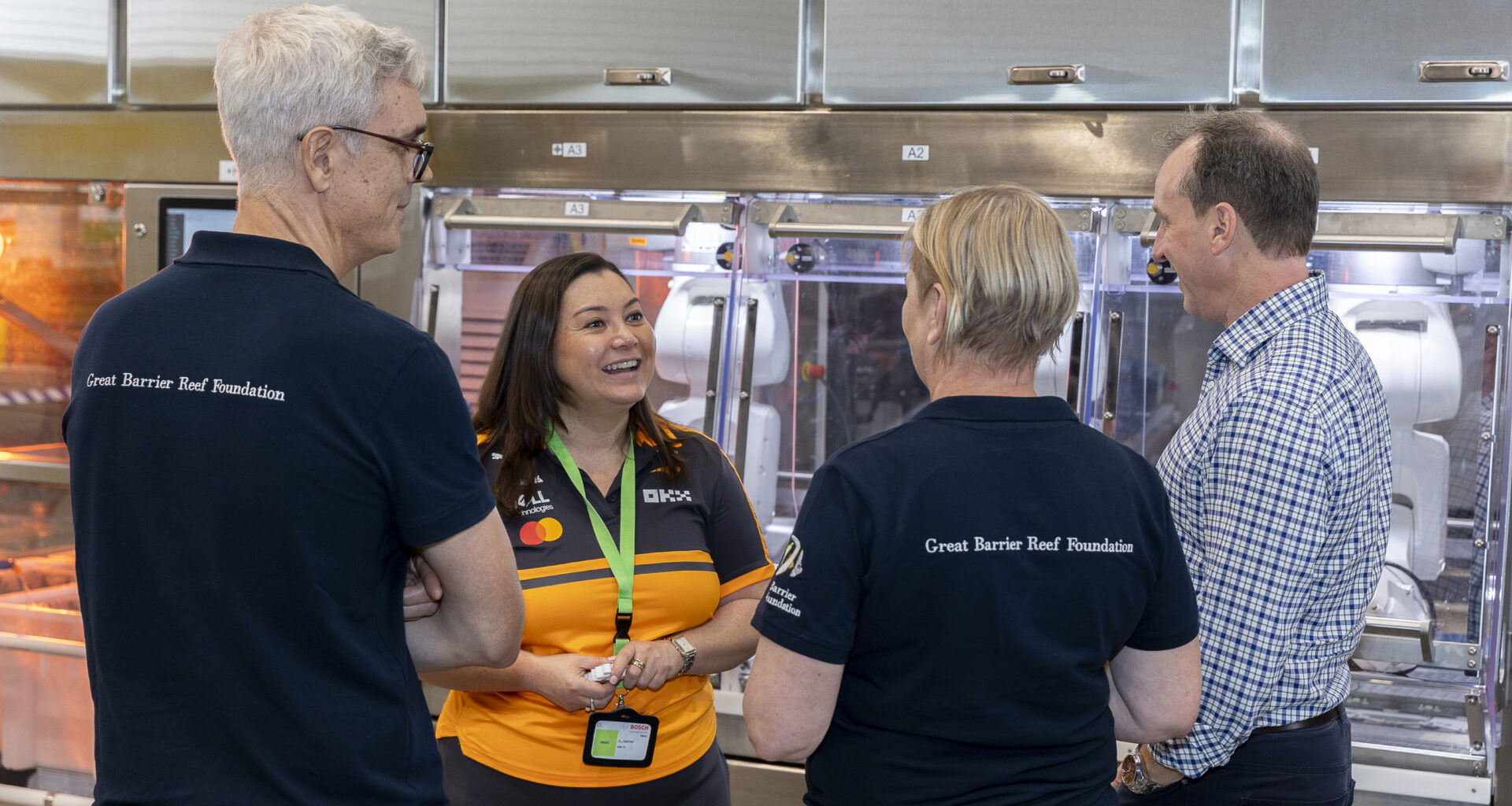
Once a year, coral spawning produces hundreds of thousands of tiny reproductive bundles, which scientists collect and grow in controlled conditions before returning them as more climate-resistant corals to damaged parts of the reef. Each coral is placed onto a small cradle device, a manual and labour-intensive process, which can take up to 90 seconds per device. OSCAR reduces this assembly time to 10 seconds, taking annual production from 100,000 to over one million cradles.
The system is currently being tested in Australia, with plans to roll it out to reefs worldwide.
As part of our Performance pillar, the report also shows how we’re fuelling performance by creating optimal environments. The McLaren Performance Hub is a facility at the McLaren Technology Centre (MTC) that offers free access to GP appointments, physiotherapy, mental health support, fitness classes and targeted health campaigns for all team members. In 2025, it completed its first full year of operation, with 47% of our people already using it at least once a week, and in the report we share the full picture of its impact on health and wellbeing.
2. Decoupling growth from impact
Doing more with less impact means optimising the positive power of our brand and business while reducing our footprint. This means ensuring that our environmental impact doesn’t scale in line with our growth, while maximising progress in the areas within our direct control.
McLaren Racing has gone through a period of sustained growth. Last year, we competed across five racing series, took part in 88 race events and continued to expand our global team, partner network and diverse global fanbase. With intensive car development ahead of the 2026 F1 regulation changes, that growth has brought a more complex supply chain and, in turn, a larger indirect emissions footprint, but we remain committed to decoupling our growth from our impact.
Looking at our own operations – our fuel and facilities, logistics, business travel, waste and merchandise – we’ve achieved a 39% reduction compared to our baseline. This is in large part due to our sustainable aviation fuel (SAF) programme in partnership with Ecolab, implementing operational projects, and optimising race calendars. Our average emissions per race also fell by 13% in 2025 compared to our baseline year of 2022.