
“Sailing through the strait will remain riskier and more costly than before the war,” Oxford Economics said in a research note on Monday. “As a result, physical flows are still likely to recover gradually rather than immediately, even if prices respond more quickly to signs that a credible reopening deal is in place.”
As US Energy Secretary Chris Wright said at that same energy conference last week, “I think it’s many months to get back to normal flows of energy.”
News of the US-Iran agreement is unlikely to immediately change the calculus of shipowners, seafarers, and maritime insurers. First, everybody in charge of a ship has to be sure that the strait is clear of mines. Then the tankers inside have to be unfouled (all sorts of things can grow on the hulls and propellers of idle ships after three months), and the stray sheep have to be gathered back to the flock. Then they have to load their cargo and take it to distant markets.
“Already depleted global petroleum inventories are likely to draw further pending mine removal, facility restarts, and unladen tankers’ travel to the region,” ClearView said in its note. Oil prices have calmed down, but they are still $20 a barrel higher than last year—and those futures prices are for deliveries at the end of the summer, not right now. “That could suggest traders think a return to status quo ante market balances and stock levels might still be months to years away.”
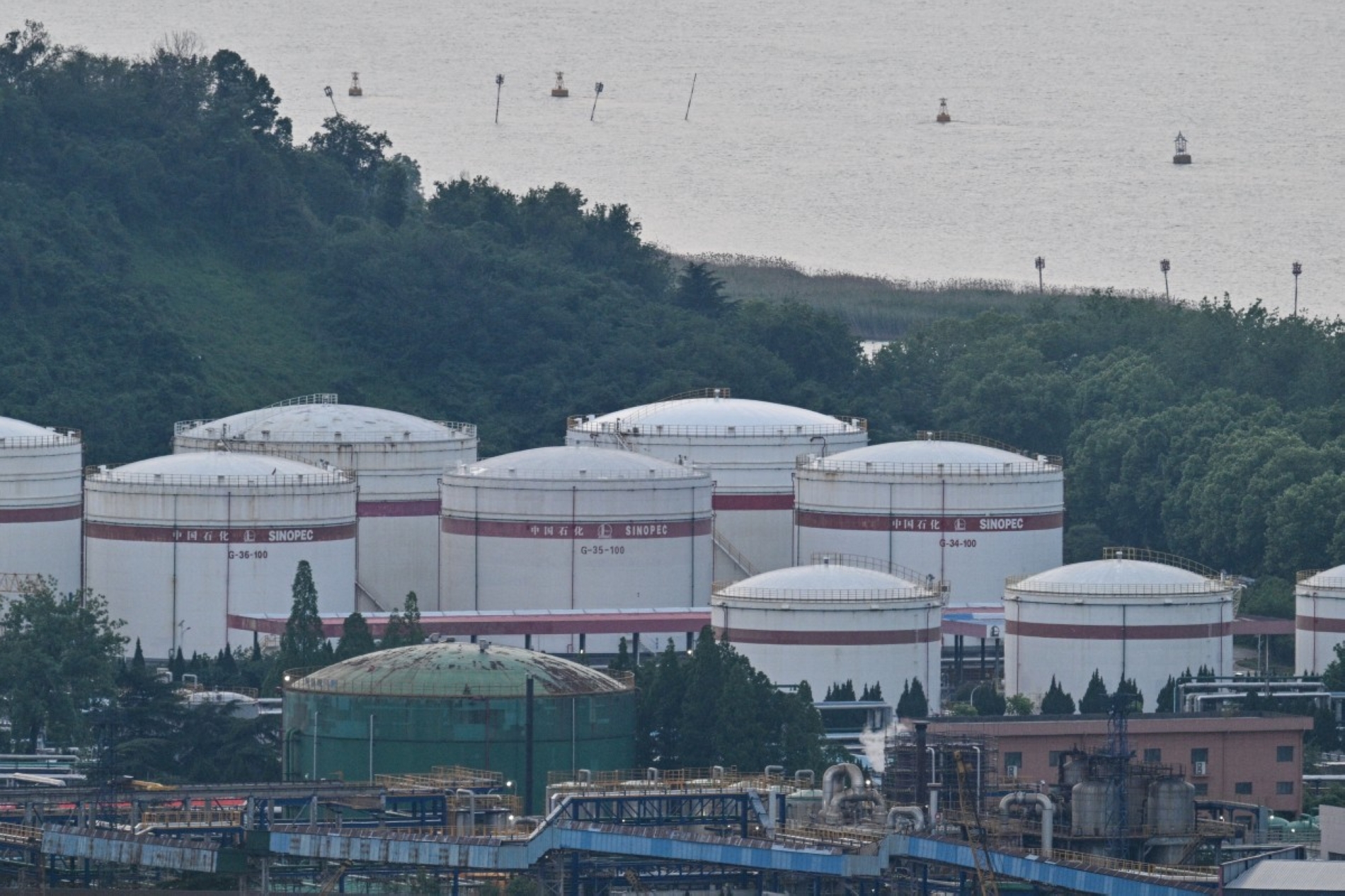 Sinopec storage tanks are seen at the crude oil refinery Sinopec Jinling Petrochemical Plant in Nanjing, in China’s eastern Jiangsu province on 8 May 2026.
And then there are the drawdowns. One big shock absorber over the last three months was the historic release of strategic oil reserves by some countries (both government and commercial stocks). The run on the tanks may ease up in July now that the framework for peace is in place, but the damage has been done. According to the US Energy Information Administration (EIA), oil inventories in OECD countries are already at their lowest level in more than 20 years.
“Because of the size of the drawdown in global inventories, we forecast that oil prices will remain elevated until global oil flows return to normal levels and oil inventories are replenished,” the EIA said in its June short-term energy outlook.
So unless there are several big surprises—producers bounce back quicker than expected, tankers return to the Gulf with no-worries nonchalance, and rapidly declining inventories don’t spook anyone—it is likely that oil prices will stay stubbornly high for a while yet. That certainly includes the 60-day period set aside for serious talks, including over the ostensible reason for the war in the first place, but it could be even longer.
A related question is why oil prices remained relatively restrained during the largest energy shock in history. While crude oil futures prices flirted with $120 a barrel at times, they never came close to the $150- or $200-a-barrel doomsday predictions.
The answers boil down to China, diversions, drawdowns, and jawbones.
China is the world’s largest oil importer, hoovering up about 11 million barrels a day in normal times. That fell to well under 8 million, and possibly as low as 6 million barrels, due to the crisis in the Gulf, where China gets most of its oil from. Beijing made up the difference by drawing on its ample stocks (China’s 1.4 billion or so barrels of oil reserves dwarf any other country) and by curtailing the export of refined products. China’s hunker-down defence was the demand destruction that helped keep oil prices from spiking.
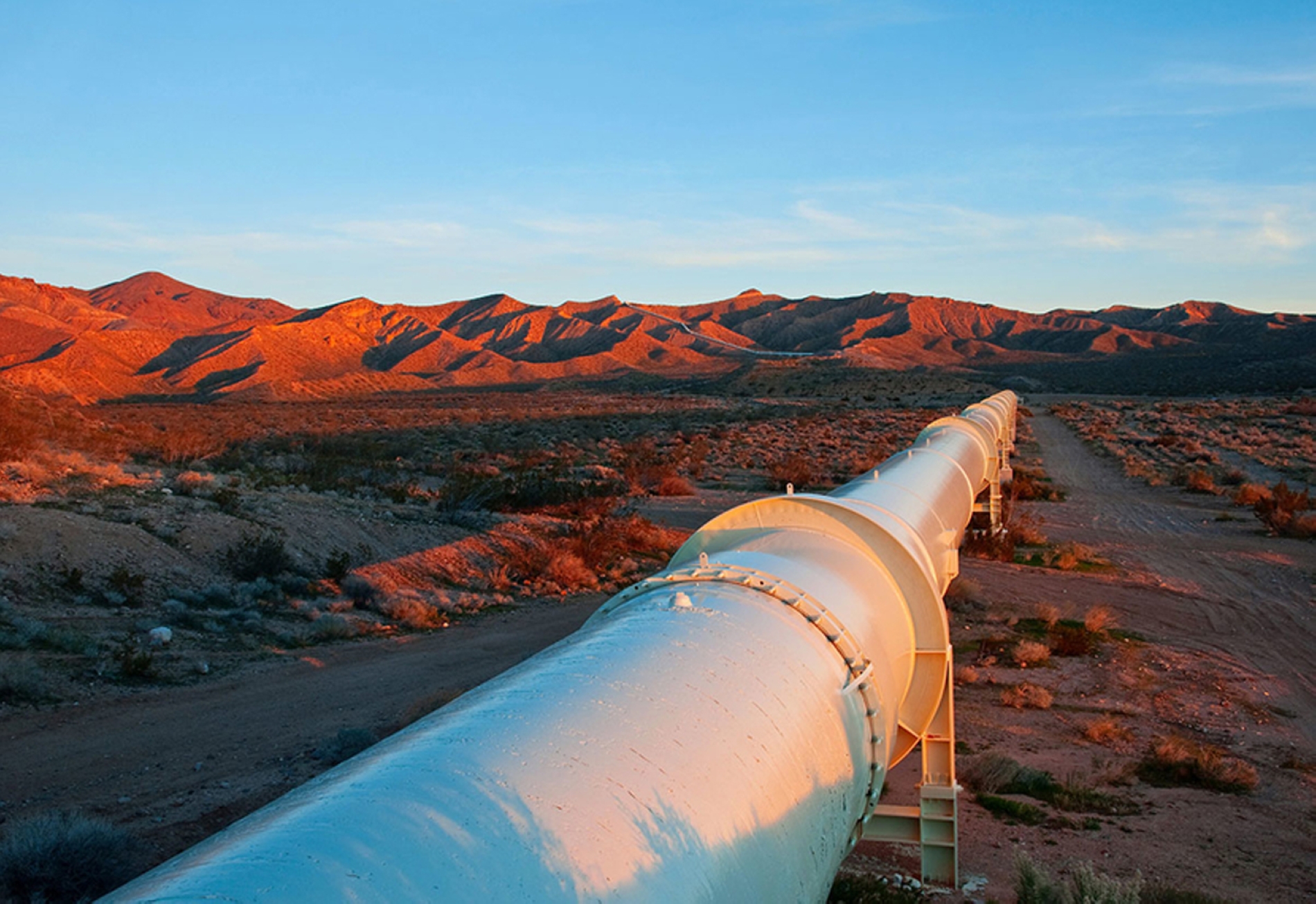 The Saudi East-West oil pipeline
Pipeline diversions were another big help. Saudi Arabia piped half its oil output across the desert to avoid Iran’s chokehold on the strait; the United Arab Emirates did something smaller but similar. That amounted to something like 7 million barrels a day that didn’t have to go through the Iran-controlled chokepoint.
At the same time, even though the United States gave up on escorting ships to force open the strait after a single day, it did help shepherd cargo ships and many tankers through a safer, non-Iranian route. The latest estimate by US officials suggests that as many as 3 million barrels a day may have snuck out of the double-blockaded strait by flying almost literally under the radar. (Tankers turned off their transponders, like “shadow fleet” tankers going dark.)
The other thing that helped was the release of strategic oil reserves, though that was a double-edged sword. The United States and Japan, as well as Europe, together released as many as 2.5 million barrels a day from storage to ease shortages. The problem is that those reserves, especially in the United States, will need to be restocked. That means there will be months of extra buying to fill those back up, adding to the usual summertime global demand for oil.
Add up the 3 million barrels a day at least from China’s forbearance, 7 million from alternate pipelines, 3 million from shadow fleets, and 2.5 million from reserves, and you’re well on the way to making up the 20 million barrels a day of prewar traffic through the Gulf. Those are four reasons the physical market didn’t implode.