
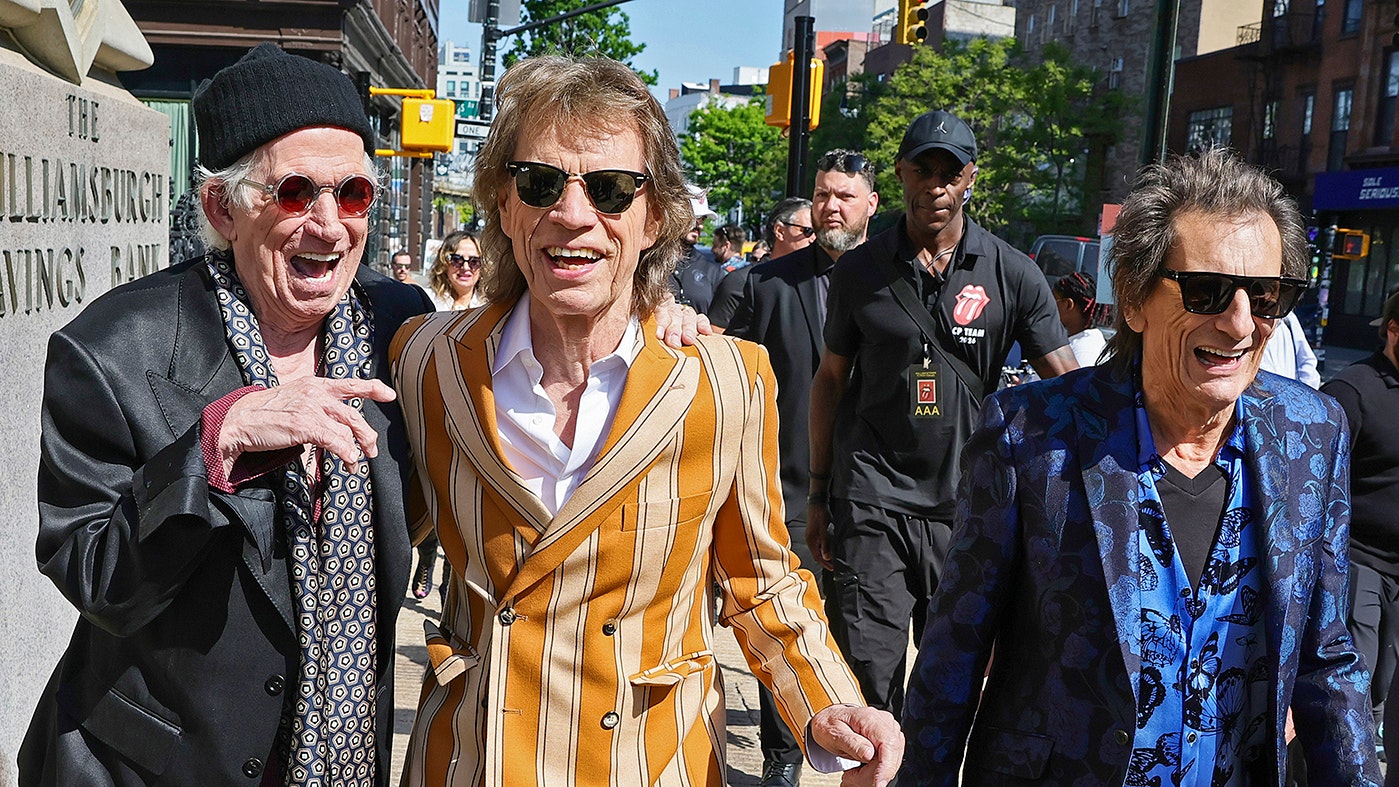
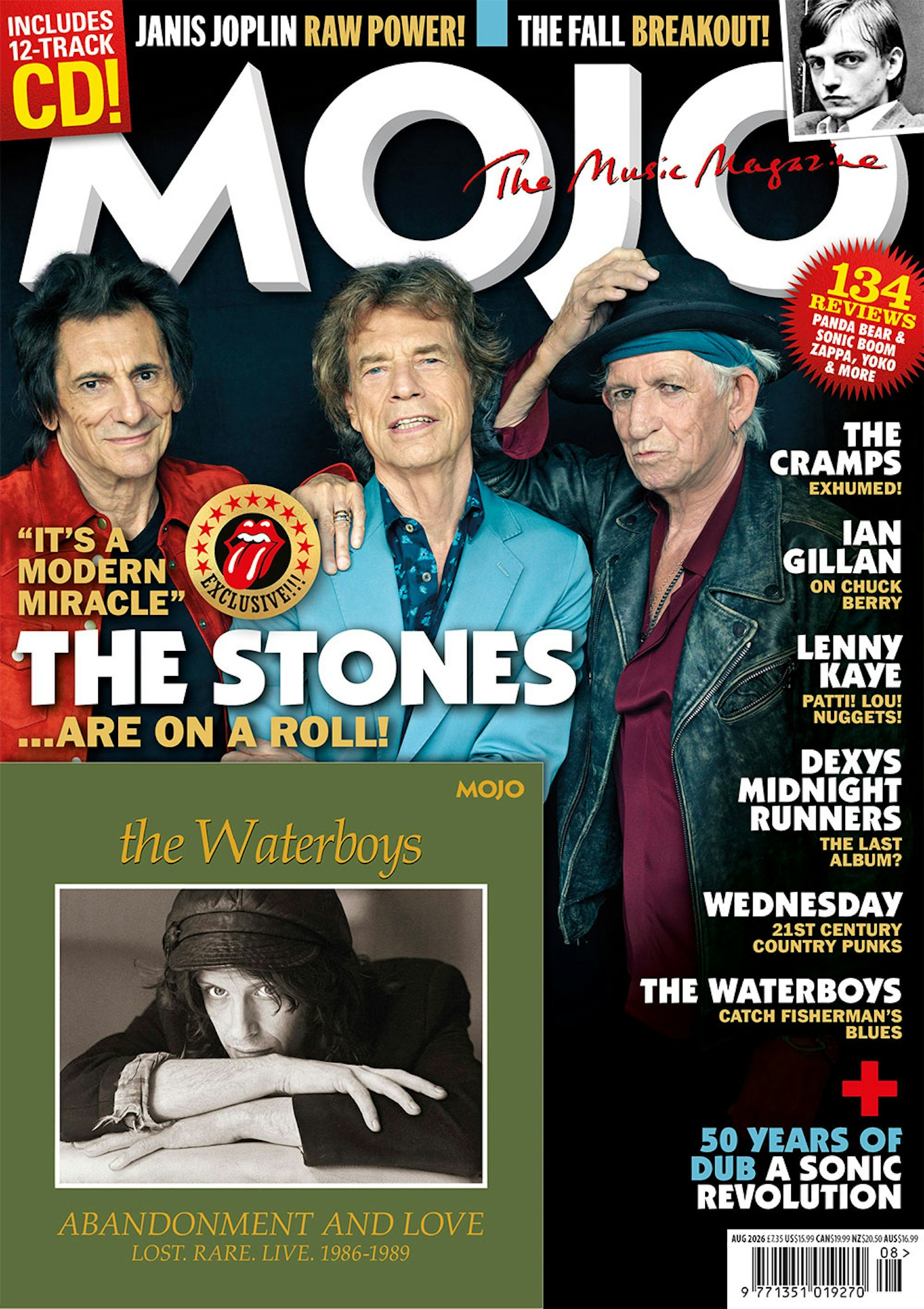
Speaking exclusively in the new issue of MOJO, on sale now, Mick Jagger and Keith Richards have discussed the political message behind one of the songs on their forthcoming new album, Foreign Tongues, the band’s longstanding relationship with America, and how the pair first started writing songs together in the 1960s.
Featured on the Stones’ 25th album, out July 10, Ringing Hollow is a classic Stones-styled country ballad that serves as both a love letter to America and a lament for what it has become. “Lady Liberty don’t look so good when there’s a tear in her gown,” sings Jagger on the track, which, like the rest of Foreign Tongues, was recorded with Hackney Diamonds producer Andrew Watt.
“It’s about America as an idea,” Jagger tells MOJO’s Will Hodgkinson. “The American Dream is intact for some people, and I’m sure we can find some wonderful immigrant stories that happened in the last 12 months, but we read about the decline of the American Empire. Is the Iran war America’s Suez moment? Well, it’s not the same at all, but there are a lot of questions about imperial overreach, and the lobbying system. The money spent on an election is absurd – it’s not corruption per se but unnecessary. Is it indicative of this administration, or is it something has been happening a long time? In any case, it’s not the same place as it was.”
In a career-spanning interview, Jagger and Richards reflect on how America and its culture have shaped The Rolling Stones, from their earliest days as blues and R&B-obsessed teenagers, to the making of their latest LP. The Stones launched their recording career in 1963 with a cover of Chuck Berry’s Come On, while Foreign Tongues ends with a recording of Berry’s 1958 song Beautiful Delilah. But, as Jagger reflects, the group have also seen a different side to the American dream than the one presented to them by rock’n’roll when they were growing up amid the dreariness of post-war Britain.
“I lived in New York for 19 years,” the singer confirms “I’ve seen lots of America that no Americans have seen because people on the coast never go to the clapped-out towns, the middle and the south. Every English band had a love affair with America. The Beatles retained their northern thing, and then John fell in love with New York.”
Jagger’s bandmate Richards is certainly one of those for whom America, and in particular, its music, has been a lifelong love and source of inspiration.
“I take Ringing Hollow to be about America when we were growing up in the ’50s,” says the guitarist. “The romance of it all: have a cocktail, smoke your cigarettes, play your jukeboxes. We were 14, 15 years old, dying for more black music from America, and slowly you go through the rock’n’rollers and realise that these cats all learned from Muddy Waters. Even now, if I’m stuck for an idea I’ll go back to the blues because the musical form is limited and that makes it all the more intriguing. You’re telling me you can get more out of this thing? Ringing Hollow is our way of saying: we love you.”
While The Rolling Stones’ first album, released in April 1964, was made up entirely of cover versions of American blues and R&B numbers, by their 1965 follow-up, The Rolling Stones No.2, Jagger and Richards’ songwriting partnership shifted the dynamic both within the group, who had been formed by doomed guitarist and blues purist Brian Jones, and that of British pop, which until then had been dominated by the more clean-cut image of The Beatles.
Although they only wrote their first song, so legend has it, when their first manager Andrew Loog Oldham locked them in a kitchen and refused to let them out until they came up with an original.
“I was never expecting to be a songwriter,” reflects Richards. “It only happened because of the sheer force of the business, to put it crudely.”
Jagger and Richards’ first original composition As Tears Go By, became a hit for Jagger’s soon-to-be girlfriend Marianne Faithfull in 1964 and set in motion a remarkable run of tracks which captured the tone of Britain as it dealt uneasily with the freedoms emerging from the rubble of World War II, from Mother’s Little Helper to Let’s Spend The Night Together: dispatches from an exciting but dangerous new world.
“I thought writing songs was on another plane, another level,” continues Richards. “Then I found out that if you worked at it, you hear melodies, you catch a phrase, and maybe songwriting is simply about being really quick. You find a rhythm or something in the street, like the honk of a horn, so thank you, Andrew Oldham, for that, even though he was doing it for himself… because we all needed the money.”
“There’s nothing like being chased by Scotland Yard to get the juices flowing!
Get the latest issue of MOJO to read our exclusive interview with Mick Jagger, Keith Richards and Ronnie Wood in full, in which they reveal the secrets behind The Rolling Stones’ ongoing saga – from dodging the law, chemical excess, and the loss of Brian Jones and Charlie Watts, to why The World’s Greatest Rock’n’Roll Band aren’t done yet. “You’ve got to be really tough to survive…” they tell MOJO. More information and to order a copy for delivery wherever you are HERE!
.
.
.
.
.