
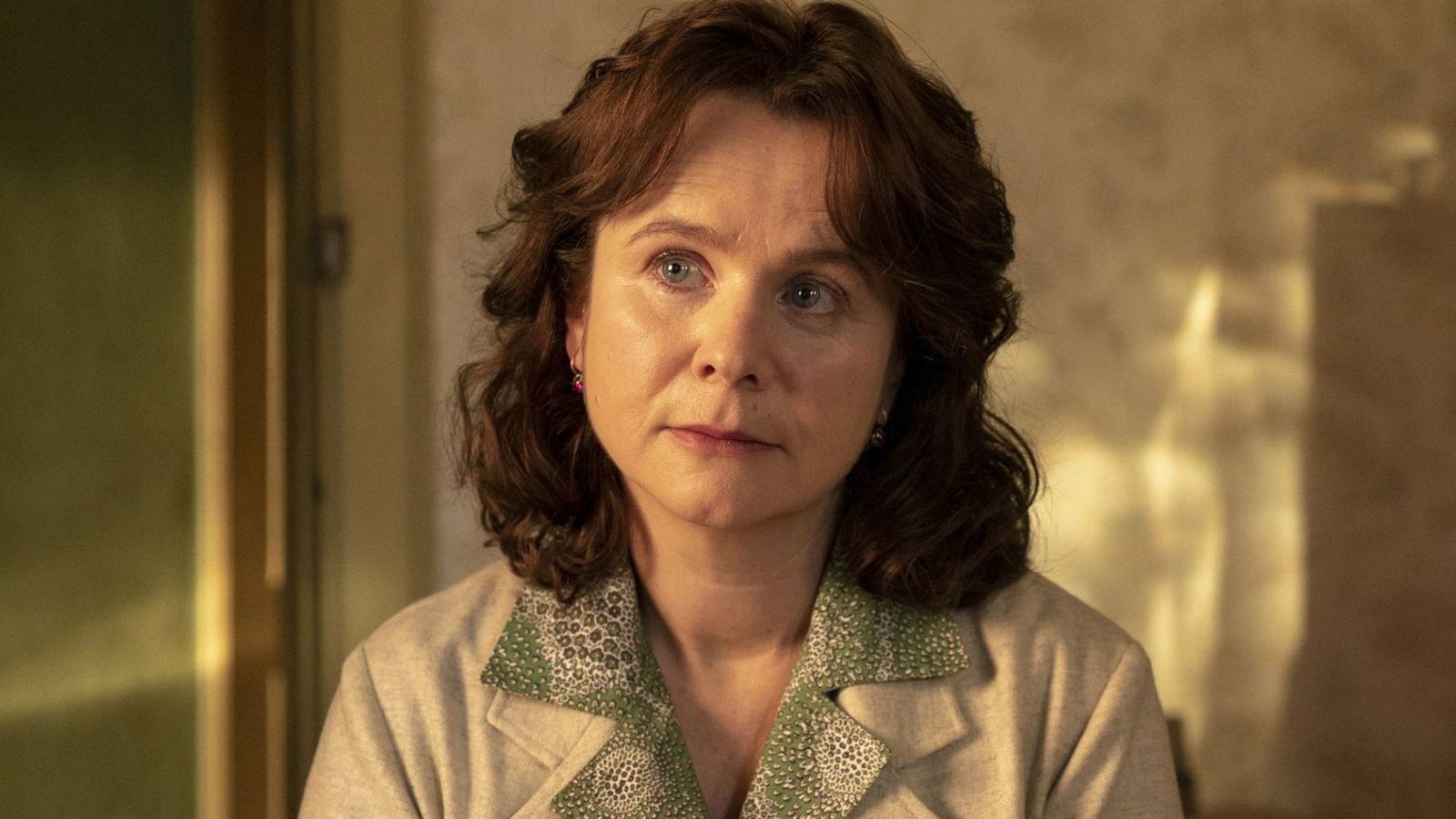
HBO is in a league of its own when it comes to miniseries. Over the years, the network has proven that some stories are best told in a single season with no room for filler. In fact, some of HBO’s most acclaimed shows tell complete, emotionally satisfying stories in fewer than 10 episodes, which seems to be the sweet spot with this format.
It gives showrunners enough room to build complex characters and immersive narratives without relying on unnecessary subplots or stretching the story for no reason. It works exceptionally well, and that’s weird, but it’s true. Here is a list of HBO miniseries with 10 episodes or fewer that feel focused and rewarding from beginning to end.
10
‘Angels in America’ (2003)
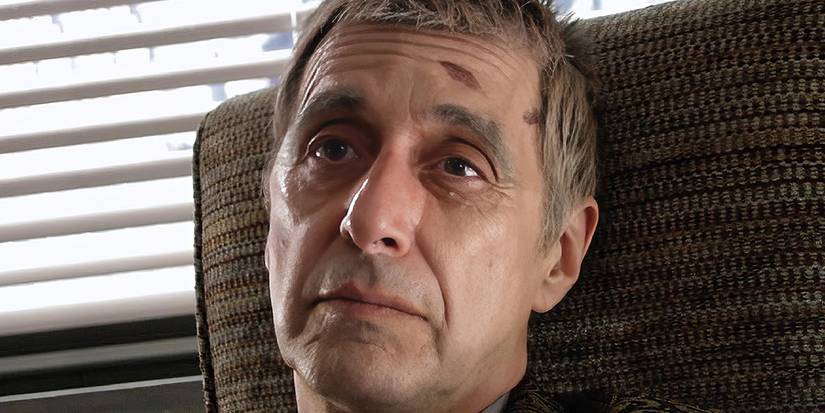
Image via HBO
Angels in America, based on Tony Kushner’s Pulitzer Prize-winning play, is a six-part drama that takes place during the AIDS crisis of the 1980s and follows several interconnected lives to explore illness, identity, love, faith, and loss. The narrative centers on gay New Yorker Prior Walter (Justin Kirk), who is struggling with his AIDS diagnosis and begins experiencing increasingly bizarre visions along with visits from an angel. The story also follows closeted lawyer Joe Pitt (Patrick Wilson), his wife Harper Pitt (Mary-Louise Parker), political fixer Roy Cohn (Al Pacino), and a host of other unforgettable characters who find their lives entangled in unexpected ways.
HBO’s Angels in America tackles heavy themes, but all of that information never gets overwhelming. The series blends fantasy, politics, romance, religion, and social commentary into a compelling narrative that can feel heartbreaking one moment and surprisingly funny the next, without ever losing its footing. That perfect balance is why Angels in America remains one of HBO’s most acclaimed miniseries more than 20 years later.
9
‘Generation Kill’ (2008)
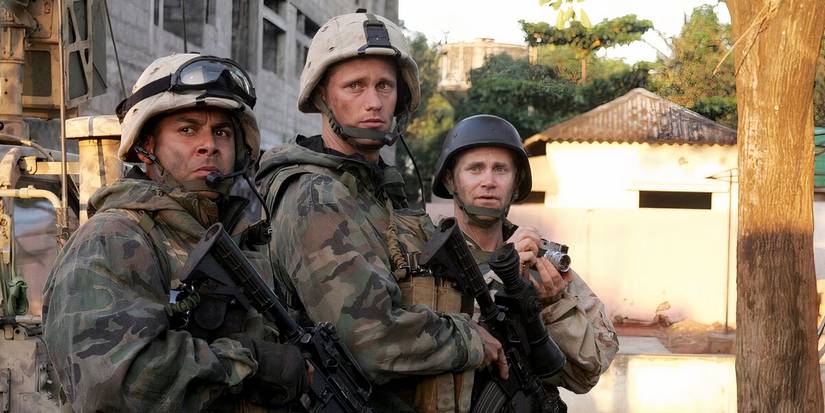
Jon Huertas, Alexander Skarsgård, and Lee Tergesen as soldiers with weapons in a town in Generation Kill.Image via HBO
Generation Kill is a drama that focuses on its characters more than the spectacle of war. The series is based on journalist Evan Wright’s firsthand account of the 2003 invasion of Iraq and follows a Marine reconnaissance battalion during the initial weeks of the war. The audience views this world through the eyes of a fictional version of Wright, played by Lee Tergesen, and travels alongside Sergeant Brad “Iceman” Colbert (Alexander Skarsgård), Lieutenant Nate Fick (Stark Sands), Corporal Josh Ray Person (James Ransone), along with the rest of Bravo Company as they push deeper into Iraq while dealing with the harsh realities of combat.
Generation Kill is one of the most realistic war series out there, and doesn’t rely on Hollywood-style heroics to drive the story forward. The show focuses on the day-to-day experience of soldiers stuck in chaotic situations that even they can’t fully make sense of. It might sound a little boring, but the series is consistently engaging and even funny at times, thanks to the constant banter between the Marines, while still delivering some of the most tense war sequences ever put on television. Generation Kill is created by David Simon and Ed Burns, the team behind The Wire, who bring the same character-driven, nuanced approach to the miniseries.
8
‘Mildred Pierce’ (2011)
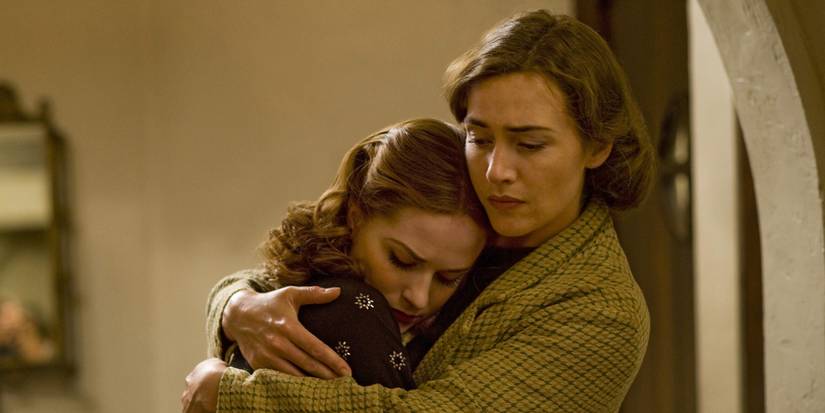
Mildred Pierce (Kate Winslet) holds her daughter Veda pierce (Evan Rachel Wood) close to her in ‘Mildred Pierce’ (2011).Image via HBO
Mildred Pierce is hands down one of the greatest character studies ever put on TV. The five-part miniseries follows Kate Winslet as the titular character, a recently divorced mother living in Southern California during the Great Depression. Mildred is determined to provide a better life for her children, which leads her to build a successful restaurant business from the ground up. However, while her professional life takes a turn for the better, her relationship with her ambitious and demanding daughter Veda Pierce (Evan Rachel Wood) becomes increasingly complicated. This means that the story’s greatest source of conflict isn’t some big business rivalry, but family itself.
The series carefully explores how Mildred’s unconditional love for Veda slowly turns into an obsession that threatens to destroy everything she has worked for. It’s impressive how much ground the series covers in just five episodes. Despite the scope of the narrative, though, Mildred Pierce never feels rushed or incomplete. Every major turning point is given room to breathe, which allows viewers to fully understand the motivations behind each character’s decisions. The show is a masterclass in short-form storytelling and proves that the most gripping dramas don’t really need evil villains or constant twists to hold the audience’s attention.
7
‘The Pacific’ (2010)
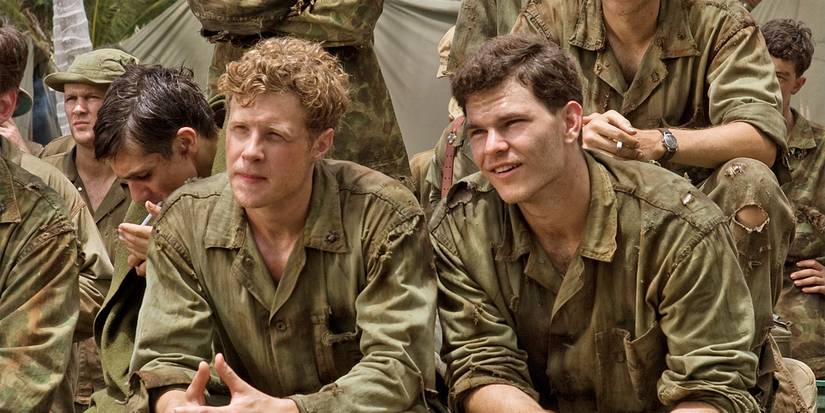
Ashton Holmes and Josh Helman in The Pacific.Image via HBO
The Pacific is the 2010 companion miniseries to Band of Brothers, executive produced by Steven Spielberg, Tom Hanks, and Gary Goetzman. However, instead of focusing on camaraderie like its predecessor, The Pacific explored the cost of war. The acclaimed ten-part miniseries follows several real-life-inspired U.S. Marines during the Pacific campaign of World War II. The narrative primarily centers on Robert Leckie (James Badge Dale), Eugene Sledge (Joseph Mazzello), and John Basilone (Jon Seda) and follows these men through some of the most brutal battles of the war, including Guadalcanal, Peleliu, Iwo Jima, and Okinawa, while also exploring how those experiences shape them later on in their lives.
The Pacific isn’t afraid to show just how physically and psychologically devastating combat can be. At the same time, the series never reduces war to a mere spectacle. It shows how every battle served a larger purpose and how these idealistic young men are forever traumatized by the horrors of everything they witness. Since the audience is always reminded of what is at stake, the combat sequences hit even harder. The Pacific is the perfect example of how showrunners can combine massive production values with deeply human storytelling to deliver an experience that stays with the audience long after the credits roll.
6
‘The Investigation’ (2020)

Image via HBO
Most true-crime dramas are obsessed with the murderer, but The Investigation takes the exact opposite approach. The miniseries is based on the real-life investigation into the murder of Swedish journalist Kim Wall and follows Chief Inspector Jens Møller (Søren Malling) as he works alongside his team to piece things together. The story begins after Wall disappears during what was supposed to be a routine interview aboard a privately built submarine. As the investigation unfolds, the police are forced to conduct an exhaustive search of the sea while trying to build a case with very little evidence to work with. Despite its true crime premise, though, The Investigation doesn’t sensationalize the case at all.
In fact, the perpetrator is never even shown or given attention because the show wants to focus on the people trying to uncover the truth, including Kim’s grieving parents. The pacing of the show is deliberately slow, but that’s because it’s meant to reflect the painstaking reality of police work. The slow burn also makes every breakthrough feel earned, almost as if the viewers are part of the same process as the investigators. The result is a gripping procedural that practically never loses its intensity.
Collider Exclusive · Action Hero Quiz
Which Action Hero Would Be
Your Perfect Partner?
Rambo · James Bond · Indiana Jones · John McClane · Ethan Hunt
Five legends. Five completely different ways of getting out alive — with style, with muscle, with charm, with luck, or with a plan so intricate it probably shouldn’t work. Ten questions will reveal which action hero was built to have your back.
🎖️Rambo
🍸James Bond
🏺Indiana Jones
🔧John McClane
🎭Ethan Hunt
FIND YOUR PARTNER →
01
You’re dropped into a dangerous situation with no warning. What do you need most from a partner?
The first few seconds tell you everything about who belongs beside you.
ASomeone who already has three contingency plans running and is calmly working through all of them.
BSomeone who reads the terrain instinctively and knows exactly how to use it against the enemy.
CSomeone who keeps their nerve and their sense of humour when everything is falling apart.
DSomeone who knows the history of wherever we are and what we’re walking into.
ESomeone with the right contact, the right cover identity, and the right exit already arranged.
NEXT QUESTION →
02
You have to get somewhere dangerous, fast. How do you travel?
How you get there is half the mission.
AOn foot through terrain no one else would attempt — I move where vehicles can’t follow.
BOn a motorcycle, a cargo plane, or anything else that gets me there before I think too hard about it.
CIn something that belongs to someone else — borrowed, stolen, or improvised under fire.
DFirst class, with a cover identity and a gadget that does something I won’t explain until it’s needed.
EBy whatever means are available — I’ve driven, flown, and once arrived by camel. The destination matters, not the method.
NEXT QUESTION →
03
You’re pinned down and outnumbered. What does your ideal partner do?
This is when you find out what someone is really made of.
ADisappears into the environment, flanks them silently, and ends it before I’ve reloaded.
BCracks a one-liner, grabs a fire extinguisher or a chair, and improvises something that somehow works.
CProduces a gadget specifically designed for this exact scenario and uses it with infuriating precision.
DPulls out a whip, a pistol, and an archaeological insight that somehow gets us out alive.
ENeutralises the threat with maximum efficiency and minimum words — they were already three moves ahead.
NEXT QUESTION →
04
The mission is paused. You have one evening to decompress. What does your partner suggest?
Who someone is when the pressure drops is who they actually are.
AA bar with terrible lighting, cold beer, and absolutely no questions about feelings.
BThe finest restaurant in the city, a bottle of something expensive, and a conversation that is equal parts brilliant and exhausting.
CA local dig site, a museum after hours, or a long story about why that particular artefact matters to human civilisation.
DPizza. Bad TV. Falling asleep halfway through a movie neither of you were watching anyway.
EA debrief that turns into three hours of contingency planning that somehow becomes the most fun you’ve had all week.
NEXT QUESTION →
05
How do you prefer your partner to communicate mid-mission?
Good communication is the difference between partners and a liability.
APrecise and minimal — tell me what I need to know and nothing else. Every word has a cost.
BDeadpan and dry — keeping it light keeps me sharp, even when everything is on fire.
CEnthusiastic and slightly chaotic — but always with useful information buried somewhere in the noise.
DCalm and controlled through an earpiece, with a plan that covers every variable I haven’t thought of yet.
EBarely at all — silence is a language and they speak it fluently.
NEXT QUESTION →
06
Your enemy is powerful, well-resourced, and has the upper hand. How should your partner approach them?
The approach to the enemy defines the partnership.
AInfiltrate their inner circle, learn everything, and dismantle them from inside out before they know we’re there.
BStudy the historical pattern — every villain of this type has a weakness written somewhere in the past.
CGet them talking. The more they monologue, the more time I have to figure out how to beat them.
DGo through them. Directly. With as much force as the terrain allows.
EFind the one thing they haven’t accounted for — there’s always one thing — and make sure we’re holding it.
NEXT QUESTION →
07
Things go badly wrong and you’re captured. What do you trust your partner to do?
Who someone is when you need them most is the only thing that matters.
ACome in alone, quietly, and get me out before anyone knows they were there.
BHave already been working on the extraction since the moment I disappeared — the plan is already running.
CCome in loud, come in fast, and worry about the collateral damage later — I’d do the same for them.
DUse every resource, every contact, and bend every rule until I’m out — they don’t leave people behind.
ECharm their way in somehow, bluff through the hard part, and still manage to look good doing it.
NEXT QUESTION →
08
What does your ideal partner bring to the table that you couldn’t replace?
A great partner fills the gap you didn’t know you had.
ATechnology that shouldn’t exist yet and the training to use it under any conditions.
BSurvival instinct so refined it borders on supernatural — and the scars to prove it’s been tested.
CKnowledge of history, language, and culture that makes them invaluable in places where force is useless.
DThe ability to walk into any room in the world and immediately become the most trusted person in it.
EStubbornness that refuses to accept a situation is hopeless — and the improvisational skill to back it up.
NEXT QUESTION →
09
Every partnership has a cost. Which of these can you live with?
No one comes without baggage. The question is whether you can carry it together.
AA partner who never fully switches off — always watching exits, always calculating threats, even at dinner.
BA partner who gets the job done brilliantly but has the emotional availability of a locked filing cabinet.
CA partner who makes everything ten times more complicated than it needs to be — but who always comes through.
DA partner who gets personally attached to every relic, ruin, and artefact we encounter, which slows everything down.
EA partner who was not built for this and knows it — but shows up anyway, every time, without being asked.
NEXT QUESTION →
10
It’s the final moment. Everything is on the line. What do you need from your partner right now?
The last question is the most honest one.
AOne line. Absolutely dry. Delivered like the world isn’t ending. Then we move.
BNothing said at all — just a look that means we both already know what has to happen.
CA plan I don’t fully understand that somehow accounts for everything, delivered in thirty seconds flat.
DA piece of historical context that reframes the entire situation and tells us exactly what to do next.
ESomeone who steps forward instead of back — because that’s who they’ve always been.
REVEAL MY PARTNER →
Your Partner Has Been Assigned
Your Perfect Partner Is…
Your answers have pointed to one action hero above all others. This is the person built to have your back — for better or considerably, spectacularly worse.
Rambo
Your partner doesn’t talk much, doesn’t need to, and will have assessed every threat in your immediate environment before you’ve finished your first sentence. John Rambo is not a man of plans or politics — he is a force of nature shaped by survival, loyalty, and a capacity for endurance that goes beyond anything training can produce. He will not leave you behind. He has never left anyone behind who deserved to come home. What you get with Rambo is the most capable, most quietly ferocious partner imaginable — one who has been through things that would have broken anyone else, and who chose to keep going anyway. You’ll never need to ask if he has your back. You’ll just know.
James Bond
Your partner will arrive perfectly dressed, perfectly briefed, and with a cover story so convincing it’ll take you a moment to remember what’s actually true. James Bond is the most professionally dangerous person in any room he enters — and the most disarmingly charming, which is the point. He operates in a world of layers, where nothing is what it appears and every advantage is used without apology. You’ll never be bored. You’ll occasionally be furious. But when it matters — when the mission is genuinely on the line and the margin for error has collapsed to nothing — Bond is exactly the partner you want. He has survived things that have no business being survivable. He does it with style. That is not nothing.
Indiana Jones
Your partner will know the history, the language, the cultural context, and exactly why the thing everyone else is ignoring is actually the most important thing in the room. Indiana Jones is brilliant, reckless, and occasionally impossible — but he is also one of the most resourceful, most genuinely knowledgeable partners you could find yourself beside. He approaches every situation with a scholar’s eye and a brawler’s instinct, which is an unusual combination and a remarkably effective one. He hates snakes and gets personally attached to objects of historical significance, both of which will slow you down at least once. It doesn’t matter. What Indy brings is irreplaceable — and the adventures you’ll have together will be the kind people write books about. Assuming you survive them.
John McClane
Your partner was not supposed to be here. He does not have the right equipment, the right information, or anything approaching the right odds. He has a sarcastic remark and an absolute refusal to accept that the situation is as bad as it looks. John McClane is the greatest accidental hero in the history of action cinema — a man whose superpower is stubbornness, whose contingency plan is improvisation, and whose capacity to absorb punishment and keep moving would be alarming if it weren’t so useful. He will complain the entire time. He will make it significantly more chaotic than it needed to be. And he will absolutely, unconditionally, without question come through when it counts. Yippee-ki-yay.
Ethan Hunt
Your partner has already run seventeen scenarios by the time you’ve finished reading the briefing, and the plan he’s settled on involves at least two things that should be physically impossible. Ethan Hunt operates at the absolute edge of human capability — technically, physically, and intellectually — and he brings the same relentless precision to protecting his partners that he brings to dismantling organisations that shouldn’t exist. He is not easy to know and he will never fully tell you everything. But he will carry the weight of the mission so completely, so absolutely, that your job is simply to trust him — and the remarkable thing is that trusting him always turns out to be the right call. The mission will be impossible. He will complete it anyway.
↻ RETAKE THE QUIZ
5
‘Band of Brothers’ (2001)
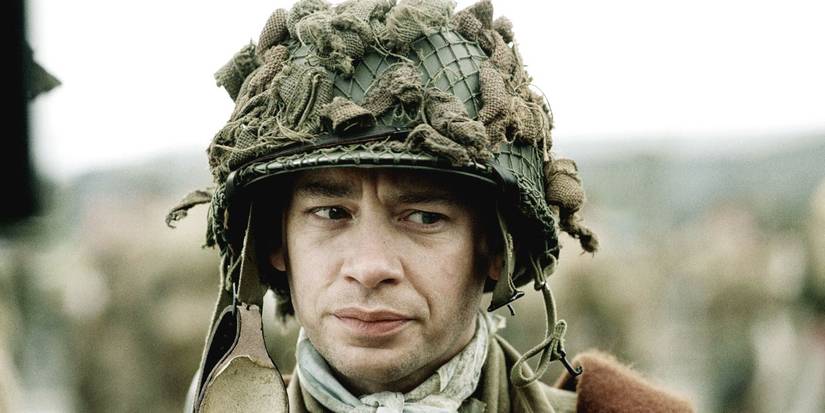
Dexter Fletcher wearing a soldier helmet in ‘Band of Brothers’.Image via HBO
Band of Brothers is one of HBO’s most powerful miniseries of all time. The show, based on Stephen E. Ambrose’s nonfiction book, follows the soldiers in Easy Company, part of the 506th Parachute Infantry Regiment of the 101st Airborne Division, from their brutal training at Camp Toccoa to the final days of World War II in Europe. Now, of course, the narrative covers some of the war’s most important operations, including D-Day, the Battle of the Bulge, and more. However, what makes it such a compelling watch is its large ensemble of characters, including Richard Winters (Damian Lewis), Lewis Nixon (Ron Livingston), Carwood Lipton (Donnie Wahlberg), and Ronald Speirs (Matthew Settle), who gradually turn into people the audience genuinely cares about.
Band of Brothers takes its sweet time setting up the dynamic between all the soldiers, along with giving the audience glimpses into their backstories. This makes every victory and loss land with all the more impact. Not to mention that the sheer scale of production in Band of Brothers remains monumental even decades later. The combat sequences are intense and immersive, but the action is never the main attraction. Band of Brothers never loses sight of the human side of war, which is why it stands as one of the greatest war shows to have ever been made.
4
‘Chernobyl’ (2019)

David Dencik in ChernobylImage via HBO
Chernobyl dramatizes the events surrounding the 1986 Chernobyl nuclear disaster. Now, unlike most disaster dramas that focus on what happened, Chernobyl covers what happened after the explosion and its lasting consequences. The five-part HBO series, created by Craig Mazin, begins in the immediate aftermath of the reactor explosion and follows the scientists, government officials, firefighters, and ordinary citizens caught in the unfolding crisis. The narrative centers on Valery Legasov (Jared Harris), who is tasked with helping investigate the disaster alongside Deputy Chairman Boris Shcherbina (Stellan Skarsgård).
However, understanding the catastrophe is next to impossible in a system built on secrecy, denial, and bureaucracy. Meanwhile, nuclear scientist Ulana Khomyuk (Emily Watson) works to uncover the truth behind the explosion and ensure that those responsible are held accountable. Chernobyl is extremely gripping because it plays out like a thriller, even though the audience already knows what is about to happen. Every episode is packed with tension as characters confront impossible choices. Most importantly, Chernobyl makes a technical subject feel extremely accessible without oversimplifying it. The show carefully explains how a chain of human errors led to an event that completely changed the world.
3
‘Mare of Easttown’ (2021)
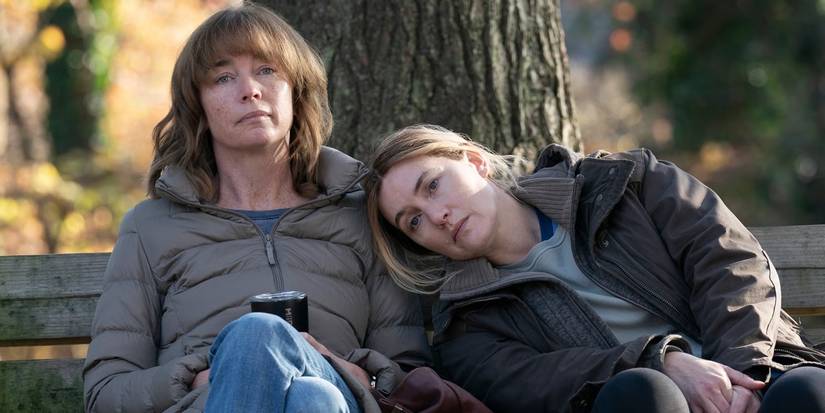
Julianne Nicholson sitting on a park bench with Kate Winslet’s head on her shoulder in ‘Mare of Easttown’.Image via HBO
Mare of Easttown begins like a standard murder mystery, but it’s actually one of the most emotionally rich crime dramas HBO has ever produced. The seven-episode miniseries stars Kate Winslet as Detective Marianne “Mare” Sheehan, a small-town investigator in Pennsylvania tasked with solving the murder of a local teenage mother. At the same time, her personal life is in total shambles thanks to her divorce, her son’s suicide, and a custody battle with her son’s formerly heroin-addicted girlfriend over her grandson. The stakes are as high as they get here, and as Mare digs deeper into the case, she discovers that nearly everyone in the tight-knit community is connected to the tragedy in some way.
The show’s realism is what sets it apart from most other crime dramas. Easttown feels like a real place populated by real people with their own stories. At the same time, Mare isn’t a typically glamorous TV detective either. She’s exhausted, stubborn, and grieving while investigating one of the biggest cases the town has ever seen. While the mystery itself is excellent, the show’s greatest strength is the time it takes to build up all of its characters. This means that every revelation carries a lot of emotional weight because the audience spends so much time understanding the people who are impacted by it all. The writing balances suspense, humor, and family drama to create a story that feels far bigger than a typical whodunit and is worth every minute of its seven-episode run.
2
‘Sharp Objects’ (2018)

Amy Adams looking out her car while sitting in the driver’s seat drinking from a water bottle in Sharp ObjectsImage via HBO
Some mysteries keep viewers hooked because they want to know who committed the crime. Sharp Objects keeps viewers hooked because they want to understand why everyone seems so broken. The eight-episode HBO miniseries, based on the novel by Gillian Flynn, stars Amy Adams as Camille Preaker, a troubled crime reporter who returns to her hometown of Wind Gap, Missouri, to investigate the murders of two young girls. However, the investigation takes a personal turn as Camille is forced to confront the painful memories and complicated relationships she has spent years trying to escape. Camille’s dynamic with her controlling mother, Adora Crellin (Patricia Clarkson), and unpredictable half-sister, Amma Crellin (Eliza Scanlen), is the heart of the story.
As the investigation progresses, the line between the reporter’s personal trauma and the murder case becomes increasingly blurred. Sharp Objects functions as both a murder mystery and an intimate psychological drama. The show isn’t interested in racing toward answers because it wants the audience to pay attention to every conversation and clue. The series has an almost dreamlike quality to it thanks to its use of fragmented memories and quick flashes of imagery to place the audience directly inside Camille’s state of mind. Sharp Objects is layered and nuanced to the point that it practically calls for a rewatch because the mystery becomes even better once the audience knows where it’s headed.
1
‘The Night Of’ (2016)
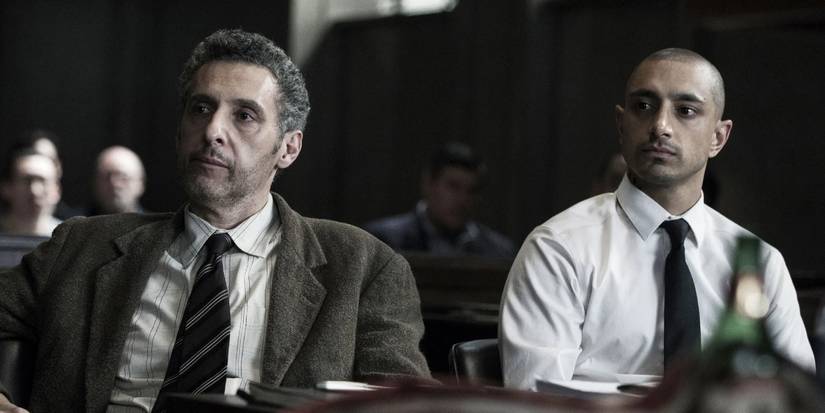
DA John Stone (John Turturro) sits in court with his client Nasir Khan (Riz Ahmed) in ‘The Night Of’ (2016).Image via HBO
HBO’s The Night Of is built around the idea of how one bad decision can completely change someone’s life. The eight-episode drama miniseries begins with Pakistani-American college student Naz Khan (Riz Ahmed) borrowing his father’s taxi for a night out in New York City. Things quickly spiral into a nightmare after Naz spends the night with a stranger named Andrea Cornish (Sofia Black-D’Elia) and wakes up to find her brutally murdered. Almost immediately, Naz suddenly becomes the prime suspect in a case that captures public attention. The young man’s life turns upside down as the investigation unfolds. His only ally is small-time defense attorney John Stone (John Turturro), the only one willing to take on what most consider to be an impossible case.
From there, The Night Of evolves into a fascinating examination of the criminal justice system and what happens to the people caught in it. The Night Of was never meant to be a simple whodunit. The central mystery is the hook, but the real focus is on the process itself. The show explores every stage of the legal system and constantly asks whether the truth even matters once the public deems a person guilty. Ahmed delivers a career-defining performance as Naz and portrays his eventual transformation under the circumstances. The Night Of is tense, unsettling, and brutally real. It’s a rare miniseries that manages to be both heavy and engaging from beginning to end.