
The Nagel Committee, established on the directive of Prime Minister Benjamin Netanyahu in January 2025,…
Abstract
The Nagel Committee, established on the directive of Prime Minister Benjamin Netanyahu in January 2025, defined the Turkish threat as a new and significant danger that could emerge in Syria if the Syrian regime were to become, in practice, a Turkish proxy. Such a development, the committee warned, could “increase the risk of a direct Turkish-Israeli confrontation.”
Introduction
Erdoğan’s Personal and Ideological Motivations
Turkey’s policy toward Israel is largely shaped by President Recep Tayyip Erdoğan, who has long exhibited strong anti-Israeli sentiments rooted in deeply held religious convictions. According to U.S. officials quoted in diplomatic cables[1] later disclosed by WikiLeaks, Erdoğan “hates Israel.” He places great importance on the Palestinian issue and, in an effort to gain legitimacy and support throughout the Muslim and Arab worlds, portrays himself as a defender of the Palestinian people and the guardian of Islam’s holy sites in Jerusalem.
Erdoğan has leveraged both the Ottoman legacy and political Islam to consolidate his rule and advance his vision of Turkey as a regional—and ultimately global—power.
Erdoğan and his party, the Justice and Development Party (AKP), share the Muslim Brotherhood’s ideological foundations with Hamas, as well as with the northern branch of the Islamic Movement in Israel. A key objective of this ideological alignment is to elevate Jerusalem as a central issue within radical Islamist discourse. The Turkish government reportedly provided approximately $63 million to organizations operating in East Jerusalem with the aim of strengthening the city’s Muslim heritage and character. Part of these funds supported the activities of the Murabitoon and Murabitat movements—radical Islamist activists who harassed and physically confronted Jewish visitors on the Temple Mount, and were subsequently outlawed by Israeli authorities.
Relations with Hamas
Since 2006, Erdoğan has provided political patronage to Hamas leaders in Turkey and has extended operational support to the organization. In May 2010, the IHH, a Turkish activist group, attempted to break the Israeli blockade of the Gaza Strip through the Mavi Marmara flotilla, resulting in a violent confrontation and a prolonged crisis in Turkish-Israeli relations.
Turkey subsequently became a “second home” for Hamas operatives released as part of the Gilad Shalit 2011 prisoner exchange agreement, most notably Saleh al-Arouri, a senior member of Hamas’s Political Bureau. Al-Arouri was responsible for establishing and financing Hamas’s terrorist infrastructure in the West Bank, which he directed from Istanbul.
Turkey’s Policy During the Swords of Iron War
In the immediate aftermath of the October 7, 2023, massacre, Erdoğan initially adopted a cautious approach. However, by October 11, he had described Israel’s siege and bombardment of Gaza as a disproportionate response and a “massacre,” while refraining from condemning Hamas’s attack on Israeli civilians. In March 2024, he accused Prime Minister Netanyahu and his government of committing “crimes against humanity,” comparing them to Hitler, Mussolini, and Stalin.
Throughout the war, Erdoğan consistently portrayed Hamas as a “liberation group” or a “resistance movement” fighting to defend its homeland rather than as a terrorist organization. He referred to Hamas members as mujahideen and compared the organization to Turkey’s nationalist forces (Kuvay-i Milliye) during the Turkish War of Independence—a comparison that confers significant legitimacy upon Hamas within Turkish public discourse.
In April 2024, Erdoğan announced that Turkey would sever all economic ties with Israel. Turkey subsequently intensified its boycott measures by:
Closing the loophole that had enabled trade with Israel through the Palestinian Authority.
Halting the issuance of preferential trade certificates (Euro-Med certificates), which allowed Turkish goods reaching Israel through third countries to receive customs exemptions.
Banning Israeli ships from docking in Turkish ports and Turkish ships from docking in Israeli ports.
Closing Turkish airspace to Israeli aircraft carrying weapons or transporting Israeli leaders.
Turkey’s Involvement in Efforts to Resolve the Gaza War
Turkey served, alongside Qatar and Egypt, as a guarantor of the ceasefire and hostage-release agreement between Israel and Hamas in Gaza that was promoted by President Donald Trump. Erdoğan seeks to ensure that Turkey plays a significant role in Gaza’s future political, economic, and potentially military arrangements. President Trump publicly thanked Erdoğan for his mediation efforts, describing him as “fantastic,” a “friend,” and a “reliable ally.” As a result, Turkey’s ties with Hamas have increasingly become a geopolitical asset.
Erdoğan’s aspiration to deploy Turkish forces as part of a multinational force in Gaza is viewed by many in Israel as a challenge to Israeli strategic interests. Critics argue that Turkey would seek a framework in which Hamas would only partially disarm and would remain a political partner in the technocratic government envisioned for post-war Gaza.
Israel reportedly provided the United States with intelligence concerning terrorist activities conducted by Hamas and Hezbollah operatives based in Turkey against Israeli targets in Lebanon, Syria, and allegedly in Latin America and Europe. According to these reports, the intelligence contributed to Washington’s acceptance of Israel’s opposition to the deployment of Turkish military forces in Gaza as part of a multinational force.
The Istanbul Chief Public Prosecutor issued arrest warrants against 37 senior Israeli officials, including Prime Minister Benjamin Netanyahu, Defense Minister Israel Katz, National Security Minister Itamar Ben-Gvir, IDF Chief of Staff Lt. Gen. Eyal Zamir, and Navy Commander Maj. Gen. David Sa’ar Salama, accusing them of “genocide” in Gaza and of involvement in the interception in September 2025 of the “Global Sumud Flotilla,” allegedly a “humanitarian independent, international, and unaffiliated with any government”. Bilateral tensions intensified further when indictments carrying lengthy prison sentences were subsequently filed against these individuals. In response, Netanyahu accused President Erdoğan of responsibility for the killing of Kurdish civilians. At the same time, former Israeli Prime Minister Naftali Bennett described Turkey as “the new Iran” and hinted at the possibility of future action against Ankara, stating that “after Iran, we will not remain idle.”
The Global Sumud Flotilla to Gaza departed from Barcelona on April 13, with Turkey playing a central logistical and political role through both non-governmental organizations and state-level support. Turkish citizens reportedly constituted a significant portion of the more than 1,000 activists and medical personnel on board. Turkey’s Ministry of Defense monitored the flotilla’s voyage and reportedly deployed long-range drones to help ensure the participants’ safety.
A further crisis was avoided, when a new flotilla consisting of approximately 60 vessels, organized by the Turkish NGO IHH in mid-May 2026, was successfully intercepted by Israeli naval forces in international waters near Cyprus.
Turkey has also joined South Africa in its case before the International Court of Justice, which accuses Israel of committing genocide in Gaza.
Expansion and Influence in Syria
Since the outbreak of the Syrian civil war in 2011, Turkey has supported various jihadist groups opposed to the regime of Bashar al-Assad. Ankara enabled the coalition led by Hayat Tahrir al-Sham (HTS)—which emerged from Jabhat al-Nusra, at the time a faction of al-Qaeda—to consolidate control over the Idlib region, establish a Salafi-oriented administration there, and focus its efforts on overthrowing the Assad regime.
At the same time, Erdoğan facilitated the creation of the Syrian National Army (SNA), a coalition of armed factions that effectively serves as Turkey’s principal proxy force in Syria. Its primary mission has been to counter and weaken Kurdish autonomy in northern Syria (Rojava). HTS leader Abu Mohammad al-Julani—now serving as Syria’s president under his real name, Ahmad al-Sharaa—proved capable of becoming a strategic partner for Erdoğan while preserving a degree of independence.
The collapse of the Assad regime, coupled with the decline in the influence of Syria’s principal allies—Russia and Iran—created an opportunity for Turkey to expand its influence across the fragmented Syrian state, with the broader objective of transforming Syria into a sphere of Turkish influence. In January 2025, Turkish Foreign Minister Hakan Fidan stated that “Turkey is the shepherd and protector” of Syria’s minority communities, including Alawites, Christians, and Yazidis, notably omitting any reference to the Kurds.
İbrahim Kalın, head of Turkish intelligence, became the first senior foreign official to visit Syria following the political transition. Shortly thereafter, the Turkish foreign minister also traveled to Damascus. The steady flow of political and military visits between Ankara and Damascus has underscored Turkey’s growing influence over Syria’s new leadership.
Syrian President Ahmad al-Sharaa has visited Turkey on multiple occasions and met with Erdoğan. During a visit to Turkey in October 2025, Syrian Foreign Minister Asaad al-Shaibani, accompanied by the defense minister and intelligence chief, declared in fluent Turkish—learned during his studies in Istanbul—that “Turkey never abandoned the Syrian people during recent years.” Discussions focused on counterterrorism efforts, border security, regional stability, and enhanced cooperation and training between the two countries. Turkey emphasized its commitment to ensuring that no external actor exploits instability within Syria.
The strategic objective of Erdoğan’s Syria policy is to establish Turkish influence over Syria’s future political, economic, and military architecture. Ankara seeks to replace Iran as the principal anti-Israeli actor operating in Syria and to help build a Sunni Islamist bloc extending around Israel from the north and northeast.
Turkey views Israel as threatening key Turkish interests through its ties with the Druze community and with the Kurdish-led Syrian Democratic Forces (SDF), both of which challenge the authority of the Syrian central government. Against the backdrop of U.S. mediation efforts between Turkey and Israel, the growing Turkish military presence inside Syria presents potential risks for escalation. Israel increasingly regards the protection of the Druze population in southern Syria as one of its strategic interests.
According to Mohammed Sarmini, founder of the Jusoor Center for Studies, Turkey is focused on “developing the capabilities of the Syrian army” so that it can serve as the country’s first line of defense. This approach was reflected in Turkey’s reported facilitation of the recent visit of Volodymyr Zelenskyy to Damascus to advance security cooperation between Syria and Ukraine. Critics argue that this policy positions Turkey as a “new Iran,” albeit through more conventional and internationally accepted mechanisms: rather than arming militias to undermine states, Ankara seeks to reshape neighboring states surrounding Israel in ways that advance Turkish strategic objectives.
The deployment of Turkish air-defense systems inside Syria could constrain the operational freedom of the Israel Defense Forces, particularly regarding operations targeting Iranian assets. The growing Turkish military presence also increases the possibility of accidental aerial encounters which, in the absence of effective deconfliction mechanisms, could generate unwanted friction between the two countries.
A spokesperson for Turkey’s Ministry of Defense announced that the Turkish naval vessel TCG Meltem was expected to arrive at the port of Latakia in early May for the first time, accompanied by a Turkish naval delegation, as part of Ankara’s efforts to support the reorganization and development of the Syrian armed forces.
The “Blue Homeland” (Mavi Vatan) Strategy
According to Dr. Hay Eytan Cohen Yanarocak, from Moshe Dayan Center for Middle Eastern and African Studies (MDC) at Tel Aviv University, Ankara’s neo-Ottoman ambitions have evolved into a multi-layered strategy of encirclement around Israel, combining hard power—through military bases stretching from Syria to Somalia—with soft power, including humanitarian assistance and cultural and religious initiatives.
This gradual expansion, extending from Libya to the Horn of Africa, complements a broader geopolitical effort that, according to this assessment, poses challenges not only to Israel’s security environment but also to its economic interests. One manifestation of this policy is Turkey’s attempt to undermine strategic cooperation between Israel, Greece, and Cyprus. Ankara seeks to gain leverage over key maritime corridors through the 2019 maritime agreement with Libya, which established a controversial maritime boundary between Turkey and Libya. Critics argue that the arrangement lacks geographic logic but serves as a strategic instrument for influencing regional shipping routes and energy projects.
Challenging Israel’s Position in the IMEC Corridor
Turkey has expressed strong opposition to the India–Middle East–Europe Economic Corridor (IMEC), an initiative launched in 2023 under the administration of former U.S. President Joe Biden. The project is intended to connect India to Europe through United Arab Emirates, Saudi Arabia, Jordan, and Israel. IMEC is widely viewed as a strategic alternative to China’s Belt and Road Initiative and aims to strengthen economic integration, connectivity, and supply-chain resilience.
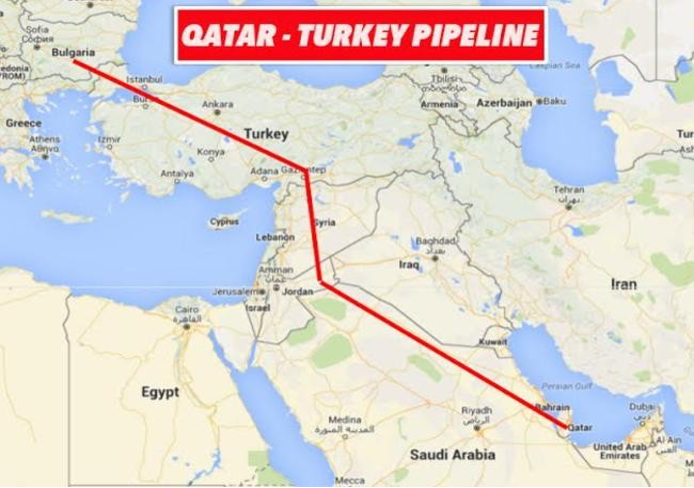
Turkey is not included in the project, and Erdoğan has repeatedly stated that no east–west transportation corridor can function effectively without Turkey’s participation. In response, Ankara has promoted an alternative initiative known as the “Development Road,” linking Iraq and Syria to Turkey with support from Qatar.
Against the backdrop of instability affecting regional trade routes, Ankara and Damascus have sought to capitalize on disruptions in the Gulf by advancing alternative transportation and energy corridors through Syrian territory. Proposed plans reportedly include a railway connecting Saudi Arabia to Syria via Jordan, alongside an oil pipeline network extending from northeastern Saudi Arabia to Syrian Mediterranean ports, which could also serve Turkey’s energy needs.
If implemented, such projects could position Syria as a principal Mediterranean gateway for Gulf exports, potentially reducing Israel’s role within emerging regional connectivity networks. Supporters of this approach view it as a means of enhancing regional economic integration, while critics argue that it could weaken Israel’s strategic position within future trade and energy corridors and carry significant economic implications.
The Military Strategic Threat
Turkey has emerged as a major producer of advanced unmanned aerial systems (UAS) and exports them to numerous countries around the world. In parallel, Ankara has placed significant emphasis on developing its ballistic missile program, adding several new systems to its arsenal. The most advanced among them, the Tayfun missile, reportedly has a range of approximately 600 kilometers, enabling it to reach numerous regional capitals, including Jerusalem.
Turkey has also reportedly utilized facilities in Somalia to support testing and development activities related to longer-range missile capabilities.
At a defense exhibition held in Istanbul in May 2026, Turkey unveiled the Yıldırımhan missile system, which was presented as having a potential range of up to 6,000 kilometers while carrying a 3,000-kilogram warhead at speeds reportedly reaching Mach 25. If such capabilities are ultimately realized, they would place Turkey among a very limited group of states capable of developing advanced long-range strategic missile systems. However, Turkey’s Ministry of Defense subsequently clarified that the system remains in the testing and development phase.
Turkey’s rapidly expanding defense industry has also made it an increasingly important partner for Europe’s rearmament efforts in response to the war in Ukraine. Both the United Kingdom and Germany have emphasized the importance of Turkey’s industrial capacity for strengthening Europe’s defense production base.
Alongside its conventional military modernization, there have been indications that Ankara seeks to preserve future nuclear options. Some analysts have speculated that Pakistan, which possesses a substantial nuclear arsenal, could potentially serve as a source of nuclear expertise or technological cooperation. Meanwhile, Turkey is approaching the operational phase of its first civil nuclear power plant, Akkuyu Nuclear Power Plant, while also pursuing plans to develop additional nuclear reactors and indigenous nuclear capabilities.
On April 19, Turkish Foreign Minister Hakan Fidan stated that Muslim countries in the region were concerned about the growing strategic partnership between Israel, Greece, and Cyprus. He argued that the trilateral framework clearly possesses a military dimension and asserted that Turkey’s concerns stem from what he described as Israel’s increasingly expansionist policies.
President Erdoğan stated in 2024 that Turkey could intervene on behalf of the Palestinians against what he characterized as Israel’s “ridiculous” military actions. In making this argument, he referenced Turkey’s military deployments in Libya and its support for Azerbaijan’s 2023 operation to retake Nagorno-Karabakh from Armenia. Erdoğan’s office later maintained that the remarks had been taken out of context and did not represent an official threat.
Turkish Defense Minister Yaşar Güler announced that Turkey is expected to assume command of NATO’s Allied Reaction Force beginning in 2028. This formation constitutes NATO’s primary high-readiness rapid deployment force, capable of responding to crises within approximately four to five days. Turkish commentators described the development not merely as a diplomatic achievement but as a reflection of Turkey’s growing influence within NATO’s command structure.
On July 7–8, Turkey is scheduled to host a NATO leaders’ summit for the second time in more than two decades. According to Turkish officials, the summit is expected to serve as a platform for reaffirming allied commitment to Article 5 collective-defense obligations and for discussing the future evolution of NATO’s multidimensional security architecture.
From a theoretical perspective, some observers have noted that if an armed conflict were ever to occur between Turkey and Israel, Ankara could seek consultations within NATO frameworks. However, Article 5 collective-defense commitments would apply only under the specific conditions defined by the alliance’s treaty obligations and established procedures.
Of additional interest are reports suggesting that Turkish officials have considered inviting Syrian President Ahmad al-Sharaa to participate in discussions surrounding future NATO-related meetings, reflecting Ankara’s efforts to integrate Syria more closely into emerging regional diplomatic and security frameworks.
The War with Iran and Emerging Anti-Israeli Regional Alignments
Since the U.S. and Israeli strikes against Iran on February 28, Turkey has sought to project principled opposition to the conflict while simultaneously positioning itself as a potential mediator behind the scenes. At the same time, Ankara has maintained its security cooperation with NATO and preserved working channels with Tehran. Official Turkish messaging has remained consistent: condemning actions that violate international law and endanger civilians, calling for an immediate cessation of hostilities, and emphasizing the importance of keeping diplomatic options open.
Foreign Minister Hakan Fidan stated that freedom of navigation through the Strait of Hormuz should be secured through diplomacy. However, he cautioned that negotiations could encounter difficulties if the Iranian nuclear issue were approached from an “all-or-nothing” perspective.
Fidan further warned that, following Iran, Tel Aviv could eventually shift its strategic focus toward Ankara. He argued that the emerging partnership among Israel, Greece, and Cyprus was intended to “encircle Turkey, or at least create such an impression.” He also claimed that both members of the Israeli government and certain opposition figures were attempting to redefine Turkey as Israel’s “new enemy.”
Following several Iranian missile incidents that heightened Turkish security concerns, Ankara accelerated efforts to develop its indigenous missile-defense architecture, known as the Steel Dome (Çelik Kubbe). Turkey has simultaneously explored the acquisition of advanced European air-defense systems, including the Franco-Italian SAMP/T. At the same time, Turkish missile development has not been confined to defensive capabilities, as demonstrated by the unveiling of new long-range and hypersonic strike systems.
Iran’s missile and drone attacks against Gulf states have reinforced concerns among regional governments regarding overreliance on a single external security guarantor. In this environment, Turkey may seek to leverage its growing defense-industrial base, NATO membership, and strategic geographic position, to expand both its economic and security role across the Gulf region.
According to Soner Cagaptay, director of the Turkish Research Program at The Washington Institute, a new geopolitical alignment stretching from South Asia to the Eastern Mediterranean may be emerging around Turkish-Israeli competition. In his assessment, one bloc consists of Pakistan, Saudi Arabia, Egypt, and Turkey, while a second includes Israel, India, the United Arab Emirates, and Greece. Each grouping combines military, economic, and geopolitical assets that could shape future regional competition.
Former Turkish parliamentary foreign affairs committee chairman and senior adviser Taha Ozhan has argued that a weakened—or worse, collapsed—Iran would generate widespread instability across the Middle East. Such a scenario, he contends, could reshape the regional balance of power, potentially expand Israeli strategic influence, exacerbate fragility in Iraq and Syria, and trigger new waves of conflict and cross-border migration. Within this framework, in addition to Qatar—Turkey’s closest regional partner—the strategic choices made by Saudi Arabia are viewed as particularly important. Turkey enters this period with significant military experience and active diplomatic engagement across multiple regional theaters.
According to an assessment by the Emirates Policy Center, Turkey’s position regarding the U.S.-Israeli Iranian conflict is shaped by a belief that Israeli Prime Minister Benjamin Netanyahu played a central role both in the outbreak of the war and in drawing President Trump into it. Ankara views the conflict as part of a broader Israeli effort, beginning after October 7, 2023, to reshape the regional balance of power in ways that could undermine Turkish interests.
From this perspective, Turkey regards Iran as a regional competitor, yet simultaneously believes that the survival and resilience of the Iranian regime help constrain Israeli ambitions and preserve a balance of power capable of limiting Netanyahu’s regional agenda. Consequently, Ankara appears to favor a U.S.-Iran agreement that preserves the Iranian regime while restricting its influence—a scenario many Turkish strategists consider most compatible with Turkey’s own long-term regional ambitions. Under such circumstances, Turkey would likely seek to strengthen its role as a security partner for Gulf states through future defense and security cooperation agreements.
On March 29, 2026, the foreign ministers of Egypt, Turkey, Pakistan, and Saudi Arabia met in Islamabad in an effort to mediate between Iran and the United States and help bring the conflict to an end. According to reports, the concept of this diplomatic “quadrilateral” originated largely in Ankara, which viewed the initiative as a mechanism for shaping the post-war regional order and balancing what it perceives as expanding Israeli influence in the Middle East.
Conclusion
A significant portion of the deterioration in Israeli-Turkish relations can be attributed to the long-serving Turkish president, Recep Tayyip Erdoğan, whose approach toward Israel is shaped by a combination of personal, ideological, and political factors. According to Aslı Aydıntaşbaş, director of The Turkey Project at Brookings Institution, the Palestinian issue occupies a central place in Erdoğan’s worldview. While Erdoğan is widely regarded as a pragmatic leader who skillfully uses geopolitics to advance Turkish interests—often shifting positions, balancing between the West and Russia, and reconciling with former adversaries when circumstances require—his position on the Palestinian issue has remained notably consistent. In her assessment, this issue is deeply personal and ideological for Erdoğan, making it less susceptible to pragmatic compromise than other areas of foreign policy.
From this perspective, Erdoğan and the Turkish leadership increasingly appear to view Israel as an obstacle to Turkey’s broader neo-Ottoman regional ambitions. Ankara also seems to take seriously the strategic significance of the partnerships that Israel has developed with Greece and Cyprus in recent years.
The weakening of Iran following the recent conflict, together with tensions between Tehran and both Gulf states and the broader Sunni Arab world, has arguably strengthened Turkey’s regional standing. This environment may facilitate closer cooperation among Turkey, Saudi Arabia, Egypt, and Pakistan, with the potential for additional alignment involving Syria and Jordan.
Turkey’s enhanced position within NATO and its growing importance to Europe’s defense architecture—particularly as European governments respond to Russian security challenges and uncertainty regarding long-term American commitments—provide Ankara with additional diplomatic leverage. Some analysts argue that Turkey may seek to capitalize on growing criticism of Israel in parts of the West while strengthening its influence within NATO’s political and security structures.
As long as Erdoğan remains in power, prospects for a return to genuinely normal relations between Israel and Turkey appear limited. According to various assessments, Foreign Minister Hakan Fidan is being positioned as a potential successor and shares many of Erdoğan’s strategic outlooks and policy preferences. At the same time, critics argue that Erdoğan’s policies have contributed to a significant erosion of Israel’s image not only among Islamist constituencies but also within segments of Turkey’s liberal opposition and broader public.
Consequently, some Israeli analysts increasingly view Turkey as an emerging strategic challenge. From this perspective, Turkey’s geographic proximity to Israel, the scale and capabilities of the Turkish military, its expanding regional influence, and its growing diplomatic weight make it a security issue that warrants close monitoring. Whether this challenge ultimately surpasses that posed by Iran remains a matter of debate, but there is little doubt that Turkey has become an increasingly important factor in Israel’s long-term strategic environment.