
Steven Spielberg has a strange problem. The man’s masterpieces are so famous that some of his most muscular blockbuster filmmaking gets treated like second-tier work by default. A movie can have better set pieces than half the modern tentpole landscape, cleaner visual storytelling than most franchise entries, and more danger in one chase than entire action trilogies, and people will still shrug because it does not sit beside Jaws, E.T., Raiders of the Lost Ark, or Jurassic Park.
That is why these five need defending with real force. They are not perfect in the same way, and they are not underrated for the same reason. All five prove that even “lesser Spielberg” can embarrass most directors’ peak studio work. Let’s get started.
5
‘The Lost World: Jurassic Park’ (1997)
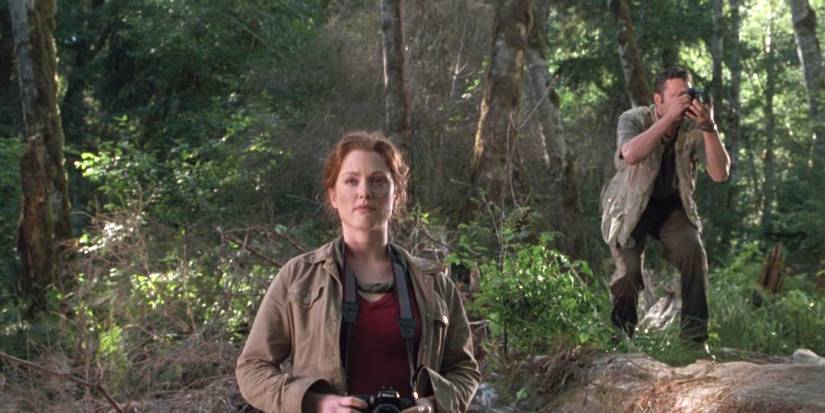
Sarah Harding (Julianne Moore) stands with her camera around her neck in a thick jungle in The Lost World: Jurassic Park.Image via Universal Pictures
People talk about The Lost World like it is simply the sequel that could not match Jurassic Park, which is true in the least interesting way possible. Of course it does not have the same first-contact wonder. Spielberg already gave audiences the impossible feeling of seeing dinosaurs for the first time. The sequel chooses rougher material: corporate greed returning to the crime scene, scientists and hunters invading an island that has no interest in being managed, and Ian Malcolm (Jeff Goldblum) realizing nobody learned the correct lesson from disaster.
The set pieces are ridiculous in the best Spielberg way because they keep building from clear physical problems. The trailer hanging over the cliff is pure pressure: glass cracking, mud sliding, Sarah Harding (Julianne Moore) on the pane, Malcolm and Eddie Carr (Richard Schiff) trying to keep everyone alive, and the T. rex attack stretching every second until rescue itself becomes punishment. The raptors in the long grass remain one of the most chilling images in the series, and the San Diego section has a pulpy monster-movie nerve that people dismissed too quickly. It is nastier, darker, and less graceful than the first film, yet it understands that awe curdles when humans keep treating nature like inventory.
4
‘Ready Player One’ (2018)
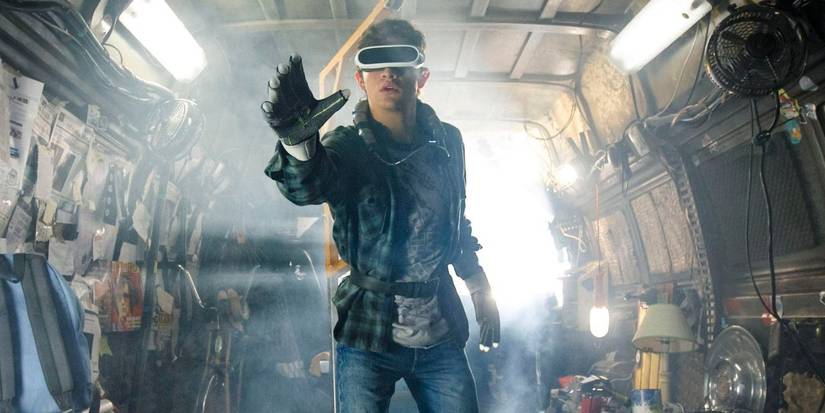
Tye Sheridan as Wade Watts / Parzival standing with a gloved hand out in Ready Player OneImage via Warner Bros. Pictures
A lot of people reduced Ready Player One to future references and missed how cleanly Spielberg turns a potentially unbearable nostalgia machine into actual movement. Wade Watts (Tye Sheridan) lives in a collapsing 2045 where the OASIS gives people a digital escape, and the hunt for James Halliday’s (Mark Rylance) hidden Easter egg becomes a war between lonely players and a corporation that wants to own imagination itself. That premise could have become a dead parade of pop-culture name-checks but Spielberg keeps pushing it through games, chases, rooms, rules, and emotional stakes that a viewer can actually follow.
The first race alone has more spatial clarity than most modern CGI action. You always understand where Wade is, what he wants, why the course defeats everyone, and how the King Kong obstacle changes the logic of the challenge. The Shining sequence is even more insane because Spielberg walks into another filmmaker’s iconography and still stages it with his own comic timing, fear beats, and character reactions. The movie has flaws, absolutely, especially when it explains its own sincerity too bluntly. Still, the craft is so alive. The movie takes avatars, brand images, digital bodies, and fandom clutter, then gives them speed, emotion, and old-school adventure grammar.
3
‘Indiana Jones and the Temple of Doom’ (1984)
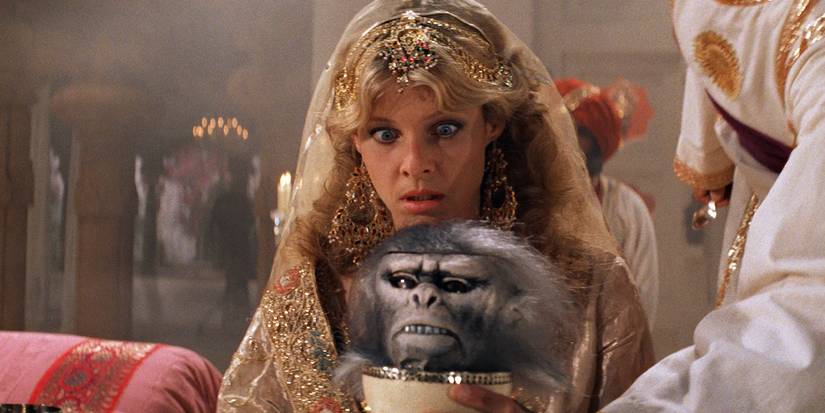
Kate Capshaw as Willie Scott in Indiana Jones and the Temple of DoomImage via Paramount Pictures
This is the Indiana Jones film people keep trying to tame in conversation, which is exactly why it remains so exciting. Temple of Doom is sweaty, grotesque, loud, mean, childish, funny, uncomfortable, and completely committed to its own nightmare-adventure energy. Indiana Jones (Harrison Ford) starts in Shanghai with a poisoned drink, a diamond, a nightclub number, a giant gong, and a plane escape, then gets dragged into a story of stolen children, a sacred stone, and a cult operating beneath a palace. The movie barely lets anyone breathe, and that impatience is part of its personality.
The criticism around Willie Scott (Kate Capshaw) and the film’s racial politics is valid, and that conversation will always be attached to it. The film still has a deranged blockbuster charge that almost no franchise movie would dare now. Short Round (Ke Huy Quan) gives the adventure its heart, and Short Round’s timing with Indy is so good that their relationship can carry scenes the script does not fully protect. The banquet, the spike room, the heart ritual, the child labor tunnels, the mine-cart chase, and the bridge confrontation all hit with blunt-force showmanship. It is ugly in places, brilliant in others, and impossible to confuse with anything safe.
Collider Exclusive · Action Hero Quiz
Which Action Hero Would Be
Your Perfect Partner?
Rambo · James Bond · Indiana Jones · John McClane · Ethan Hunt
Five legends. Five completely different ways of getting out alive — with style, with muscle, with charm, with luck, or with a plan so intricate it probably shouldn’t work. Ten questions will reveal which action hero was built to have your back.
🎖️Rambo
🍸James Bond
🏺Indiana Jones
🔧John McClane
🎭Ethan Hunt
FIND YOUR PARTNER →
01
You’re dropped into a dangerous situation with no warning. What do you need most from a partner?
The first few seconds tell you everything about who belongs beside you.
ASomeone who already has three contingency plans running and is calmly working through all of them.
BSomeone who reads the terrain instinctively and knows exactly how to use it against the enemy.
CSomeone who keeps their nerve and their sense of humour when everything is falling apart.
DSomeone who knows the history of wherever we are and what we’re walking into.
ESomeone with the right contact, the right cover identity, and the right exit already arranged.
NEXT QUESTION →
02
You have to get somewhere dangerous, fast. How do you travel?
How you get there is half the mission.
AOn foot through terrain no one else would attempt — I move where vehicles can’t follow.
BOn a motorcycle, a cargo plane, or anything else that gets me there before I think too hard about it.
CIn something that belongs to someone else — borrowed, stolen, or improvised under fire.
DFirst class, with a cover identity and a gadget that does something I won’t explain until it’s needed.
EBy whatever means are available — I’ve driven, flown, and once arrived by camel. The destination matters, not the method.
NEXT QUESTION →
03
You’re pinned down and outnumbered. What does your ideal partner do?
This is when you find out what someone is really made of.
ADisappears into the environment, flanks them silently, and ends it before I’ve reloaded.
BCracks a one-liner, grabs a fire extinguisher or a chair, and improvises something that somehow works.
CProduces a gadget specifically designed for this exact scenario and uses it with infuriating precision.
DPulls out a whip, a pistol, and an archaeological insight that somehow gets us out alive.
ENeutralises the threat with maximum efficiency and minimum words — they were already three moves ahead.
NEXT QUESTION →
04
The mission is paused. You have one evening to decompress. What does your partner suggest?
Who someone is when the pressure drops is who they actually are.
AA bar with terrible lighting, cold beer, and absolutely no questions about feelings.
BThe finest restaurant in the city, a bottle of something expensive, and a conversation that is equal parts brilliant and exhausting.
CA local dig site, a museum after hours, or a long story about why that particular artefact matters to human civilisation.
DPizza. Bad TV. Falling asleep halfway through a movie neither of you were watching anyway.
EA debrief that turns into three hours of contingency planning that somehow becomes the most fun you’ve had all week.
NEXT QUESTION →
05
How do you prefer your partner to communicate mid-mission?
Good communication is the difference between partners and a liability.
APrecise and minimal — tell me what I need to know and nothing else. Every word has a cost.
BDeadpan and dry — keeping it light keeps me sharp, even when everything is on fire.
CEnthusiastic and slightly chaotic — but always with useful information buried somewhere in the noise.
DCalm and controlled through an earpiece, with a plan that covers every variable I haven’t thought of yet.
EBarely at all — silence is a language and they speak it fluently.
NEXT QUESTION →
06
Your enemy is powerful, well-resourced, and has the upper hand. How should your partner approach them?
The approach to the enemy defines the partnership.
AInfiltrate their inner circle, learn everything, and dismantle them from inside out before they know we’re there.
BStudy the historical pattern — every villain of this type has a weakness written somewhere in the past.
CGet them talking. The more they monologue, the more time I have to figure out how to beat them.
DGo through them. Directly. With as much force as the terrain allows.
EFind the one thing they haven’t accounted for — there’s always one thing — and make sure we’re holding it.
NEXT QUESTION →
07
Things go badly wrong and you’re captured. What do you trust your partner to do?
Who someone is when you need them most is the only thing that matters.
ACome in alone, quietly, and get me out before anyone knows they were there.
BHave already been working on the extraction since the moment I disappeared — the plan is already running.
CCome in loud, come in fast, and worry about the collateral damage later — I’d do the same for them.
DUse every resource, every contact, and bend every rule until I’m out — they don’t leave people behind.
ECharm their way in somehow, bluff through the hard part, and still manage to look good doing it.
NEXT QUESTION →
08
What does your ideal partner bring to the table that you couldn’t replace?
A great partner fills the gap you didn’t know you had.
ATechnology that shouldn’t exist yet and the training to use it under any conditions.
BSurvival instinct so refined it borders on supernatural — and the scars to prove it’s been tested.
CKnowledge of history, language, and culture that makes them invaluable in places where force is useless.
DThe ability to walk into any room in the world and immediately become the most trusted person in it.
EStubbornness that refuses to accept a situation is hopeless — and the improvisational skill to back it up.
NEXT QUESTION →
09
Every partnership has a cost. Which of these can you live with?
No one comes without baggage. The question is whether you can carry it together.
AA partner who never fully switches off — always watching exits, always calculating threats, even at dinner.
BA partner who gets the job done brilliantly but has the emotional availability of a locked filing cabinet.
CA partner who makes everything ten times more complicated than it needs to be — but who always comes through.
DA partner who gets personally attached to every relic, ruin, and artefact we encounter, which slows everything down.
EA partner who was not built for this and knows it — but shows up anyway, every time, without being asked.
NEXT QUESTION →
10
It’s the final moment. Everything is on the line. What do you need from your partner right now?
The last question is the most honest one.
AOne line. Absolutely dry. Delivered like the world isn’t ending. Then we move.
BNothing said at all — just a look that means we both already know what has to happen.
CA plan I don’t fully understand that somehow accounts for everything, delivered in thirty seconds flat.
DA piece of historical context that reframes the entire situation and tells us exactly what to do next.
ESomeone who steps forward instead of back — because that’s who they’ve always been.
REVEAL MY PARTNER →
Your Partner Has Been Assigned
Your Perfect Partner Is…
Your answers have pointed to one action hero above all others. This is the person built to have your back — for better or considerably, spectacularly worse.
Rambo
Your partner doesn’t talk much, doesn’t need to, and will have assessed every threat in your immediate environment before you’ve finished your first sentence. John Rambo is not a man of plans or politics — he is a force of nature shaped by survival, loyalty, and a capacity for endurance that goes beyond anything training can produce. He will not leave you behind. He has never left anyone behind who deserved to come home. What you get with Rambo is the most capable, most quietly ferocious partner imaginable — one who has been through things that would have broken anyone else, and who chose to keep going anyway. You’ll never need to ask if he has your back. You’ll just know.
James Bond
Your partner will arrive perfectly dressed, perfectly briefed, and with a cover story so convincing it’ll take you a moment to remember what’s actually true. James Bond is the most professionally dangerous person in any room he enters — and the most disarmingly charming, which is the point. He operates in a world of layers, where nothing is what it appears and every advantage is used without apology. You’ll never be bored. You’ll occasionally be furious. But when it matters — when the mission is genuinely on the line and the margin for error has collapsed to nothing — Bond is exactly the partner you want. He has survived things that have no business being survivable. He does it with style. That is not nothing.
Indiana Jones
Your partner will know the history, the language, the cultural context, and exactly why the thing everyone else is ignoring is actually the most important thing in the room. Indiana Jones is brilliant, reckless, and occasionally impossible — but he is also one of the most resourceful, most genuinely knowledgeable partners you could find yourself beside. He approaches every situation with a scholar’s eye and a brawler’s instinct, which is an unusual combination and a remarkably effective one. He hates snakes and gets personally attached to objects of historical significance, both of which will slow you down at least once. It doesn’t matter. What Indy brings is irreplaceable — and the adventures you’ll have together will be the kind people write books about. Assuming you survive them.
John McClane
Your partner was not supposed to be here. He does not have the right equipment, the right information, or anything approaching the right odds. He has a sarcastic remark and an absolute refusal to accept that the situation is as bad as it looks. John McClane is the greatest accidental hero in the history of action cinema — a man whose superpower is stubbornness, whose contingency plan is improvisation, and whose capacity to absorb punishment and keep moving would be alarming if it weren’t so useful. He will complain the entire time. He will make it significantly more chaotic than it needed to be. And he will absolutely, unconditionally, without question come through when it counts. Yippee-ki-yay.
Ethan Hunt
Your partner has already run seventeen scenarios by the time you’ve finished reading the briefing, and the plan he’s settled on involves at least two things that should be physically impossible. Ethan Hunt operates at the absolute edge of human capability — technically, physically, and intellectually — and he brings the same relentless precision to protecting his partners that he brings to dismantling organisations that shouldn’t exist. He is not easy to know and he will never fully tell you everything. But he will carry the weight of the mission so completely, so absolutely, that your job is simply to trust him — and the remarkable thing is that trusting him always turns out to be the right call. The mission will be impossible. He will complete it anyway.
↻ RETAKE THE QUIZ
2
‘The Adventures of Tintin’ (2011)
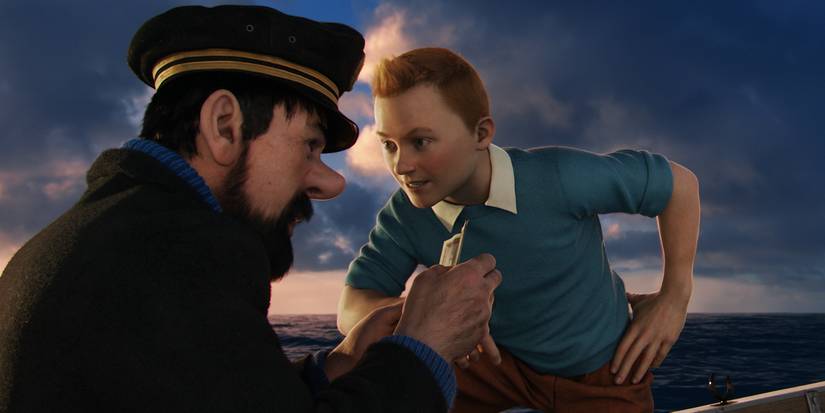
Captain Haddock and Tintin examining a clue in The Adventures of TintinImage via Paramount Pictures
Spielberg making an animated adventure should have been treated like a major event for decades, yet The Adventures of Tintin somehow became a movie people remember with mild appreciation instead of total disbelief. This thing moves. Tintin (Jamie Bell), Snowy, Captain Haddock (Andy Serkis), and the mystery of the Unicorn give Spielberg a clean adventure engine, and he attacks it with the energy of someone finally handed a camera that can go anywhere his brain wants.
The motorcycle chase through Bagghar is the obvious masterpiece sequence that carries the film because it has water, collapsing streets, a tank, a hawk, a dam, a hotel, a scroll case, and Snowy somehow staying active in the geography without the scene losing coherence. That is insane control. Plenty of live-action blockbusters with real actors cannot stage action this legibly. The film also nails the specific Tintin pleasure: investigation as adventure, jokes tucked into danger, a hero who is brave through curiosity, and a sidekick in Haddock whose drunken family shame slowly becomes heroic purpose. The faces can be a little uncanny, but the filmmaking is so sharp that it barely matters. This is Spielberg using animation as a full adventure language.
1
‘War of the Worlds’ (2005)
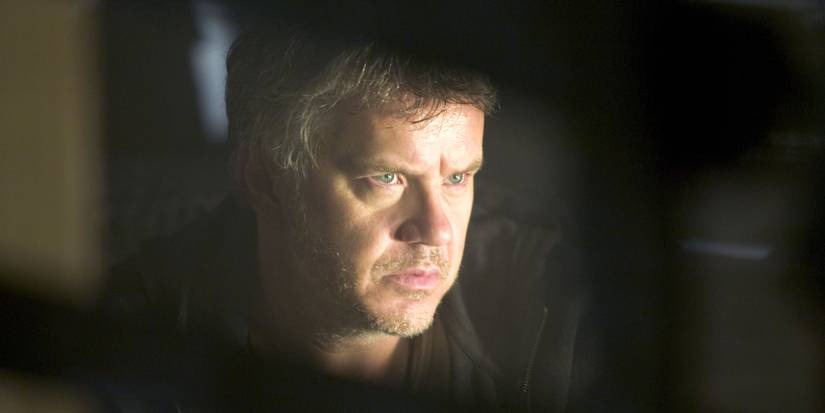
WAR OF THE WORLDS, Tim Robbins, 2005, (c) Paramount/courtesy Everett CollectionImage via Paramount/courtesy Everett Collection
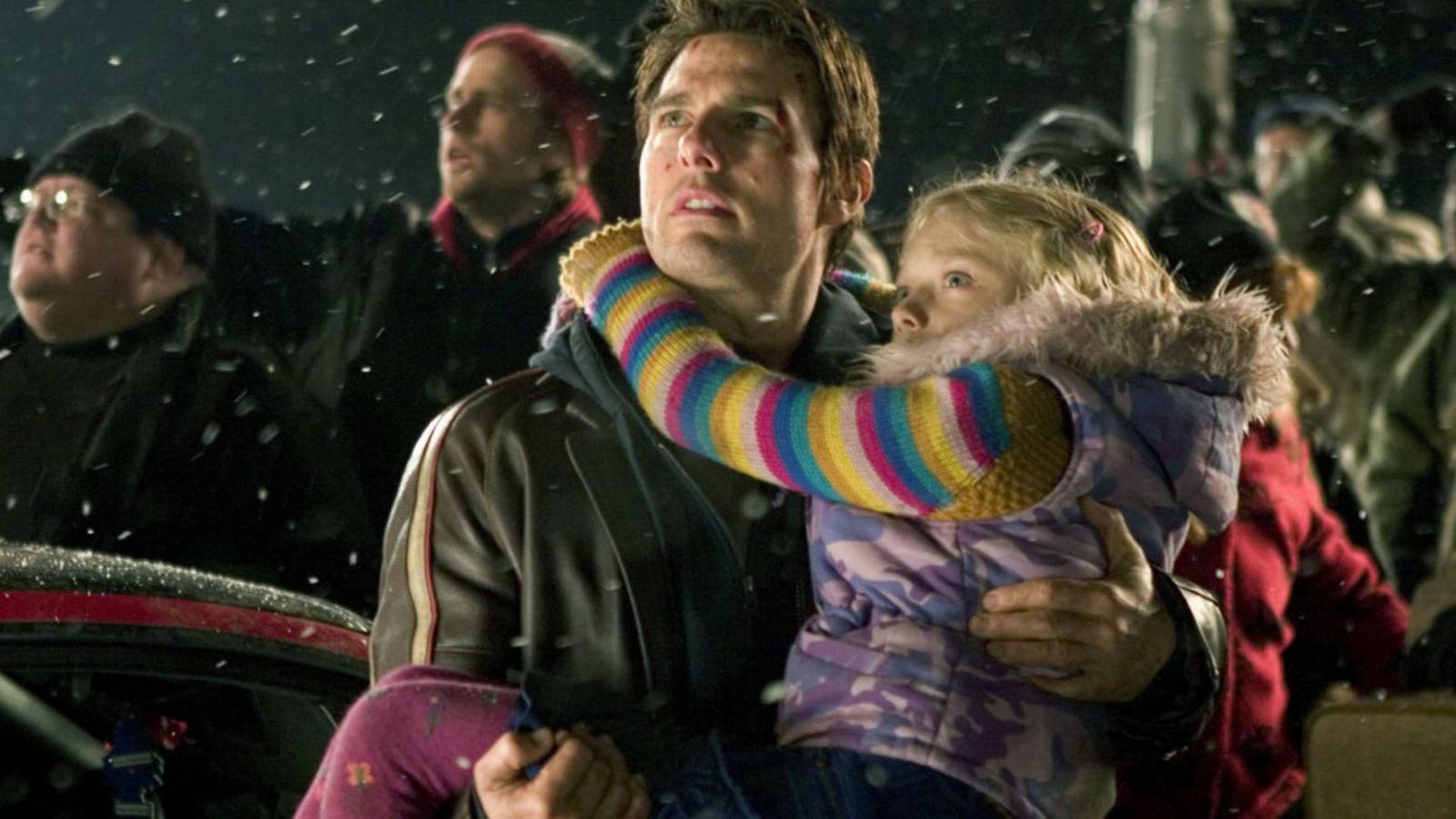
War of the Worlds is a summer alien-invasion movie that feels genuinely traumatized, and that is probably why some audiences still underrate it. The film follows Ray Ferrier (Tom Cruise), a divorced, impatient father who has no idea how to protect his children when the tripods rise from the ground and begin exterminating people. He is not a chosen hero, a soldier, a scientist, or a leader. He is a bad dad with a car, a daughter, Rachel (Dakota Fanning), who is terrified, a son who wants to run toward the fight, and no plan beyond getting them away from the next horror.
The film is terrifying because it beautifully captures disaster through family panic instead of spectacle pride. The first tripod attack has people turning to ash in the street while their empty clothes drift down, and Ray comes home covered in human dust because the movie refuses to let him process what he has seen. The mob attacking the car is almost harder to watch than the aliens because survival has made everyone recognizable and frightening. The basement section with Ogilvy (Tim Robbins) turns invasion into claustrophobic moral panic, with Ray forced into a choice that destroys any remaining fantasy of clean heroism. Rachel’s fear, Ray’s shaken physicality, the train on fire, the red weed, the ferry attack, the tripod horn, all of it lingers. This is basically Spielberg using blockbuster scale to show how small a parent can feel when the world stops making sense.