
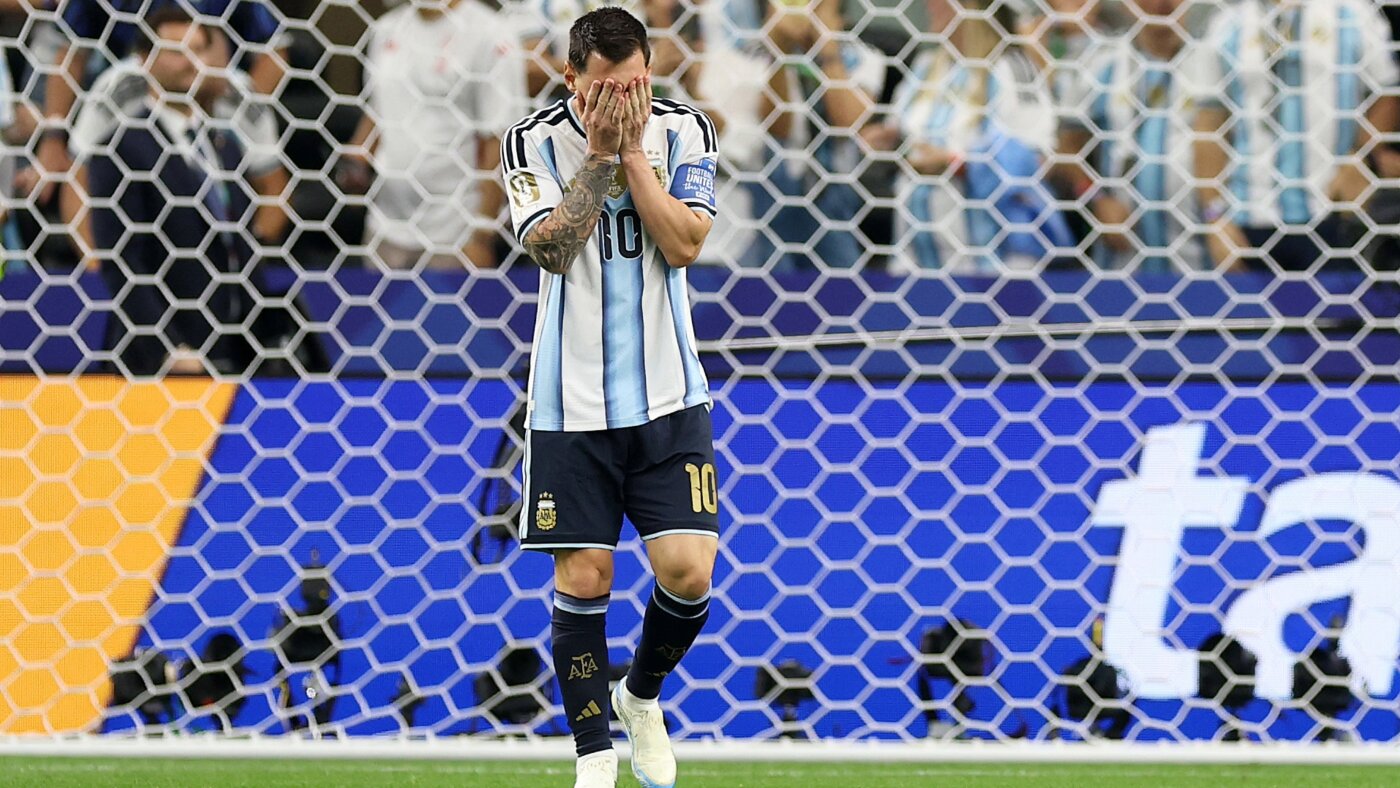
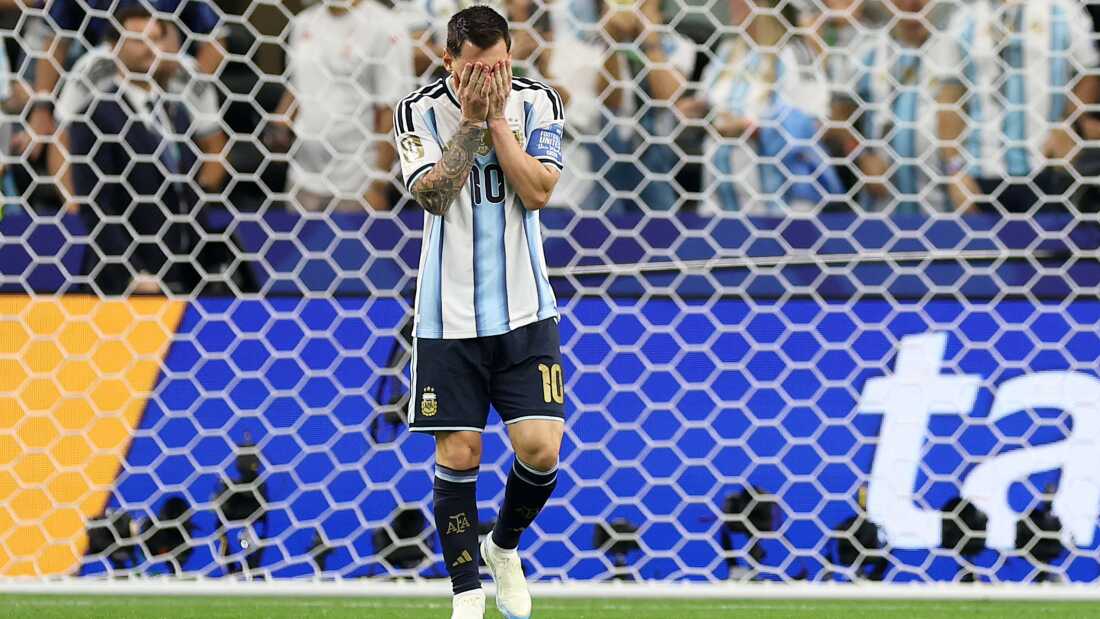
Lionel Messi #10 of Argentina reacts after missing the penalty kick during the FIFA World Cup 2026 Group J match between Argentina and Austria at Dallas Stadium on June 22, 2026 in Arlington, Texas.
Francois Nel/Getty Images
hide caption
toggle caption
Francois Nel/Getty Images
Lionel Messi is arguably the greatest soccer scorer of all time. But when it comes to penalty kicks, Messi is merely average. Why? Maybe the answer involves game theory.
According to game theory, there’s an optimal strategy for taking penalty kicks. This strategy involves an idea that was once somewhat controversial in economics — that is, until economists started studying soccer players in real life.
On today’s show, we kick it over to the hosts of the Soccernomics podcast to explain how game theory has changed soccer, and how soccer has changed game theory.
Watch the penalty shootout between Manchester United and Chelsea in the Champions League final in 2008.
Support:
Read:
Our book: Planet Money: A Guide to the Economic Forces That Shape Your Life
Our weekly longform Planet Money newsletter
Our weekly Indicator round-up newsletter
Follow:
This episode of Planet Money was produced by Emma Peaslee with help from James Sneed. It was edited by Jess Jiang. It was fact checked by Sierra Juarez and engineered by Annlie Huang. Alex Goldmark is our executive producer.
The Soccernomics episode was originally hosted by Ashish Malhotra, Simon Kuper and Stefan Szymanski and sound designed by Alex Roldan.
Music: NPR Source Audio – “Bassline Motion,” “Bass Talks,” and “What Da Funk”