
 Iran’s new regime is very different to what came beforepublished at 07:42 BST
07:42 BST
 Paul Adams
Diplomatic correspondent
Iran is in the midst of profound change.
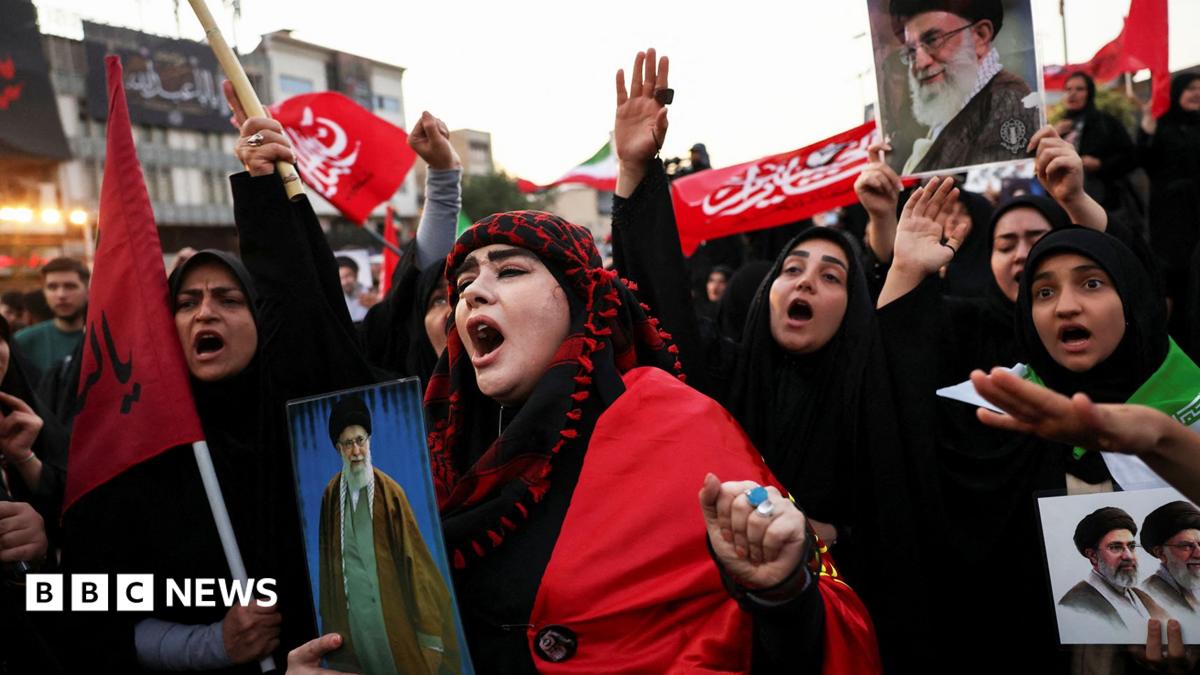
The country is saying farewell to its former supreme leader, Ayatollah Ali Khamenei, who was killed more than four months ago in the devastating joint US-Israeli airstrikes which began the war and decapitated much of the regime in Tehran.
It’s a big moment: a grand reminder that the old guard has given way to the new. And with the new faces comes a new approach with its own implications.
The new leadership is not made up of the sort of people Washington is used to calling “woolly-brained apocalyptic ideologues”, says Vali Nasr, professor of International Affairs and Middle East Studies at Johns Hopkins’ School of Advanced International Studies.
At 56, the country’s new supreme leader Mojtaba Khamenei is 30 years younger than his father, Ali Khamenei, who was believed to be in frail physical condition when he was killed at the start of the war.
The president, Masoud Pezeshkian, is older at 71, but the generation that mounted the 1979 revolution are all gone.
Two key figures, the parliamentary speaker and chief negotiator Mohammad Bagher Ghalibaf and the commander-in-chief of the Revolutionary Guard, Ahmad Vahidi, are both in their 60s.
But having stood up to the combined might of the US and Israel, can Iran’s new leadership capitalise on this potentially fleeting opportunity to rebuild the regime’s shattered legitimacy?
After six tumultuous months, the region has started to look different. But a lot has to go right for this plastic moment to solidify into something better.