
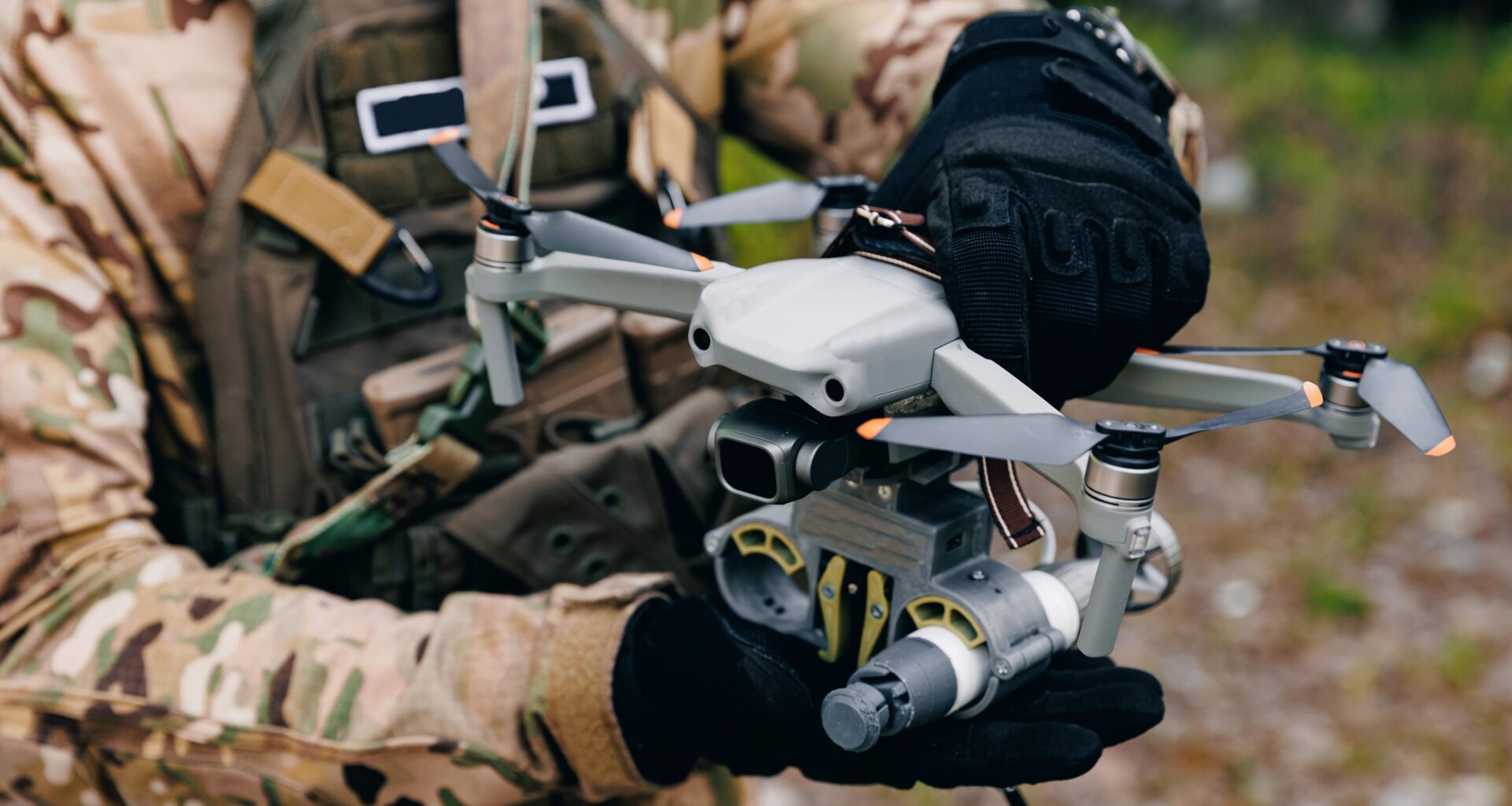
Modern warfare increasingly hinges on the ability to produce and deploy large numbers of interoperable low-cost systems that can leverage AI to find, fix, and finish targets. Competing in this era of “precise mass” requires a new type of industrial base: a defense tech ecosystem comprising national security-aligned investors, startups, accelerators, and commercial companies that can rapidly innovate and scale production. On both sides of the Atlantic, governments are racing to build their own defense tech ecosystems, recognizing that the exquisite capabilities that have traditionally underpinned military advantage are still necessary but no longer sufficient to achieve victory on the contemporary battlefield.
The transatlantic partners have a strong track record of defense industrial cooperation that has historically focused on major conventional platforms. To secure future military advantage, it will be essential to accelerate defense tech collaboration. This type of cooperation, if successful, will provide militaries with access to best-in-class defense solutions they lack, enable governments to scale production of low-cost, high-volume capabilities, and ultimately backstop a new transatlantic way of war.
Interconnected Ecosystems, Growing Pressures
Both sides of the Atlantic are having a defense tech moment. In the United States, equity funding for defense startups in 2025 reached $14.2 billion, nearly triple the level of the previous year. American defense tech companies, sometimes in partnership with traditional military contractors, are driving technological advances and moving quickly to translate innovation into capability. At the government level, the Trump administration’s approach to defense acquisitions and reforms to arms transfer policies amounts to a doubling down on sourcing military capabilities from a wider set of potential suppliers.
Europe, too, is experiencing a defense tech boom. Rearmament sparked by Russia’s full-scale invasion of Ukraine has evolved into an unprecedented defense buildup amid US calls for burden shifting. At the same time, European governments have learned from Ukraine that startups and commercial companies can innovate at speed and produce at scale, complementing traditional defense industry. The result is a wave of investment and the emergence of European defense tech companies with valuations exceeding $1 billion.
The expansion of defense tech in the United States and Europe has created new transatlantic linkages. To give a few illustrative examples:
Total investment in European defense tech companies in 2025 reached nearly $9 billion, with US investors providing over one-third of the amount.
The top five US defense tech startups have won six contracts with European governments and formed 17 European teaming relationships.
The top five European defense tech startups have won eight contracts with the US government (plus one with NATO Allied Command Operations) and formed 17 US teaming relationships.
Two of the top five European defense tech startups have established production facilities in the United States.
The top 11 performers in the first Gauntlet challenge organized by the Pentagon’s Drone Dominance Program that were selected to receive orders include two European companies and one transatlantic company.
Beyond capital flows, government contracts, teaming arrangements, and production footprint, the institutional architecture underpinning transatlantic defense tech collaboration has also expanded and matured. Most prominently, the Defence Innovation Accelerator for the North Atlantic (DIANA), launched in 2022, has scaled its activities through establishing 16 accelerators. DIANA is also increasingly focused on rapid adoption pathways that enable NATO members to quickly translate promising technologies into real-world capabilities. Twenty-four national governments have also come together to create the NATO Innovation Fund as a vehicle for investing directly in defense tech startups alongside private capital. At the bilateral level, the United States has recently concluded “technology prosperity deals” with a subset of European countries that, in some cases, include a defense tech component.
At the same time, this emerging transatlantic defense tech ecosystem is under strain.
The first area of pressure is the reassertion of sovereignty on both sides of the Atlantic. Many European governments, reacting to US foreign policy volatility, are reevaluating the benefits of cooperation with Washington—including on defense tech—against the risks of dependence. Moreover, European definitions of sovereignty increasingly extend to control over data and digital infrastructure. This poses an additional complication given the fusion of software and hardware that defines defense tech. Finally, the goal of many European governments to build domestic defense tech ecosystems to anchor economic growth and manufacturing jobs has a chilling effect on potential cooperation with the United States. There, the reassertion of sovereignty has taken the form of prioritizing reindustrialization and arms exports over types of collaboration with allies that more evenly distribute technological and economic gains, such as co-development and joint production.
The second area of pressure is divergence over military applications of AI. The United States and its allies and partners have yet to adopt a foundational standard for the use of AI in this area. In fact, views on AI’s appropriate role for military targeting and autonomous operations more broadly have diverged as Washington has moved away from the Responsible AI in the Military (REAIM) Domain Blueprint for Action endorsed by 60 countries in 2024. Today, the United States, with Israel and Ukraine, are employing AI across military operations, including for targeting. American allies in Europe have generally taken a more restrained approach even as the EU has refrained from issuing explicit regulations addressing the military use of AI.
These divisions over military applications of AI pose a challenge to transatlantic defense tech cooperation. Without at least a baseline standard on AI for specific military use cases, fielding interoperable capabilities will be challenging. Conflicting standards, if codified, could, alongside sovereignty pressures, fragment the emerging transatlantic defense tech ecosystem, creating silos of technology and capital.
Navigating an Inflection Point
Despite these pressures, there are still forces advancing a transatlantic defense tech ecosystem.
US venture capitalists, private equity firms, and institutional investors are eager to deepen their involvement in Europe’s new defense industry, anticipating that the aggregate increase in European military expenditures in the years ahead will outpace changes in the larger, but more stable, US defense budget. American defense tech companies similarly view Europe as a vital and expanding market, albeit one that is increasingly complex.
In Europe, many governments recognize that backfilling the upcoming reduction of American forces on the continent will place a premium on defense tech. From a cost and time perspective, it is impractical to replace US conventional platforms and strategic enablers with exact European equivalents. A robust European defense tech ecosystem will provide the continent, in some instances, with the option to generate lower-cost, high-volume capabilities that can achieve similar military effects.
The trajectory of transatlantic defense tech cooperation consequently remains highly variable. Medium-term outcomes range from fragmentation to acceleration. Here are guidelines for successfully navigating today’s inflection point:
Pursue an ambitious vision. Now is the moment to take a first-principles approach to transatlantic defense tech cooperation and identify the architecture that maximizes future military advantage. A North Star for defense tech cooperation, even if potentially unreachable in the short term, will ensure that tactical steps to address the challenges posed by sovereignty pressures and divergence over military AI remain anchored to larger strategic objectives.
Map the transatlantic defense tech ecosystem. There is a deficit of data on the state of defense tech cooperation between the United States and Europe. Policymaker decisions would benefit significantly from a more comprehensive understanding of the transatlantic defense tech ecosystem at the government and private-sector levels. Mapping transatlantic defense tech collaboration will require identifying not only policy structures but also the magnitude and direction of investment flows and procurements, the geographic distribution of production facilities, and cross-border teaming arrangements. The degree of transatlantic entanglement is likely more expansive than political leaders, policymakers, and publics recognize.
Treat sovereignty as non-unitary. The trade-off between deepening cooperation on defense tech and the risks of dependence will become more manageable if the transatlantic partners approach sovereignty as encompassing multiple categories. These include political sovereignty, industrial sovereignty, data sovereignty, operational sovereignty, and procurement sovereignty. Governments should determine the categories of sovereignty that must be fully protected, those that can be partially shared, and those for which resilience gained from cooperation outweighs the downsides of greater dependence on allies.
Disaggregate military applications of AI. Although the United States and some European governments differ on autonomous lethal targeting, other military AI use cases may prove less contentious. To set standards for a transatlantic defense tech ecosystem, the United States and Europe should identify a concrete set of military AI applications, beginning with those more removed from kinetic action, such as optimizing logistics, cyber defense, and processing intelligence, surveillance, and reconnaissance (ISR) data. Even if the transatlantic partners fail to reach a consensus on kinetic uses of AI, they can achieve significant interoperability by agreeing on other military applications below this threshold.
Lean into comparative advantage. Individual countries bring unique assets to transatlantic defense tech collaboration. The United States has disproportionate capital and abundant defense tech startups. European countries such as Germany possess a skilled industrial workforce and high-quality manufacturing capacity that can be repurposed for defense needs. Ukraine has unparalleled experience in the use of precise mass on the battlefield. Türkiye has a low-cost manufacturing base compared to other transatlantic partners. And countries on Europe’s eastern edge, such as Poland and Romania, are well positioned to support production of new capabilities close to potential frontlines, which could prove critical in a protracted conflict in which transoceanic logistics are contested.
Take a global perspective. The United States and Europe are part of a larger defense tech ecosystem that spans the transatlantic and Indo-Pacific. A global network of defense tech cooperation will require a strong transatlantic core. At the same time, sovereignty concerns and differences over military AI are less pronounced in other regions. Bringing in partners from outside the North Atlantic may help to unlock areas of defense tech cooperation that would not be possible in a purely transatlantic context. An expanded geography will also create new opportunities to address military operational problems common across multiple theaters, such as leveraging precise mass to deter and, if necessary, defeat potential adversaries.
Defense tech collaboration can emerge as a critical element of a transformed US-Europe relationship if the transatlantic partners can navigate current headwinds. The alternative—succumbing to the challenges of the moment—risks ceding future military advantage at a time when conventional deterrence in Europe and globally has already eroded.
The author wishes to acknowledge former GMF Senior Fellow Kristine Berzina and Nonresident Senior Fellow Ioan Istrate for providing thought partnership that helped to shape this paper.
The views expressed herein are those solely of the author(s). GMF as an institution does not take positions.