
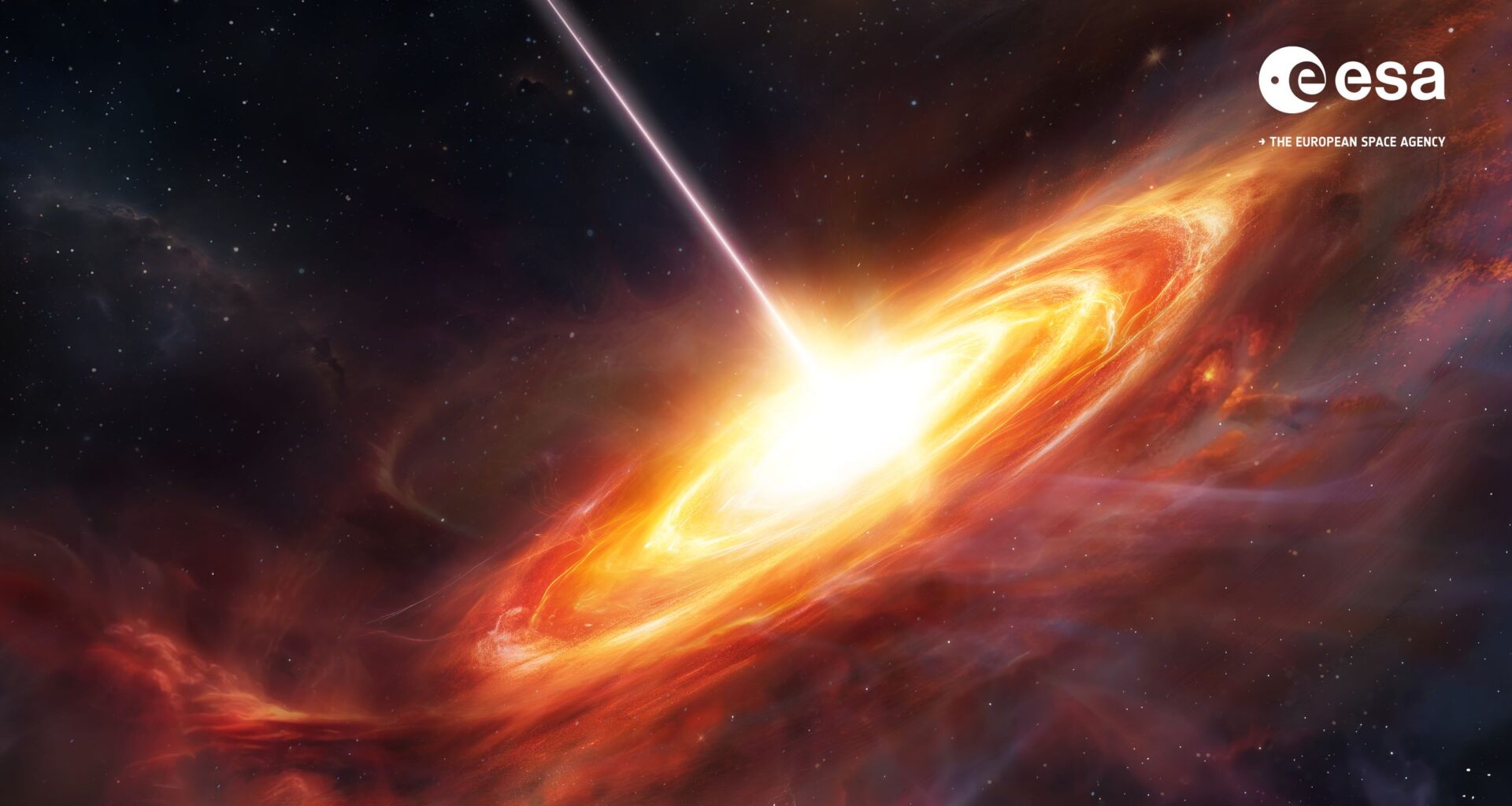
The European Space Agency’s (ESA) Euclid space telescope has spotted 31 previously unknown quasars dating to the universe’s earliest chapter, including the two oldest ever found.
The discoveries, described July 6 in the journal Astronomy & Astrophysics, more than double the number of known quasars from that primordial era and could help astronomers unravel one of cosmology’s biggest mysteries: how supermassive black holes grew so enormous so quickly after the Big Bang.
You may like
De Ugarte Postigo, A., Фатхуллин, Т. А., Jóhannesson, G., Gorosabel, J., Соколов, В. В., Castro‐Tirado, A. J., Balega, Y. Y., Spiridonova, O. I., Jelínek, M., Guziy, S., Pérez-Ramírez, D., Hjorth, J., Laursen, P., Bersier, D., Pandey, S. B., Bremer, M. N., Monfardini, A., Huang, K. Y., Urata, Y., . . . Трушкин, С. А. (2006). Extensive multiband study of the X-ray rich GRB 050408. A likely off-axis event with an intense energy injection. Max Planck Digital Library. https://doi.org/10.1051/0004-6361