
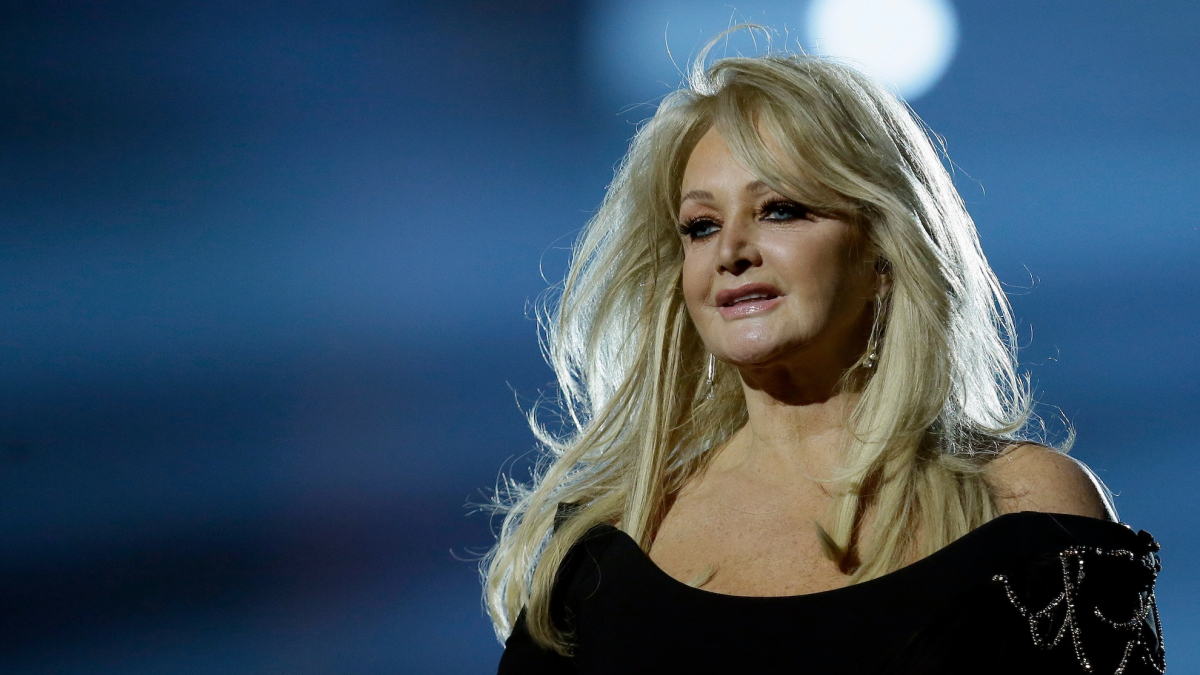
Bonnie Tyler didn’t build her legacy quietly. Her voice arrived like weather, raspy and theatrical, turning breakup songs into full-scale events and helping make “Total Eclipse of the Heart” one of the most recognizable power ballads ever recorded.
The Welsh singer, born Gaynor Hopkins in Skewen, Wales, died at 75 after a career that stretched from club stages in South Wales to global pop stardom.
Bad Bunny’s Paris show backfires as fans insist a Latina girl would’ve nailed it
Her net worth was widely estimated at around $40 million, a figure shaped by record sales, touring, licensing, collaborations and property investments accumulated across more than five decades in music.
That fortune wasn’t built on one song alone, even if one song towered over everything.
Tyler first made her name in the 1970s with “Lost in France” before “It’s a Heartache” became a major international breakthrough, reaching the upper end of the American charts and turning her into a serious export from the British pop scene.
Then came the partnership that changed her career. Working with songwriter and producer Jim Steinman, Tyler released “Total Eclipse of the Heart” in 1983, a sweeping, operatic single that topped charts in the United States and the United Kingdom.
How Bonnie Tyler built her wealth
The most valuable part of Tyler’s career was her catalog. “Total Eclipse of the Heart” and “Holding Out for a Hero” became fixtures of film, television, advertising, karaoke nights and sporting montages, generating long-term commercial life far beyond their original chart runs.
Touring also became central to her earnings. Even as her U.S. chart presence slowed after the 1980s, Tyler remained a strong draw in Europe, where albums such as Bitterblue, Angel Heart and Silhouette in Red helped sustain her audience.
Her later career included collaborations with artists including Mike Oldfield, Rick Wakeman, Robin Gibb and Vince Gill.
A 2003 bilingual version of “Total Eclipse of the Heart” with French singer Kareen Antonn became a No.1 hit in France and Belgium, proving the song could still travel across generations and languages.
Real estate also formed part of her reported fortune. Tyler and her husband, Robert Sullivan, were linked to property holdings in Portugal, the United Kingdom and elsewhere, including a villa in Portugal that became part of her long-standing life away from the stage.
Streaming showed reach, and industry problem
In 2026, “Total Eclipse of the Heart” passed one billion streams on Spotify, a milestone that underlined how strongly Tyler’s music still connected with listeners decades after release.
Yet the achievement also carried a sharper point. Tyler publicly said streaming had brought relatively little personal income despite the huge numbers, highlighting a wider issue for legacy artists whose biggest songs remain culturally powerful but don’t always produce earnings that match their reach.
Her career was still decorated with major recognition. She earned Grammy nominations, represented the United Kingdom at Eurovision in 2013 and was appointed an MBE for services to music.
The estimated $40 million figure explains the business of Bonnie Tyler’s career. It doesn’t fully capture the force of it. Her real asset was a voice that made every chorus sound like the end of the world, and kept people listening long after the charts moved on.