
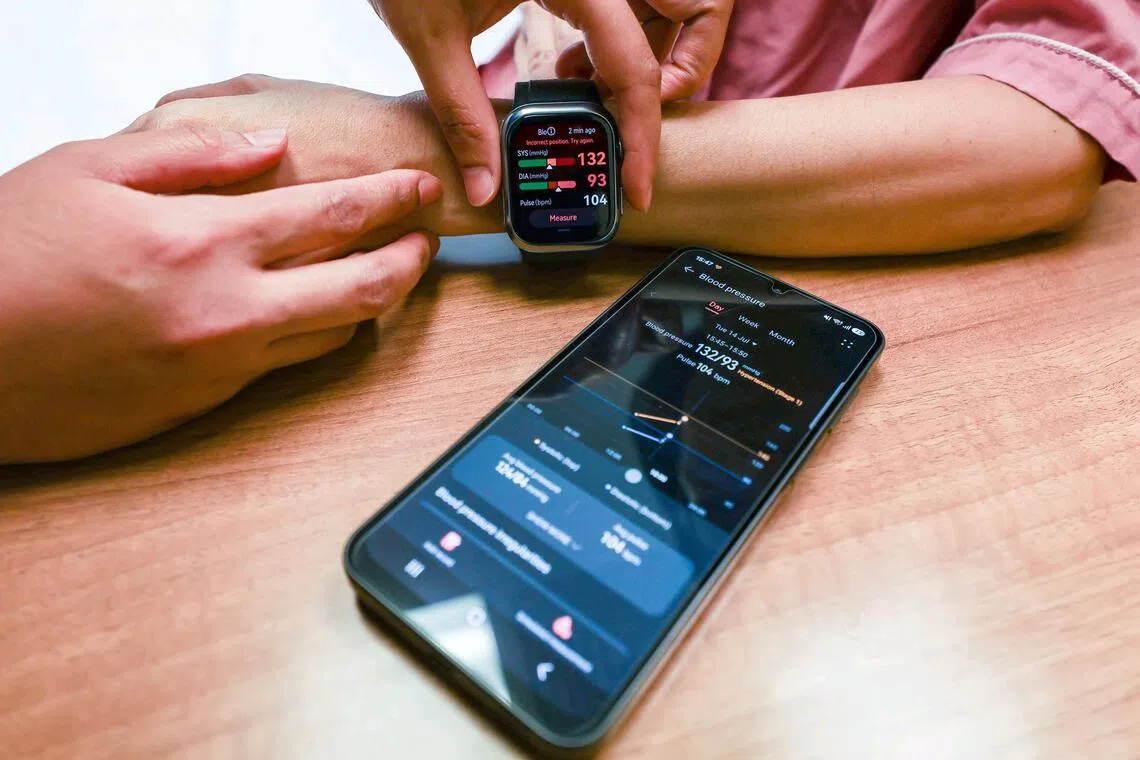
SINGAPORE – The National University Hospital (NUH) aims to broaden its use of wearable technology for vital signs monitoring, with as much as 10 per cent of inpatient vital signs monitoring expected to be supported by smartwatches over the coming year.
Data from the smartwatches will be fed into the hospital’s electronic medical records system, allowing automatic documentation – a move that is expected to cut the time required for each check from two minutes to about 40 seconds per patient.
The move is expected to improve the recovery experience of warded patients while easing the workload of nurses, NUH said, noting that this is in line with the hospital’s efforts to use technology to enhance patient safety and optimise care delivery.
Immediately following a procedure, patients’ vital signs – including blood pressure, pulse rate and blood oxygen saturation – are monitored as frequently as once every hour to assess their condition, said Lim Tian Zhi, an associate consultant in NUH’s surgery department.
“These vital signs help us assess the patient to see whether they are recovering on the normal track or showing early signs of deterioration,” he said.
Such regular monitoring – which requires nurses to wake sleeping patients – can be disruptive to their recovery, Lim noted, adding that it is also time-consuming for nurses.
Using smartwatches would allow patients’ vital signs to be monitored continuously and sent to devices tracked by nurses, allowing their condition to be observed without disrupting their rest, he said.
“It also frees nurses from routine, repeated vital signs monitoring, allowing them to have more time for physical face-to-face care for complex nursing needs,” said Lim.
NUH conducted a month-long trial in June, during which 30 patients wore smartwatches with vital signs monitoring capabilities that have been approved by the Health Sciences Authority.
These devices – which incorporate miniature airbags similar to those in conventional blood pressure monitors – continuously monitored the patients’ blood pressure, pulse rate and blood oxygen saturation.
During the trial, nurses continued carrying out routine vital signs checks, recording the smartwatch readings at hourly or four-hourly intervals.
When the devices detected abnormal readings, nurses verified the measurements using standard bedside equipment.
The trial found that the smartwatches detected 18 abnormal vital sign changes and were able to identify these changes up to two hours earlier than routine manual observations.
The Straits Times understands that the device used was a Huawei smartwatch, which is recognised as a medical device by regulators in Europe and China.
NUH nurse manager Lim Pooi See noted that the use of wearables could also help reduce the risk of cross-infection between patients from the use of shared monitoring devices.
The hospital aims to roll out the devices for surgical patients across its general ward, with the goal of eventually expanding their use to other patient groups, said Lim.
Among the patients who took part in the trial was Ho Mei Guat, who was warded at NUH following an operation to remove a tumour from her colon in June.
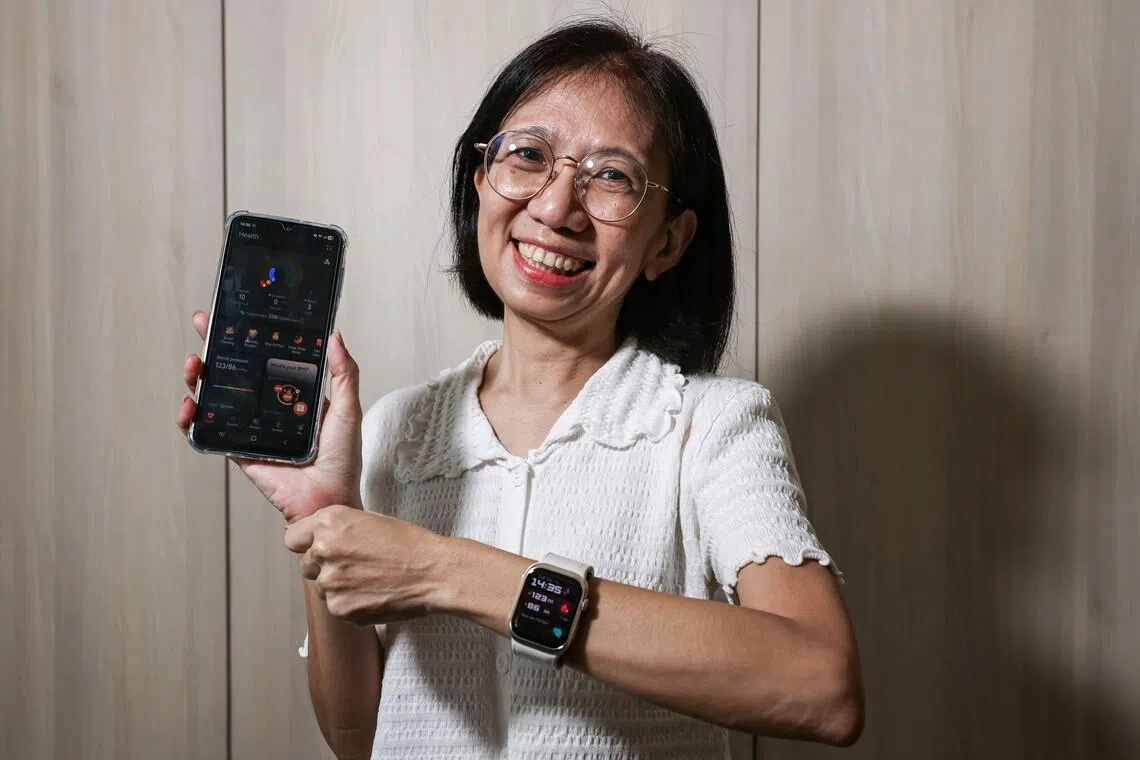
Ho Mei Guat took part in the month-long trial conducted by NUH in June, during which 30 patients wore smartwatches with vital signs monitoring capabilities that have been approved by the Health Sciences Authority.
ST PHOTO: BRIAN TEO
The 50-year-old, who works for a software company, said the experience was much more restful compared with a previous hospital stay a decade ago, when she fractured her ankle.
“I wasn’t being woken up every hour by the nurses,” she said, adding that using a smartwatch was also less intimidating than being hooked up to multiple monitoring devices.
“The encouraging results have given us confidence to explore wider implementation across suitable patient groups,” said Asim Shabbir, head of NUH’s department of surgery.
“As we expand the programme, patient safety will remain our top priority. We will continue to evaluate the clinical context and suitability of the technology in different care settings, (to identify) where it can deliver the greatest benefits,” he added.