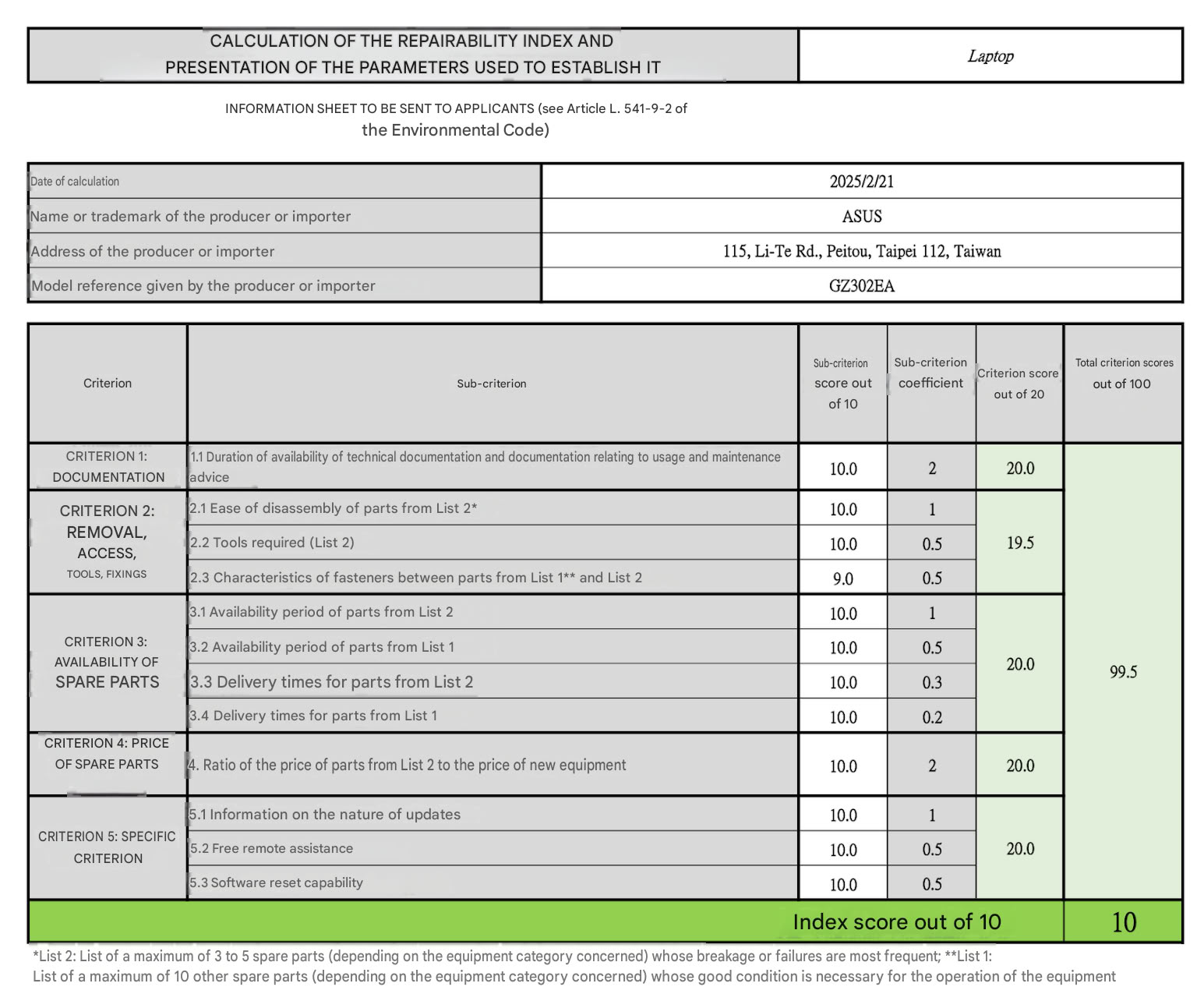
When ASUS launched the ROG Flow Z13 gaming 2-in-1 in 2025, it proudly boasted about the convertible’s 10/10 repairability score—a self-reported score that evaluates the repairability of a product based on the availability of parts, documentation, repair cost, and how easy it is to access the internals for parts replacement.
Just recently, iFixit, the popular repair and right-to-repair activism company, got its hands on the Flow Z13 for one of its teardown repairability analyses, and after taking the device apart, iFixit gave the Flow Z13 a much more reserved 7/10 repairability score. Of course, this is still a reasonably high score, especially considering how compact the Flow Z13 is, but it’s nowhere close to the 10/10 that ASUS gave itself based on the French index.

 Part of iFixit’s criticism in the teardown video has to do with how the different aspects are weighted. Where iFixit gives hardware design the highest weight, occupying 80% of the overall repairability score, the French Indice de Réparabilité weighs hardware design at just 20% of the overall score.
This high weighting on the hardware design front leads iFixit to praise certain design aspects that make disassembly and repair significantly easier. The display is screwed down, not glued down; the SSD is accessible without taking the device apart, the battery is held down with screws and not glue, and both the front and back camera modules are both easily accessible and modular. While the speakers are also modular, they are less easily accessible, which is true for both the microSD card slot and the I/O board.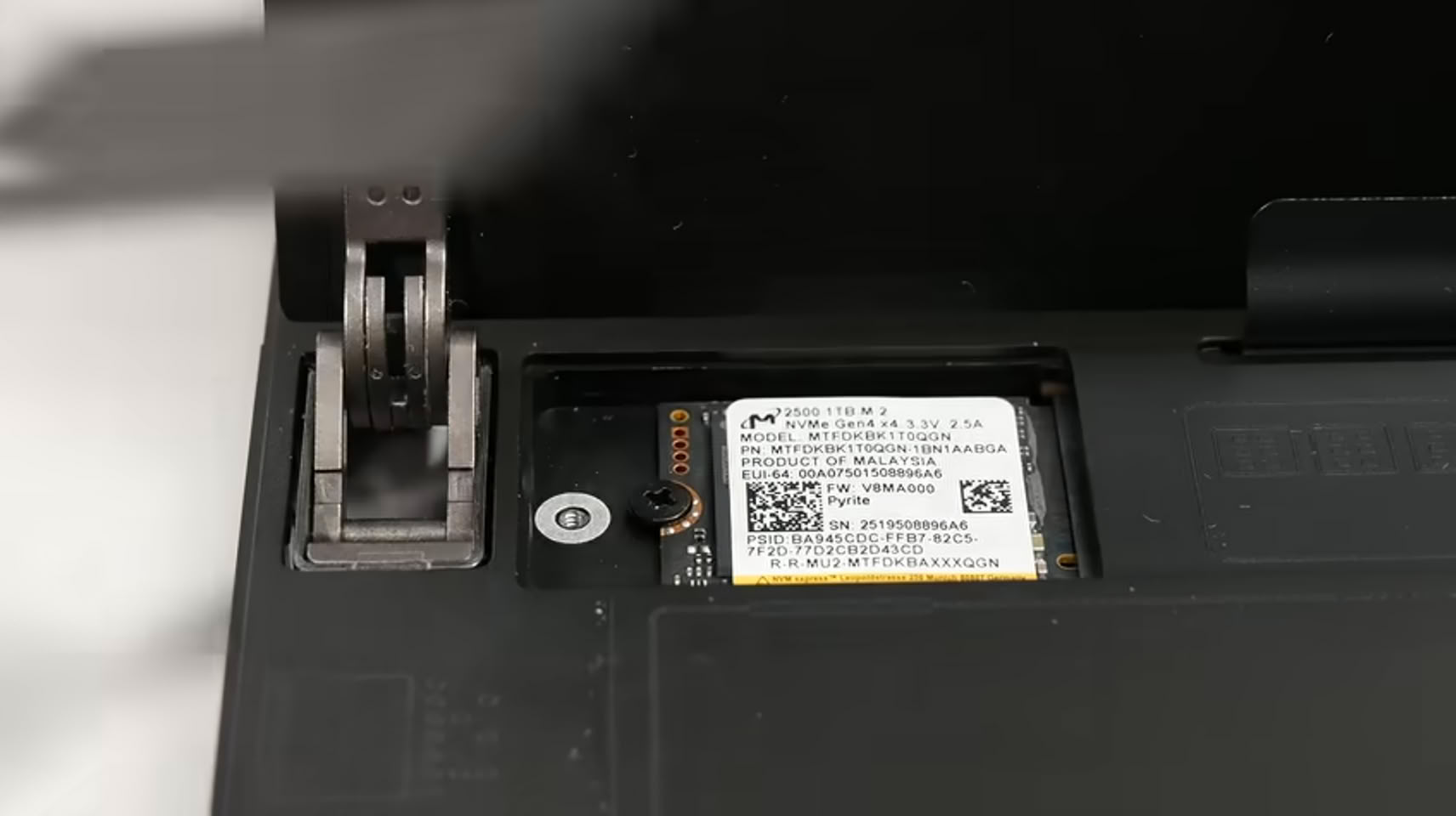 There are other design features that are less admirable, like a complicated fan replacement that requires removing the heat-sink and replacing the liquid metal on the CPU. Further, the wireless card, ports, and RAM are all soldered to the motherboard, meaning that failures of any of those components will require removal and resoldering a new individual component—or alternatively a motherboard replacement—to repair it. iFixit argues that, even based on the less strict French scoring system, ASUS should have lost points based on those soldered components. Additionally, the repair outlet argues that the manual ASUS supplies is incomplete, since it is missing details about troubleshooting and board-level repair.
Repairs availability is also questionable, mostly justified by the high cost of the device, although spares are available directly from ASUS. As iFixit points out, the ASUS repairability score on the device’s Amazon page is 9.3, which is lower than the score on the official ASUS online store and product page.
iFixit argues that this is more indicative of a systemic problem with unaudited, self-reported repair scores, because it lets manufacturers circumvent or bend the rules to their liking.