

Five members of Israel’s Council for Higher Education quit Monday over a law passed last week to expand gender segregation in higher education, warning that it could worsen the exclusion of women at universities and was an “unprecedented intervention” into the council’s independence.
The law, backed by Prime Minister Benjamin Netanyahu’s religious coalition partners, permits universities and colleges to offer segregated master’s and doctoral degree programs, subject to approval by the council.
Marcelle Machluf of the Technion — Israel Institute of Technology, Jihad El-Sana of Ben Gurion University of the Negev, Lia Laor of Levinsky-Wingate Academic College, and Edit Tshuva of the Hebrew University of Jerusalem announced their resignations and concerns in a letter sent to Education Minister Yoav Kisch and President Isaac Herzog.
Council member Moshe Vigdor announced his resignation in a separate letter, according to Hebrew media reports.
The law constitutes an “unprecedented intervention in the independence of the council” and “a fundamental change in the character of the tertiary education system in Israel,” the four resigning members of the authority wrote in their joint letter to Kisch and Herzog.
Get The Times of Israel’s Daily Edition
by email and never miss our top stories
By signing up, you agree to the terms
They said the law harms “academic freedom, equality, excellence and pluralism,” which they say are fundamental values of the higher education system in Israel.
The members said continuing to serve on the council would “legitimize moves that contradict the values for which we were asked to serve.”
Tshuva is a former deputy chairwoman of the council, and Vigdor, who serves as a public representative of the council, is also its former director-general.

Moshe Vigdor, then-director general of the Israeli Council for Higher Education, attends a session of the Education, Culture, and Sports Committee at the Knesset, Israel’s parliament in Jerusalem. December 07, 2011. (Uri Lenz/FLASH90)
Vigdor wrote that the law will “fatally harm the ability of academia to strive for scientific excellence in the modern world and will grant state legitimization to the exclusion of women from academia, and in the future, additional public spaces.”
He asked other members of the council to also resign if the law is implemented, Haaretz reported.
The council is meant to have no fewer than 19 and no more than 25 members. The resignations leave it with the minimum number of members.
The law builds upon a 2021 High Court ruling that upheld the Council for Higher Education’s policy permitting limited gender-segregated undergraduate programs aimed at integrating ultra-Orthodox students into higher education and, ultimately, the workforce. Haredi society strives to separate men and women in a variety of public spaces.
The court stressed that the arrangement was specifically intended for the Haredi community and imposed safeguards, including limiting segregation to classrooms in mixed institutions, and prohibiting discrimination against female lecturers.
The new legislation extends that framework to master’s and doctoral programs and makes it available to all students, not only Haredim. A proposed amendment by Shas MK Yossi Taieb to expand segregation to additional areas of campuses was rejected.
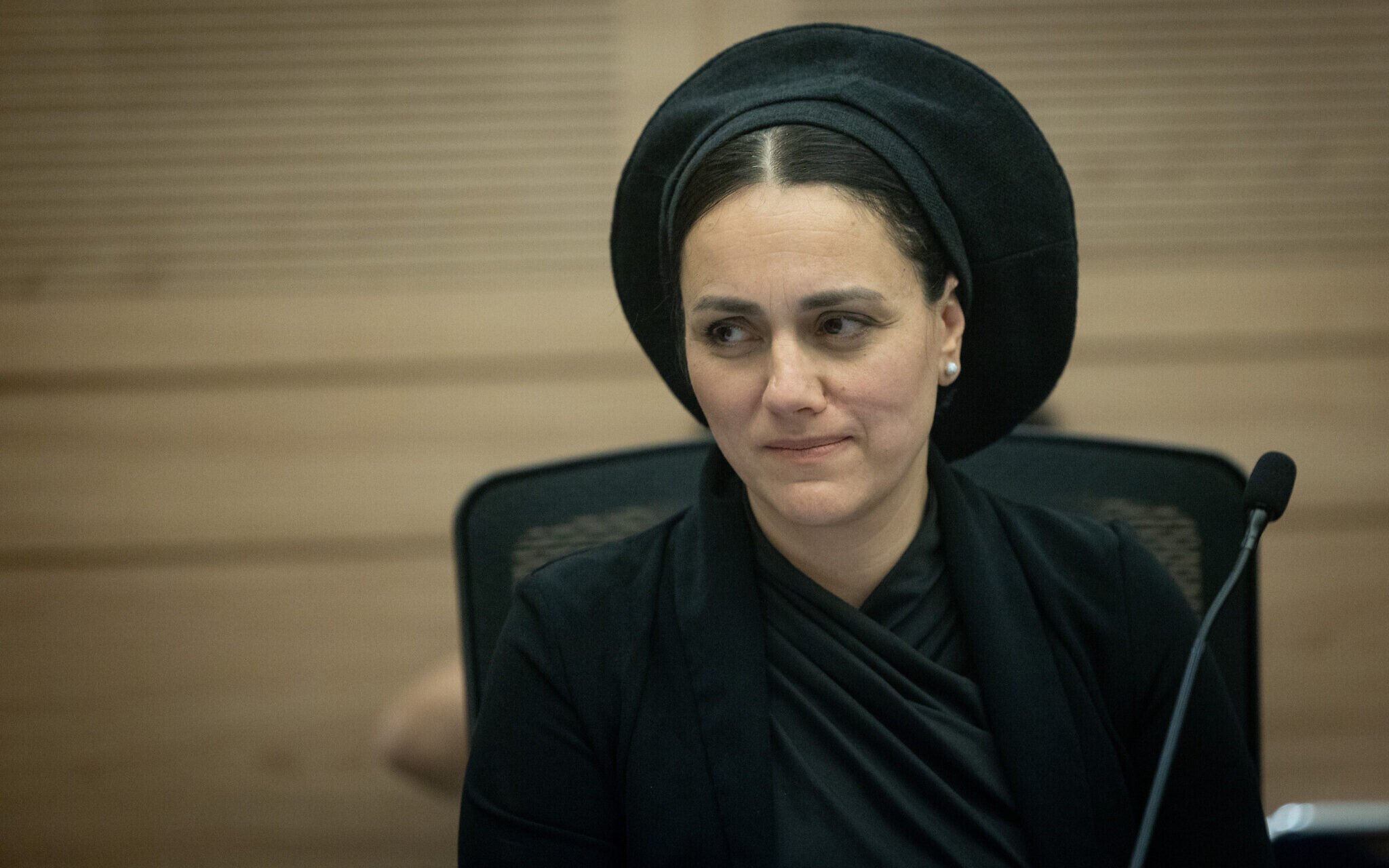
MK Limor Son Har-Melech attends a Knesset Foreign Affairs and Defense Committee meeting, July 18, 2024. (Chaim Goldberg/ Flash90/ File)
Proponents frame the law as increasing educational opportunities for religious women, with the legislation’s sponsor, far-right Otzma Yehudit MK Limor Son Har-Melech, arguing the legislation will “advance women from sectors that have not received the opportunities they deserve,” while committee chair and far-right Religious Zionism MK Zvi Sukkot has said it would “expand freedom of choice.”
Opposition lawmakers and academic representatives, who campaigned intensely against the law’s passage, argue that it unnecessarily expands gender segregation beyond existing arrangements, prioritizing religious strictures over the rights of female students and lecturers to equality, dignity and freedom of movement. They also say it harms academic freedom and the quality of teaching and research.
Earlier this month, leaders of Tel Aviv University, the Hebrew University of Jerusalem, Bar-Ilan University and the Technion came out against the law.
Tel Aviv University President Ariel Porat wrote in a letter that the legislation would presumably also limit the freedom of non-Orthodox students, as budgetary constraints would mean that some institutions would be unable to hold separate classes just for Haredi students and would therefore impose segregation on all students.
Bar-Ilan University, which caters to a more religiously observant student population, said in a letter to Knesset members that in advanced degrees, “the essence of which is research meeting, critical debate, joint laboratory work, and exposure to differing opinions, segregation means a violation of equality and also a direct violation of the quality of research, academic training, and teaching freedom.”
The law was among a raft of controversial coalition measures approved during the Knesset’s final legislative blitz before its dissolution on Friday ahead of elections in late October.
The ultra-Orthodox parties agreed to back the coalition’s legislative agenda – including this law, another passed on Wednesday weakening the role of the attorney general, and Communications Minister Shlomo Karhi’s media overhaul – after securing passage earlier this week of their own priorities, including laws banning the arrests of ultra-Orthodox draft dodgers and declaring Torah study a foundational value of the state.
Ariela Karmel contributed to this report.
We can’t do this work alone.

The war with Iran has been draining for all of us in Israel. But when I heard about a high casualty incident – ballistic missile impacts in Arad and Dimona that left nearly 200 people wounded – I drank a cup of coffee, packed a bag, and headed south.
There, I spoke with Shilgit, the head of an after-school program for underprivileged youth. Standing outside her destroyed center, Shilgit said it was a miracle that no children were hurt and spoke about the community coming together in the hours since.
As a Times of Israel reporter, I’m committed to telling stories of resilience like Shilgit’s. But my colleagues and I can’t do this alone. If you value work like this, please consider joining our reader support group, The Times of Israel Community. Your financial support is essential to keep real human reporting like this going.
— Stav Levaton, military reporter
Already a member? Sign in to stop seeing this
You’re a dedicated reader

That’s why we started the Times of Israel – to provide discerning readers like you with must-read coverage of Israel and the Jewish world.
So now we have a request. Unlike other news outlets, we haven’t put up a paywall. But as the journalism we do is costly, we invite readers for whom The Times of Israel has become important to help support our work by joining The Times of Israel Community.
For as little as $6 a month you can help support our quality journalism while enjoying The Times of Israel AD-FREE, as well as accessing exclusive content available only to Times of Israel Community members.
Thank you,
David Horovitz, Founding Editor of The Times of Israel