

Japanese terrorist Kozo Okamoto, who carried out a deadly attack on an Israeli airport on behalf of the Popular Front for the Liberation of Palestine in 1972, died on Thursday in Beirut aged 78, the terror group said.
In a statement, the PFLP mourned “militant comrade Kozo Okamoto… who passed away today” in Beirut’s southern suburbs, a stronghold of the Iran-backed Hezbollah terror group.
The group lauded his “unwavering support for the Palestinian cause.”
Okamoto was part of a three-man commando from the Japanese Red Army, a far-left militant group, that killed 26 people on May 30, 1972, at Lod airport — now known as Ben Gurion Airport — near Tel Aviv in an attack planned by the PFLP, which is classified as a terror group by Israel, the US, the European Union and Japan.
Okamoto, along with Tsuyoshi Okudaira and Yasuyuki Yasuda, arrived in Israel with fake passports on an Air France flight.
Get The Times of Israel’s Daily Edition
by email and never miss our top stories
By signing up, you agree to the terms
Prior PFLP hijackings had led to increased passenger screening by airlines, but inspection of check-in luggage was still rare. The bloodbath at the airport later set off a review of global security standards in the aviation industry.
Okamoto and his two accomplices passed through immigration untroubled, picked up their baggage from the carousel, and whipped out assault rifles and grenades.
The three then opened fire and threw grenades at the airport, killing eight Israelis, one Canadian, and 17 US citizens from Puerto Rico who had flown in on a pilgrimage to the Holy Land.
Okudaira and Yasuda were killed in the attack, but Okamoto was wounded by Israeli security and captured, and eventually sentenced to life in prison in Israel.
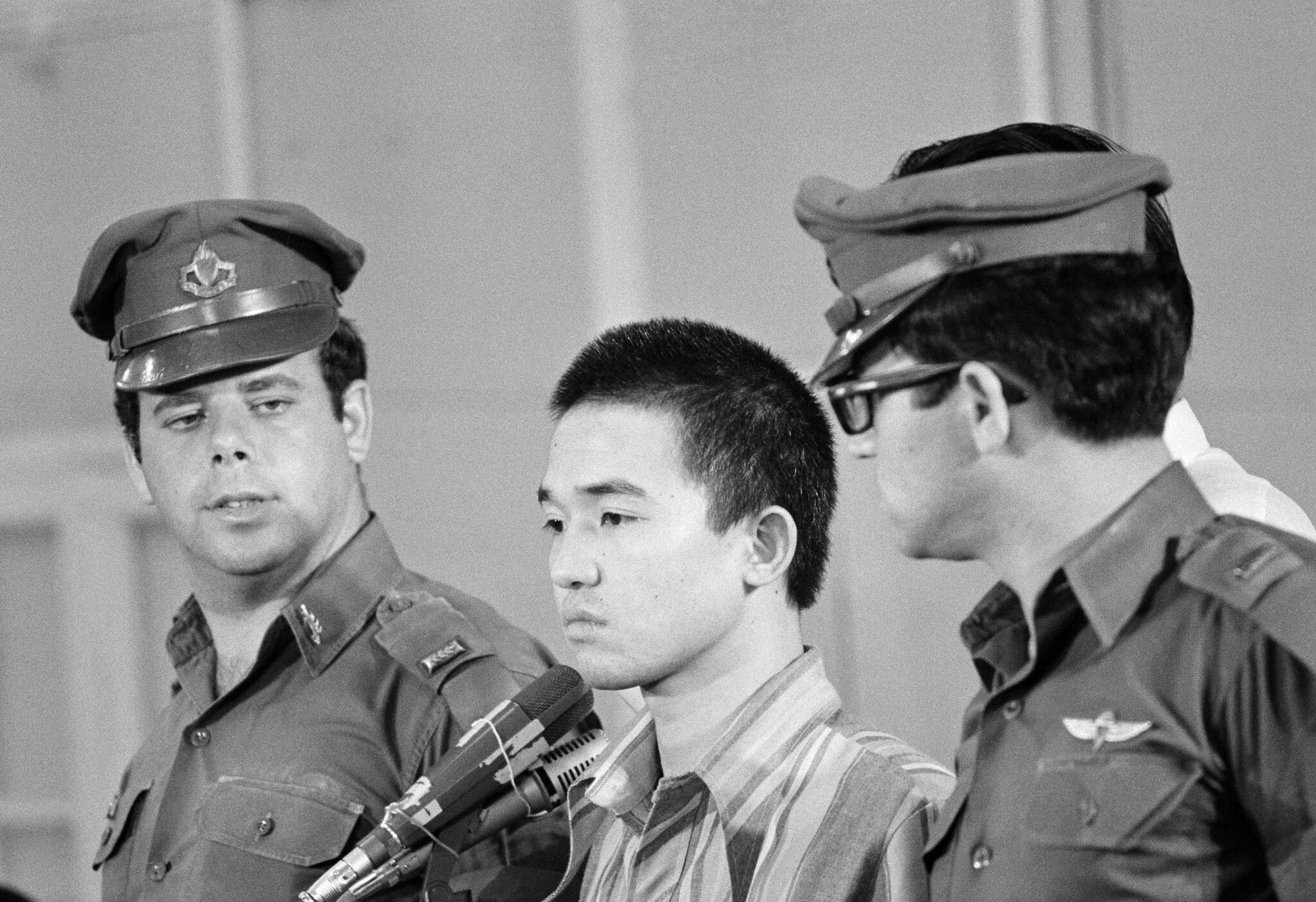
Kozo Okamoto is seen in court as he receives a life sentence in Lod on July 27, 1972. (AP Photo/Max Nash)
He was released in a huge prisoner exchange deal known as the Jibril Agreement in 1985 and remained in Lebanon under the protection of the PFLP until his death.
He was imprisoned in Lebanon again in 1997, this time on forgery charges, but narrowly avoided extradition to Japan, where he was wanted for terrorism, and in 2000 became the first person to obtain political asylum in Lebanon.
Final years spent in semi-isolation under PFLP care
In May 2022, Okamoto made a rare public appearance at a PFLP event in Beirut marking 50 years since the airport massacre. During the brief wreath-laying ceremony for Okudaira and Yasuda, he smiled at the cameras, flashed a V-sign and was escorted back.
Born the youngest of six children in a middle-class family of southern Japan, Okamoto had no particular connection to the Palestinian cause growing up.
But “until today, he speaks of Palestine and refuses the occupier,” Abu Yusef, a PFLP official in Beirut who provided for Okamoto’s needs, told AFP in 2022.
According to an AFP account from the same year, Okamoto lived a sedate but isolated life in his final years.
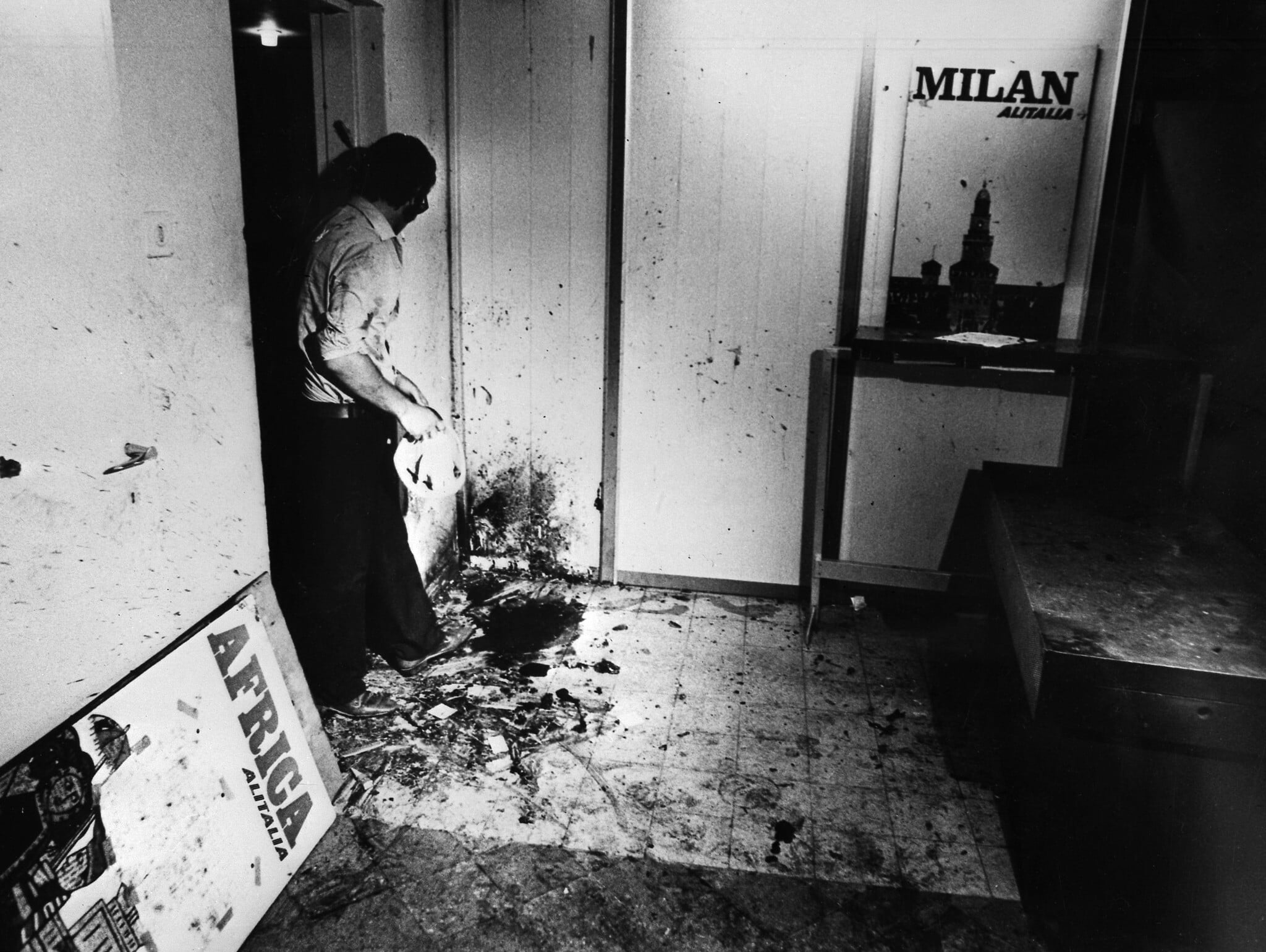
In this photo taken on June 1, 1972, a man looks at blood traces after three terrorists of the radical Japanese Red Army, acting on behalf of the PFLP, killed 26 people and injured 78 others in a machine gun and grenade attack at the Lod international airport in Israel. (AFP)
He lived in semi-hiding, with limited knowledge of the outside world, received his meals at set times and was given a daily allowance of cigarettes. He would spend hours watching “Tom and Jerry” or other cartoons on television.
We can’t do this work alone.

The war with Iran has been draining for all of us in Israel. But when I heard about a high casualty incident – ballistic missile impacts in Arad and Dimona that left nearly 200 people wounded – I drank a cup of coffee, packed a bag, and headed south.
There, I spoke with Shilgit, the head of an after-school program for underprivileged youth. Standing outside her destroyed center, Shilgit said it was a miracle that no children were hurt and spoke about the community coming together in the hours since.
As a Times of Israel reporter, I’m committed to telling stories of resilience like Shilgit’s. But my colleagues and I can’t do this alone. If you value work like this, please consider joining our reader support group, The Times of Israel Community. Your financial support is essential to keep real human reporting like this going.
— Stav Levaton, military reporter
Already a member? Sign in to stop seeing this
You’re a dedicated reader

That’s why we started the Times of Israel – to provide discerning readers like you with must-read coverage of Israel and the Jewish world.
So now we have a request. Unlike other news outlets, we haven’t put up a paywall. But as the journalism we do is costly, we invite readers for whom The Times of Israel has become important to help support our work by joining The Times of Israel Community.
For as little as $6 a month you can help support our quality journalism while enjoying The Times of Israel AD-FREE, as well as accessing exclusive content available only to Times of Israel Community members.
Thank you,
David Horovitz, Founding Editor of The Times of Israel