
On July 21, drone pilot and marine wildlife photographer Carlos Gauna posted a frightening video to Instagram.
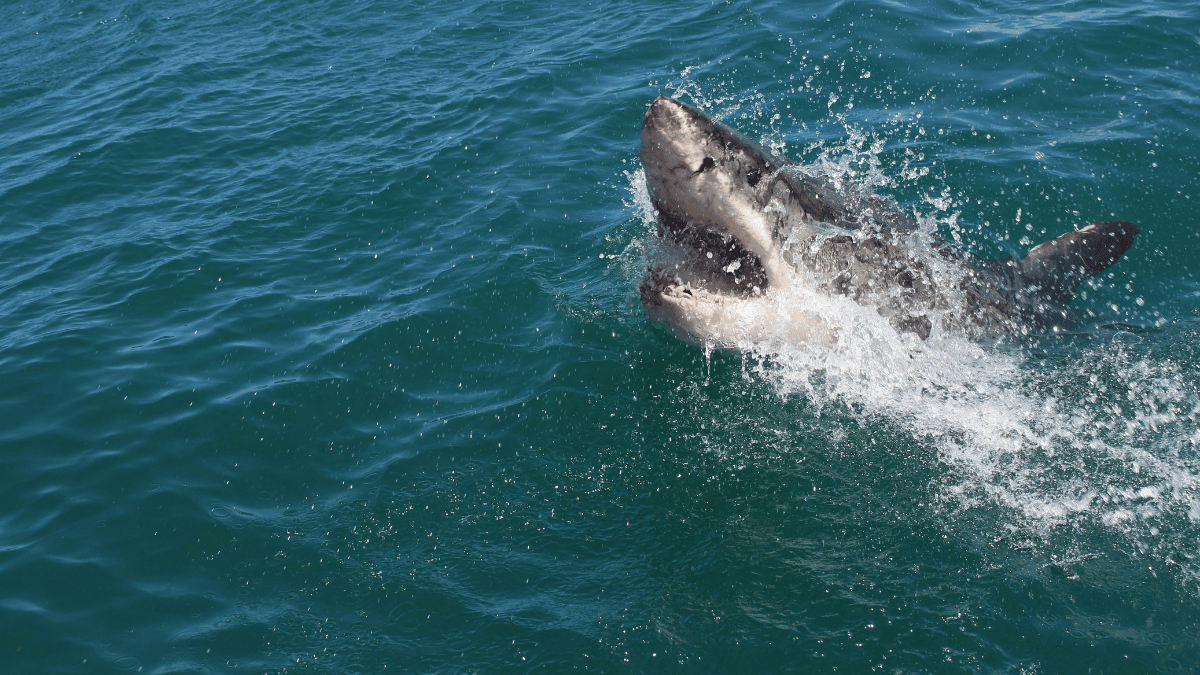
Gauna, known online as The Malibu Artist, captured a 10-foot great white shark swimming extremely close to children off the Southern California coast.
The children appeared unaware of the shark’s presence, with the apex predator approaching and swimming away without incident.
“I don’t often get nervous, but this was one of those rare instances where I did. The young swimmers had no idea,” Gauna wrote in the caption of his Instagram post.
Per a TMZ report, some people who watched the video felt he should have alerted the kids to the danger, but Gauna explained that he was located more than a mile away when his drone captured the footage. The warning could have triggered panic among the swimmers and splashing, which may have caught the shark’s attention, he said.
View this post on Instagram
Gauna’s footage may seem alarming, but the photographer’s clip is one of several drone videos capturing close calls over the last few months.
In May, YouTube channel GreatWhiteDronE posted a clip of a young kid paddling to shore, seemingly unaware of the great white shark following closely behind.
According to experts, more great white sharks are expected across California waters this summer.
Sharks are Moving to SoCal
According to the National Oceanic and Atmospheric Administration (NOAA), an El Niño weather pattern began in the Pacific Ocean last month and has since strengthened.
El Niño is when ocean temperatures are warmer than usual in the central and eastern tropical Pacific, which happens when east-to-west trade winds weaken, bringing warm waters toward the Americas.
During this phenomenon, groups of juvenile great white sharks take a trip to SoCal waters, which remain chilly even in the summer months. This year, young sharks were first spotted venturing into California waters back in February.
But while the sight of sharks can be scary, experts are reassuring Californians there is no need to worry.
“Humans don’t look like prey, they don’t sound like prey,” Dr. Chris Lowe, director of the Shark Lab at California State University Long Beach, told The Guardian. “If it doesn’t feel like prey [to a white shark], they ignore it. It’s not a threat, it’s not food.”
Lowe added that the general consensus among researchers is that sharks can differentiate between people and food. Since humans do not smell like a shark’s typical prey, they may leave them alone.
Statistics demonstrate this. According to California’s Department of Fish and Wildlife, fewer than 250 shark attacks have occurred in the state since 1950. Of the 250 incidents, 20 were fatal.
So if you’re swimming in the ocean and see a shark, avoid approaching them, and it may do the same for you.