
Fiber is definitely having its moment in the pop culture spotlight. (Please don’t ask me to use the word “fibermaxxing” in a sentence.) As a dietitian, I’m thrilled to finally see people giving fiber the attention it deserves. Although it doesn’t provide energy, fiber still plays an essential role in many body processes.
“Fiber is important for a balanced gut microbiome, regular bowel movements, digestive health, blood sugar management, healthy cholesterol levels, appetite regulation, liver health, weight management, and more,” says Avery Zenker, RD, an Ontario-based health writer at MyChronsAndColitisTeam.
With so much riding on this nutrient, we want to help you understand how much is needed, what important foods and supplements you can get it from, as well as how to safely boost your intake — and yes, there’s definitely a wrong way to go about it.
Recommendations for what constitutes “enough” range with age and intake. But food blogger Meme Inge, RDN, of Living Well Kitchen in Solana Beach, California, says: “Recommendations are for about 14 grams [g] of fiber per 1,000 calories consumed. For men under 51 years old, [that’s] 38 g per day. Women under 51 need at least 25 g per day. Men over 51 need 30 g, and women over 51 need at least 21 g of fiber per day.”
If you’re not coming close to this number right now, your best bet is to increase your intake slowly and get to a place you can stay at consistently, according to Inge, to avoid gastrointestinal distress. Zenker suggests setting meal targets by breaking down your full daily fiber needs into manageable portions. For a 25-g day, you could aim for 8 g to 9 g with each meal and then work in some of our high-fiber snack ideas, too.
I’ve come across a lot of misconceptions about what foods are actually high in fiber during my own 12 years as a dietitian. (The PR team for spinach deserves a raise.) For instance, folks are often shocked when I tell them that you’d have to eat 10 cups of spinach to get close to the amount of fiber in a single serving of beans.
[1]
Zenker suggests swapping out your garden salad for roasted vegetables — like cauliflower, broccoli, and Brussels sprouts — and trying some of the highest-fiber foods, like artichokes. While some good fiber will come from fruits and vegetables, some more-concentrated sources tend to be nuts, seeds, beans, and grains. “Legumes are some of the highest-fiber foods, providing you some of the best bang-for-your-buck,” Zenker says.
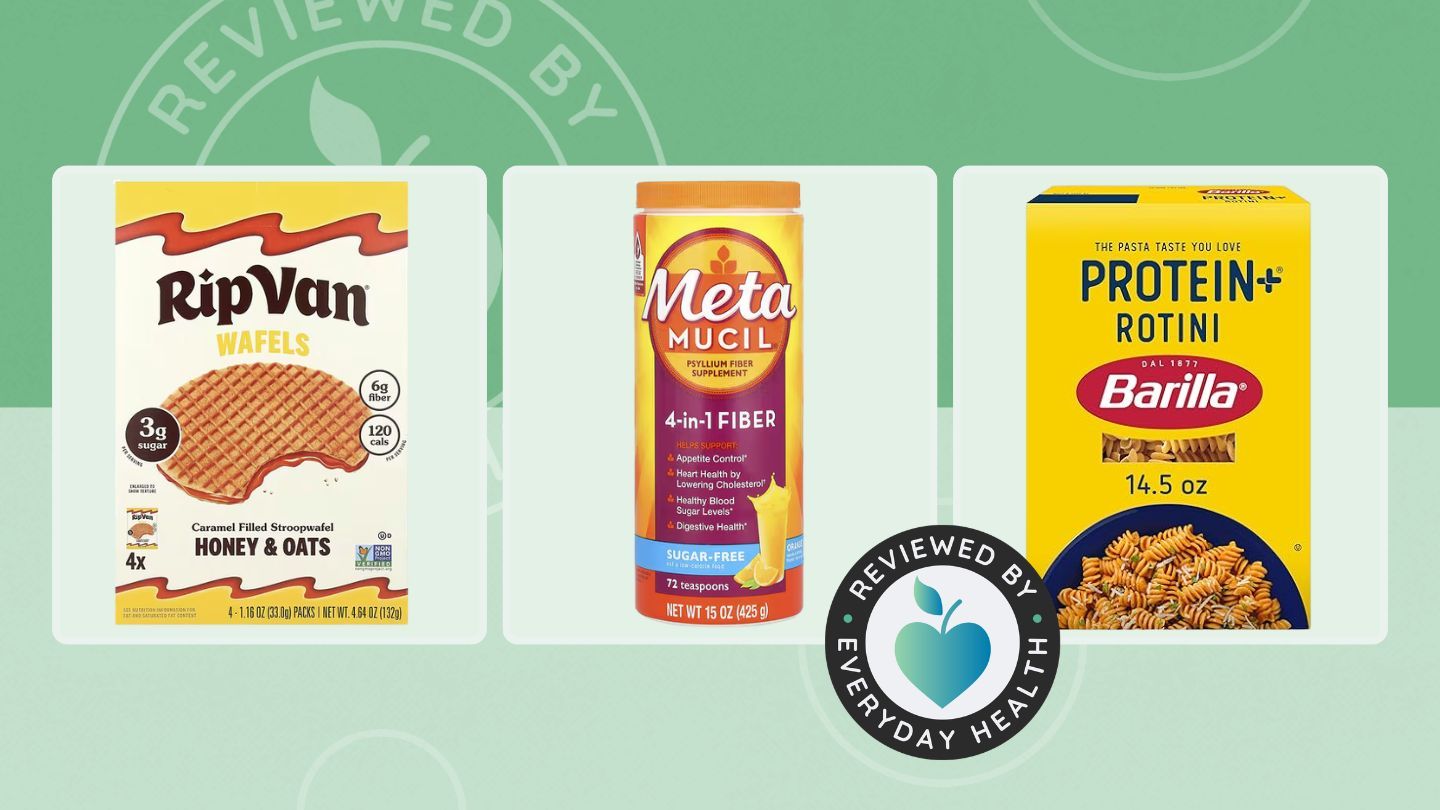
As a bean and grain evangelist myself, I’m pleased to share some of the best foods (and some fabulous supplements) to help you get more fiber each day.