
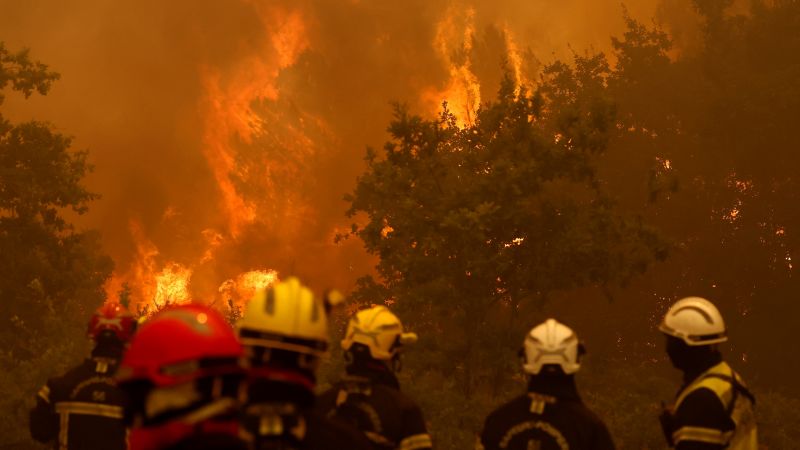
Firefighters are battling to contain wildfires which have forced more than 250,000 people to evacuate from their homes in France and Spain.
In Spain, further evacuations have taken place today, taking the total number of people displaced to more than 70,000, said Francisco Martín, the Spanish government’s delegate in Madrid. Even the command post, which had been coordinating the response to the fires, is being evacuated and moved to a new location since it is now under threat, Martín added.
Spain’s Prime Minister Pedro Sánchez visited the site of the wildfires earlier today and said “we have a window of opportunity this weekend” to fight the blaze.
In France, the wildfire tearing across the Gironde region is no longer convective, meaning that it is spreading less quickly, but remains dangerous, authorities said this afternoon. More than 167,000 people have been evacuated in that area, and another 31,000 people have been told to leave their homes in the nearby Landes region too.
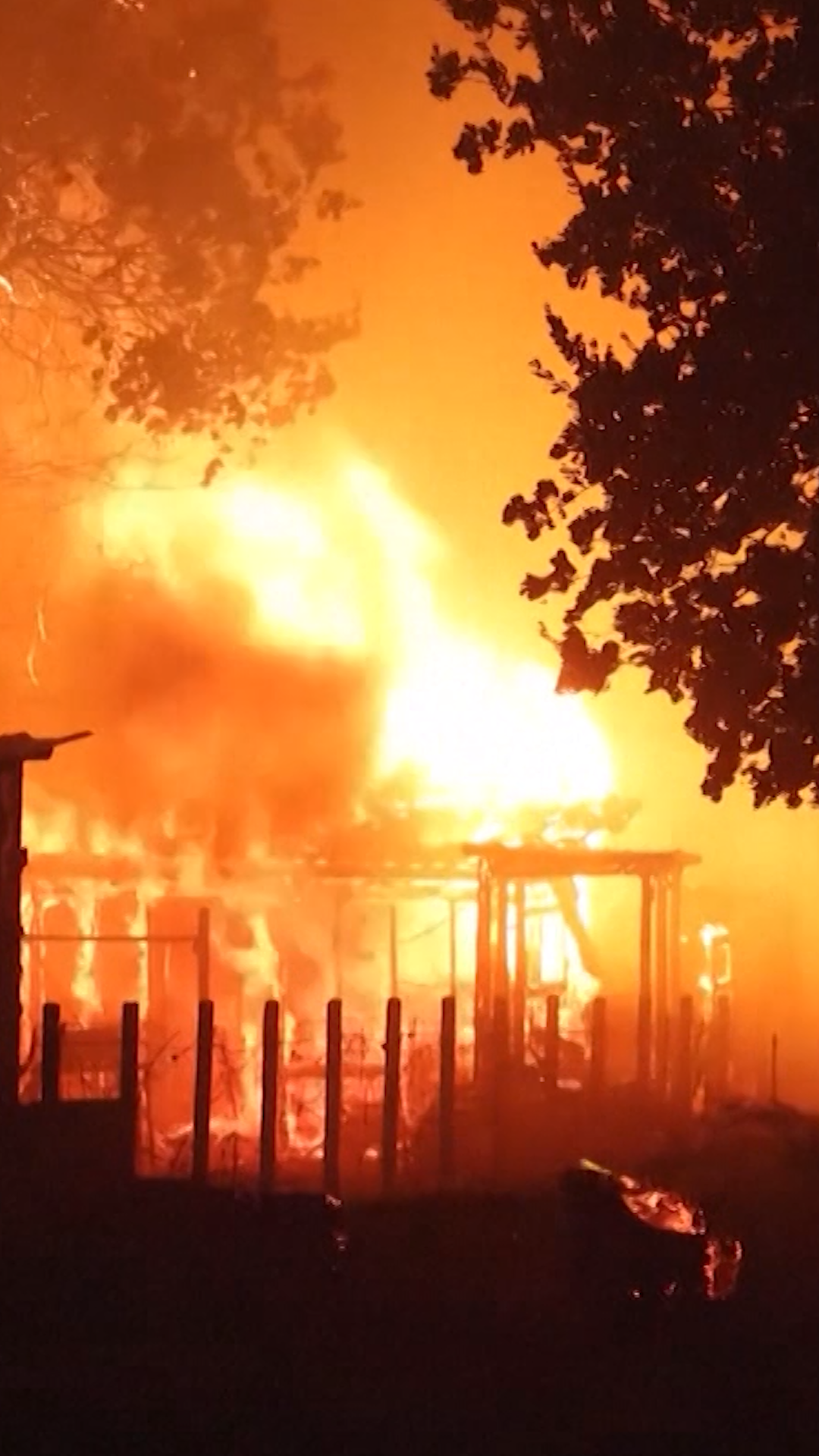
Intense wildfires force evacuations across France
Tens of thousands of people have been evacuated as wildfires burn across France, prompting President Emmanuel Macron to request firefighting assistance from other European Union countries.

Intense wildfires force evacuations across France
1:11
French authorities have deployed an enormous military cargo plane, which has been adapted to drop huge amounts of flame retardants from the air, to help firefighting efforts. At least 27 firefighters have been injured fighting these wildfires.
Elsewhere across Europe, which has sweltered under weeks-long, climate change-driven heat waves for weeks, significant wildfires are raging in Scotland and Italy.
Dozens of forest fires are still burning in Sicily, and Italian authorities have mobilized thousands of soldiers, state broadcaster RAI reported. However, most of the 344 fires reported to be burning on Wednesday have since been extinguished, RAI said. Over 160 wildfires have also been recorded in the last day in Calabria.
CNN’s Sophie Tanno, Tim Lister, Oliver Sherwood and Charlie Bell contributed reporting.