

Senior Israeli officials are reportedly warning that Iran is trying to interfere in Israel’s upcoming election and may seek to harm officials and candidates.
In a meeting with top officials, Shin Bet director David Zini cautioned that Iran and other countries are attempting to meddle in and undermine the vote, Channel 13 reported on Monday. The report did not say how those efforts were manifesting, but sources who took part in the meeting told the network that the Shin Bet chief looked “very disturbed” by the threat.
The Kan public broadcaster, meanwhile, reported that senior political, security and professional officials are alarmed about those potential Iranian efforts, including the possible targeting of candidates and public officials.
At a classified meeting of the Knesset Subcommittee for Intelligence and Secret Services, committee chairman Boaz Bismuth reportedly said the election season “will be a central target for enemies of Israel, and there is a substantial fear that elected officials and candidates will be physically harmed.”
“Iran understands it can’t defeat us on the battlefield, so they will try to harm us from within, to foment civil war, to deepen the rift in Israeli society and to turn the election into another front,” Bismuth, a Likud lawmaker, is said to have added.
Get The Times of Israel’s Daily Edition
by email and never miss our top stories
By signing up, you agree to the terms
Israel is set to hold national elections on October 27. Zini said the effort is at the top of the agency’s agenda and the second “most concerning” after the threat of major terror attacks, according to the Channel 13 report.
Kan reported that Zini also asked for the Shin Bet not to be dragged into political arguments.
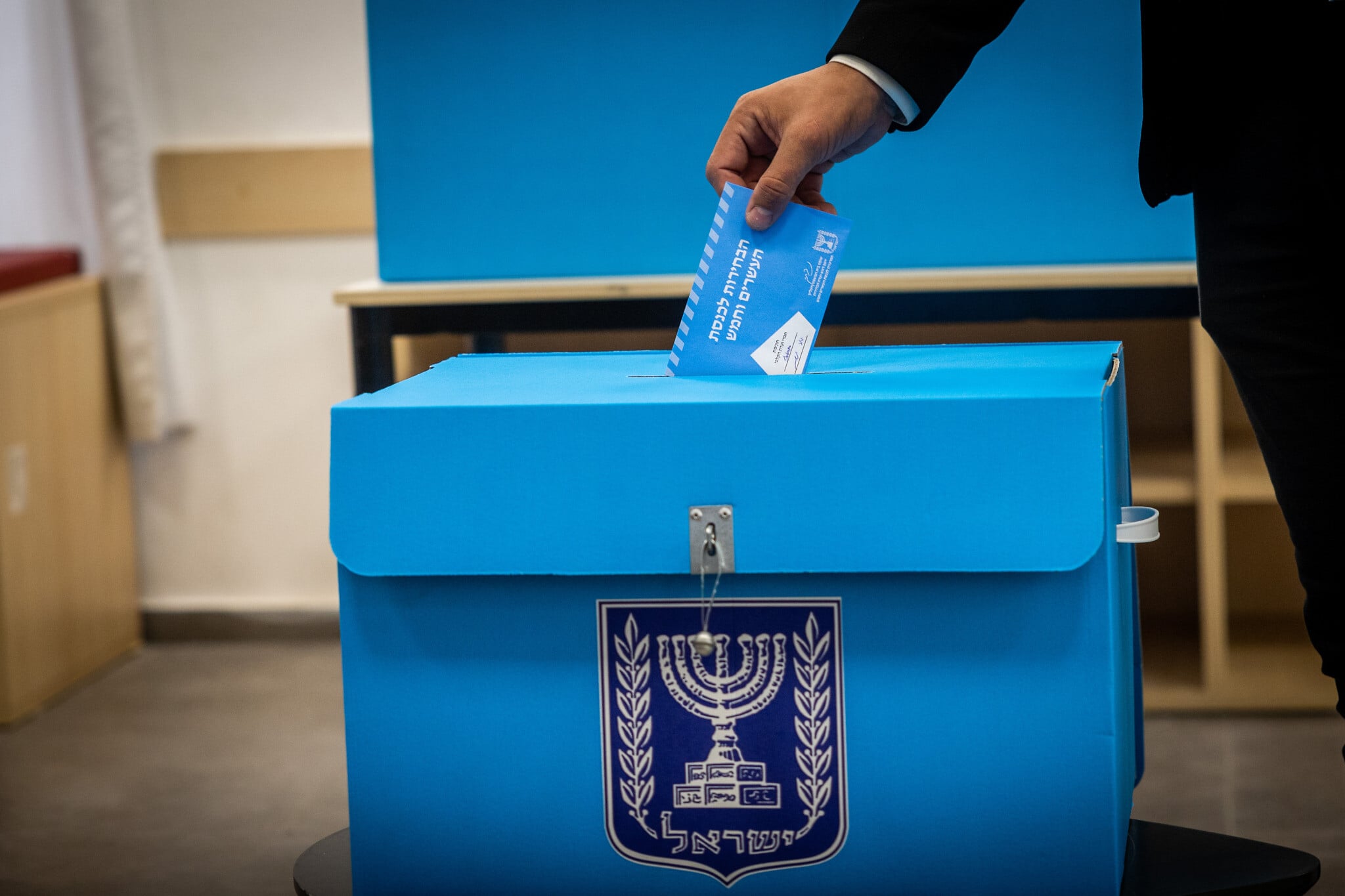
A man casts his vote at a polling station in Jerusalem, on November 1, 2022. (Yonatan Sindel/Flash90)
Zini held a meeting earlier this month with President Isaac Herzog and Central Elections Committee chairman Noam Sohlberg, in which the three stressed their commitment to “ensuring the integrity of the election,” the president’s office said in a statement at the time.
“There are many hostile foreign digital influences, and there are many elements seeking to sabotage from within, and especially from the outside,” the president continued, without elaborating.
The Kan report said that Sohlberg, who is also the deputy Supreme Court president, said there is constant collaboration with security bodies and professionals to “ensure a proper, fair and trustworthy election process.”
The state comptroller warned earlier this month that the government has no national policy to combat the danger of foreign election interference, and that Iran and other hostile actors are systematically exploiting social media to deepen social divisions in Israel, spread panic and manipulate the public’s perception of reality.
His report sounded an alarm over the fact that the Shin Bet only started preparing in January for the upcoming elections while the National Security Council “ceased dealing with the matter” in August 2025.

Likud MK Boaz Bismuth leads a Foreign Affairs and Defense Committee meeting in Knesset, Jerusalem, July 1, 2026. (Yonatan Sindel/Flash90)
Foreign actors have tried to meddle in Israel’s politics before. A joint study by the Institute for National Security Studies and the Institute for the Research of the Methodology of Intelligence revealed that, ahead of the 2022 Knesset elections, multiple covert campaigns unfolded on social media.
One sought to fracture the Religious Zionism party, using dozens of fake Twitter accounts posing as Israelis to urge far-right political leader Itamar Ben Gvir to end his Otzma Yehudit party’s joint electoral run with Religious Zionism.
Another campaign aimed to suppress voter turnout, coordinating hundreds of accounts — including some posting in Arabic — days before and on Election Day.
After the vote, a small network of accounts across Facebook, Twitter, Instagram, and Telegram sought to sow distrust in the results, spreading claims of election fraud and mobilizing protests, supported by thousands of fake followers to amplify credibility.
Stav Levaton contributed to this report.
We can’t do this work alone.

The war with Iran has been draining for all of us in Israel. But when I heard about a high casualty incident – ballistic missile impacts in Arad and Dimona that left nearly 200 people wounded – I drank a cup of coffee, packed a bag, and headed south.
There, I spoke with Shilgit, the head of an after-school program for underprivileged youth. Standing outside her destroyed center, Shilgit said it was a miracle that no children were hurt and spoke about the community coming together in the hours since.
As a Times of Israel reporter, I’m committed to telling stories of resilience like Shilgit’s. But my colleagues and I can’t do this alone. If you value work like this, please consider joining our reader support group, The Times of Israel Community. Your financial support is essential to keep real human reporting like this going.
— Stav Levaton, military reporter
Already a member? Sign in to stop seeing this
You’re a dedicated reader

That’s why we started the Times of Israel – to provide discerning readers like you with must-read coverage of Israel and the Jewish world.
So now we have a request. Unlike other news outlets, we haven’t put up a paywall. But as the journalism we do is costly, we invite readers for whom The Times of Israel has become important to help support our work by joining The Times of Israel Community.
For as little as $6 a month you can help support our quality journalism while enjoying The Times of Israel AD-FREE, as well as accessing exclusive content available only to Times of Israel Community members.
Thank you,
David Horovitz, Founding Editor of The Times of Israel