

Prime Minister Benjamin Netanyahu’s various residences have cost the Israeli taxpayer over NIS 2.7 million ($880,000) during 2025 and the first half of 2026, according to data released after a freedom of information request and published in Hebrew media Tuesday.
That figure represents all expenses at Netanyahu’s three homes, including staff salary, renovations, landscaping, food deliveries, as well as other various costs, some of which were redacted and not disclosed by the Prime Minister’s Office.
The expense data was originally requested in December 2025 by the Movement for Freedom of Information, and first published Tuesday by the Ynet news site.
Netanyahu and his wife primarily reside in their private home on Jerusalem’s Azza Street, as well as their home in the affluent coastal town of Caesarea, both of which have undergone significant and costly renovations over Netanyahu’s time in office.
The prime minister’s official residence is located on Balfour Street in Jerusalem, though Netanyahu spends little time there, despite it also recently undergoing costly renovations and maintaining a full-time staff. The Azza Street residence is located in a residential neighborhood of central Jerusalem and is not adjacent to the Prime Minister’s Office, which is in the government quarter near the city’s western entrance.
Get The Times of Israel’s Daily Edition
by email and never miss our top stories
By signing up, you agree to the terms
The prime minister has often been criticized for what is perceived as excessive spending on a lavish lifestyle.
His wife Sara has also long faced allegations of extravagant living, and state comptroller reports have found she repeatedly tried to get funding for the couple’s private residence, including one instance when she purchased furniture, apparently for the official residence in Jerusalem, and then moved it to the family’s private residence in Caesarea, while older furniture was taken from Caesarea to the residence in Jerusalem.
According to the data released this week, all three homes cost the state NIS 1,979,517 ($646,731) in 2025, and NIS 731,081 ($238,852) over the first six months of 2026, totaling over NIS 2.7 million ($880,000).
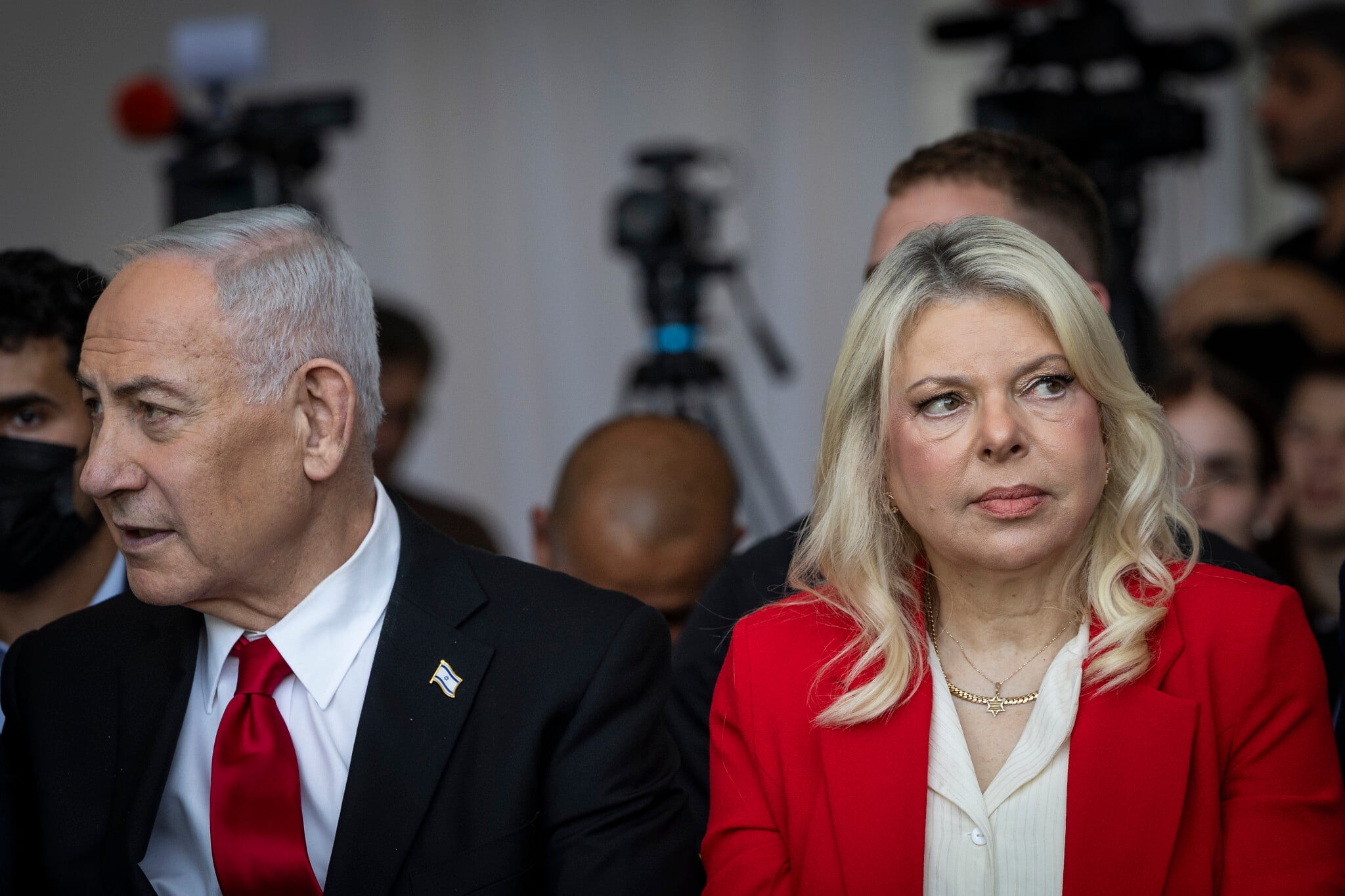
Prime Minister Benjamin Netanyahu and his wife, Sara Netanyahu, attend a cornerstone-laying ceremony for the Atarot Heritage Center in Jerusalem, July 5, 2026. (Chaim Goldberg/Flash90)
Of that total expenditure, NIS 974,000 ($318,217) was allocated to operation and maintenance costs, with the remaining NIS 1,735,000 ($566,706) to staff pay.
Within the items listed under operation and maintenance, food was by far the single most costly expense, with the state spending NIS 165,444 ($54,025) on food at all three residences over 2025. Spending on food increased significantly this year, with data showing that over NIS 120,000 ($39,178) has been spent on food in the first half of 2026 alone.
Much of this was in the form of deliveries via the popular Wolt app, with the data showing that 34 orders were charged between July and October 2025, just at the Azza Street apartment, for a total cost of NIS 4,984 ($1,627). In August of last year alone, 19 deliveries were made at the home for around NIS 2,700 ($880).
Another notably high expense was landscaping, with the state paying NIS 94,957 ($31,011) in 2025 just for work in the gardens of the Netanyahus’ home in Caesarea.
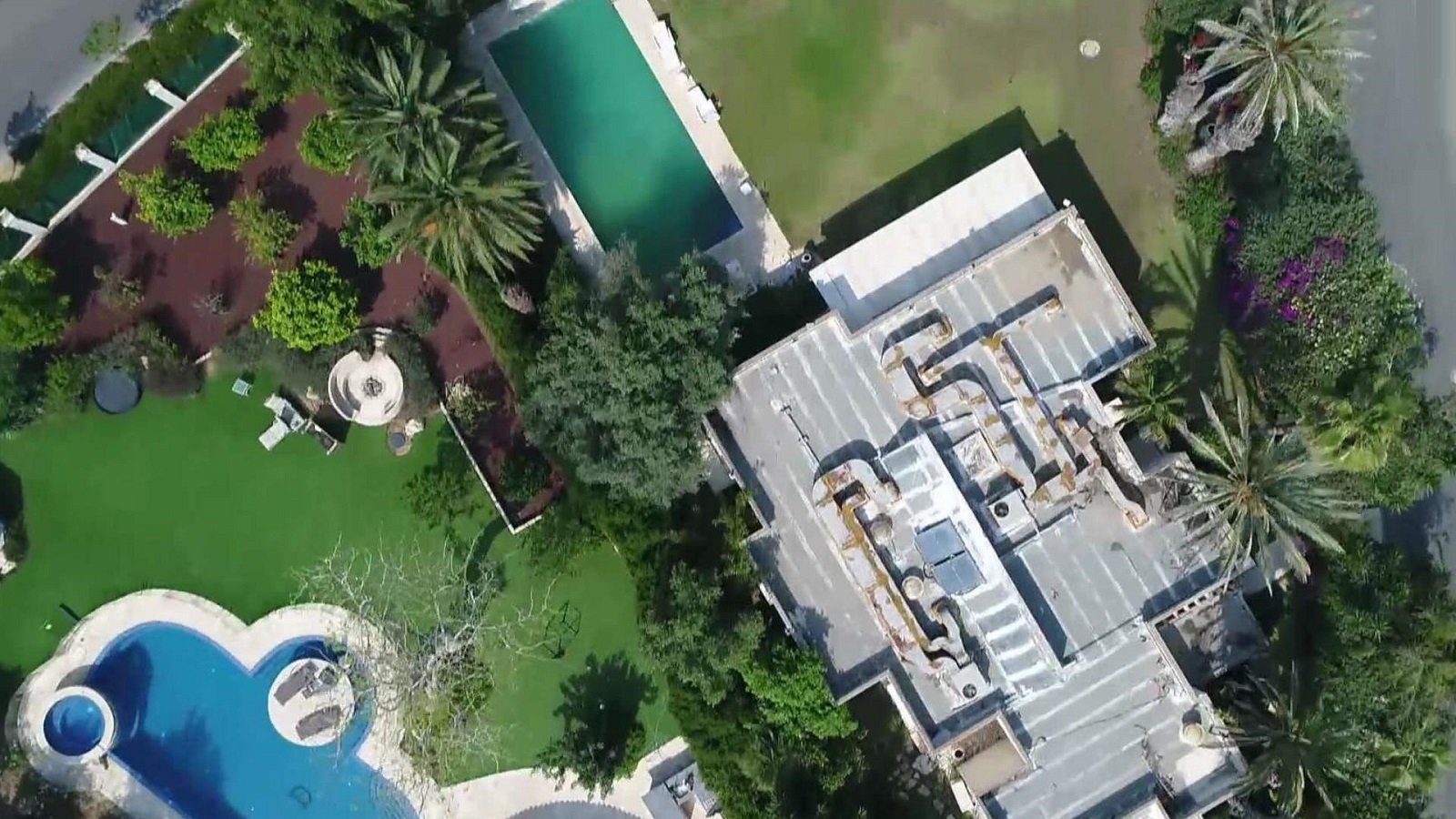
Prime Minister Benjamin Netanyahu’s private residence in Caesarea. (Screenshot/Kan public broadcaster)
One line item singled out by Ynet was the replacement of two bathtubs at the Azza Street home, both of which cost the taxpayer around NIS 28,500 ($9,307) over just 13 months.
The outlet also pointed to one day, June 16, 2025, as particularly unusual in terms of spending. On that day, the data shows that 76 purchases were made on “food and prepared meals,” for a total of NIS 9,521 ($3,109).
Unusually, the data specifies that this single day expenditure was divided between all three residences, with 58 purchases made at the private Azza Street and Caesarea homes. and another 18 made at the official Balfour house.
The data set redacted the names of vendors paid on that day from all 76 line items, which the Ynet report noted as peculiar, given the unusual amount of separate purchases made in one day at all three residences.
However, the unusual expenses may have been related to the 12-day Iran war that started on June 13, 2025.
The outlet also noted 347 completely redacted line items listed under 2025, for a total of NIS 63,033 ($20,585), in which both vendor and description were not disclosed.
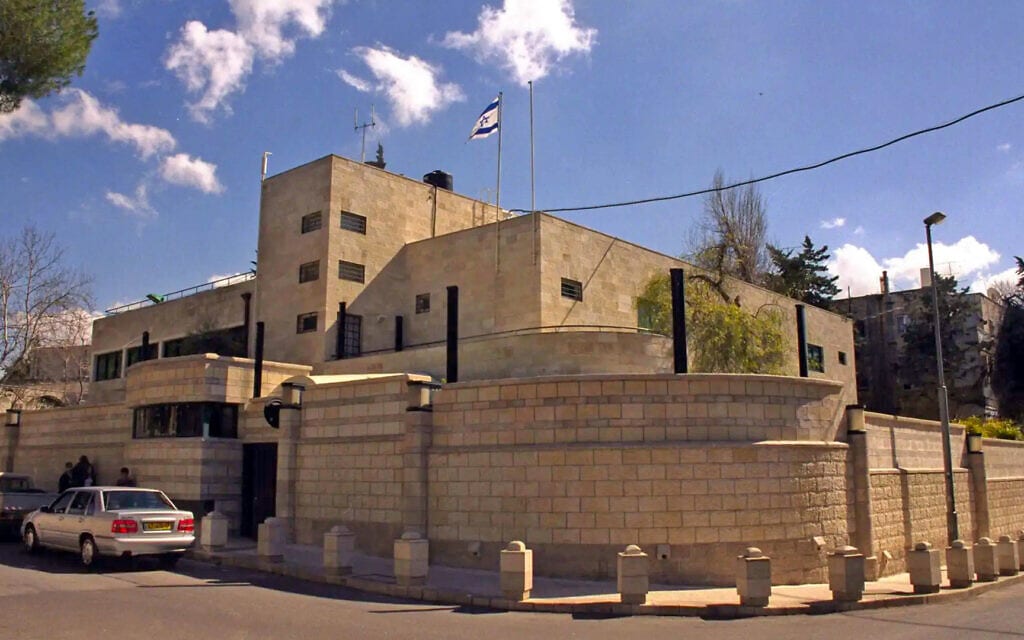
The Prime Minister’s Residence on Balfour Street, Jerusalem, in an undated photograph. (Yaakov Saar/GPO)
Commenting on the data released in the freedom of information request, Netanyahu’s office said that “the data shows that overall expenses during Netanyahu’s term of office are significantly lower than those of previous prime ministers.”
His office pointed to residence spending during former premier Naftali Bennett’s term of office, from June 2021 to June 2022, which it said totaled over NIS 1.3 million ($424,554), excluding staff pay.
Netanyahu’s office said this spending was some three times higher than that of the current premier, though the data shows that spending at all three of Netanyahu’s residences is on pace to nearly match that of Bennett’s year in office. Additionally, data from the tenures of Bennett and former premier Yair Lapid showed that their spending was significantly lower than Netanyahu’s from the previous years.
The PMO also refused to hand over invoices for individual line items requested by the Movement for Freedom of Information, saying that doing so would constitute an “unreasonable allocation of resources.”
We can’t do this work alone.

The war with Iran has been draining for all of us in Israel. But when I heard about a high casualty incident – ballistic missile impacts in Arad and Dimona that left nearly 200 people wounded – I drank a cup of coffee, packed a bag, and headed south.
There, I spoke with Shilgit, the head of an after-school program for underprivileged youth. Standing outside her destroyed center, Shilgit said it was a miracle that no children were hurt and spoke about the community coming together in the hours since.
As a Times of Israel reporter, I’m committed to telling stories of resilience like Shilgit’s. But my colleagues and I can’t do this alone. If you value work like this, please consider joining our reader support group, The Times of Israel Community. Your financial support is essential to keep real human reporting like this going.
— Stav Levaton, military reporter