
Id like to begin by acknowledging the Traditional Custodians of the land on which we meet and pay my
respects to Elders past and present. I extend that respect to all Aboriginal and Torres Strait Islander
people joining us today.
Its a privilege to be with you again for the Anika Foundation fundraising lunch, my third year
joining as Governor. The Foundations commitment to advancing youth mental health is making a
lasting difference in the lives of young Australians and their families.
A defining and recurring feature of the global economy in recent years has been the increasing frequency
and impact of supply shocks.
First, there was the shock associated with the COVID-19 pandemic. Then the
Russian invasion of Ukraine led to an energy price spike.
As some of the disruptions associated with these earlier adverse shocks began to recede, new risks have
emerged. The conflict in the Middle East is disrupting energy markets, severe weather events have
affected production and trade around the world, and continuing trade tensions add further ambiguity.
The outlook can change quickly, and uncertainty can re-emerge even as earlier risks begin to ease.
Today, I will discuss how recent global developments are affecting Australia and place them in historical
context by looking back to the oil shocks of the 1970s.
The world has been more shock-prone in recent years, but the economy is more resilient than it was in the
past. The adoption of credible inflation targets by central banks – to keep inflation low and
stable – has played a key role in our improved resilience.
This doesnt mean were immune from adverse supply shocks. They can constrain growth, reduce
real incomes and add to inflationary pressures. In this environment, our job is to keep inflation
expectations anchored and make sure that shocks dont lead to lasting increases in inflation.
With inflation and capacity pressures already elevated, recent shocks have added further to the inflation
impulse.
That is why we tightened monetary policy earlier this year and why we remain focused on returning
inflation sustainably to target.
How is the Australian economy faring?
Before turning to current conditions, I want to reflect on the inflation challenge we have faced in recent
years.
Following a once-in-a-century pandemic, economies around the world experienced inflation outcomes that few
current central bankers had encountered in their professional lives. Australia was no different. Demand
and employment outcomes remained strong. Our challenge was to bring inflation down while preserving as
many of the gains in the labour market as possible.
In Australia, inflation declined significantly from its peak and underlying inflation also moderated in
2024 and 2025. Our forecasts at the time suggested inflation would return sustainably to target over
time. This marked important progress in restoring price stability after a period of global disruption.
Inflation has since increased and is now above target. Indeed, it was rising and above target even before
the recent oil price rises. This means that we havent yet achieved our objective of returning
inflation sustainably to target.
Higher inflation isnt just a statistic. It strains household budgets, complicates business planning,
and weighs on confidence. Many Australians are again feeling this pressure; indeed, we recently published
survey evidence showing that inflation is the single most pressing economic concern for Australians. The Monetary
Policy Board is acutely aware of the impact of this high inflation.
Let me now turn to how were assessing the impact of this years conflict in the Middle East,
and the evidence so far on how the Australian economy is responding to recent increases in the cash
rate.
Five months have passed since the conflict began. While there are now some signs of the impact of the
conflict on inflation and activity, recent developments in commodity markets are a reminder that
conditions can change quickly and that it remains too early to assess the full economic effects.
In this environment, the outlook remains uncertain. Ongoing commodity price volatility seems likely, which
makes it even more difficult to assess the ultimate effect on inflation and activity.
Likewise, because monetary policy operates with a lag, the full effects of this years cash rate
increases are yet to be felt.
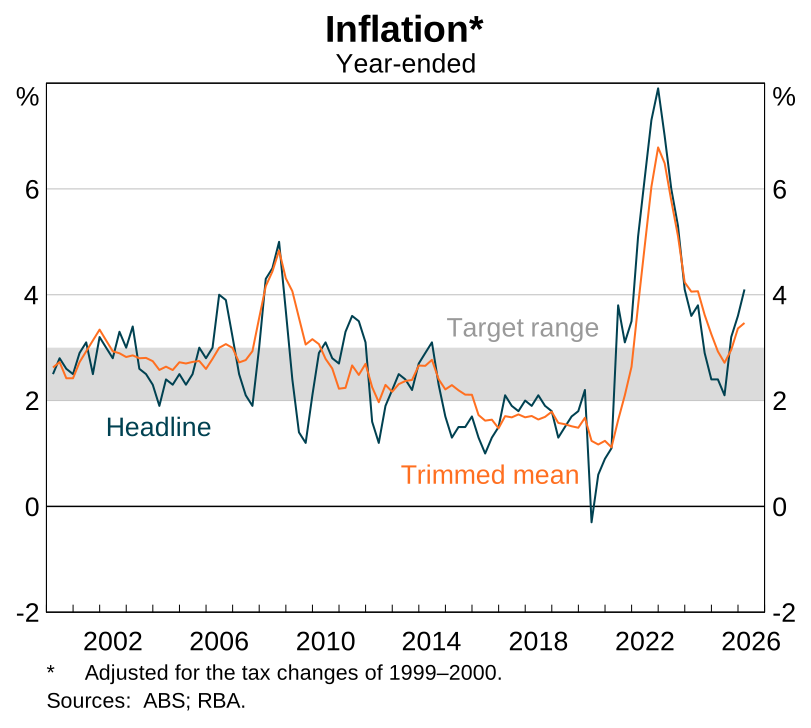
Since the outbreak of the conflict, oil prices have been highly volatile and, as recent days and weeks
have demonstrated, conditions can change quickly. While the effect on fuel prices and headline inflation
has so far been smaller than initially feared, headline inflation remained well above target at
4 per cent in May (Graph 1).
More importantly, underlying inflation – a better guide to the inflation impulse that abstracts from
more volatile prices – has evolved broadly as we expected back in May. But it is still too high.
Graph 1
Elevated underlying inflation is consistent with ongoing capacity pressures in the domestic economy, which
had re-emerged before the conflict in the Middle East. It also reflects some pass-through of earlier
higher fuel costs to other prices. For instance, new dwelling inflation picked up noticeably in the May
CPI data, partly reflecting higher fuel and construction costs.
Were also hearing from our business and community liaison program that non-labour cost pressures
have continued to pick up, and more firms are looking to pass these costs on.
Demand growth appears to be moderating broadly as expected in the May baseline forecasts, helping bring
aggregate demand closer into line with the economys supply potential. So far, theres limited
evidence of a large effect of the spike in oil prices on household spending, in part reflecting temporary
policy measures such as the reduction in fuel excise.
Consumer sentiment remains very weak, though it has recovered somewhat from its trough in April. While
households remain cautious, spending has been more resilient than sentiment alone might suggest.
Timely indicators, including liaison, point to moderate growth in consumption over the June quarter,
broadly as expected. Household saving rates also appear to have been relatively stable.
Business confidence fell sharply at the start of the conflict but has rebounded somewhat over recent
months. The decline in business conditions and capacity utilisation has been less pronounced. Business
investment has been stronger than expected, largely driven by investment in data centres.
One sector of the economy that has been weaker than expected is the housing market. We had expected
conditions to ease in response to the changed outlook for monetary policy and the rise in the cash rate
earlier this year.
But the housing market has eased by more than we had anticipated in May. This appears to reflect a range
of factors, including recent policy developments affecting the housing market, and a general softening in
housing market sentiment.
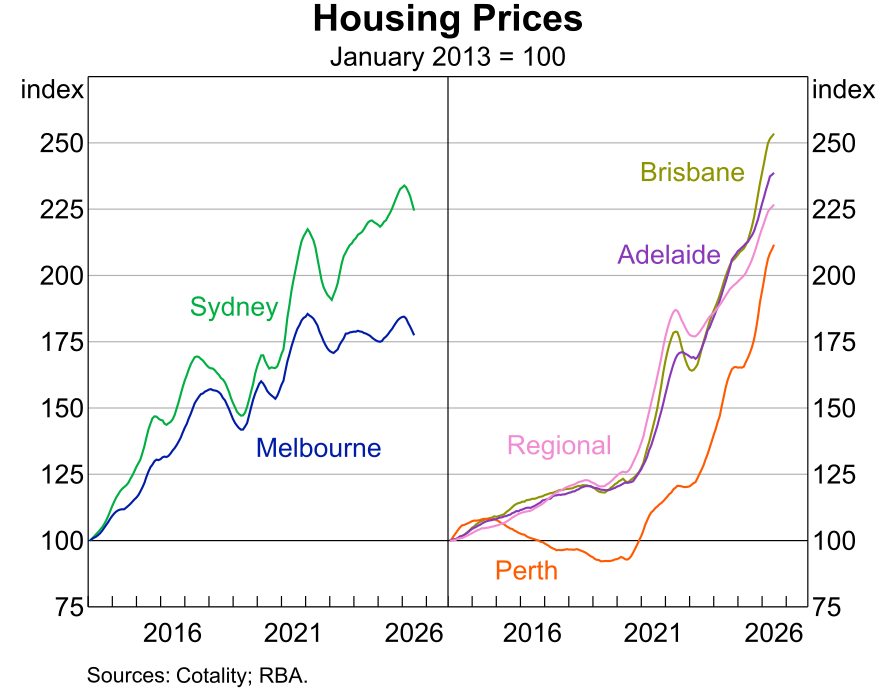
Even so, the easing in established housing prices has so far been modest, following a period of strong
growth. Price declines have been concentrated in the Sydney and Melbourne markets, but prices in these
markets remain around where they were before interest rates started to rise in February this year
(Graph 2).
Graph 2
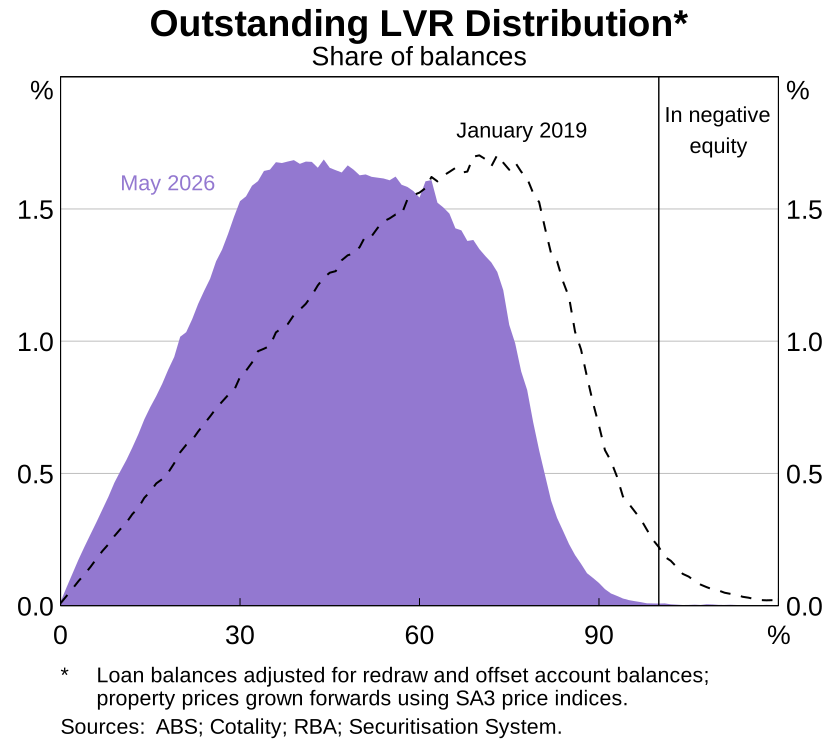
Furthermore, the most recent data suggest that, notwithstanding the price falls, negative equity remains
very limited, affecting less than 1 per cent of borrowers (Graph 3).
Of that small group, our estimates suggest that only a small share of borrowers are facing severe
difficulty with
their loan repayments. This is not to downplay that this would be stressful for those affected. But it
does indicate that financial stability risks are contained, and borrowers, in aggregate, have built up
considerable savings buffers over recent years.
Graph 3
While we expect housing prices to be affected when interest rates rise, monetary policy doesnt
target housing prices. Rather, what matters for monetary policy is how changes in housing prices affect
household spending, investment decisions, and, ultimately, inflation.
The labour market has also eased a bit more than expected over recent months, moving it a little closer to
balance relative to its tight starting point. The unemployment rate has risen by somewhat more than
expected, but other indicators, such as job advertisements, have remained more resilient. Recent
intelligence from our liaison program suggests that some firms paused hiring in the early stages of the
conflict, but some hiring activity seems to have resumed more recently.
Overall, we continue to assess that some further easing in labour market conditions will likely be
required to bring inflation back to target.
As we prepare our updated forecasts for August, were considering how the key judgements and
assumptions underpinning the May forecasts have evolved.
Were assessing how recent developments, including higher input costs and geopolitical tensions, will
affect inflation. Domestic demand has eased broadly as expected and labour market conditions have
softened somewhat. But with continued weak productivity growth, the economy cant grow strongly
without putting pressure on inflation. This is a fundamental challenge for the Australian economy over
the next few years.
The supply side matters
To understand current circumstances better, it is useful to step back and consider how the supply side of the global
economy has evolved over time.
This years oil supply shock has been challenging for households, businesses and the economy. But, as
I noted in my opening remarks, its best understood as the latest in a series of adverse supply
shocks affecting the global economy, beginning with the pandemic. These shocks have taken a wide range of
forms and, at times, have interacted in compounding ways, amplifying their effects on inflation and
economic activity.
Global supply chains – particularly during the pandemic – underscored just how interconnected
and finely balanced the global economy has become. But despite the scale of the disruption, supply chains
in many cases adapted more quickly than initially expected.
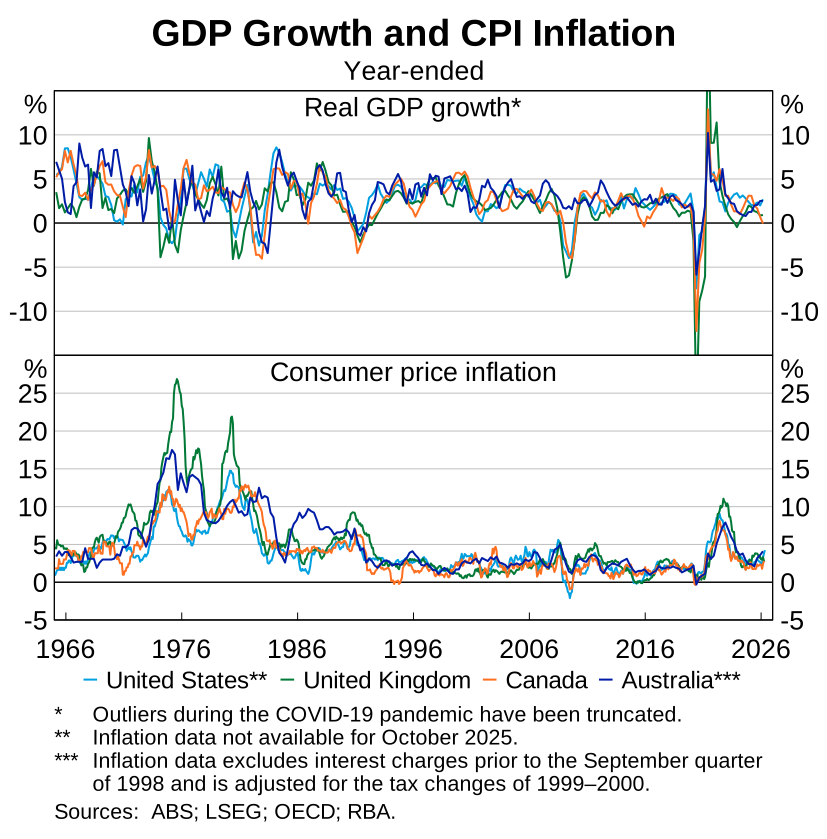
In earlier decades, the macroeconomic environment was shaped by a more benign supply side. During the
period often referred to as the Great Moderation from the late 1980s through to the global
financial crisis, fluctuations in output and inflation were much less pronounced relative to today and to
the more turbulent period that preceded it in the 1970s and early 1980s (Graph 4). There were still
shocks in that period, but they were predominantly cyclical demand shocks that monetary policy was better
equipped to deal with.
Graph 4
In part, this stability – compared with the 1970s and 1980s – reflected stronger policy
frameworks and structural reforms that were put in place in response to earlier economic volatility.
Examples include the adoption of more flexible exchange rates, labour market reforms and the introduction
of inflation targets for central banks.
But there was also an element of good fortune. There were fewer severe adverse commodity price and
productivity shocks during this period. And the emergence of the Chinese economy represented a
large favourable supply shock for the rest of the world.
In that environment, monetary policy could focus primarily on managing demand, which, in turn, meant the
RBAs objectives of price stability and full employment were often complementary, rather than in
tension.
That has changed.
The pandemic, and a series of major global developments since then, have delivered a succession of adverse
supply shocks.
Collectively, these adverse shocks have constrained global growth and contributed to higher inflation at
the same time.
For Australian households and most businesses, adverse supply shocks that originate overseas represent a
real income loss. Prices increase, but incomes dont adjust proportionately, which means people
cant buy as much as they could before and many households are worse off.
In Australia, these shocks have occurred against a backdrop of persistently weak productivity growth,
which has weighed on real incomes and wages for many years. Reversing that is central to improving
Australians living standards over the longer term.
Business investment is critical for boosting productivity growth and the economys supply capacity
over time. One element of this that were watching closely is investment in new technologies,
including artificial intelligence. Considerable uncertainty remains about the size and timing of these
effects.
For monetary policymakers, the implications are significant.
When the growth of potential supply is constrained, inflation is higher for any given level of demand,
sharpening the trade-off between our dual objectives of price stability and full employment.
In a more uncertain and shock-prone world, navigating those trade-offs has become more challenging for
central banks.
Then and now: Responding to supply shocks
Structural changes in the global economy, alongside stronger institutional frameworks, have made the
economy much more resilient to supply shocks than in the 1970s.
Being more resilient doesnt mean supply shocks are costless. It means the economy is better able to
absorb and adjust to them.
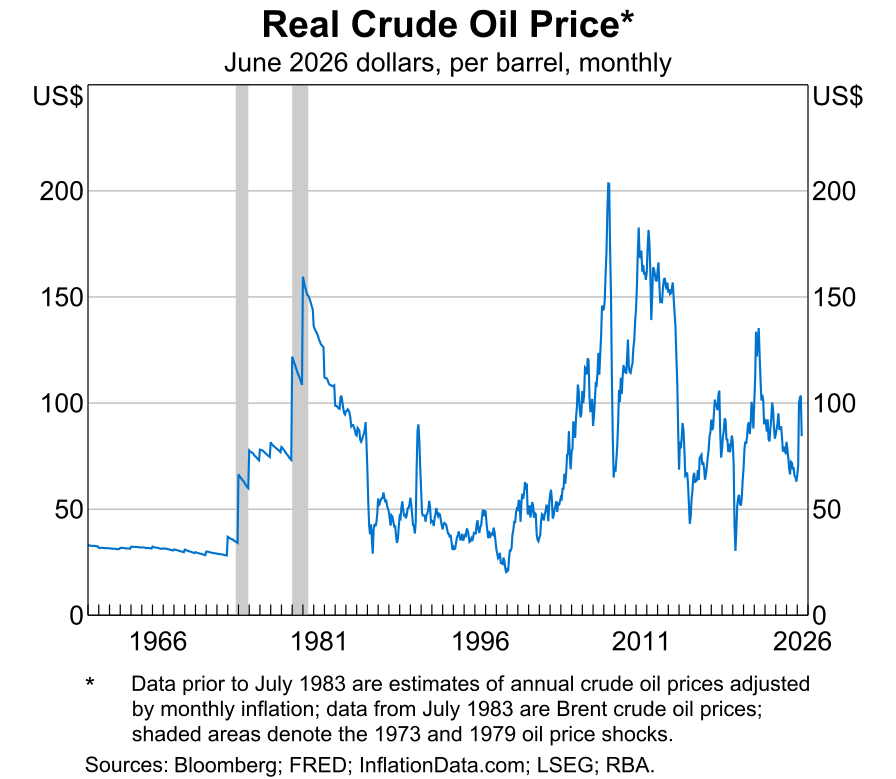
The oil price shocks of 1973 and 1979 provide a clear point of comparison. They were highly disruptive for
the global economy, including Australia, with oil prices rising two- to three-fold in each episode
(Graph 5).
Graph 5
It wasnt just the initial price spikes that made this period so difficult. It was also what
followed.
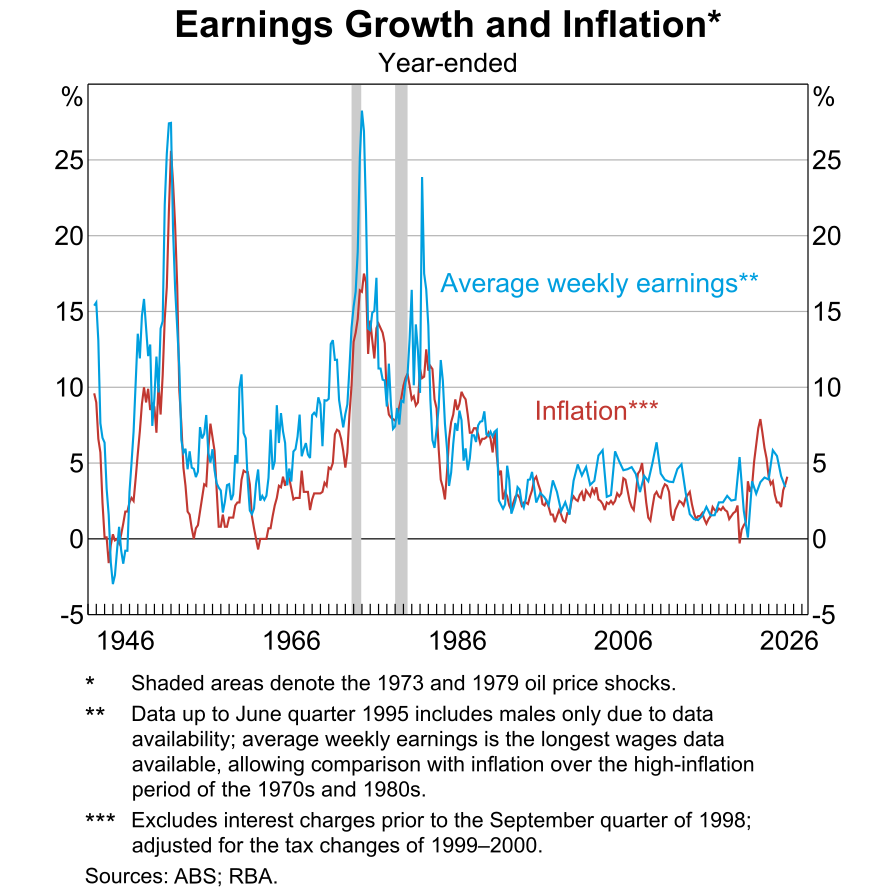
In Australia – and many other advanced economies – higher costs spread through the economy.
Businesses passed rising input costs into prices, while workers sought to protect their purchasing power
by demanding higher wages, increasing costs for firms. Over time, inflation became more broadly based and
persistent (Graph 6).
Graph 6
Policy responses initially sought to support activity in the face of the shock. But over time, higher
inflation expectations became embedded in the decision-making of households and firms, making the problem
self-perpetuating and much harder to resolve. Putting off a period of tight monetary policy today can
mean higher rates and higher unemployment down the track.
Bringing inflation and inflation expectations down ultimately required a significant tightening in
monetary policy. That came at the cost of severe recessions and high unemployment in many advanced
economies.
The further inflation moves from target, and the more embedded it becomes, the harder it is to reverse.
Credibility is hard won and easily lost.
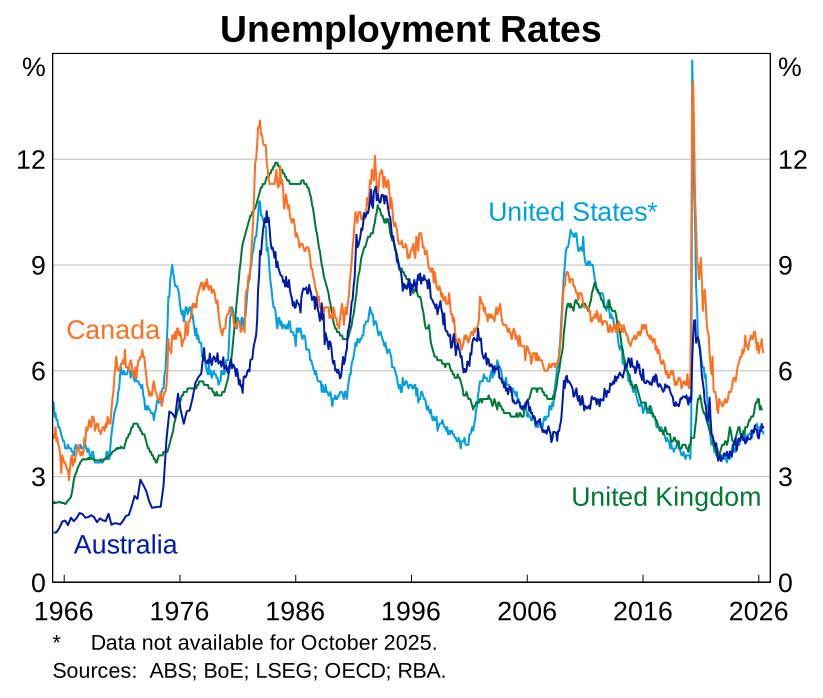
In Australia, inflation peaked at 12½ per cent in 1982. While it had declined to around
2½ per cent by the end of 1984, this came at the cost of a sharp rise in the unemployment rate
from around 6 per cent at the turn of the decade to a peak of 10½ per cent in 1983
(Graph 7).
Graph 7
The Australian and global economies today are very different from those of the 1970s. This helps
explain why the recent oil price shock has had a more limited impact on activity.
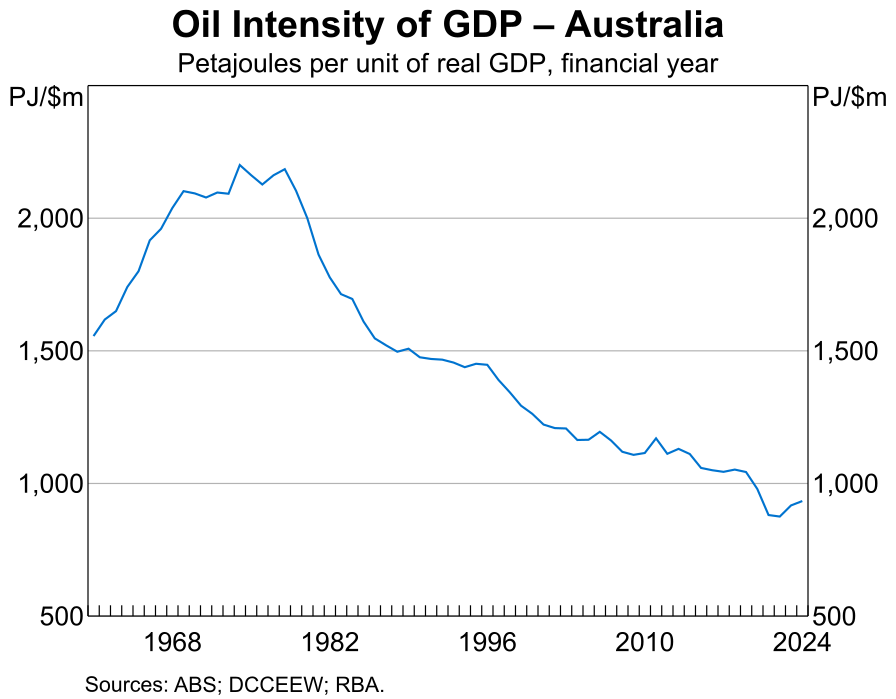
First, the economy is less dependent on oil. This means a given increase in oil prices has a less
direct and less pervasive effect on inflation today than it would have in the 1970s (Graph 8).
Graph 8
Second, monetary policy frameworks have evolved considerably – partly reflecting the lessons of the
1970s and 1980s. The widespread adoption of clear and credible central bank inflation targets has helped
anchor the expectations of households and businesses, reducing the risk that temporary supply shocks
translate into more persistent inflation.
And third, economies are more dynamic and interconnected. While this can transmit shocks more quickly, it
also increases the ability of firms and supply chains to adapt.
While higher energy prices still place real strain on households and businesses, recent experience since
the pandemic suggests that individual supply shocks are less likely, on their own, to trigger the kind of
prolonged high inflation and high unemployment seen in the past.
However, the outlook becomes more complex when multiple shocks occur in quick succession and interact.
The greater frequency and diversity of supply shocks in recent years have demonstrated the value of these
shock absorbers – including flexible exchange rates and more credible monetary policy frameworks,
deeper financial markets, more competitive product markets, and more adaptable labour markets.
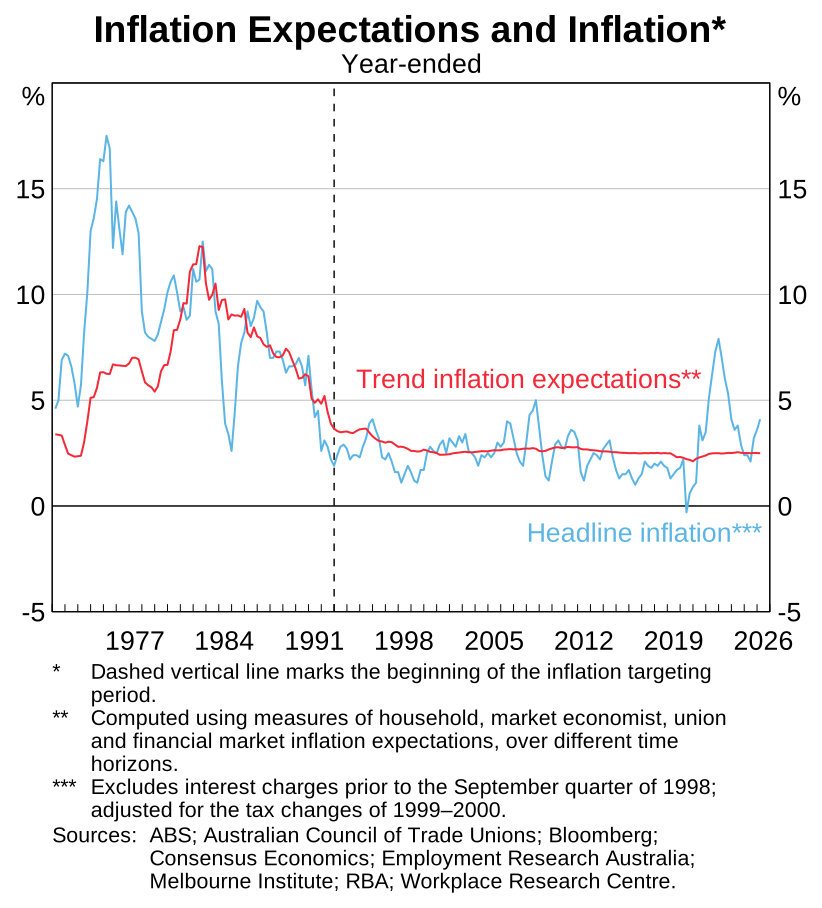
For central banks, this reinforces the importance of conducting policy in a way that maintains public
confidence that inflation will remain under control (Graph 9).
Graph 9
Implications for monetary policy
Let me conclude with some reflections on the implications for monetary policy.
The global environment has changed and the outlook is uncertain. While this makes the task of monetary
policy more complex, our objectives havent changed. The Board remains focused on delivering price
stability and full employment.
The full effects of increases in the cash rate from earlier in the year will take time to materialise. And
even if the renewed disruption to oil supply abates quickly, underlying inflation is still expected to be
higher as fuel price rises flow through to other prices.
Its also important to remember that inflation and capacity pressures in the domestic economy were
already too high prior to the recent shock. Theres evidence that domestic demand and labour market
conditions have been easing as required to bring the economy back towards balance.
Against a backdrop of ongoing capacity pressures, the Board remains focused on preventing elevated cost
pressures from entrenching inflation.
This does mean that some further easing in the growth of demand is likely to be required if were to
bring inflation back down sustainably to target. A key question in the period ahead is whether the
tightening in monetary policy earlier in the year is sufficient to achieve this.
While conditions vary across sectors, the economy overall has adjusted gradually and broadly as
expected.
One thing monetary policy cant do, however, is address the economys slow productivity growth.
While this persists, the ability of the economy to grow without generating inflation is constrained, and
Australians will continue to experience limited growth in real wages.
In these circumstances, the best contribution monetary policy can make is to maintain low and stable
inflation and support sustainable full employment.
The Board is prepared to act as required to achieve its mandate, including by increasing the cash rate
further if needed.