
The urge came out of nowhere. Unbearable thoughts raced through my mind, ordering me to hurl my newborn to the ground.
Tiny, red-faced, and barely five pounds, he nestled into me. But my arms were as stiff as tree branches. I didn’t trust myself not to kill him. Nothing made sense. The world around me swirled, the edges of my body felt blurry, still numb from the epidural. Yet the compulsion to throw my child burrowed into my brain like a parasite. I imagined it happening. I envisioned a new mother who looked just like me launching her baby into the air. I imagined him falling, head smashed in, instantly dead. I couldn’t grasp the sheer horror of it. I felt unhinged.
Get The Gavel
A weekly SCOTUS explainer newsletter by columnist Kimberly Atkins Stohr.
I’d been desperate for a child. My husband and I had been trying for years. Now, here I was about to commit infanticide while he was busy snapping photographs of us. Nobody sensed the battle going on in my head — not my doctors or the nurses cooing over the minutes-old baby. I scrunched my eyes shut and clutched him fiercely, hoping my mind wouldn’t collapse. One part of me said do it, while another part kept holding on.
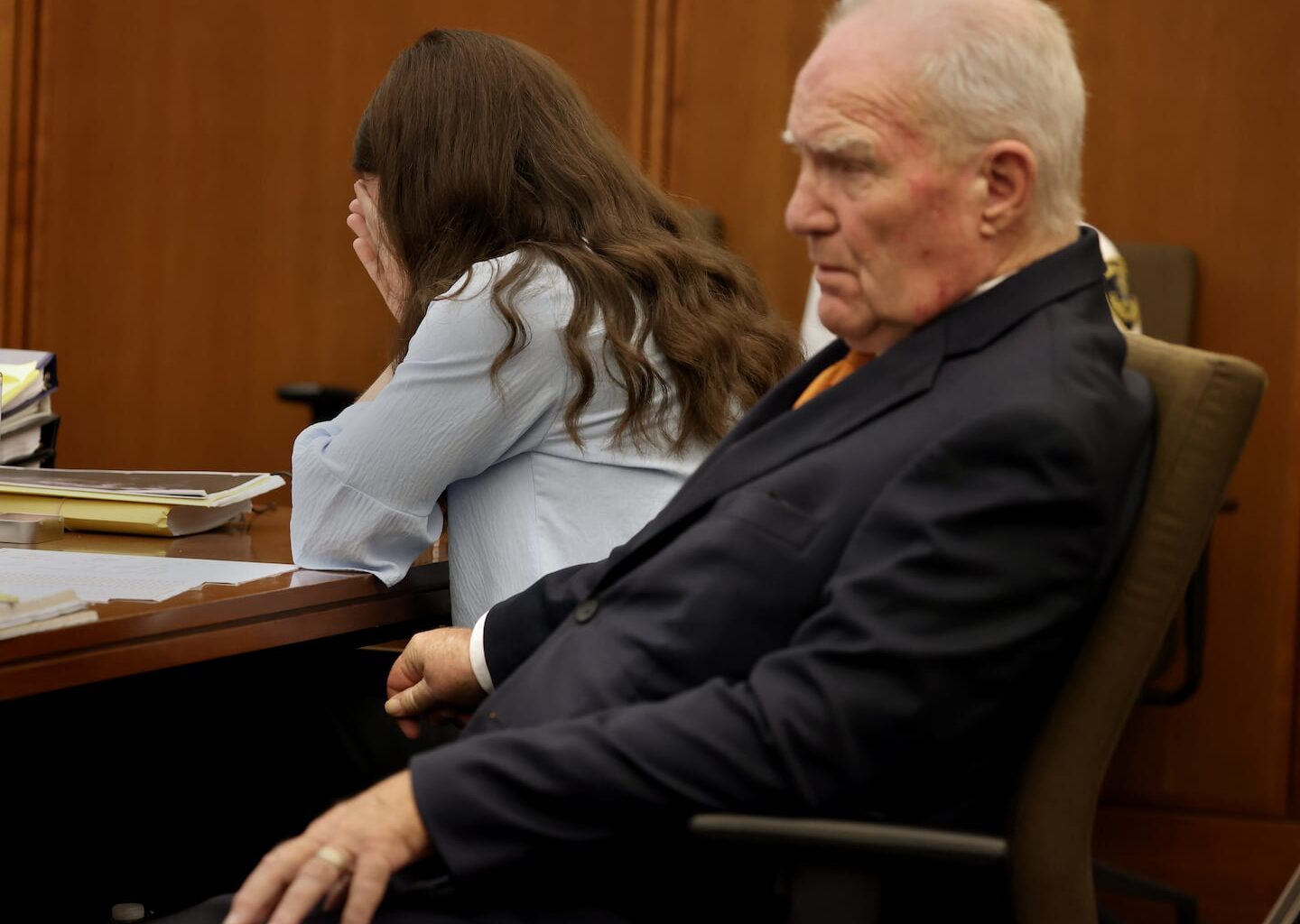
Postpartum psychosis is the most catastrophic of the psychiatric disorders associated with childbirth. And it’s in the headlines now with the case of Lindsay Clancy — a Massachusetts woman on trial for strangling her three children to death before hurling herself from a window in a suicide attempt. But as high-profile as this and similar cases have been, we know surprisingly little about how the condition works.
First observed by Hippocrates in 430 BC, it can run in families. I was at risk for it. My mother suffered from it after giving birth to my youngest sister. The condition affects an estimated 1 or 2 per 1,000 childbearing women globally and is marked by a sudden onset of delirium, hallucinations, extreme mood swings, and bizarre delusions about the baby or the self. The symptoms can come and go over a period of days or even months. A new mother can seem perfectly fine until she isn’t.
There is little debate that postpartum psychosis is a dire psychiatric emergency. Four percent of mothers who develop postpartum psychosis commit infanticide, and of the five percent who commit suicide, the methods they choose are often violent: hanging, jumping from high windows, or self-immolation. In 2013, a New York lawyer, Cynthia Wachenheim, strapped her infant son to her chest and jumped out of her eighth-floor window. The baby survived, cushioned by Wachenheim’s body, but nobody, not even her husband, suspected she was suffering from postpartum psychosis until she killed herself.
Despite all this, the psychiatric community is still debating whether postpartum psychosis even belongs as a stand-alone diagnosis in the “bible” of psychiatry, the Diagnostic and Statistical Manual (DSM).
In 1980, the DSM eliminated “psychosis with childbirth,” as postpartum psychosis was then known, as a distinct diagnosis — instead directing clinicians to classify it under another disorder, often bipolar disorder or major depression. Of course, a diagnostic label is just one tool to determine a condition’s severity, but the absence of a clear, readily searchable category can make it harder for clinicians to recognize and treat a rapidly escalating psychiatric emergency. Postpartum psychosis isn’t simply an extreme case of the “baby blues.” It is an illness that, left untreated, can result in disaster.
These are high stakes, as the unfolding trial of Clancy, a former labor and delivery nurse, shows. Her husband, Patrick Clancy, maintains that the health care system failed his wife and filed suit against her health care providers, accusing them of failing to properly diagnose and treat her condition.
Cases like Lindsay’s put a gruesome spotlight on an area of women’s health that is chronically overlooked, at least until disaster strikes. “There is no money for it, not for research, not for treatment,” Dr. Veerle Bergink, director of the Women’s Mental Health Program at Mount Sinai Hospital told The New Yorker in 2023. “There are no guidelines. This is one of the most severe conditions in psychiatry, one that has huge impacts on the mother and potentially on the child, and there’s nothing.”
I was 10 years old when my mother was put into restraints after giving birth and my newborn sister was taken away from her. I remember how my stepfather, a psychiatrist, wept while telling me that she was a danger to herself, to the baby, to my middle sister, and to me. She was too ill to be our mother.
And yet she was lucky. My stepfather had been trained to recognize postpartum psychosis. My mother was treated in the hospital and came home two months after my sister’s birth. Like my mother, I was also lucky, but not because I received a diagnosis or treatment. I was simply not one of the 4 to 5 percent of affected women who take the most extreme steps. Maybe it was some quirk of my genetics, maybe it was something else. But even in my state of confusion, I still had some shreds of sanity left persuading me that killing my newborn was deeply irrational. Had I been fully psychotic, I might not have been able to make that distinction.
My son is in his early 30s now, but Lindsay Clancy’s children are dead. We shouldn’t have to rely on luck to ensure our sons and daughters live into adulthood. We are clearly not doing enough.